13 haircuts that make thin hair look thicker and fuller
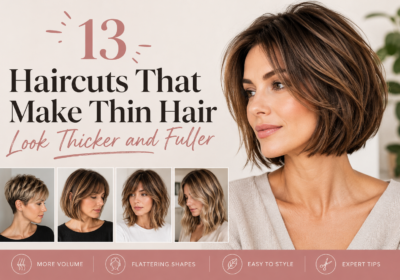
When hair starts looking thinner, the instinct is often to search for products that promise more volume. But sometimes the biggest difference doesn’t come from another spray, mousse or styling trick.
It comes from the haircut itself.
The right shape can make thin hair appear denser, create lift in areas that tend to fall flat and prevent sparse ends from making the entire hairstyle look thinner.
The secret isn’t simply going short or adding lots of layers. In fact, too much layering can have the opposite effect. The best haircuts for thin hair strategically preserve density while creating movement exactly where it’s needed.
From feathered crops and voluminous pixies to blunt bobs and airy medium-length styles, these 13 haircuts can make thin hair look thicker and fuller without requiring complicated daily styling.
Fine Hair vs. Thin Hair: What’s the Difference?
Before choosing a haircut, it helps to understand what you’re actually working with.
Fine hair describes the diameter of each individual strand. You can have very fine strands but plenty of them.
Thin hair, on the other hand, refers to overall density — there are fewer strands covering the scalp.
And yes, it’s possible to have hair that is both fine and thin.
This distinction matters because a haircut that works beautifully on fine but dense hair may remove too much weight from hair that has lower density.
For thin hair, preserving strategic fullness is usually just as important as creating volume.
13 Haircuts That Can Make Thin Hair Look Thicker
1. Feathered Crop
A feathered crop can give thin hair movement without making it look heavy or overly styled.
The key is keeping the crown softly layered while allowing the fringe and perimeter to remain substantial enough to frame the face.
Unlike heavily razored short cuts, a modern feathered crop doesn’t need hundreds of tiny layers. The movement should feel light and intentional.
Why it works: Soft crown lift creates height while the shorter overall length prevents thin hair from being weighed down.
Best for: Straight to slightly wavy hair that tends to fall flat around the crown.
2. Voluminous Pixie
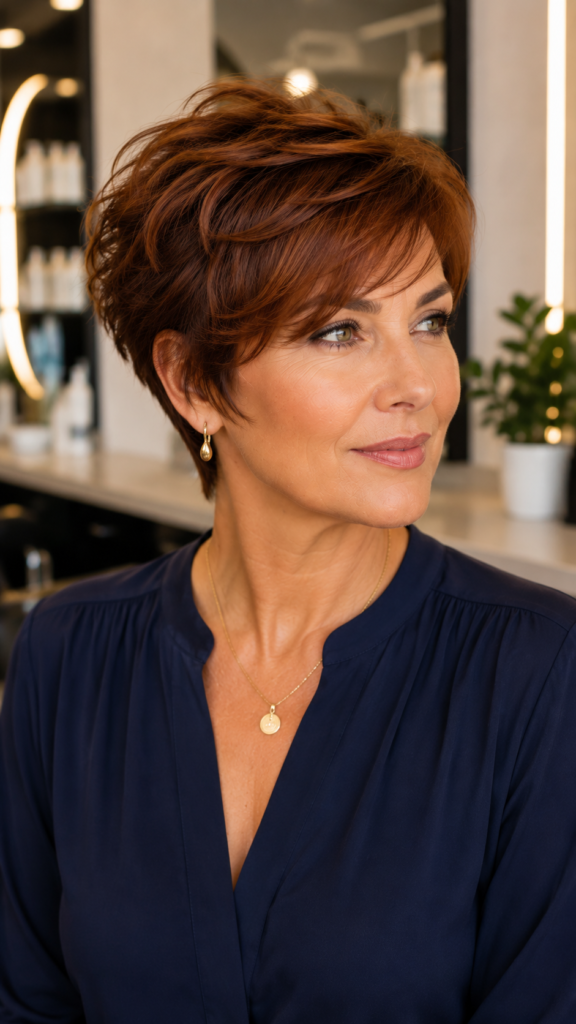
Few haircuts can transform flat hair as dramatically as a well-shaped pixie.
Removing excess length makes it easier to create lift at the roots, particularly around the crown. Slightly longer pieces on top also give you enough hair to create movement without sacrificing the clean silhouette of a short cut.
A side-swept fringe can make the style feel softer and more versatile.
Why it works: Shorter lengths naturally resist the downward pull that can make thin hair appear flatter.
Styling tip: Concentrate volume at the roots rather than teasing the entire haircut.
3. Long Layered Pixie
Not ready for a very short pixie?
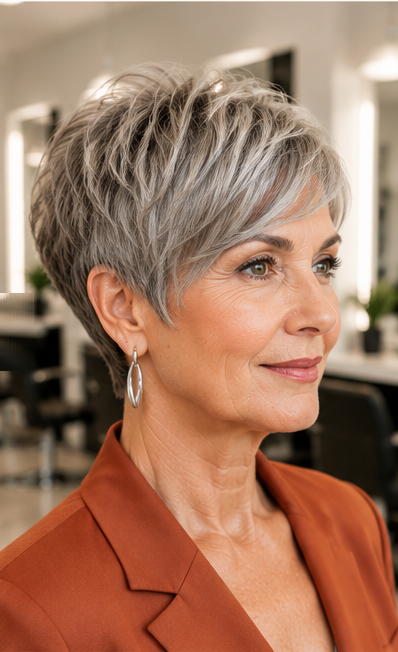
A longer version offers many of the same volume benefits while maintaining more softness around the face.
Keep additional length through the top and fringe and use controlled layering around the crown. This creates dimension without exposing too much scalp.
Best for: Anyone who wants a short haircut but still likes the option of changing the part or styling the fringe differently.
4. Soft Bixie
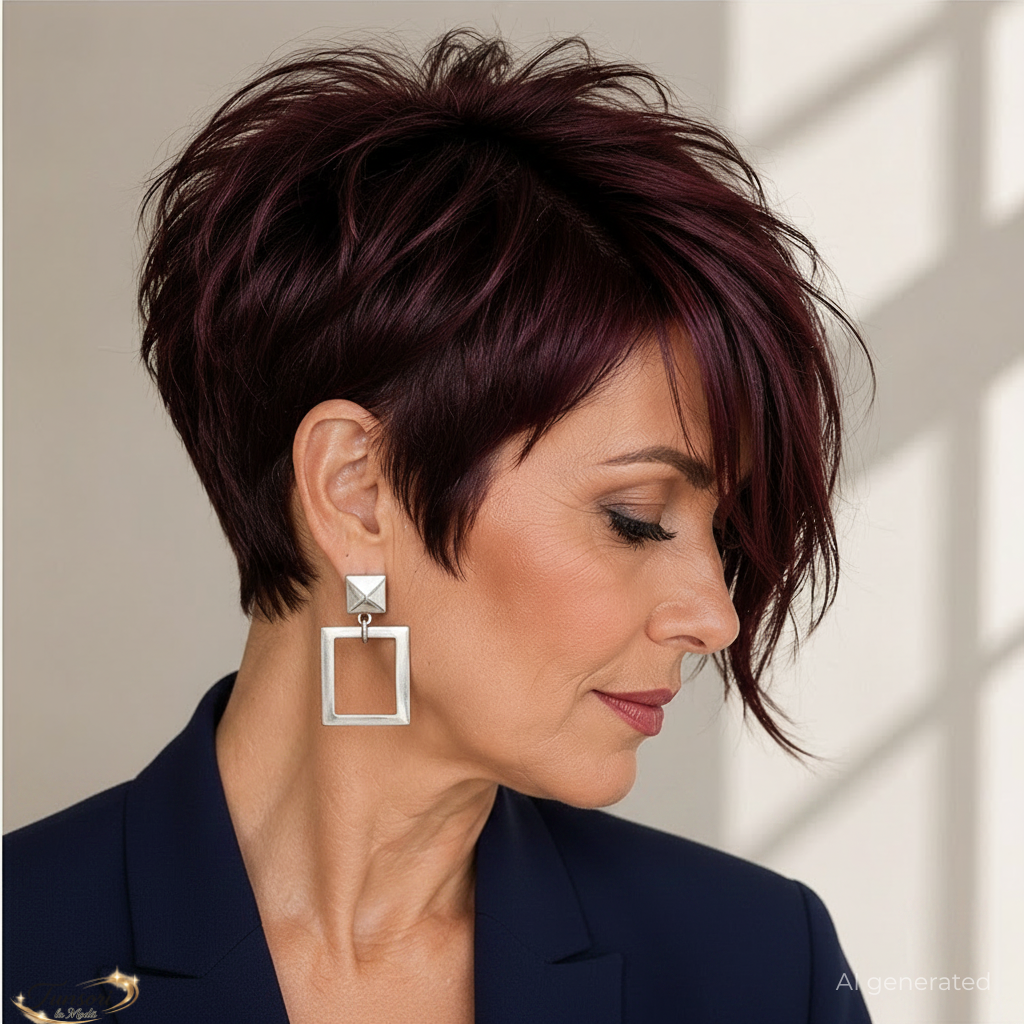
The bixie sits somewhere between a bob and a pixie, making it an excellent option for hair that struggles to maintain volume at longer lengths.
The most flattering versions for thin hair keep enough weight through the sides while introducing subtle movement around the crown.
Avoid making every section heavily textured. Some areas need to remain stronger to maintain the appearance of density.
Why it works: The shorter shape creates lift while the slightly longer perimeter maintains softness and fullness.
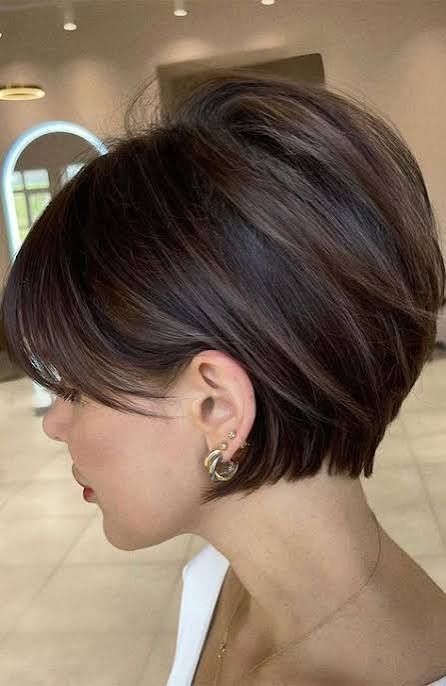
5. Blunt Chin-Length Bob
If your ends tend to look sparse, this may be one of the most effective changes you can make.
A blunt bob creates a strong visual line across the bottom of the haircut. Instead of individual wispy ends being visible, the hair appears concentrated into one fuller perimeter.
Chin length is particularly effective because it removes much of the weight associated with longer hair.
Why it works: A solid baseline creates the illusion of thicker ends.
Best for: Straight or slightly wavy thin hair.
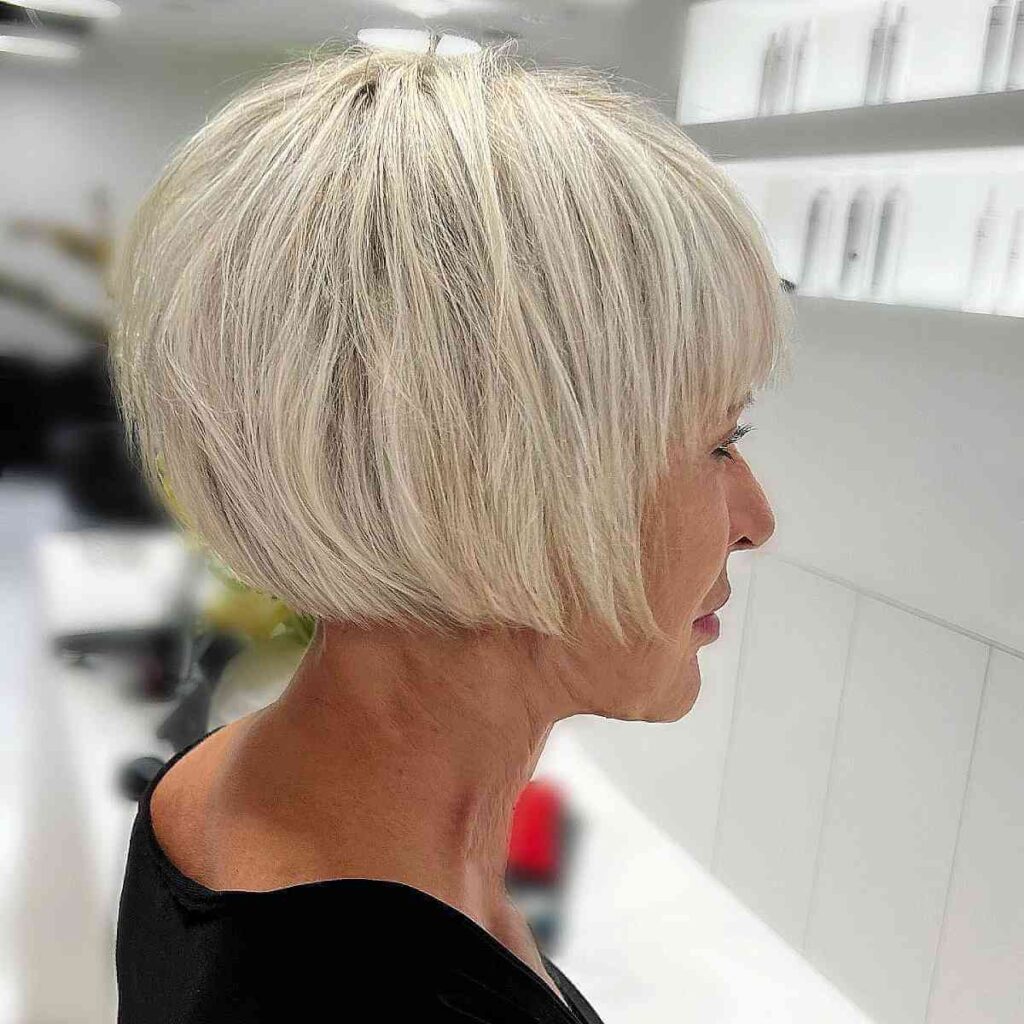
6. Softly Graduated Bob
Graduation can create beautiful fullness through the back of a bob — but with thin hair, subtlety matters.
A softly graduated bob uses a gentle increase in length toward the front rather than dramatic stacking.
This creates shape around the back of the head without removing excessive density from the perimeter.
Why it works: Strategic graduation creates roundness and dimension exactly where flat hair often needs it most.
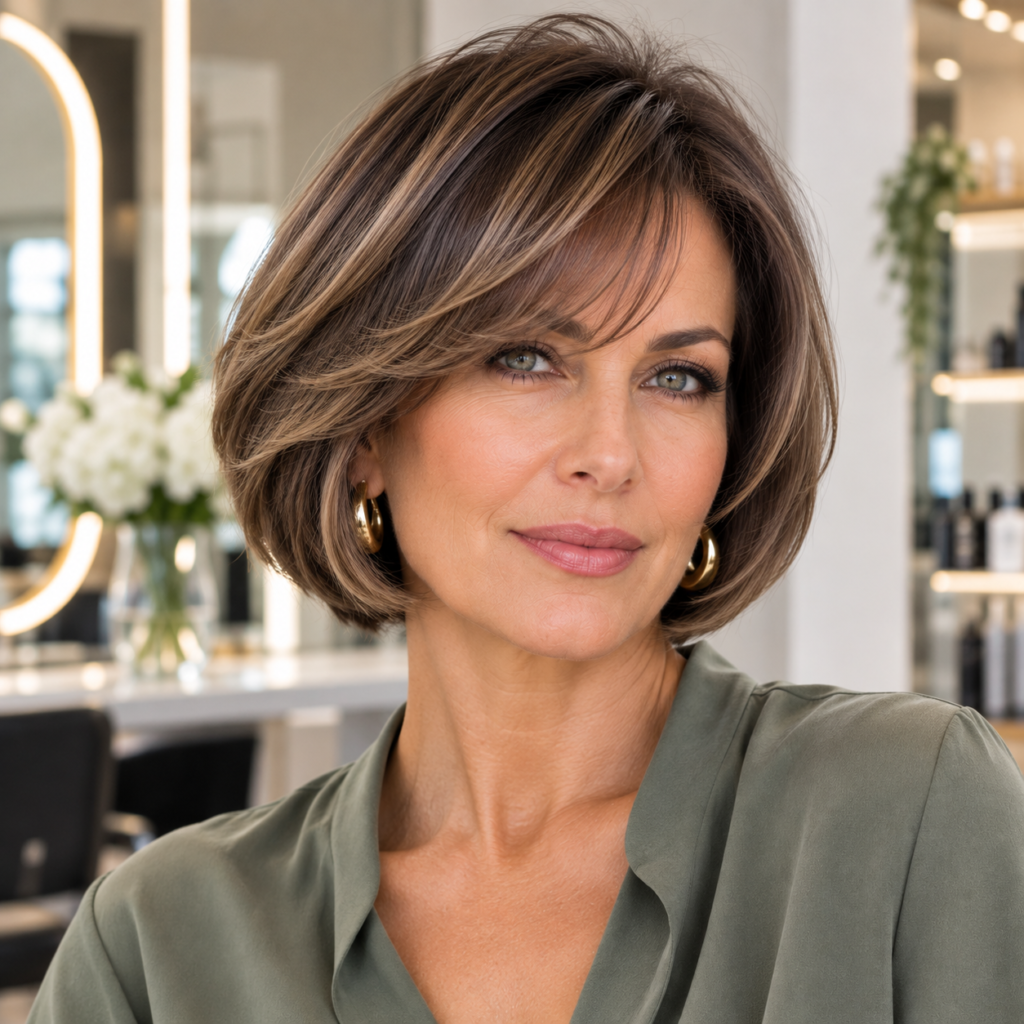
7. Textured French Bob
Short, chic and intentionally imperfect, the French bob can make thin hair feel surprisingly substantial.
The length usually falls somewhere around the jaw, concentrating the hair into a compact shape.
A little natural texture or a few loose bends prevent the strands from sitting completely flat against one another.
If you’re adding bangs, keep them relatively soft rather than taking an excessively large section of hair from the front.
Best for: Thin hair with straight, slightly wavy or naturally tousled texture.
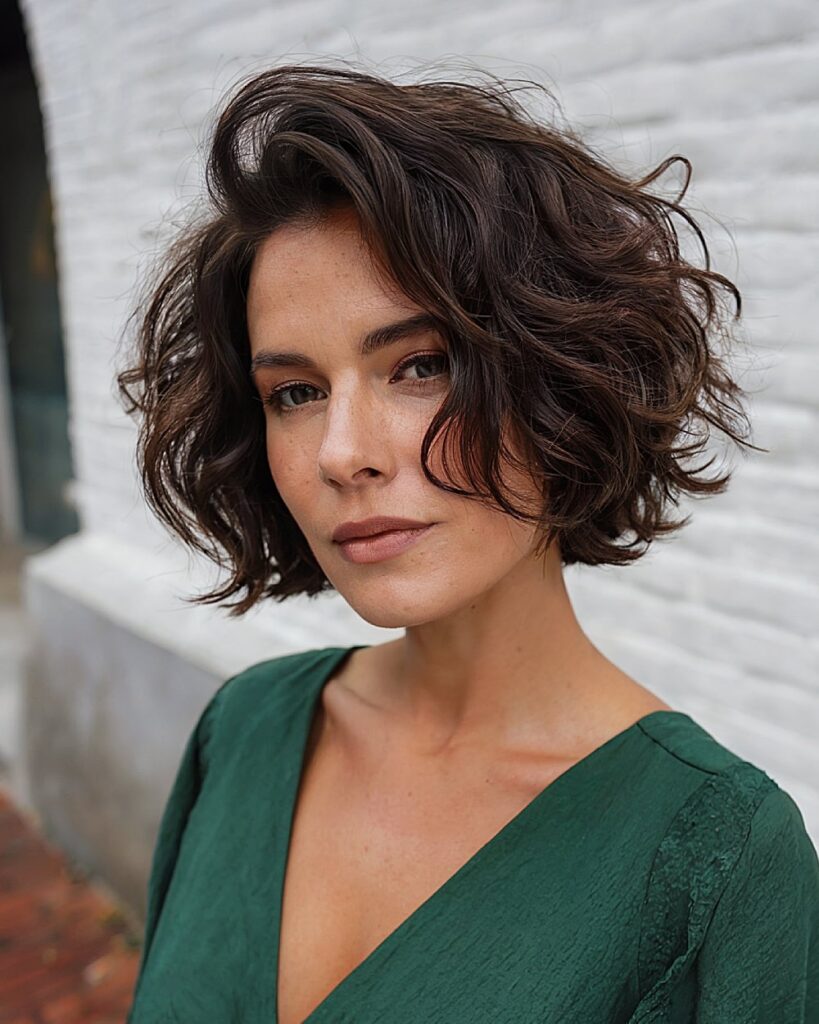
8. Side-Parted Bob
Sometimes the smallest adjustment creates the most noticeable change.
A deeper side part shifts hair away from the position where it naturally falls flat, immediately creating more lift on one side.
Combine that with a bob that maintains a strong perimeter and you get both root volume and fuller-looking ends.
Why it works: Changing the direction of the roots creates instant visual lift without requiring additional layers.
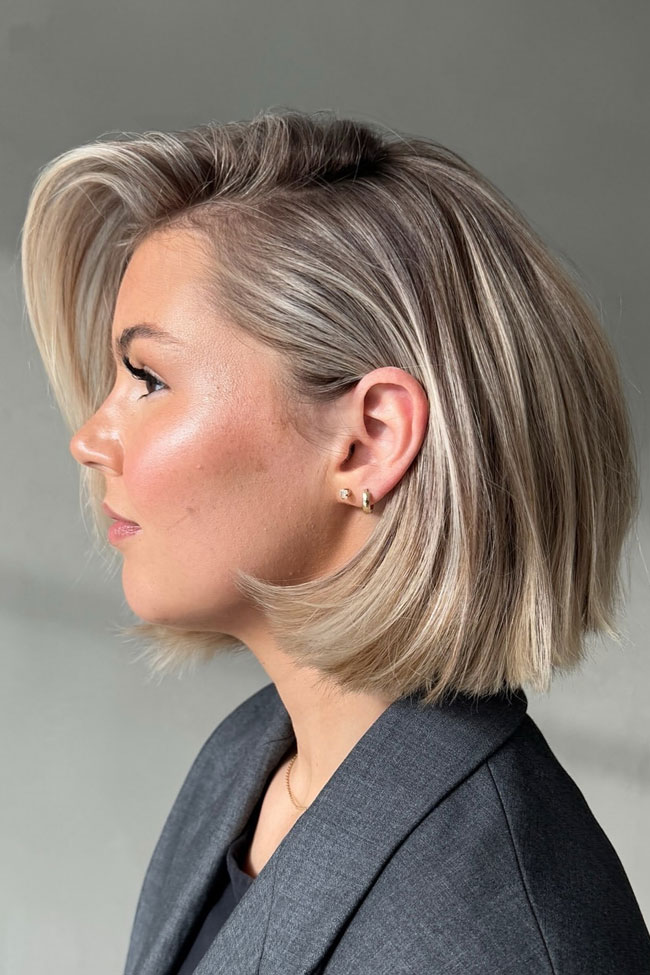
9. Collarbone Lob
Thin hair doesn’t have to be short.
If you prefer more length, a collarbone lob offers an excellent compromise. It’s long enough for ponytails and simple updos but short enough to remove fragile, sparse-looking ends.
For maximum fullness, keep the baseline relatively strong and use long layers sparingly.
Why it works: It preserves versatility while preventing excess length from pulling the hairstyle flat.
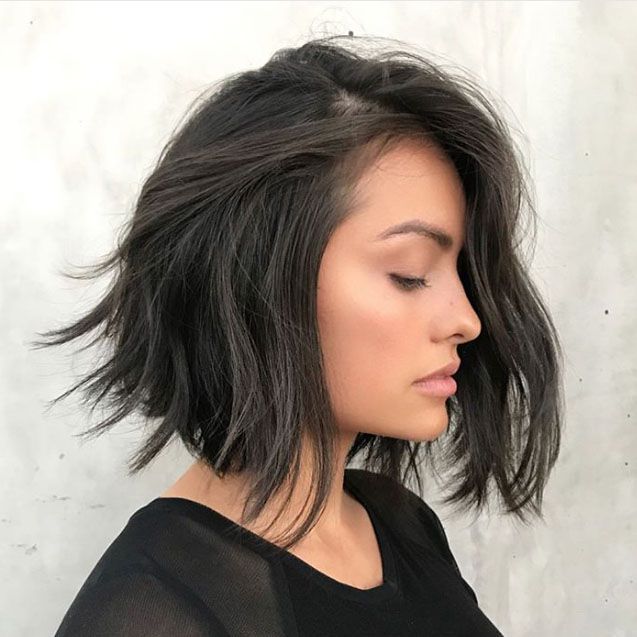
10. Airy Midi Shag
A shag and thin hair might sound like a risky combination, but the right version can work beautifully.
The important word is airy.
Instead of dramatic disconnected layers, an airy midi shag uses softer movement around the crown, fringe and face while preserving enough weight through the bottom.
A curtain-style fringe can add movement around the face without requiring a heavy full bang.
Why it works: Controlled layering creates movement and crown lift while the medium length keeps the style soft and modern.
Avoid: Excessive razor cutting if your ends are already sparse.
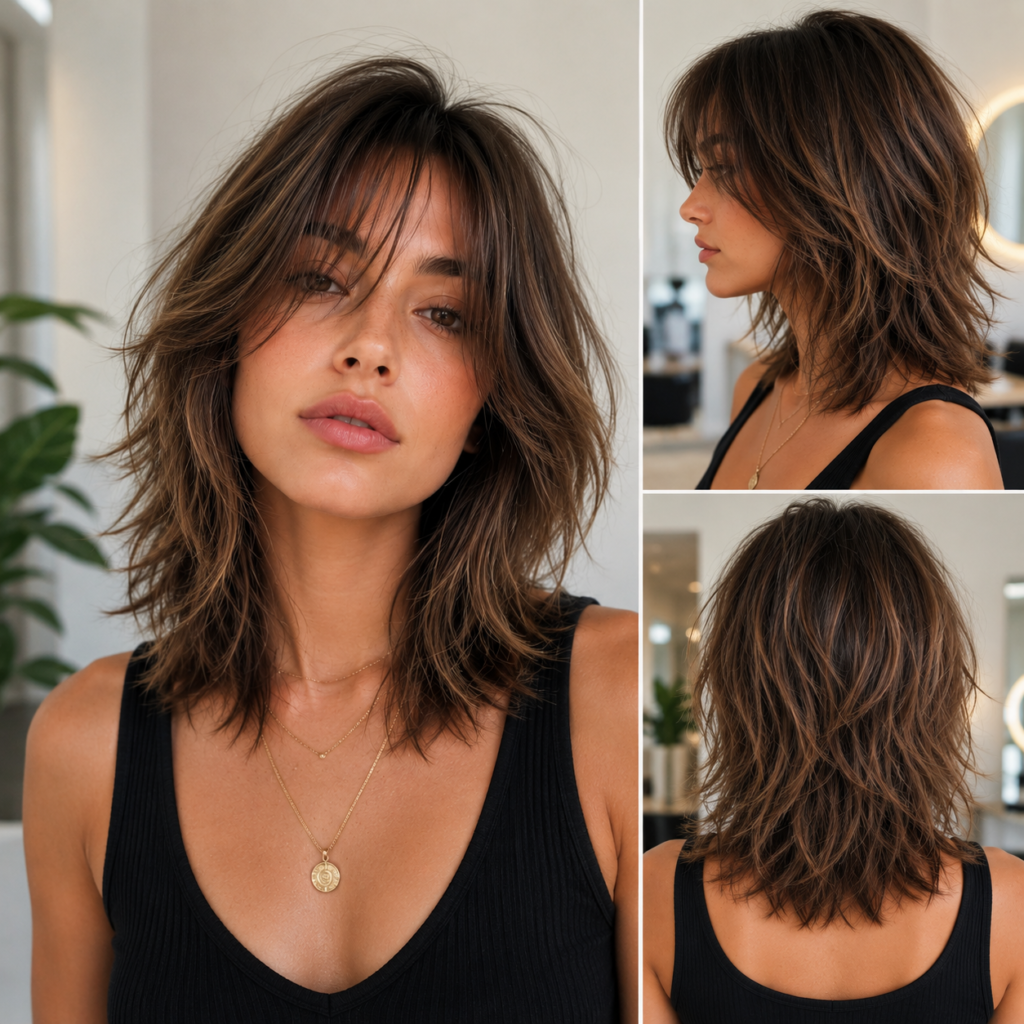
11. Medium Cut With Face-Framing Layers
If you want to maintain medium-length hair, you don’t necessarily need layers everywhere.
Keeping the back and perimeter relatively full while concentrating movement around the face can give you the best of both worlds.
The face-framing pieces create softness and dimension while the stronger baseline maintains the appearance of density.
Best for: Thin hair that still has reasonable fullness through the ends.
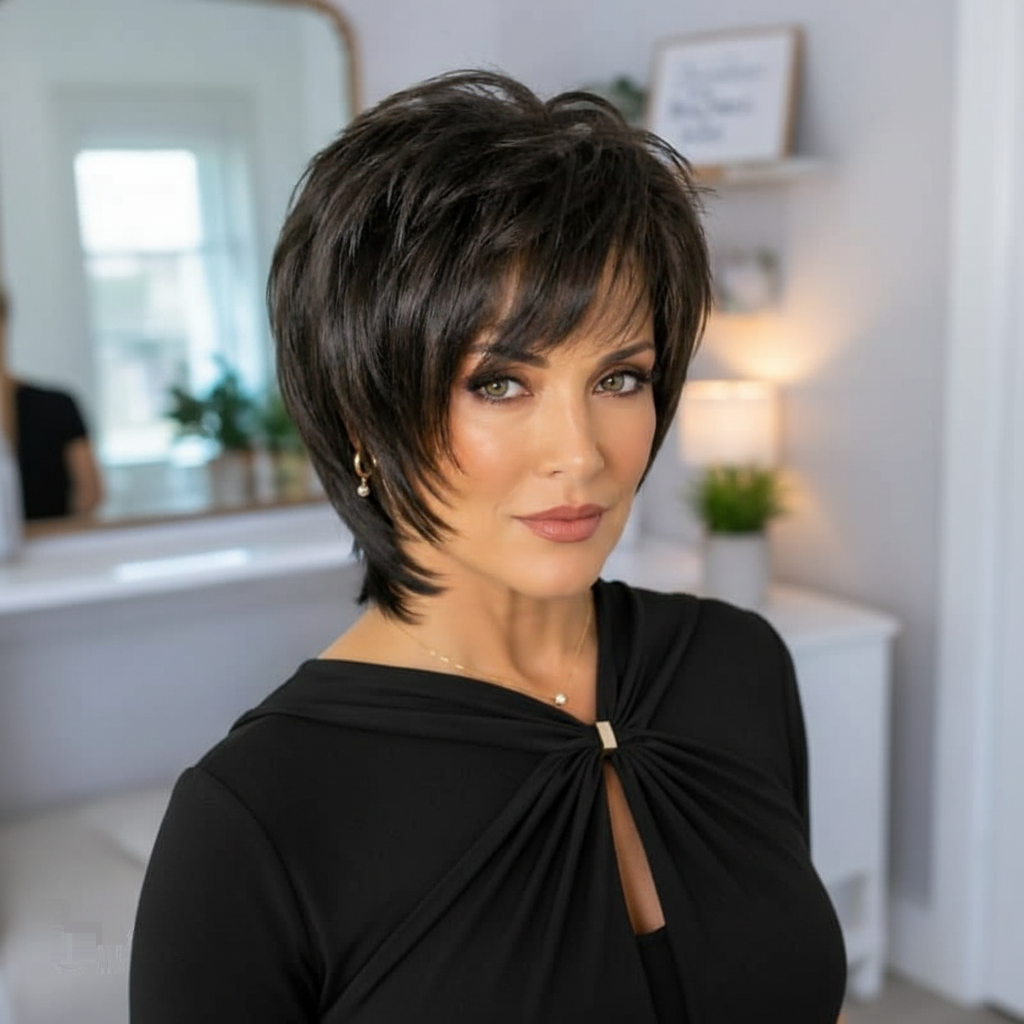
12. Soft Butterfly Lob
The traditional butterfly haircut often relies on generous density and extensive layering, which isn’t always ideal for thin hair.
But a modified butterfly lob can work.
Instead of dramatic cascading layers throughout the entire haircut, keep the perimeter strong and introduce longer, flowing pieces primarily around the front and upper sections.
The result has the movement associated with a butterfly cut without sacrificing too much density.
Why it works: Longer face-framing layers create visual movement while most of the hair remains intact.
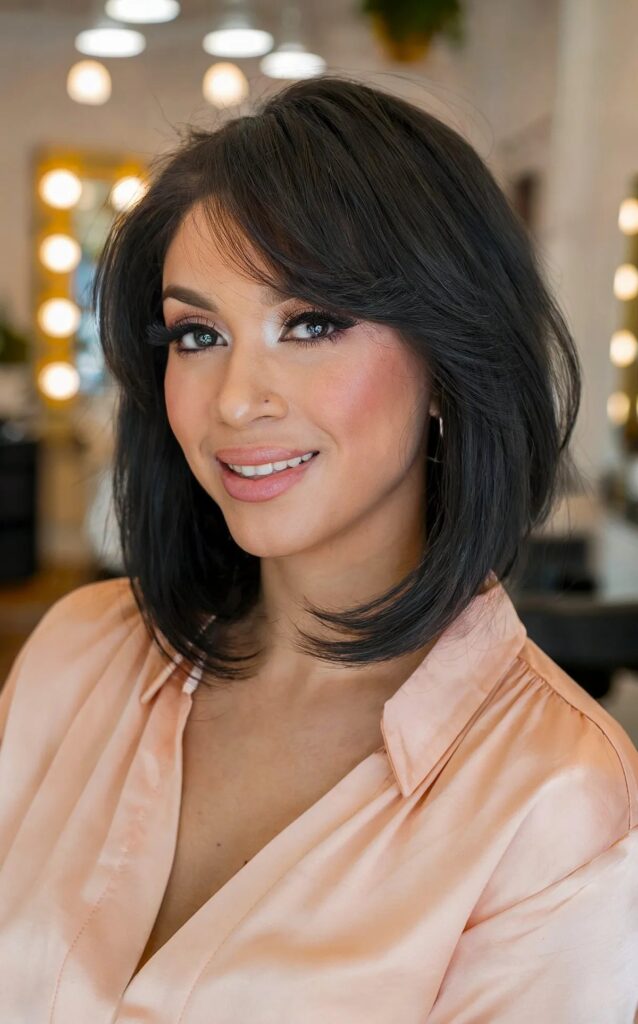
13. Shoulder-Length Cut With Wispy Movement
Sometimes the most flattering solution is also the simplest.
A shoulder-length cut with subtle movement through the ends can make thin hair appear healthier and more intentional without dramatically changing your style.
The key is avoiding overly feathered ends.
You want soft movement, not transparency.
A slightly off-center or side part can add additional volume around the front.
Best for: Anyone who wants a noticeable refresh without committing to short hair.
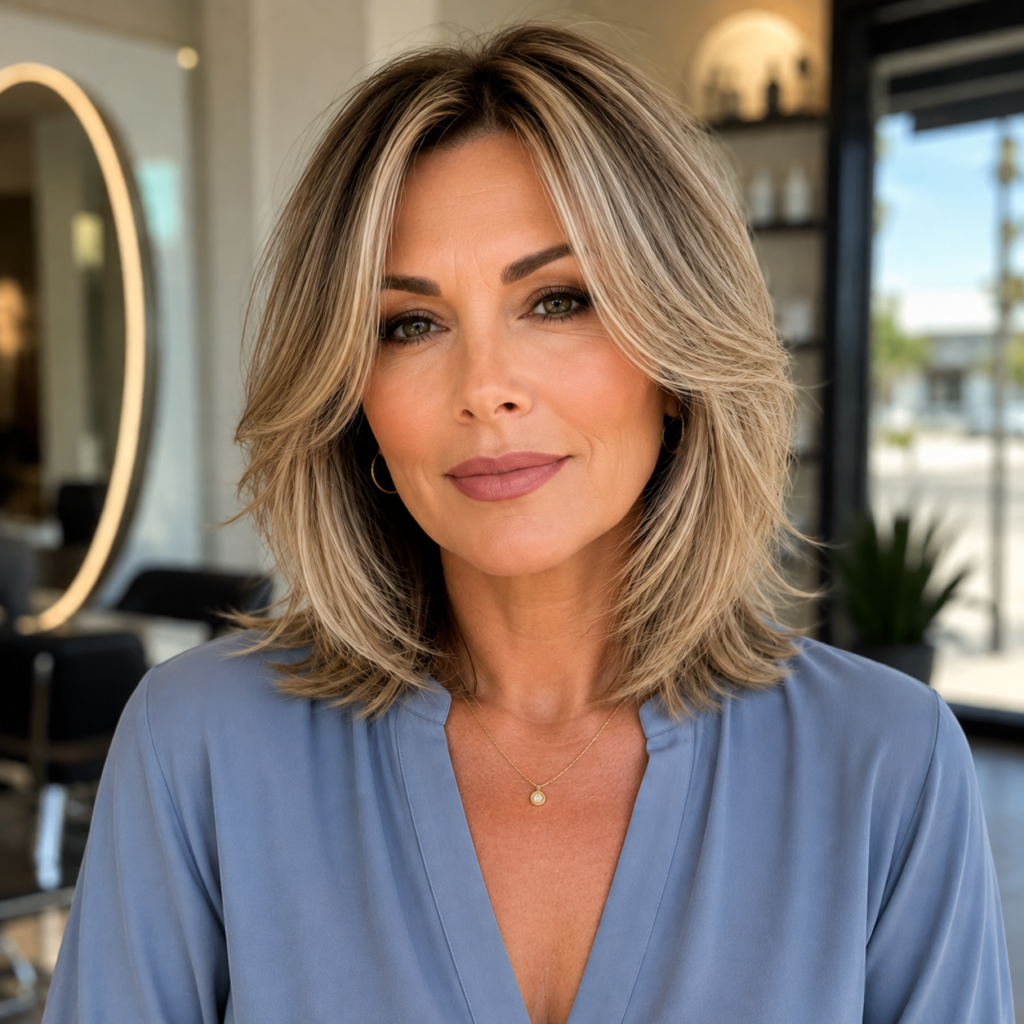
What Hair Length Makes Thin Hair Look Thickest?
There isn’t one universal answer, because density varies from person to person.
However, hair often appears fullest at the point where the ends still maintain reasonable density.
For many people with thin hair, that’s somewhere between the jaw and shoulders.
If your hair looks relatively full at shoulder length but becomes noticeably wispy several inches below it, keeping that extra length may actually make the entire hairstyle appear thinner.
Look at the bottom few inches of your hair.
If you can see significant gaps between the ends, removing some length may create a surprisingly dramatic improvement.
Are Layers Good or Bad for Thin Hair?
Neither.
Layers aren’t inherently bad for thin hair — too many layers can be.
Strategically placed layers can create movement, lift and shape. But every layer removes some hair from another area of the haircut.
That’s why thin hair usually benefits from selective layering rather than aggressive layering throughout the entire head.
Layers Can Work Well When…
You have enough density through the perimeter but struggle with flatness around the crown.
Long or subtle layers can introduce movement without dramatically reducing fullness.
A Blunter Cut May Be Better When…
Your ends already appear sparse or transparent.
In that situation, preserving as much hair as possible through the perimeter can create a stronger, thicker-looking silhouette.
Which Haircuts Can Make Thin Hair Look Even Thinner?
The same haircut can behave differently depending on hair density, but several techniques deserve caution.
Excessive Short Layers
Too many short layers can create lift at the crown while leaving the bottom of the haircut looking noticeably thinner.
Aggressive Thinning
Removing bulk makes sense for extremely dense hair.
For genuinely thin hair, excessive thinning can remove the very density you’re trying to preserve.
Extremely Wispy Ends
Soft texture can look beautiful, but if the ends become transparent, the entire haircut may appear less substantial.
Excessive Length
Very long hair can exaggerate differences in density, particularly when the bottom several inches are considerably thinner than the hair closer to the scalp.
Keeping length isn’t always the same as keeping fullness.
Blunt vs. Textured: Which Makes Hair Look Thicker?
If maximum density is your priority, a stronger, blunter perimeter generally creates the most immediate visual fullness.
But that doesn’t mean the entire haircut needs to be perfectly blunt.
Texture can create dimension and prevent thin hair from looking flat. The trick is deciding where to place it.
A strong perimeter combined with subtle internal movement can often provide a better result than choosing completely blunt or heavily textured hair.
Think of it as:
Density at the bottom. Movement through selected areas.
That’s often the sweet spot.
Should Thin Hair Have Bangs?
Absolutely — provided the fringe doesn’t require sacrificing too much density elsewhere.
Heavy bangs require a relatively large section of hair from the front of the head. On low-density hair, that can sometimes leave the sides looking thinner.
Consider softer alternatives such as:
- side-swept bangs,
- wispy fringe,
- curtain-style pieces,
- longer face-framing bangs.
These options can reshape the front of the haircut while preserving more hair through the sides.
How to Style Thin Hair for More Volume
The haircut creates the foundation, but a few styling choices can enhance it considerably.
Start With the Roots
Volume created close to the scalp usually has a greater visual impact than trying to make the ends enormous.
When blow-drying, lift the roots slightly away from their natural direction.
Don’t Overload the Hair
Fine and thin hair can collapse quickly under heavy oils, creams and styling products.
Use small amounts and add more only when necessary.
Create Imperfect Movement
A few loose bends can make strands visually separate from one another, creating the appearance of greater volume.
Perfect curls aren’t necessary.
Change Your Part
If you’ve worn exactly the same part for years, your roots may naturally lie very flat in that position.
Moving the part slightly can create immediate lift.
Protect the Ends
Thin hair can look considerably thinner when the ends are dry or damaged.
Limiting unnecessary heat and maintaining regular trims can help preserve the stronger perimeter your haircut was designed to create.
How to Choose the Right Haircut for Where Your Hair Is Thinning
Not everyone experiences thinning in the same place.
If your primary concern is flatness at the crown, consider a pixie, bixie, feathered crop or softly graduated bob that creates strategic lift.
If your ends look thin, prioritize a blunt bob, collarbone lob or stronger shoulder-length perimeter.
If you notice less density around the front and temples, softer side-swept pieces may be more flattering than a very severe center part.
And if your hair has become thinner overall, preserving density throughout the haircut becomes particularly important.
The goal isn’t to hide every individual strand. It’s to create a shape that makes the hair you have work together more effectively.
What to Ask Your Hairstylist
Instead of simply saying, “I want more volume,” tell your stylist exactly what bothers you about your current haircut.
For example:
“My ends look too thin.”
“My crown always falls flat.”
“I want movement, but I don’t want to lose density.”
“I’d like face-framing layers without heavily layering the back.”
Those details can be much more useful than asking for a generic “volumizing haircut.”
Bring reference photos, but remember that hair density and texture affect how every haircut falls.
A good stylist should adapt the inspiration to your actual hair, rather than copying the photograph section by section.
Final Thoughts
Making thin hair look fuller isn’t about creating as much volume as possible.
It’s about putting the volume in the right places.
A blunt bob can strengthen sparse-looking ends. A feathered crop or pixie can create lift around the crown. A carefully layered shag can introduce movement, while a collarbone lob can preserve length without allowing the ends to become too thin.
The best haircut is ultimately the one that balances three things:
density, movement and shape.
And sometimes removing a few inches — or a few unnecessary layers — can make a bigger difference than adding another volumizing product to your bathroom shelf.
Which would you try: a short crop, a fuller bob or an airy medium-length cut?