Stacked Bob Haircuts for Women Over 50 That Add Volume
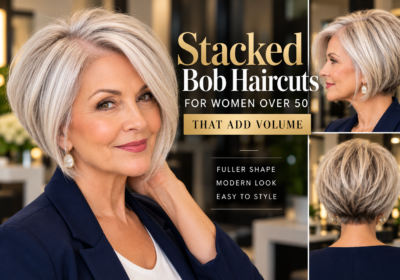
A stacked bob is one of those haircuts that makes more sense when you look at it from the back.
From the front, it may appear to be a polished short bob. But the real work happens behind the head, where shorter graduated layers build into longer ones and create a naturally fuller silhouette.
For women over 50, that structure can be particularly useful when hair has started to sit flatter at the crown or when a traditional one-length bob feels heavy and lacks movement.
The secret, however, isn’t simply adding more and more layers.
A beautiful stacked bob depends on where the graduation begins, how much weight is preserved and how the back connects to the longer front sections.
Get those details right and the haircut can create lift without looking overly teased, rounded or dated.
Why a Stacked Bob Creates Volume
The word stacked refers to the graduated layers through the back of the haircut.
Instead of leaving the hair at one uniform length, the nape is cut shorter and the layers gradually become longer as they move upward.
That construction changes the silhouette.
The shorter layers underneath support the longer hair above them, creating natural lift through the back and crown. Current hairstyling references describe this graduation as the defining mechanism behind the stacked bob’s fuller shape. Latest-Hairstyles.com
That means the volume is built into the haircut rather than relying entirely on teasing, heavy root products or daily styling.
And this is exactly why the back view matters so much.
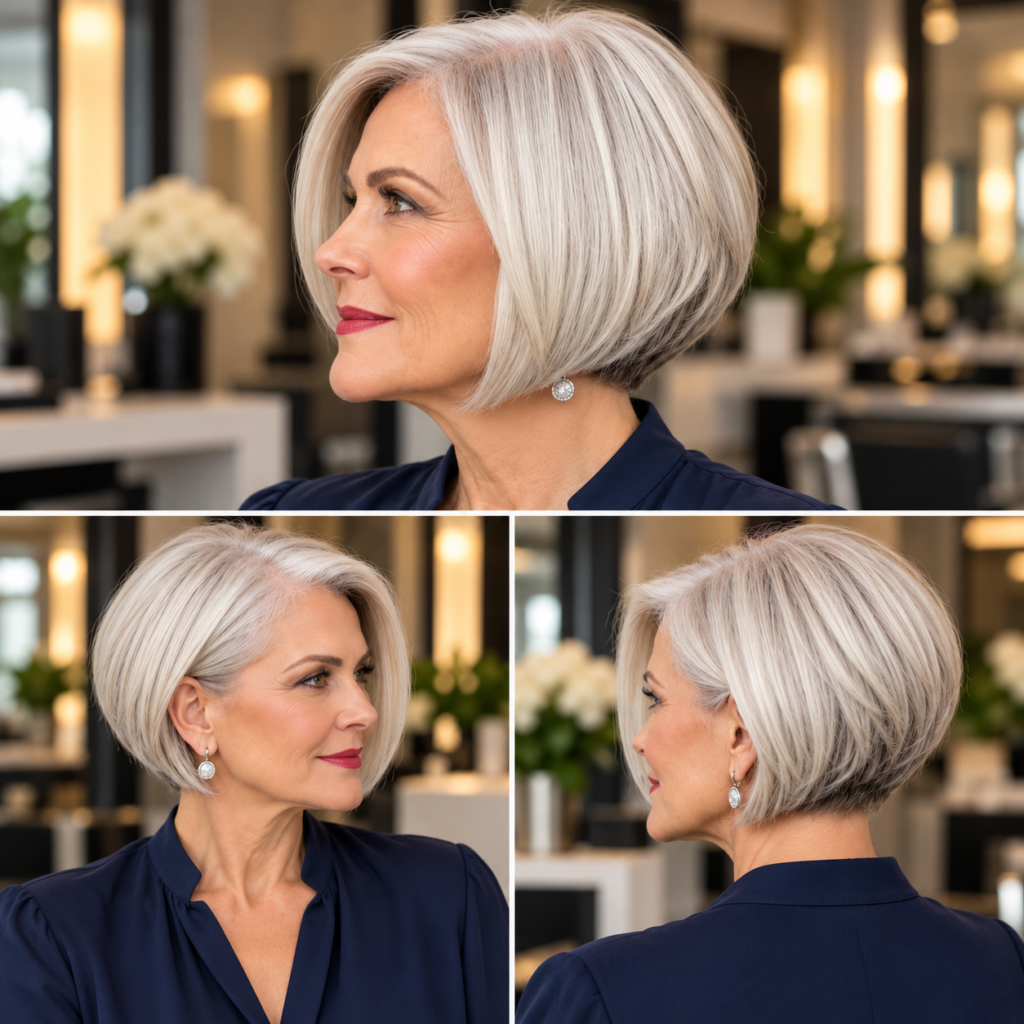
Put it immediately after this section. It demonstrates the architecture perfectly: side profile, longer front and graduated back.
The Soft Stacked Bob: Volume Without the “Stacked” Look
Not every stacked bob needs a dramatically rounded back.
In fact, a softer stack is often the more sophisticated option.
The graduation begins lower and transitions gradually into the upper layers, creating subtle lift rather than an obvious shelf of volume.
From the front, it can look almost like a classic bob.
Turn to the side, however, and you see a gently elevated back and a cleaner neckline.
This is a good direction if you want the benefits of a stacked haircut without an exaggerated silhouette.
Ask your stylist for: soft graduation through the back, a clean nape and enough length on top to maintain movement.
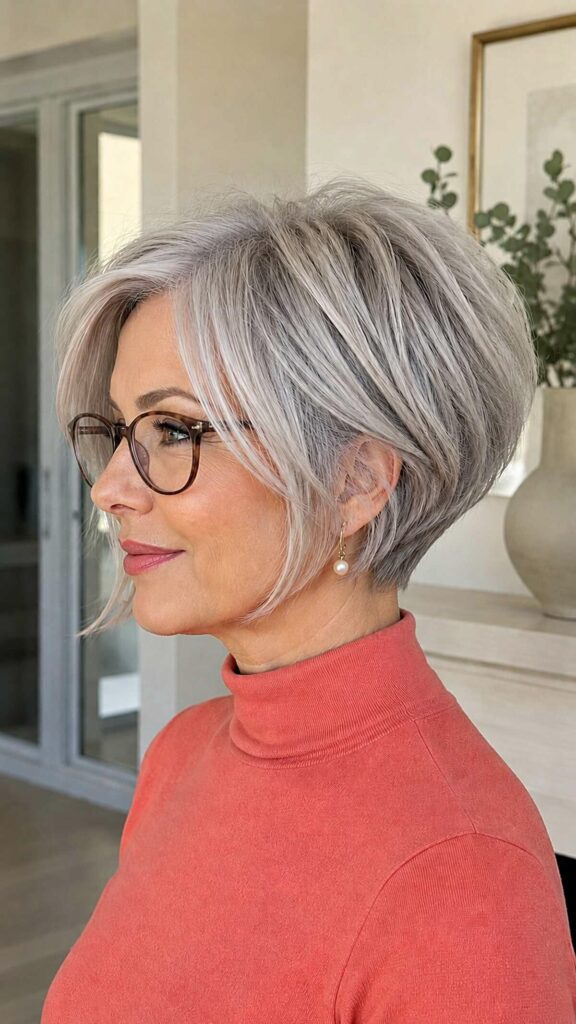
A Silver Stacked Bob Can Make the Shape Even More Visible
Silver, gray and dimensional blonde hair work particularly well with a stacked shape because variations in tone make the layers easier to see.
Instead of appearing like one solid block of hair, lighter and darker strands emphasize the direction of the graduation.
This is especially beautiful with a side part and slightly longer front pieces.
The haircut provides the structure.
The dimensional color simply makes that structure more visible.
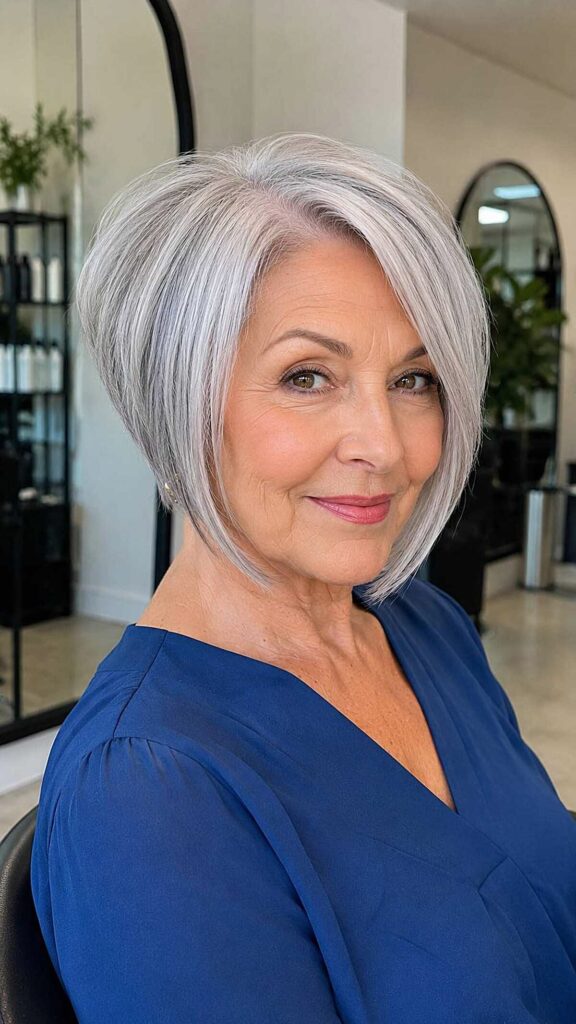
Where Should the Stack Begin?
This is one of the most important decisions in the entire haircut.
A higher stack creates more obvious lift and a stronger rounded silhouette.
A lower, softer stack creates a subtler transition and usually feels more relaxed.
Neither is automatically better.
The right position depends on your head shape, hair density, natural texture and how much volume you actually want.
If your main concern is a flat crown, slightly more graduation through the upper back may help support the shape.
If you already have plenty of density, a softer stack may be enough.
This is why copying a stacked bob from a single frontal photograph can be risky.
Always look at the back.
The Longer-Front Stacked Bob
Keeping the front slightly longer changes the entire personality of a stacked bob.
The back provides lift while the longer front sections create a cleaner vertical or diagonal line around the face.
This combination prevents the haircut from becoming uniformly round.
It can also make the style feel more contemporary because there is a clear difference between the compact back and the softer front.
The angle doesn’t need to be extreme.
Sometimes an extra inch of length toward the front is enough to create a beautiful profile.
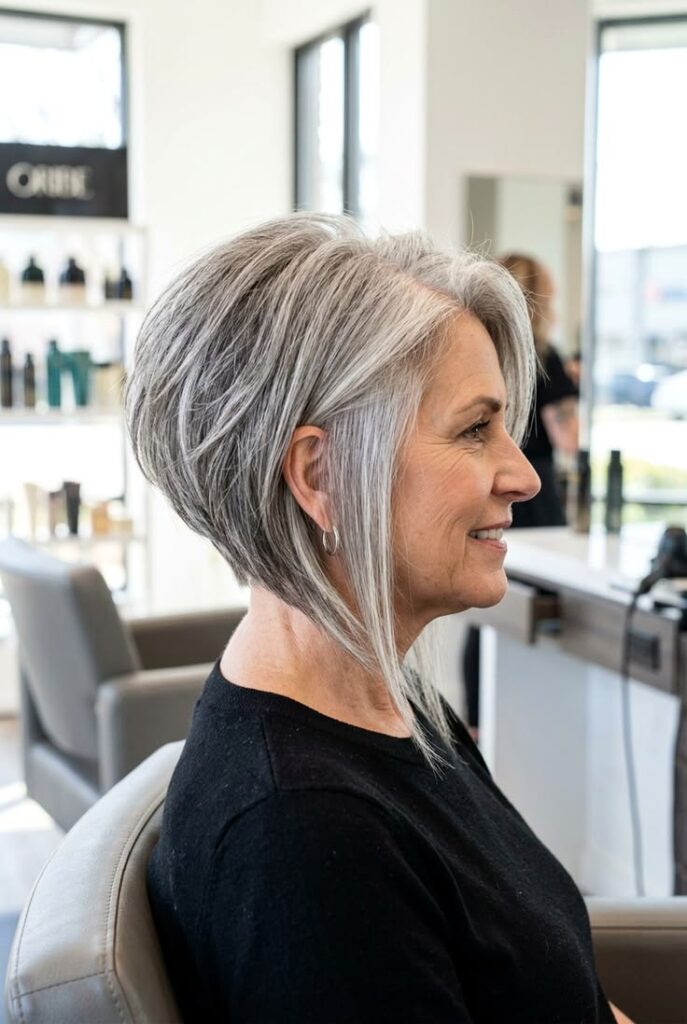
Stacked Bob for Fine Hair
Fine hair is one of the most obvious candidates for a carefully constructed stacked bob.
When fine hair is cut into a completely flat, one-length shape, it may lack enough density to create visible fullness through the crown.
Graduation can help create structural lift.
But there is an important warning:
Fine hair still needs weight.
Too many short layers can remove so much density that the ends begin looking thin.
The goal is not maximum layering.
It’s strategic graduation with enough perimeter left intact to keep the haircut looking substantial.
This is also why a softly stacked bob can sometimes work better than an aggressively layered version.
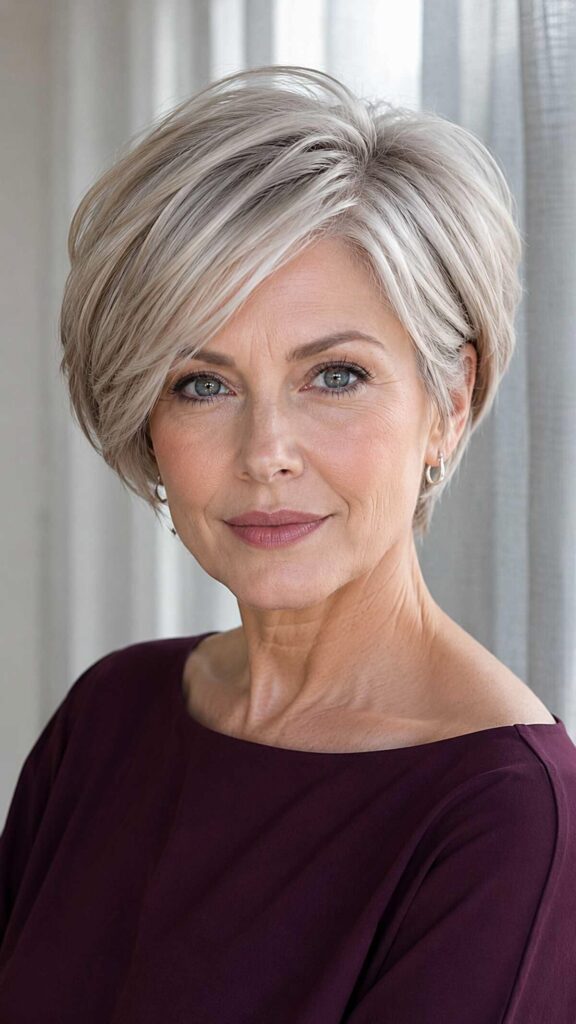
Stacked Bob for Thick Hair
The same haircut can solve a completely different problem on thick hair.
Instead of trying to create the illusion of more hair, the stylist may use graduation to control where all that density sits.
A shaped nape prevents excess weight from accumulating at the bottom, while internal weight removal can keep the back from becoming bulky.
The surface should still look full and polished.
The difference is underneath.
For thick hair, the objective isn’t necessarily more volume.
It’s better-shaped volume.
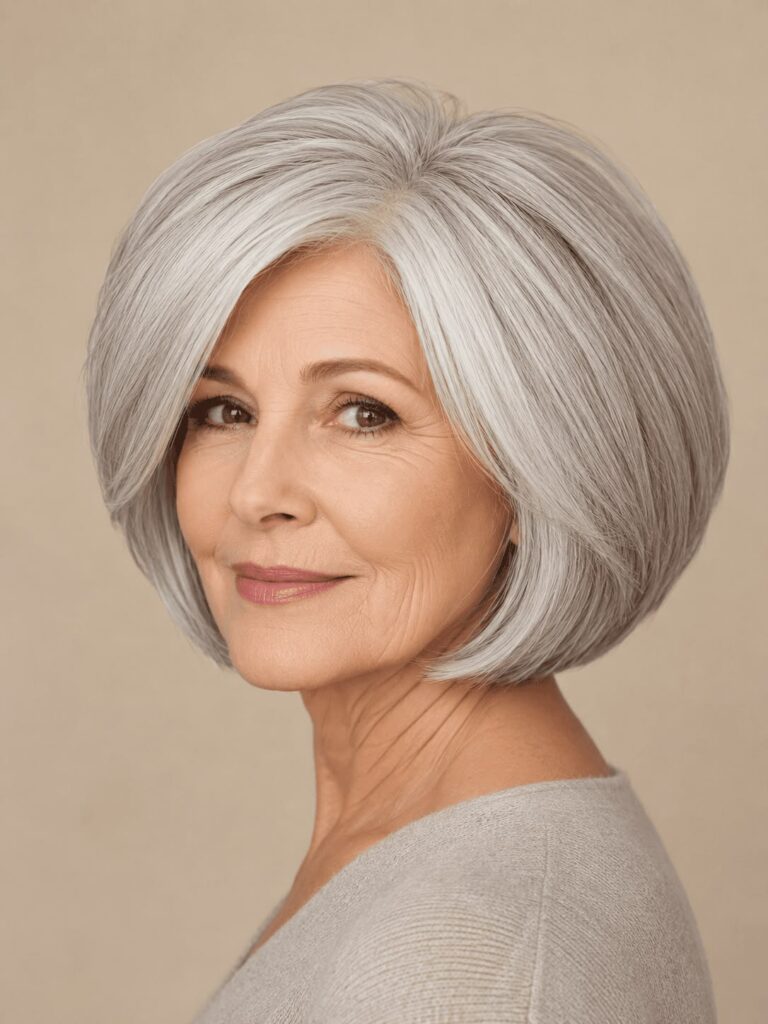
A Stacked Bob With Side-Swept Bangs
Side-swept bangs work particularly well with this haircut because they introduce movement in the opposite direction from the structured back.
Instead of having volume concentrated only behind the head, the fringe brings some of that movement toward the face.
The result feels softer.
Longer bangs can also blend naturally into the front sections of the bob, which helps connect the entire haircut.
For a more modern finish, keep the fringe light enough to move rather than creating a dense horizontal block across the forehead.
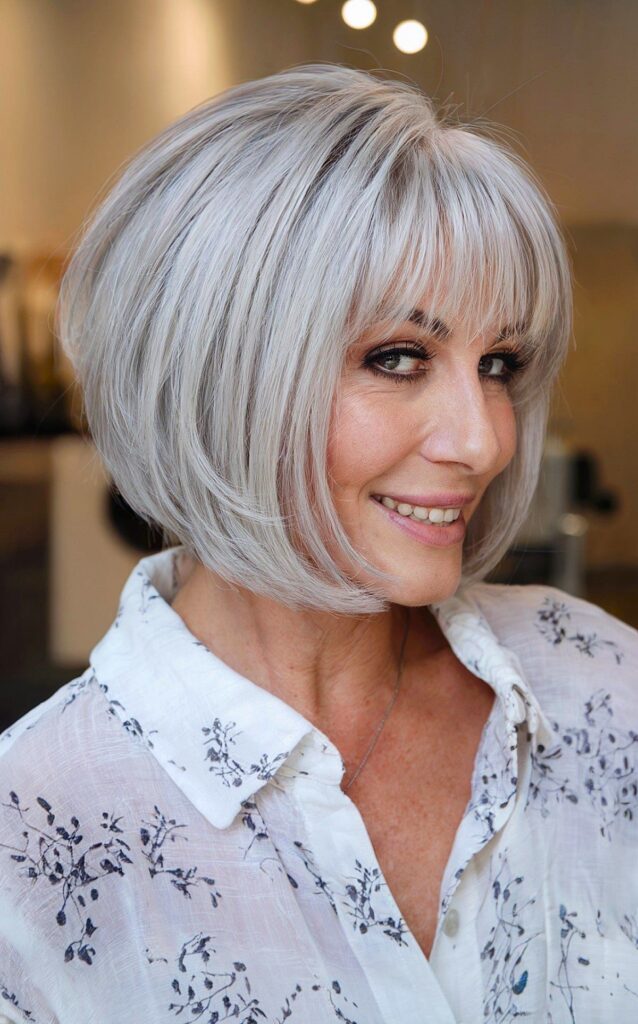
A Stacked Bob With Crown Lift
If your primary concern is a crown that goes flat, pay particular attention to the transition between the stacked back and the top layers.
The haircut needs enough structure underneath to support the crown—but the top shouldn’t be cut so short that it stands upright.
A little length allows the hair to move while the graduation beneath provides support.
This creates lift rather than puffiness.
And that distinction is important.
The goal isn’t to make the hair look artificially large.
It’s to prevent the silhouette from collapsing against the head.
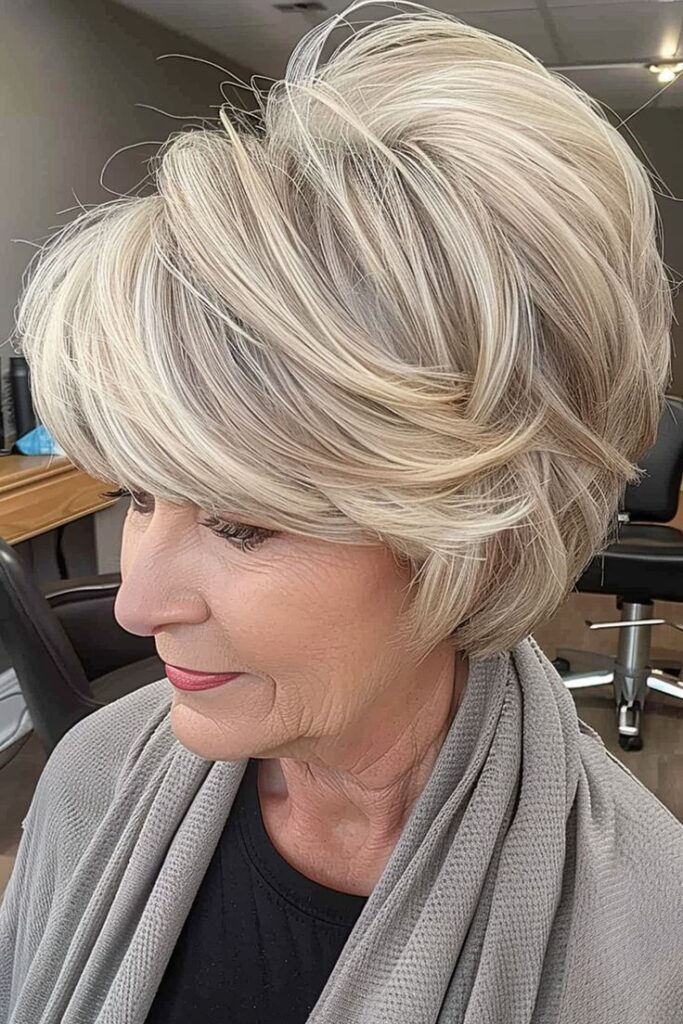
Wavy Stacked Bob
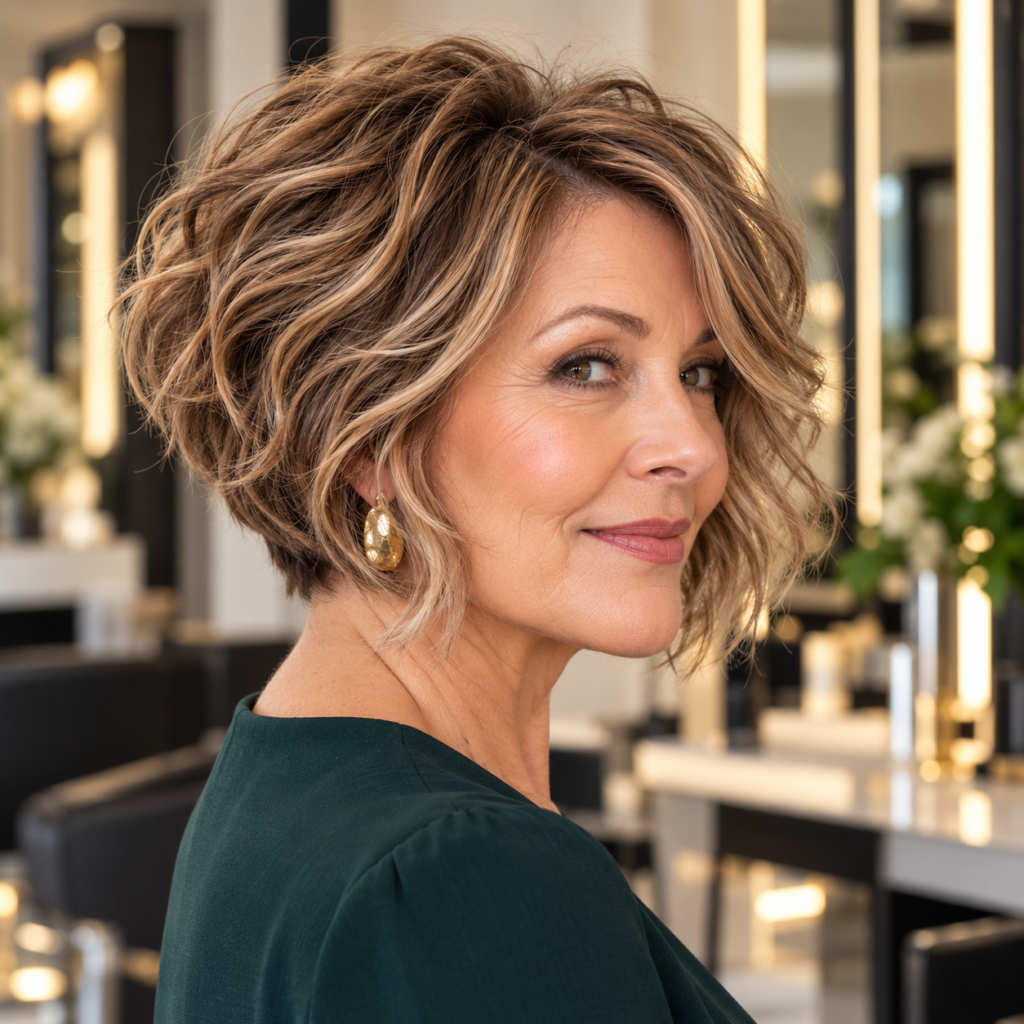
A stacked bob doesn’t have to be perfectly smooth.
Natural wave can soften the geometry beautifully.
Instead of seeing every graduated layer as a precise line, the movement blends the layers together and produces a more relaxed silhouette.
For naturally wavy hair, the stylist should account for how much the hair contracts when dry.
Cutting the stack too aggressively while the hair is wet can create much more volume than expected once the waves return.
A softer graduation usually gives the natural texture more room to behave.
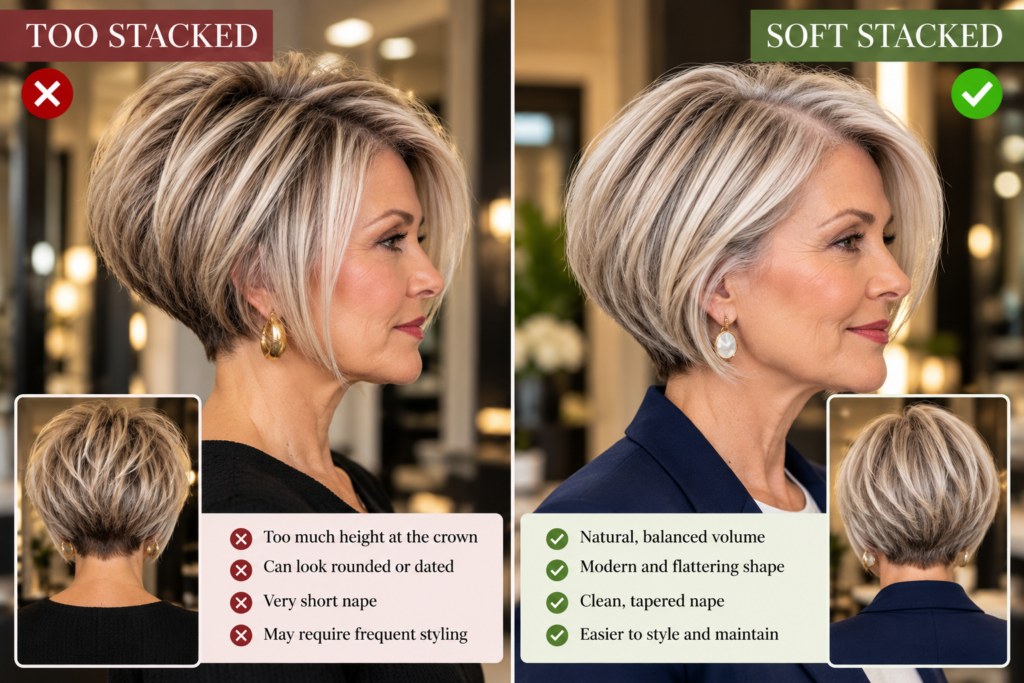
When a Stacked Bob Becomes Too Stacked
This is where the haircut can go wrong.
If the graduation is too aggressive, the back may become extremely rounded while the nape becomes very short.
The result can feel rigid rather than modern.
You may also end up needing frequent styling simply to maintain the intended shape.
A modern stacked bob doesn’t need to announce itself from across the room.
Often the most flattering versions are the ones where you notice beautiful volume first and the technical stacking second.
Think:
soft lift → clean shape → natural movement.
Not:maximum height → maximum layers → maximum roundness.
The Nape Is Part of the Haircut
It’s easy to focus on the crown because that’s where the volume appears.
But the nape is what gives that volume a foundation.
If too much hair is left at the neckline, the bottom can become heavy and compete with the lift above it.
A cleaner, slightly tapered nape creates separation between the neck and the fuller part of the bob.
That contrast makes the upper shape appear even more defined.
Graduated bob guidance likewise emphasizes the relationship between crown and nape when creating the full-bodied silhouette.
What to Ask Your Hairstylist
Instead of simply saying:
“I want a stacked bob.”
describe the result you want.
If your hair goes flat:
“I’d like soft graduation through the back to create natural crown lift, but I don’t want an exaggerated rounded stack.”
If you want a cleaner neckline:
“I’d like the nape shaped closely, with the graduation blending naturally into the longer layers above.”
If you want a modern silhouette:
“Keep some length toward the front and make the stack softer rather than very high.”
And take inspiration photos showing more than one angle.
A back view may actually be more useful to your stylist than the front.
How Often Does a Stacked Bob Need Trimming?
The more precise the back, the sooner you’ll notice growth.
As the nape grows, the lower edge becomes heavier and the graduation begins losing definition.
A softer stacked bob generally grows out more gracefully than a very tight, highly structured version.
Current hairstyling guidance commonly places maintenance for graduated/stacked shapes around the several-week range, with tighter structures requiring more frequent reshaping. haircut tips
If you prefer longer intervals between salon visits, tell your stylist before the haircut.
That can influence how aggressively the back should be graduated.
How to Style a Stacked Bob for Natural Volume
The haircut should do most of the work.
Start by directing the roots away from the scalp while drying rather than immediately flattening everything into place.
Concentrate on the crown and upper back.
A small or medium round brush can help create lift, but avoid turning every section under into an identical curve.
That can make the haircut look overly set.
Instead, aim for movement.
A lightweight root product may help fine hair, while thicker hair may need very little additional volume product.
The final shape should still look like hair, not a helmet.
The Best Stacked Bob Is Built for Your Hair
There isn’t one perfect stacked bob for every woman over 50.
Fine hair may benefit from controlled graduation that creates lift while protecting the perimeter.
Thick hair may need internal weight removed so the stacked back doesn’t become bulky.
Wavy hair requires enough length for its natural texture to form.
And someone who wants an extremely polished neckline will need a different cut from someone who prefers a softer grow-out.
The photograph gives you inspiration.
Your hair density and texture determine the construction.
Final Thoughts
Stacked bob haircuts for women over 50 can create beautiful volume because the fullness comes from the architecture of the haircut itself.
Shorter layers at the nape support gradually longer layers above, creating lift through the back and crown while longer front pieces can keep the silhouette soft and flattering.
But more stacking isn’t necessarily better.
The most modern versions balance graduation, weight, movement and a clean back shape.
When those elements work together, the result doesn’t simply look fuller.
It looks intentional from the front, side and back.