7 haircuts that make fine hair look thicker (Without adding too many layers)

Fine hair can be soft, beautiful, and easy to style, but the wrong haircut can quickly make it appear flatter or thinner than it actually is. The solution isn’t always adding more layers or creating extreme volume. In many cases, the shape of the haircut matters much more than the amount of layering.
A strong perimeter, strategically placed texture, and the right length can help fine hair appear fuller while still keeping plenty of natural movement.
If you’re ready for a change, these seven haircuts are designed to make fine hair look thicker without overwhelming it with unnecessary layers.
1. Blunt Bob With a Full Perimeter
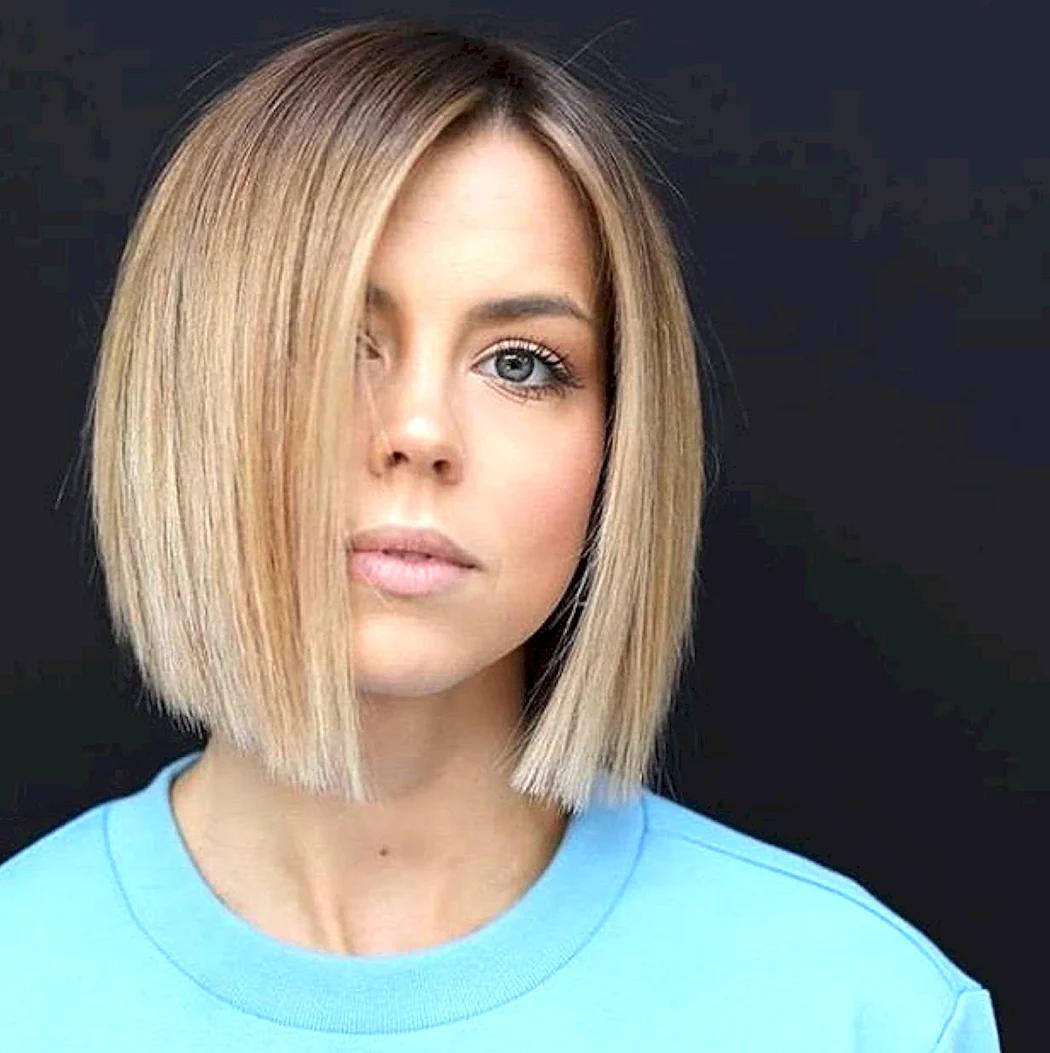
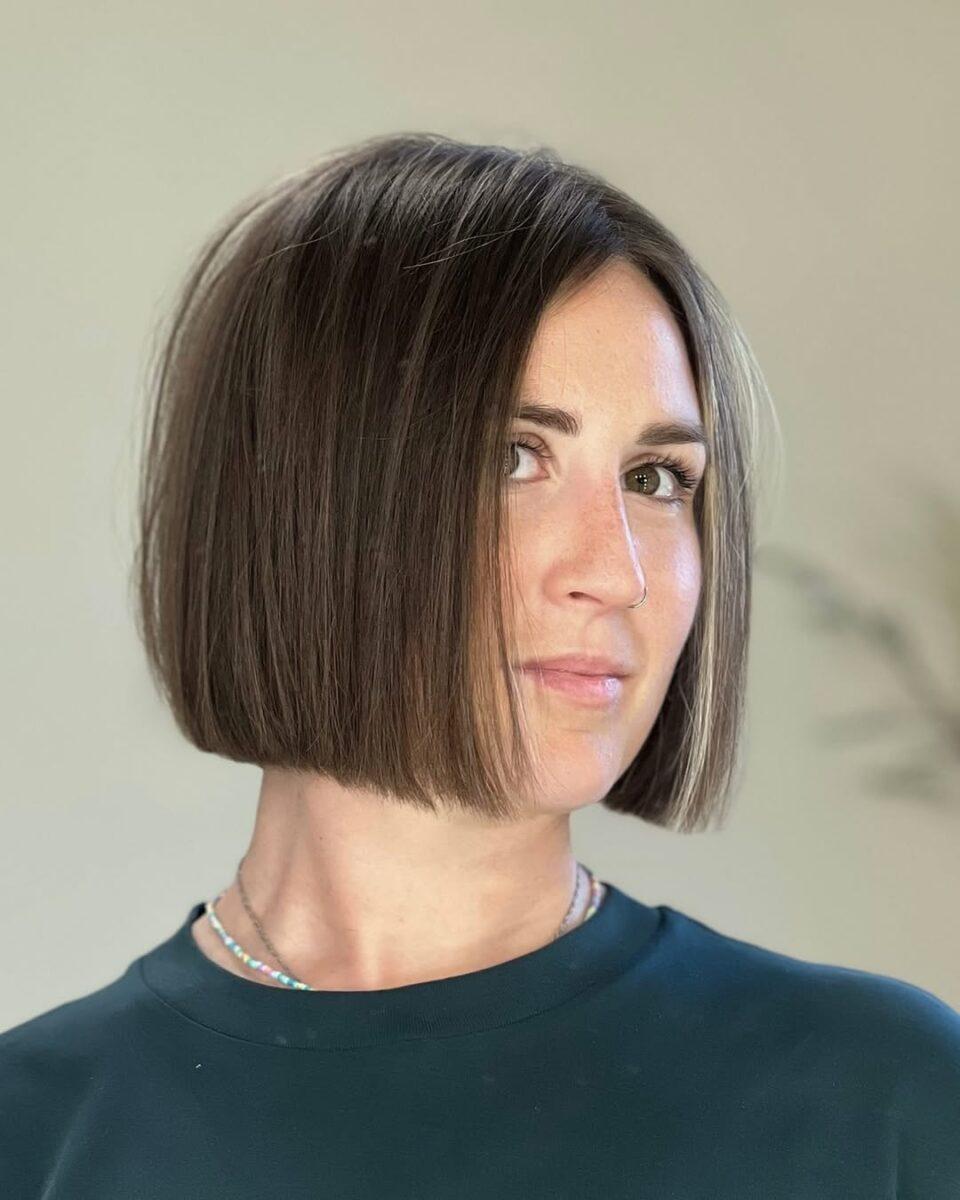
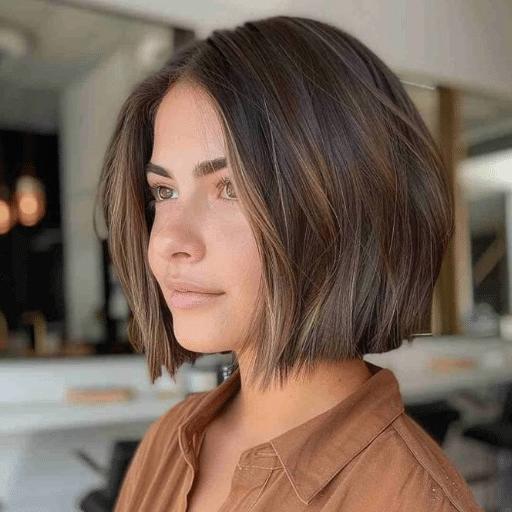
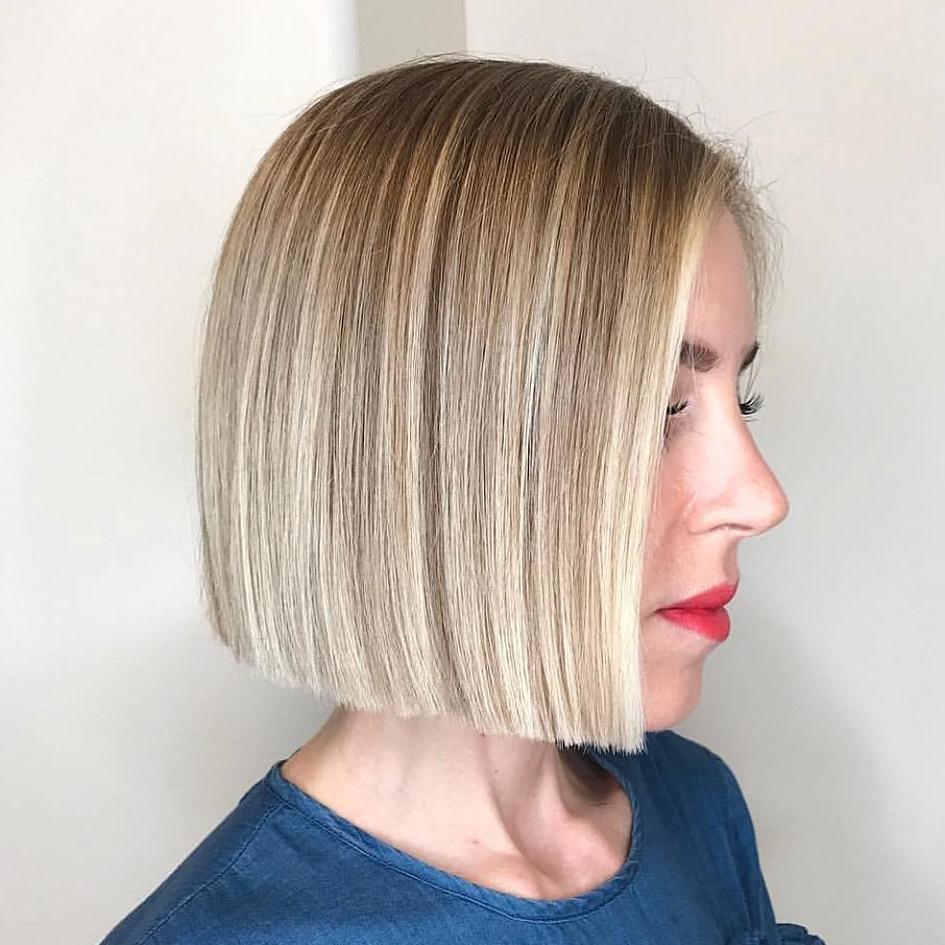
A classic blunt bob remains one of the most reliable choices for fine hair.
Instead of heavily layering the ends, the hair is cut along a stronger, more consistent line. This creates the appearance of greater density because the ends visually sit together rather than separating into thin sections.
A bob that falls somewhere between the jaw and chin can be particularly flattering when the goal is to create a fuller-looking silhouette.
Why it works for fine hair:
The solid perimeter helps the ends appear thicker and gives the entire haircut more structure.
Styling tip: Keep the finish smooth but not completely flat. A slight bend through the lengths can add softness without sacrificing the strong outline.
If you’re specifically looking for a shorter style, see our guide to bob haircuts for fine hair over 50.
2. Softly Layered Jaw-Length Bob

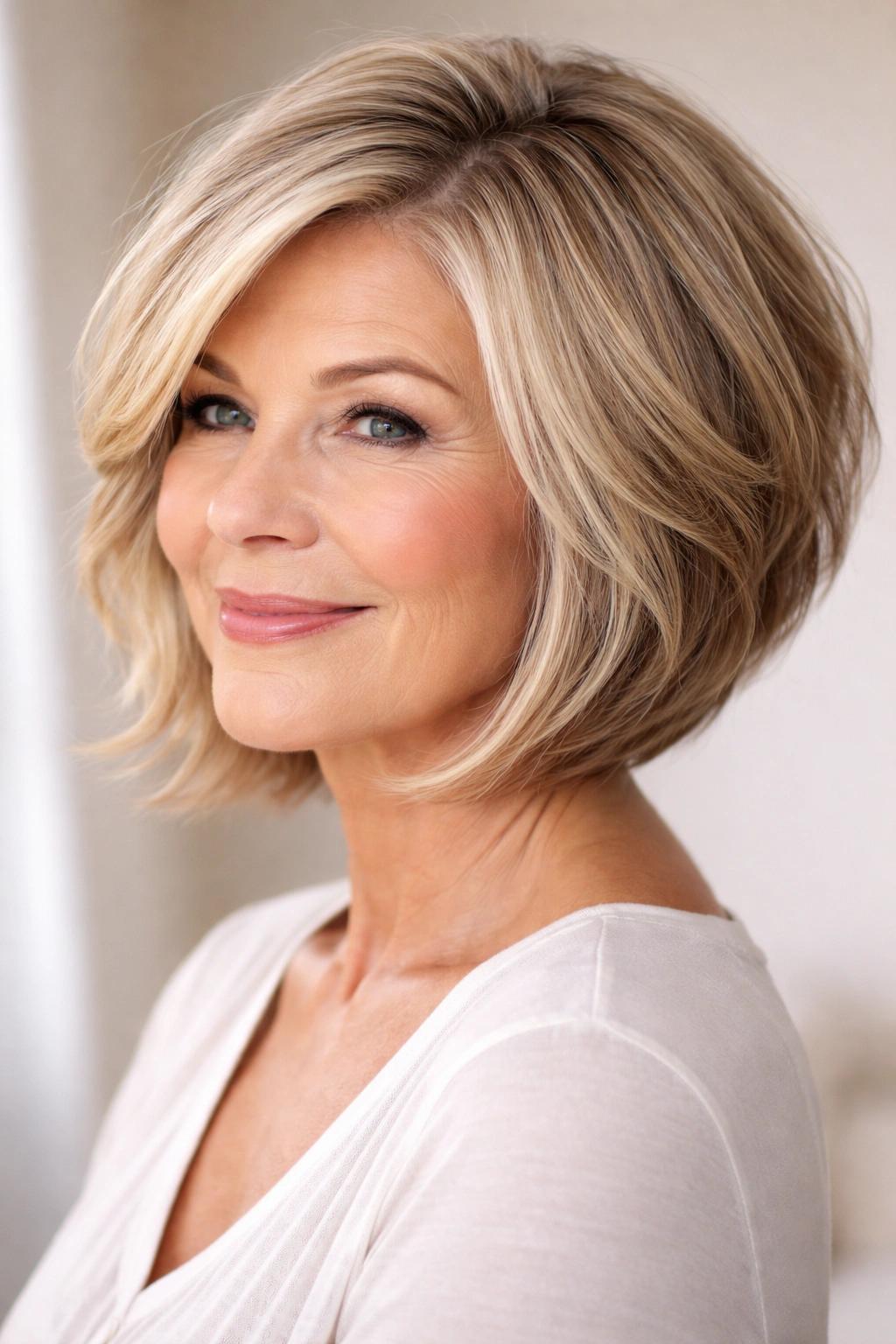
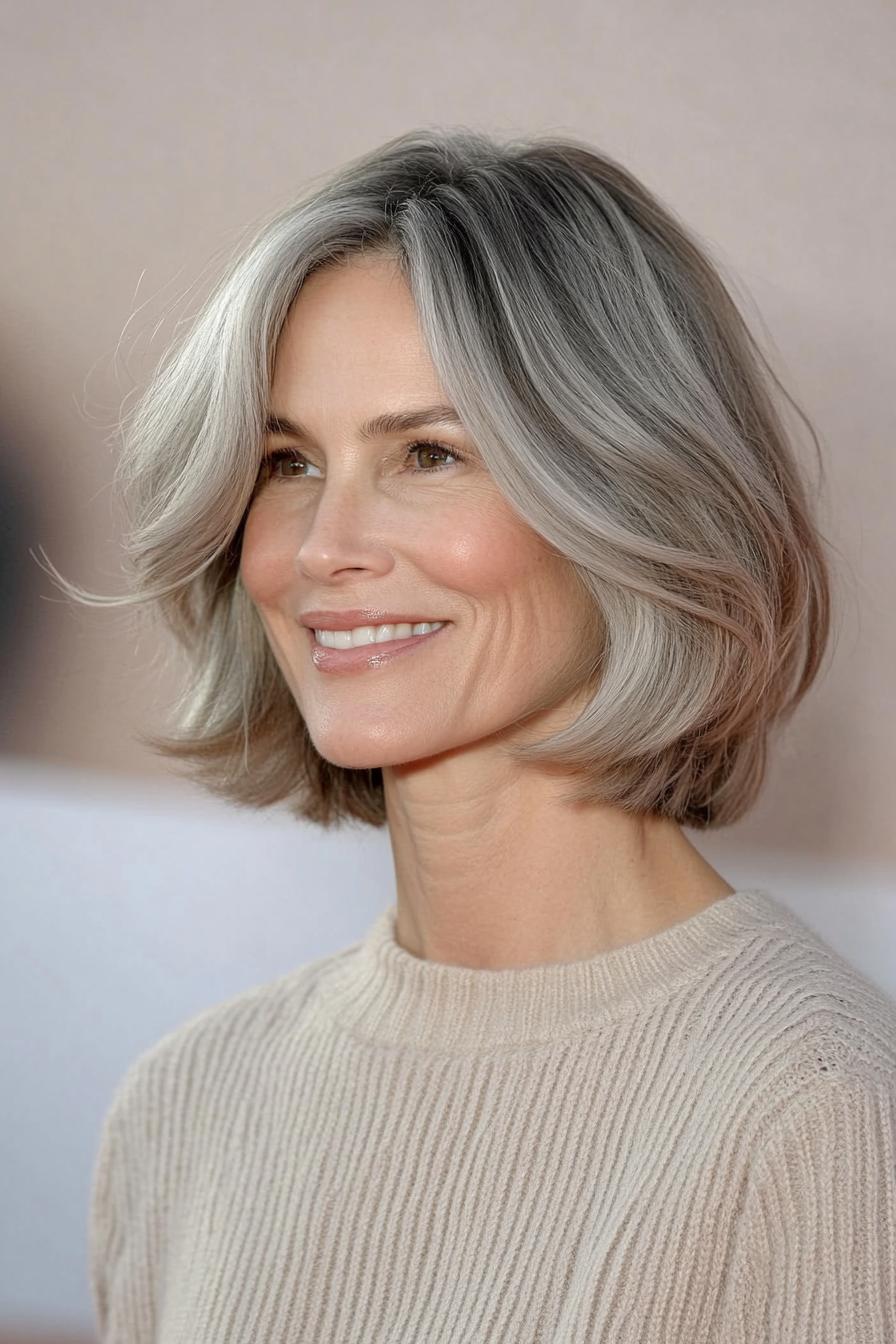
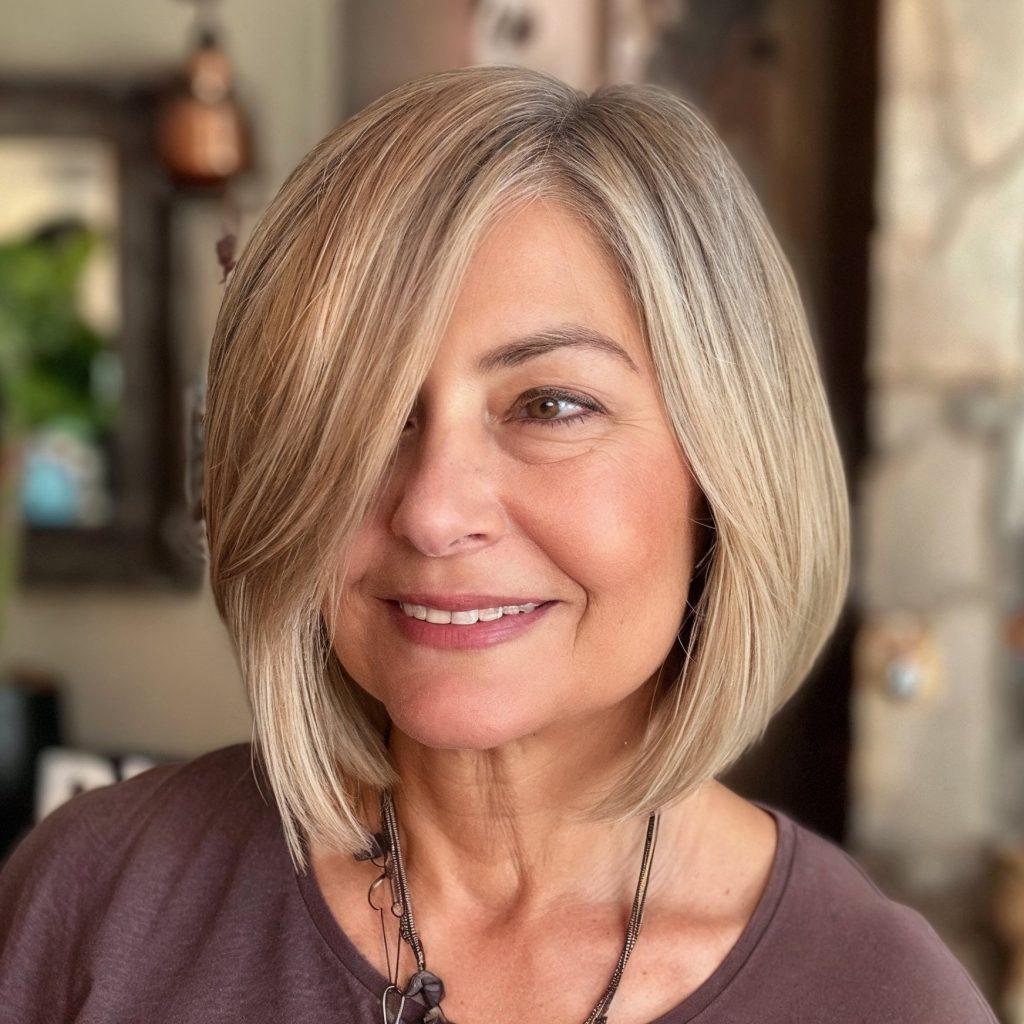
Layers aren’t necessarily the enemy of fine hair. The key is where they are placed and how much hair is removed.
A jaw-length bob with very subtle layering can introduce movement around the crown while preserving fullness through the lower portion of the haircut.
Rather than creating dozens of visible layers, the goal is to maintain a strong base with just enough internal movement to prevent the style from looking heavy or rigid.
Why it works for fine hair:
You get softness and movement without sacrificing the density of the ends.
This is an especially versatile option if you like polished haircuts but don’t want a completely blunt finish.
3. Longer Pixie With Crown Lift
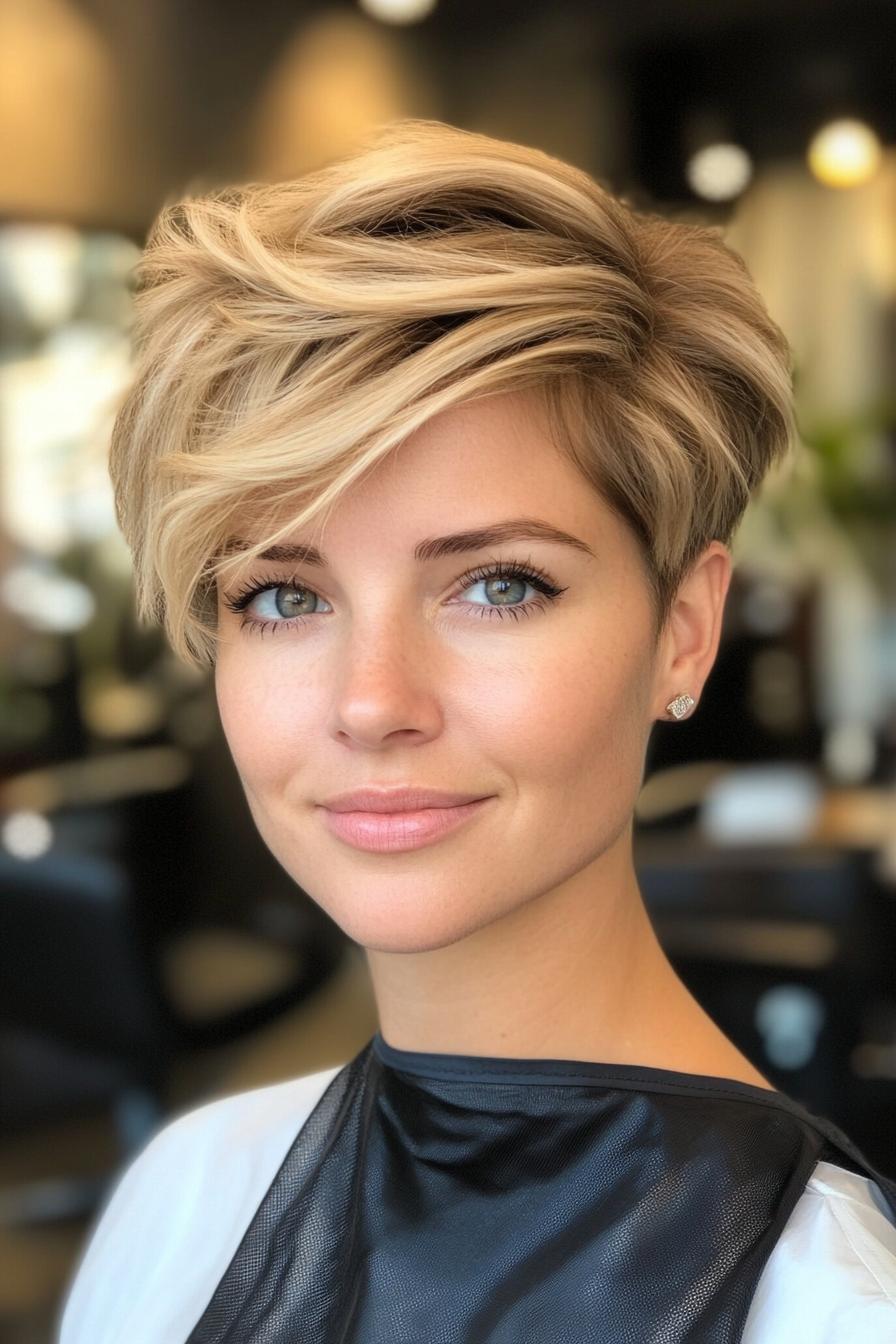
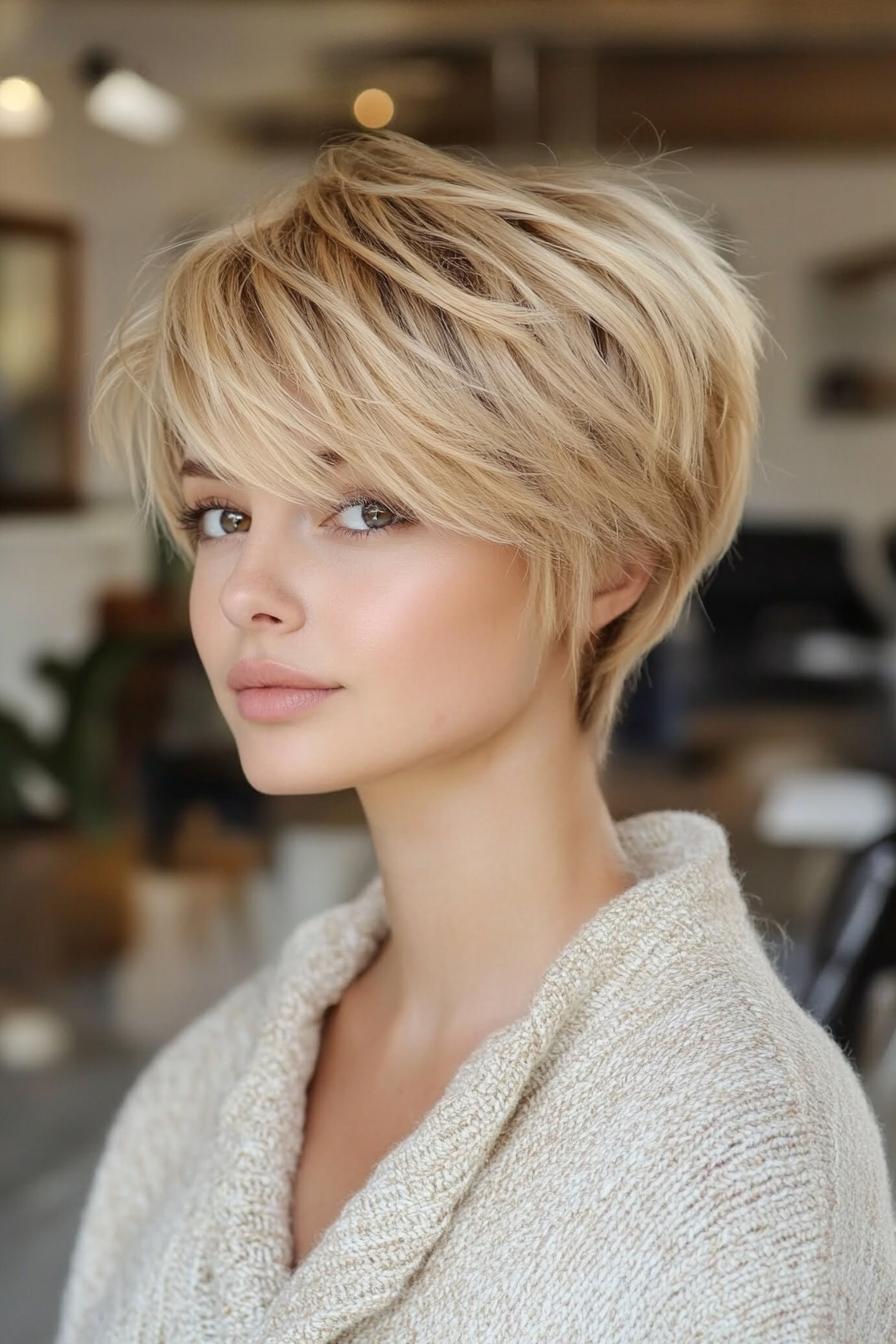
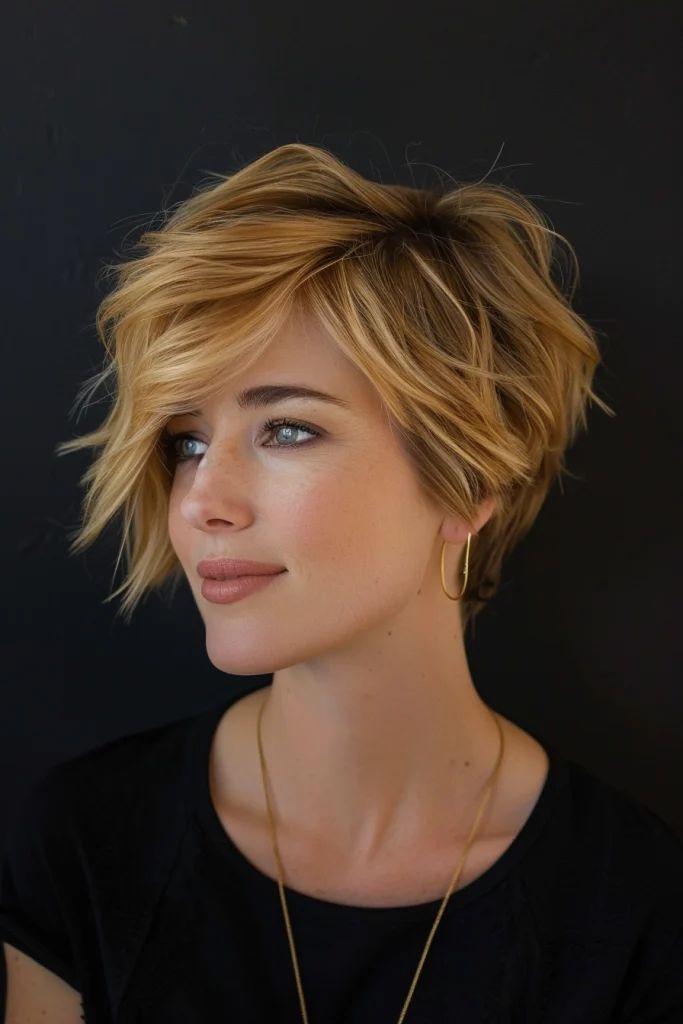
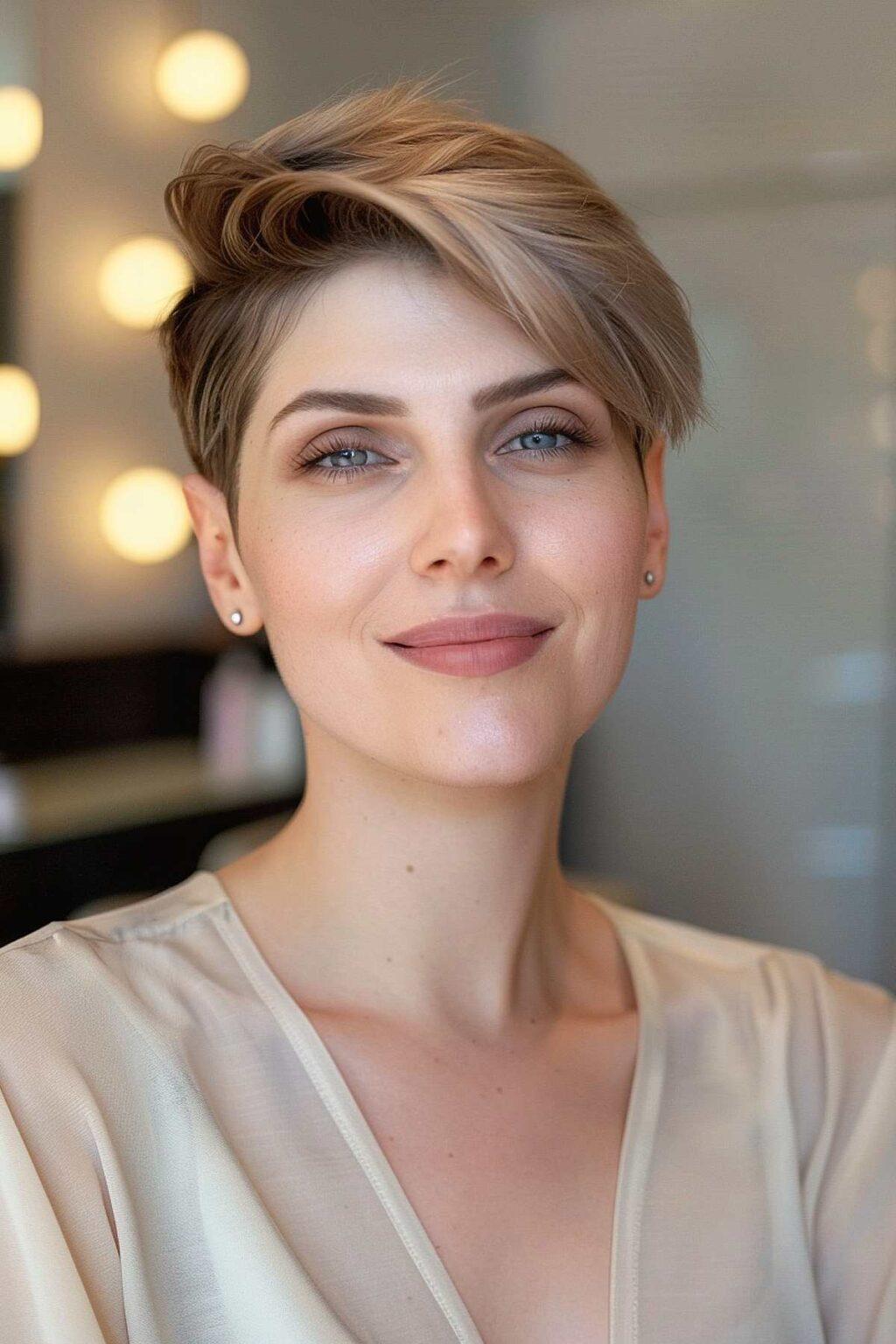
A longer pixie can make fine hair surprisingly easy to manage.
Keeping additional length through the crown provides enough hair to create gentle lift, while a side-swept fringe prevents the haircut from appearing overly severe.
The important part is avoiding excessive thinning. Fine hair doesn’t necessarily need to be aggressively textured simply because it’s short.
Why it works for fine hair:
Shorter lengths reduce the weight pulling the hair downward, while controlled crown texture creates the appearance of natural volume.
For a softer result, keep the fringe slightly longer and allow a few pieces to frame the face.
4. Rounded Bixie With Soft Texture
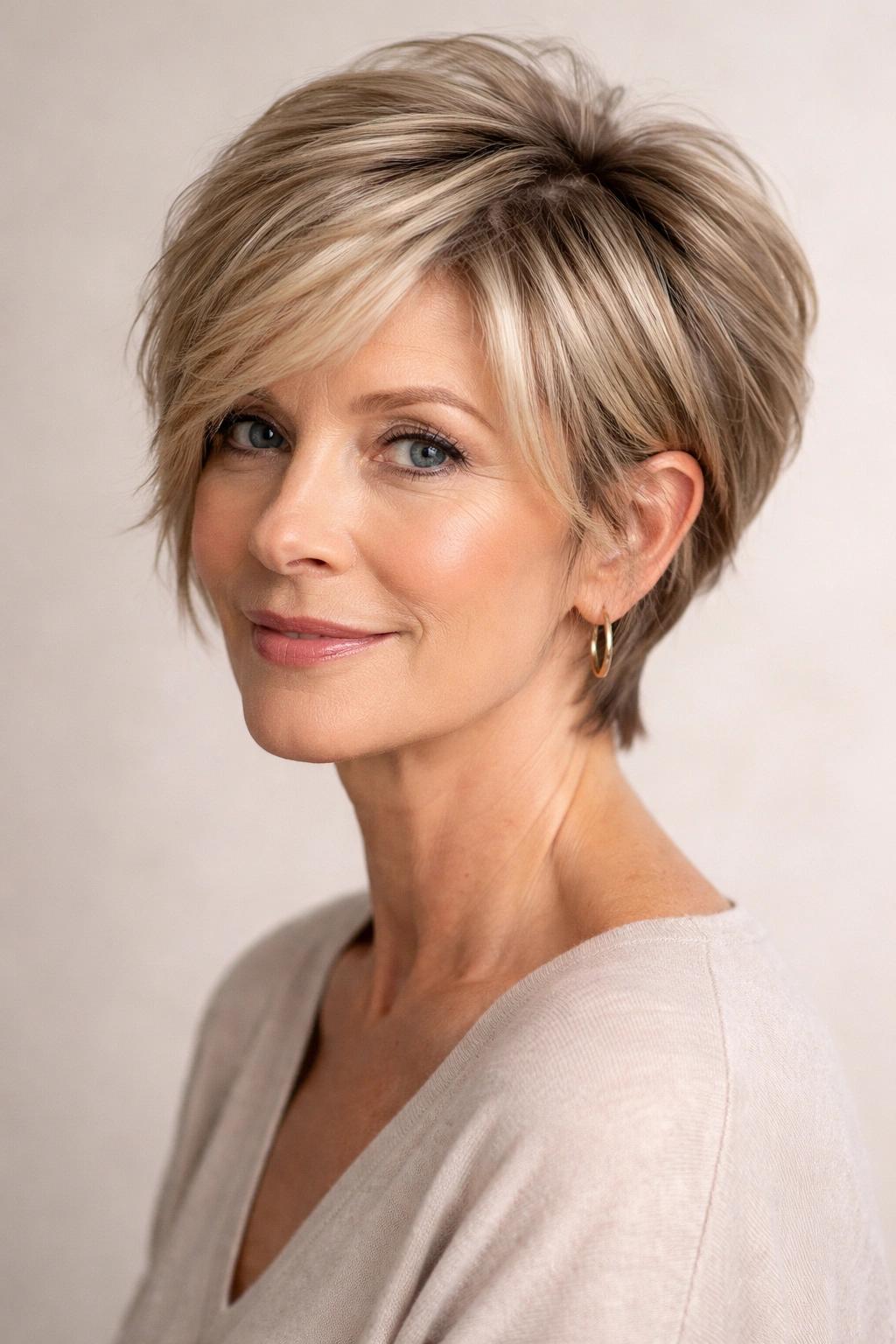
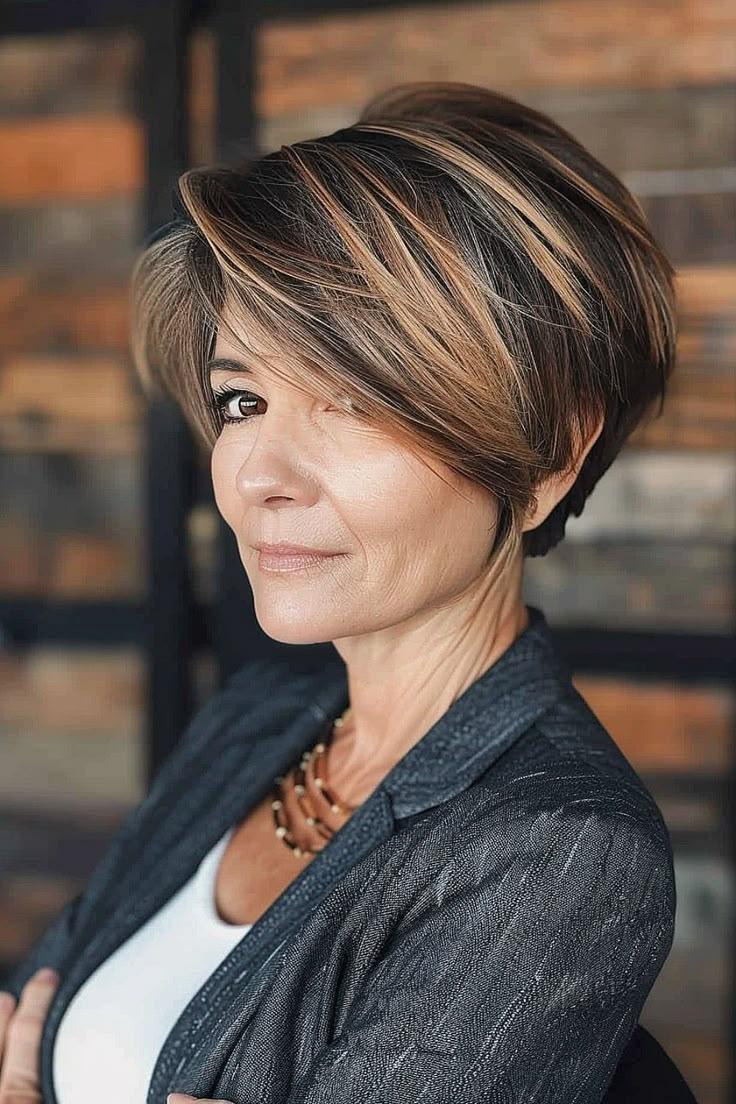
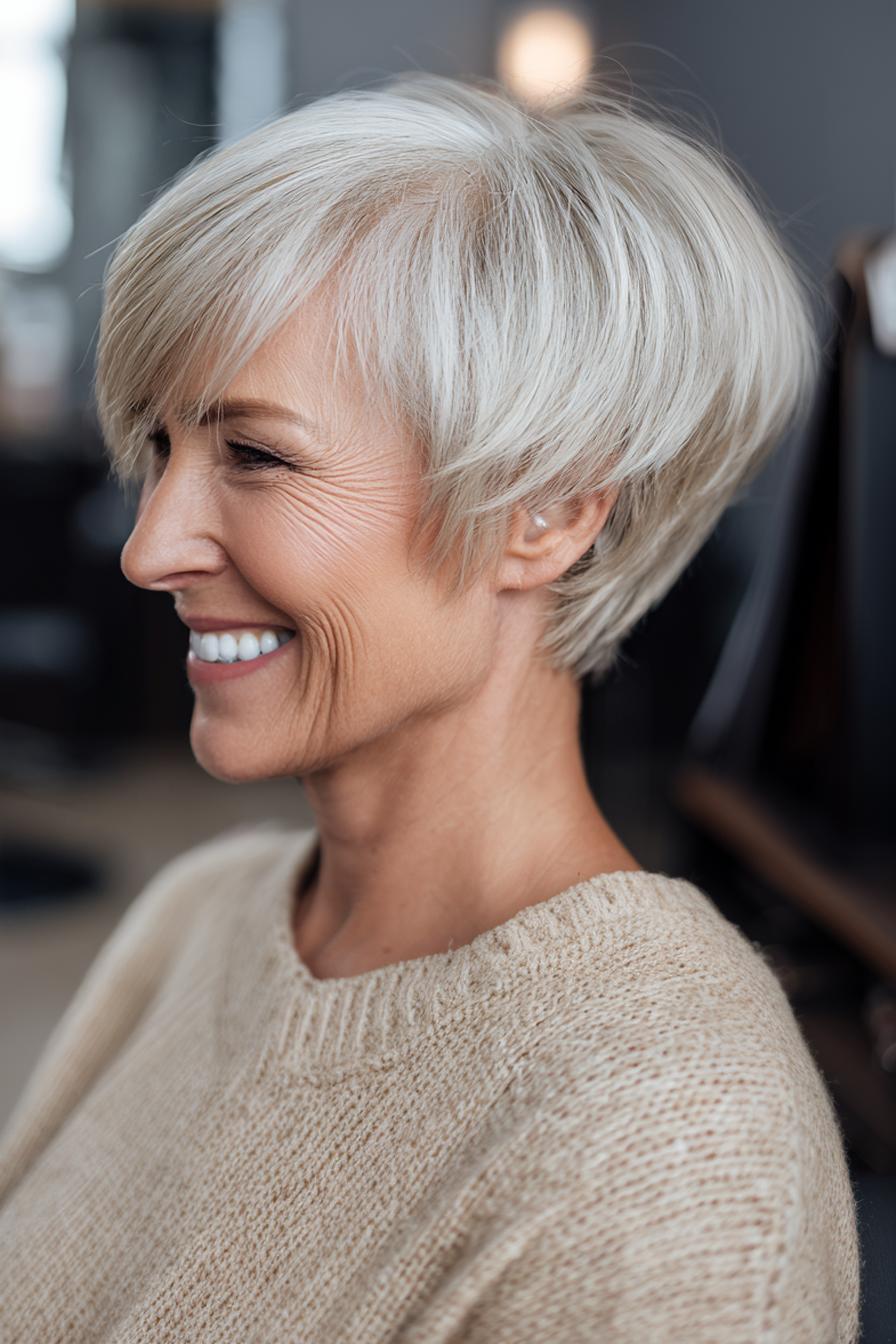
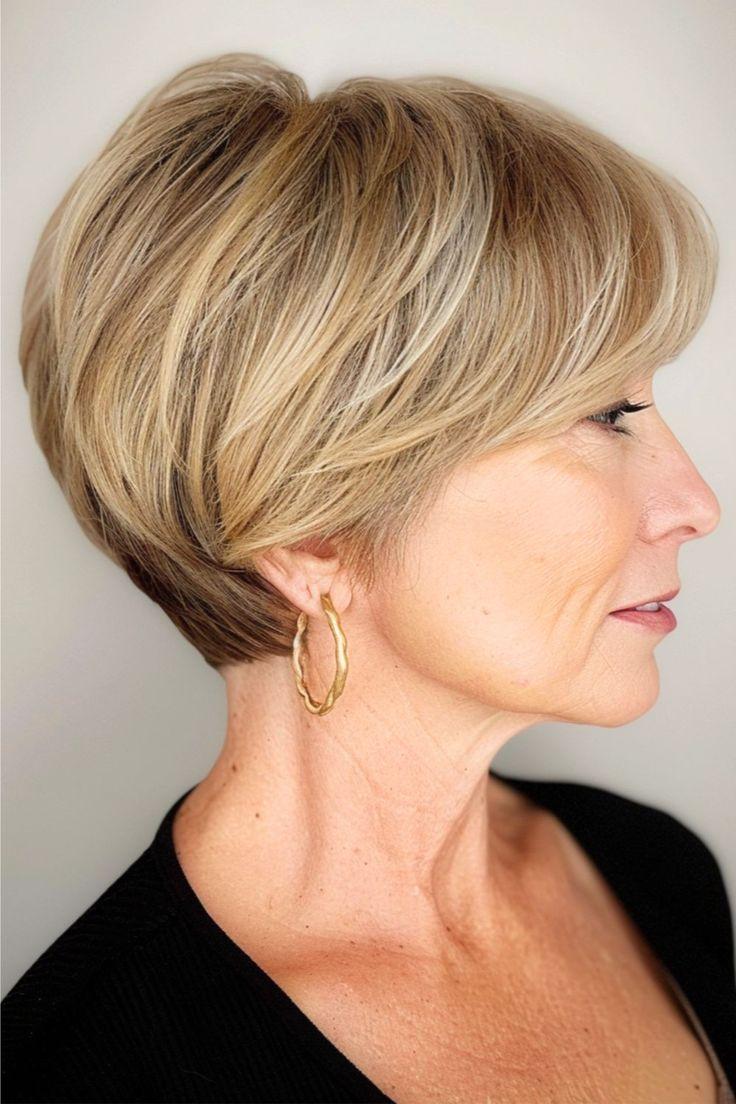
Can’t decide between a bob and a pixie? A bixie offers elements of both.
The shape typically has the lightness and movement of a pixie while maintaining additional length around the sides and back.
For fine hair, a softly rounded bixie can create an especially flattering silhouette because the hair doesn’t need enormous volume to appear full.
Why it works for fine hair:
The rounded shape creates visual fullness while strategically placed texture prevents the haircut from becoming too heavy.
It’s also a good option for anyone who wants short hair without committing to a very cropped pixie
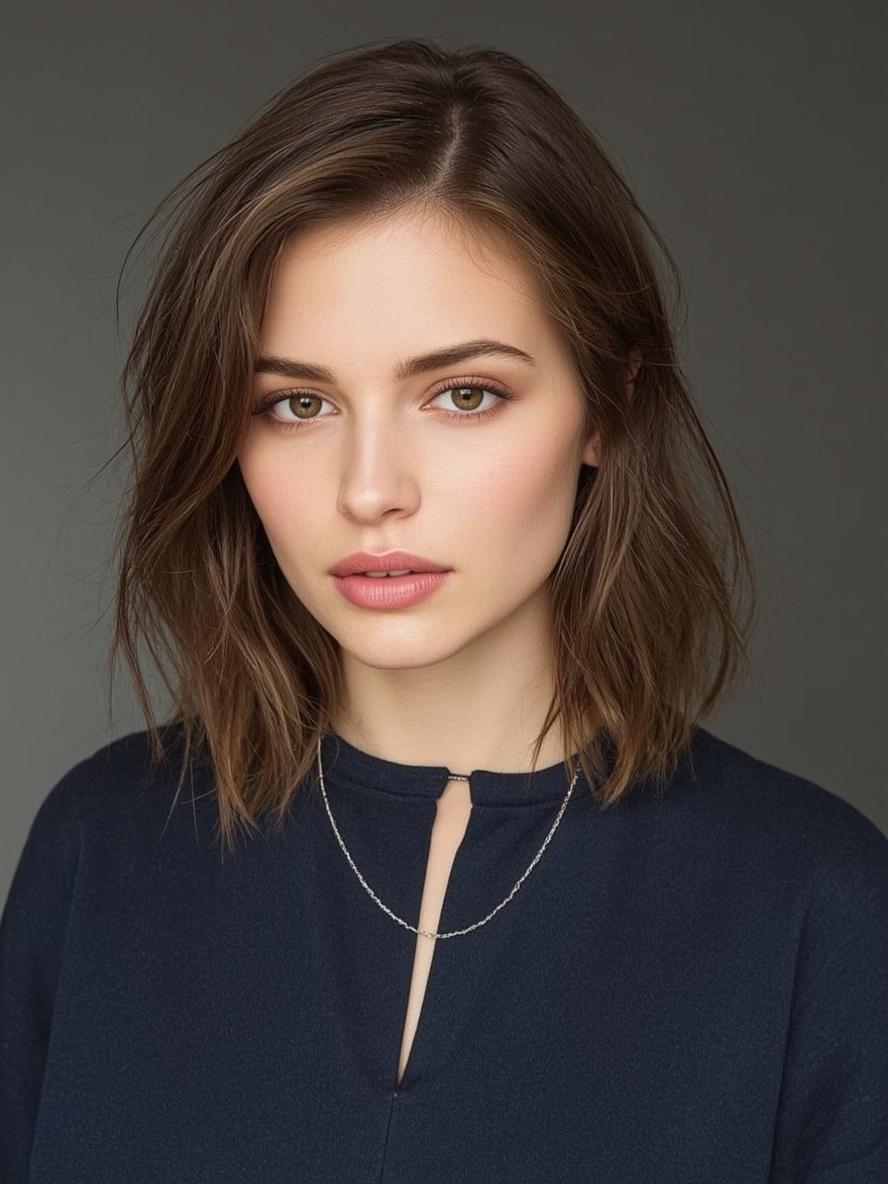
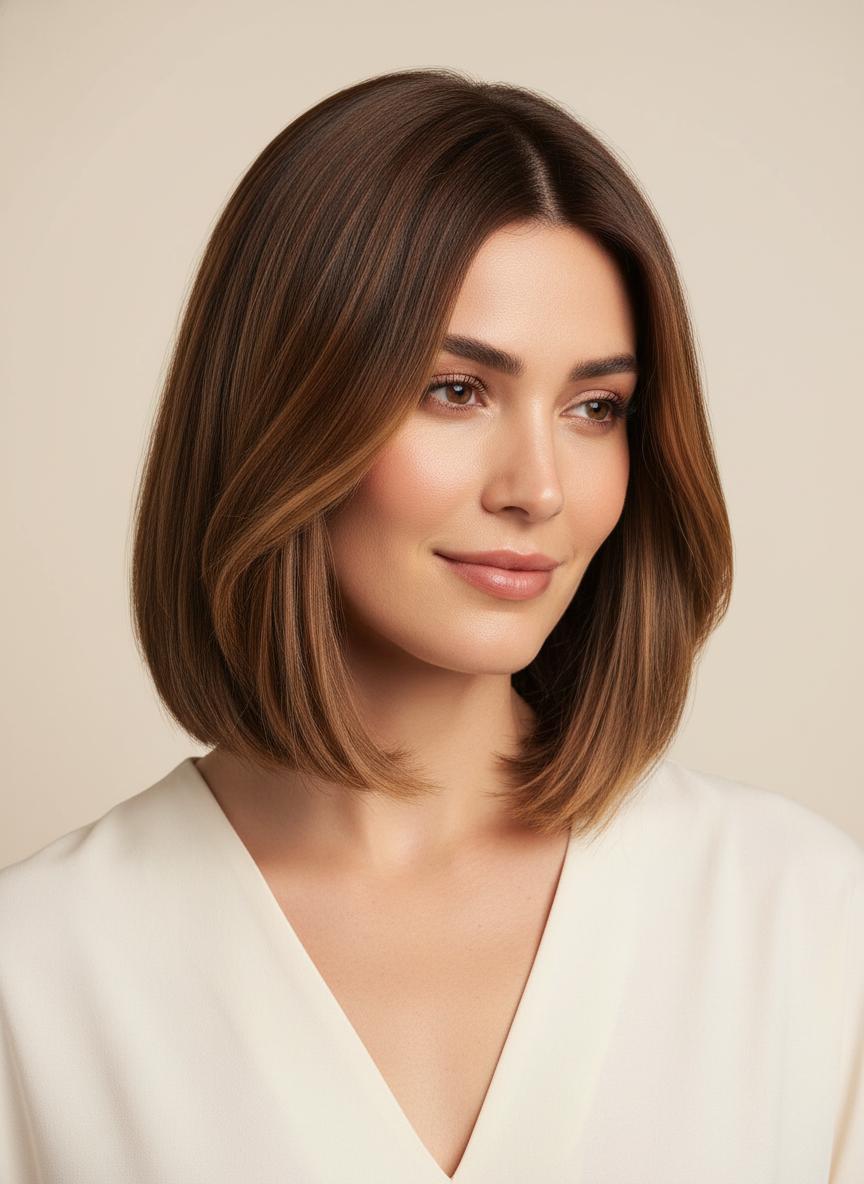
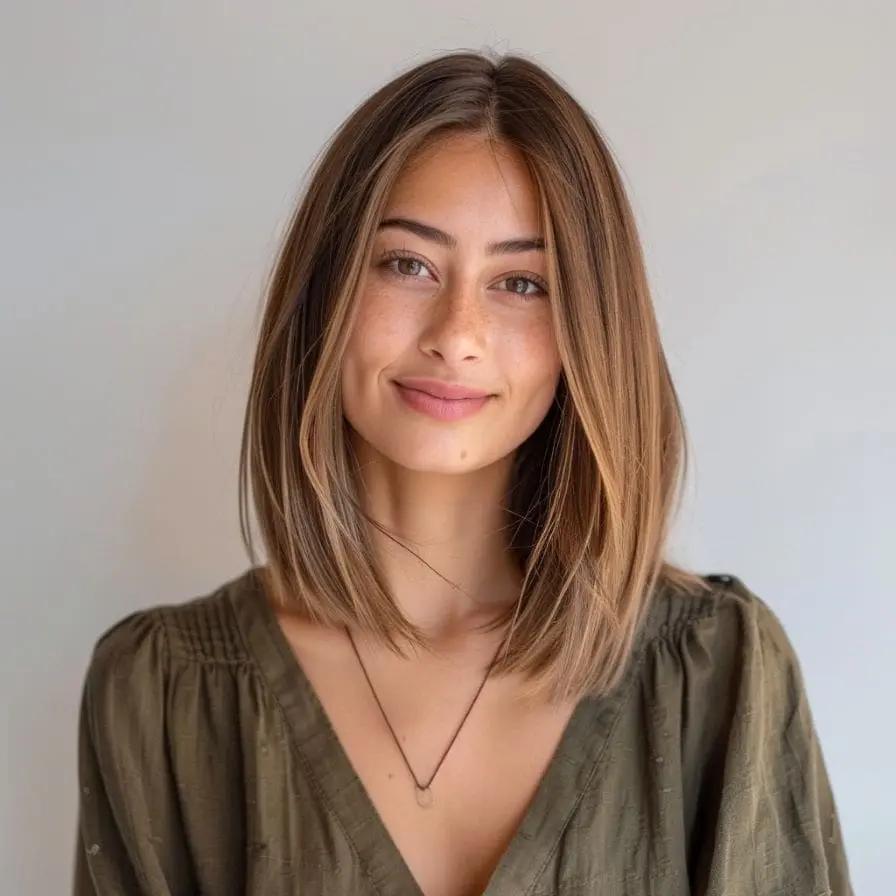
5. Collarbone Lob With Minimal Layers
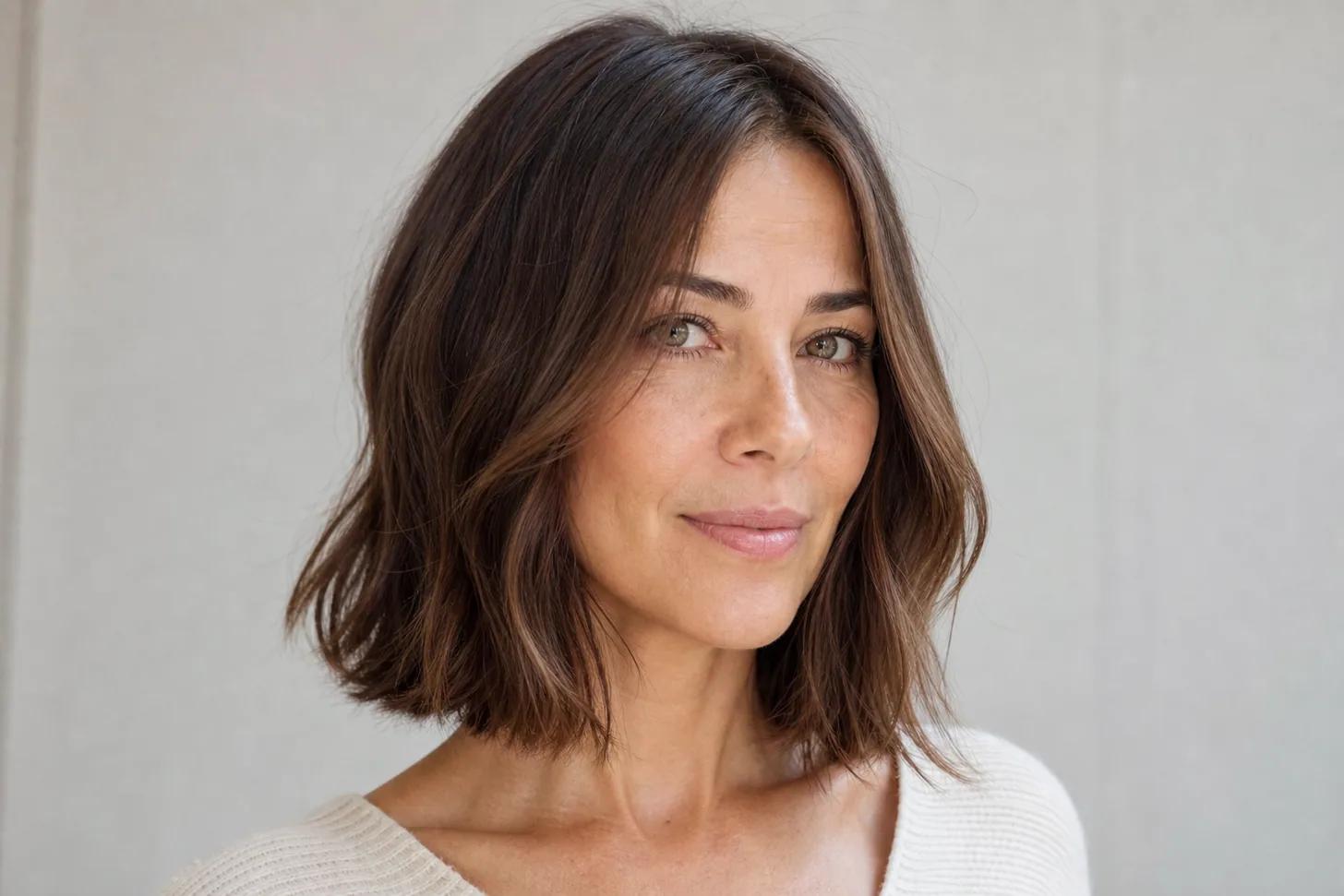
Not everyone with fine hair wants to go short.
A collarbone-length lob provides enough length for ponytails and different styling options while still being short enough to maintain a strong shape.
The trick is keeping the layering minimal.
Too many short layers through longer fine hair can sometimes leave the bottom looking noticeably thinner. Instead, maintaining weight through the perimeter creates a fuller appearance.
Why it works for fine hair:
The medium length provides movement without placing excessive weight on the roots, while the fuller base maintains visual density.
A subtle face frame can be added without dramatically layering the entire haircut.
6. Chin-Length Bob With Side-Swept Bangs
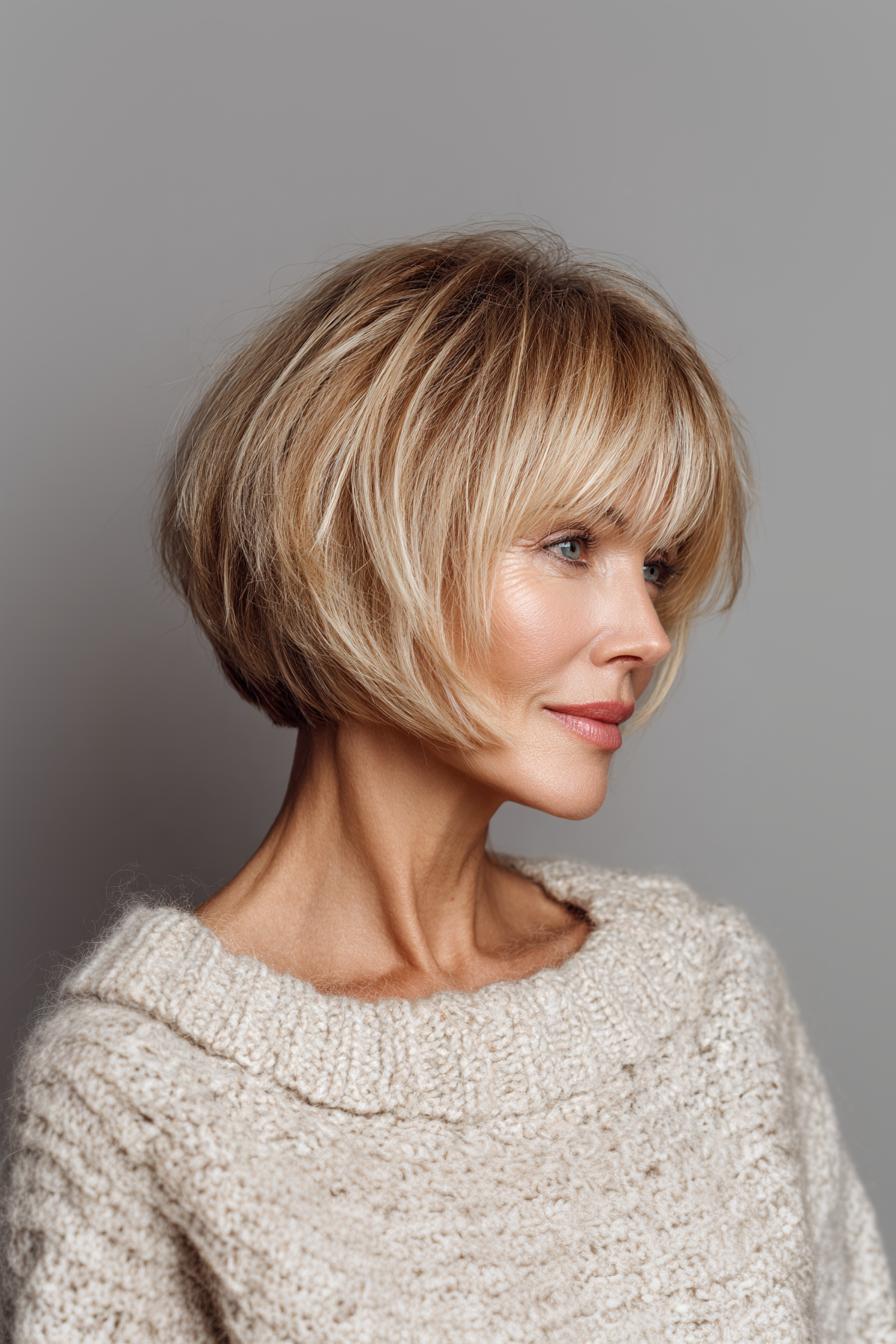
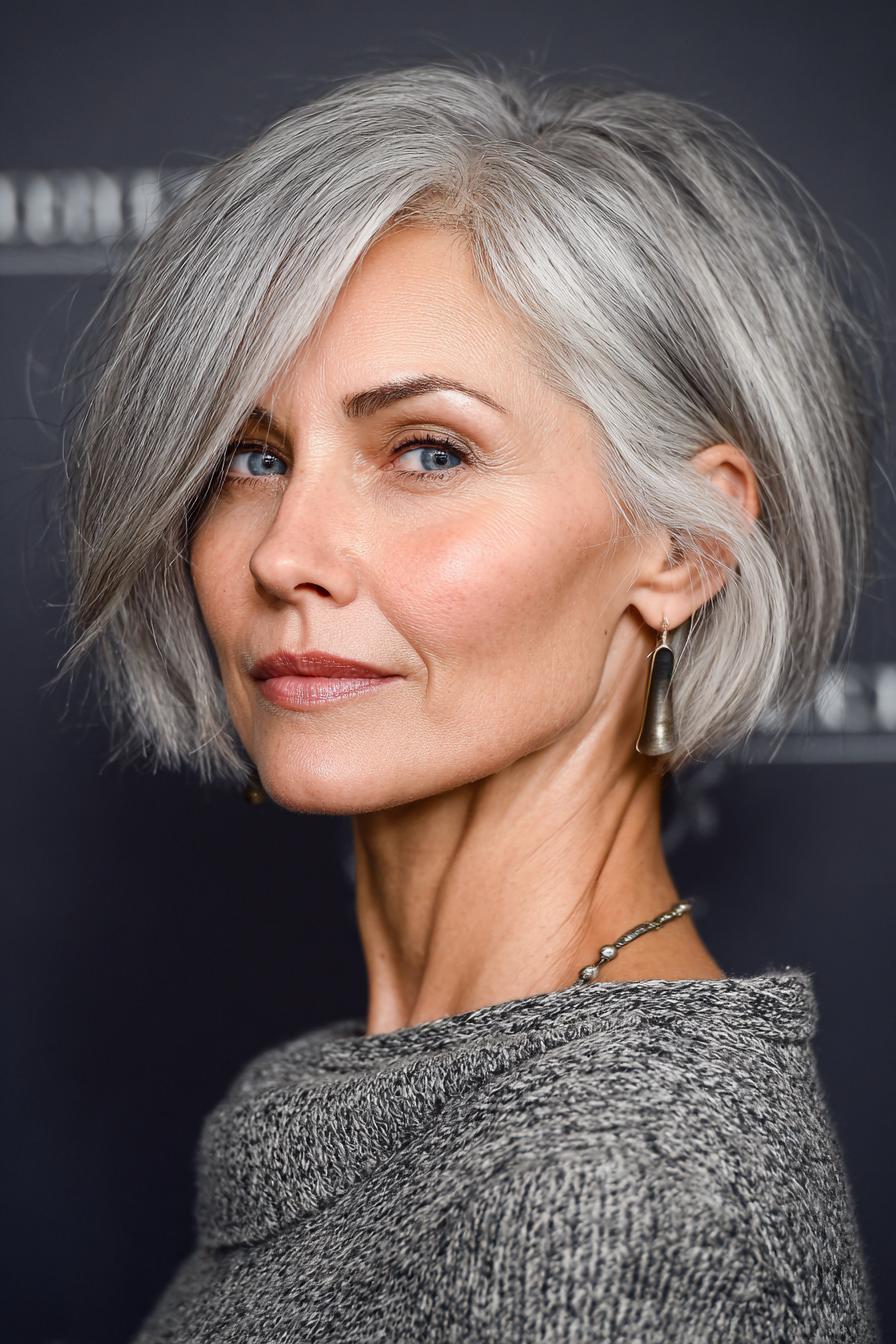
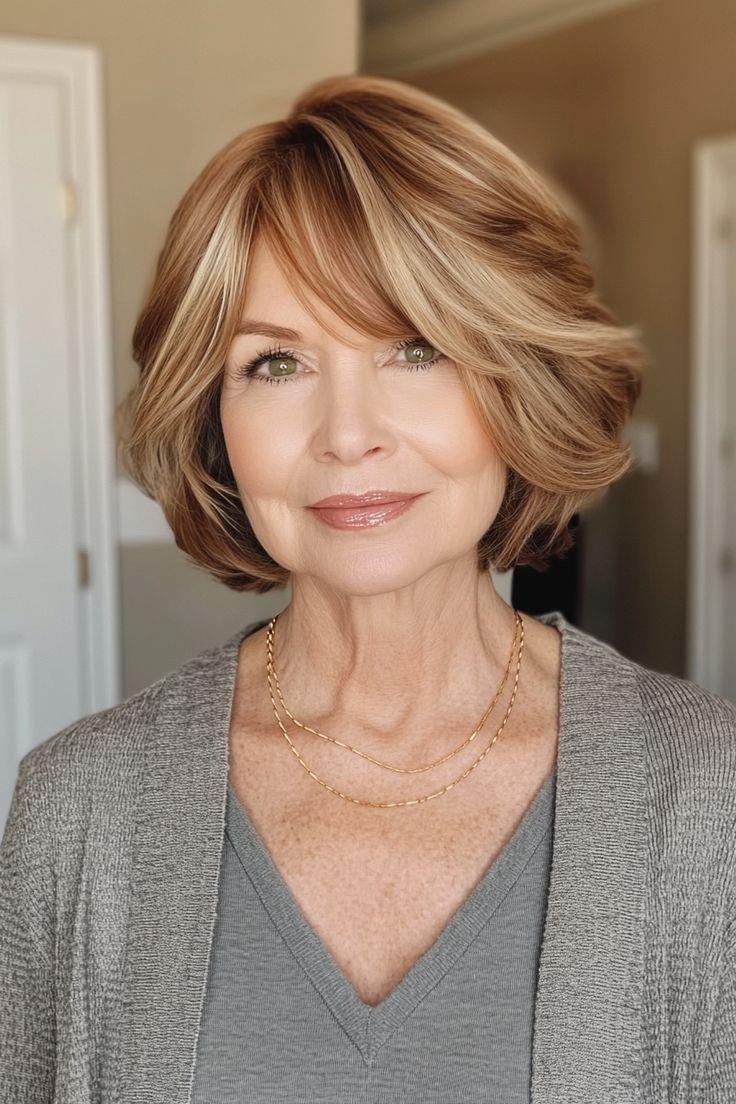
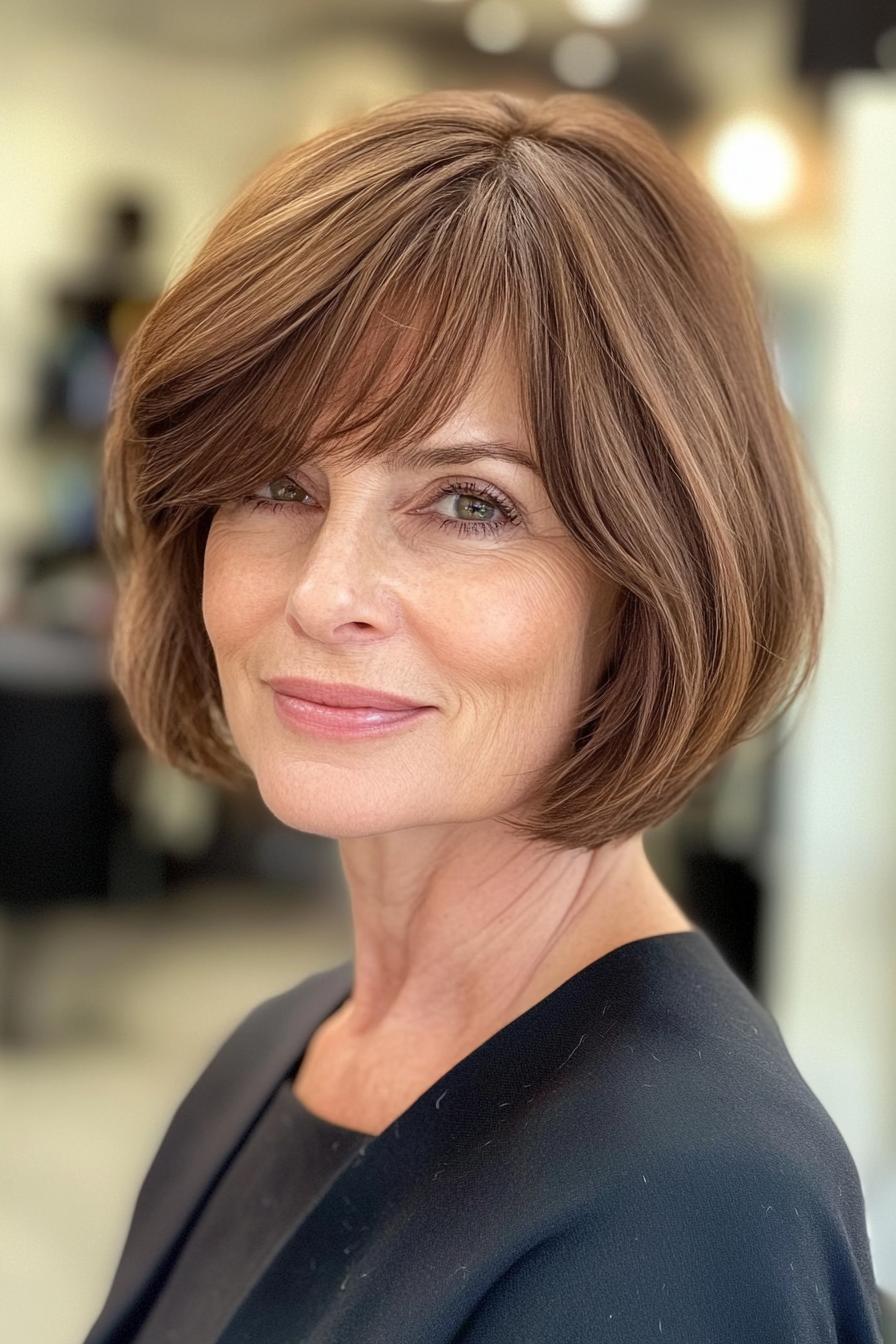
Adding bangs doesn’t automatically mean sacrificing fullness.
A longer side-swept fringe can actually give fine hair more movement around the face while allowing the rest of the bob to retain a strong perimeter.
The asymmetry created by the fringe also draws attention toward the eyes and cheekbones.
Why it works for fine hair:
The bob maintains density through the bottom while the fringe introduces movement without requiring heavy layering throughout the entire haircut.
For the fullest appearance, avoid making the fringe excessively thin or wispy.
7. Soft Feathered Crop
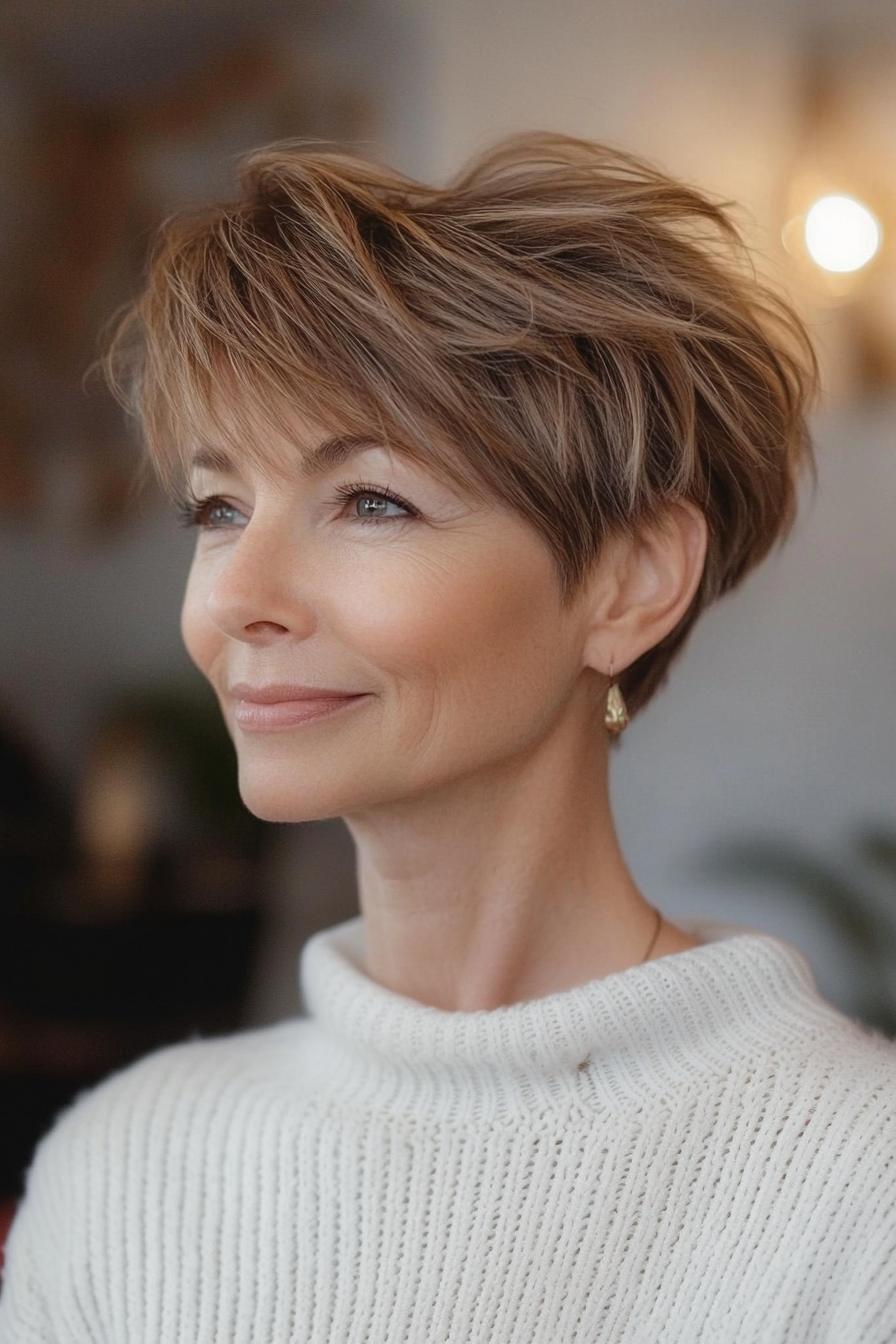
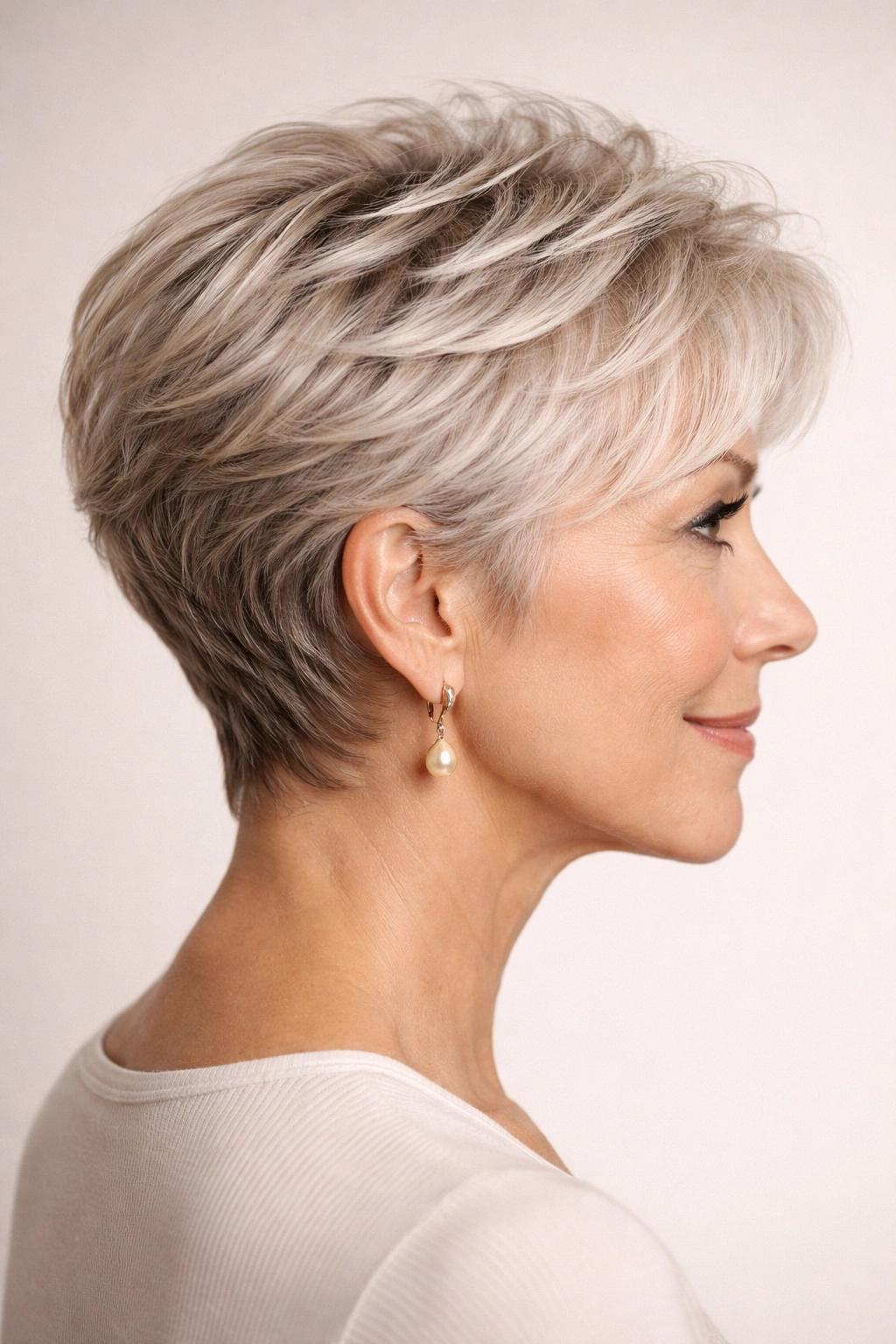
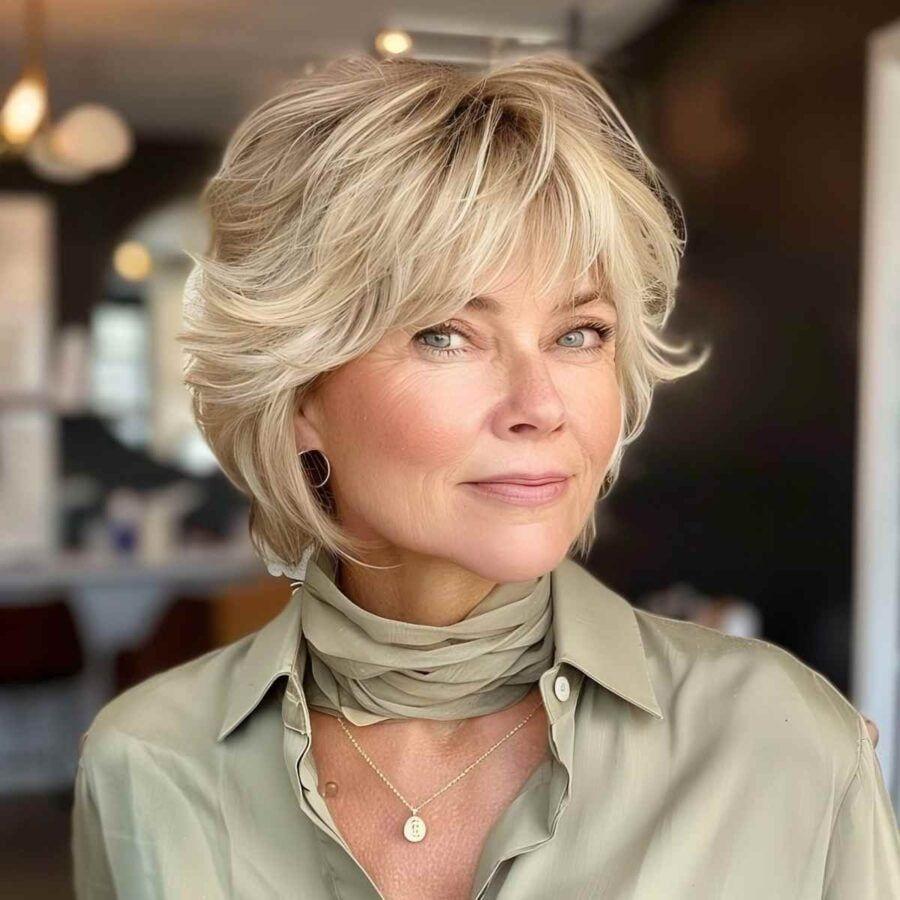
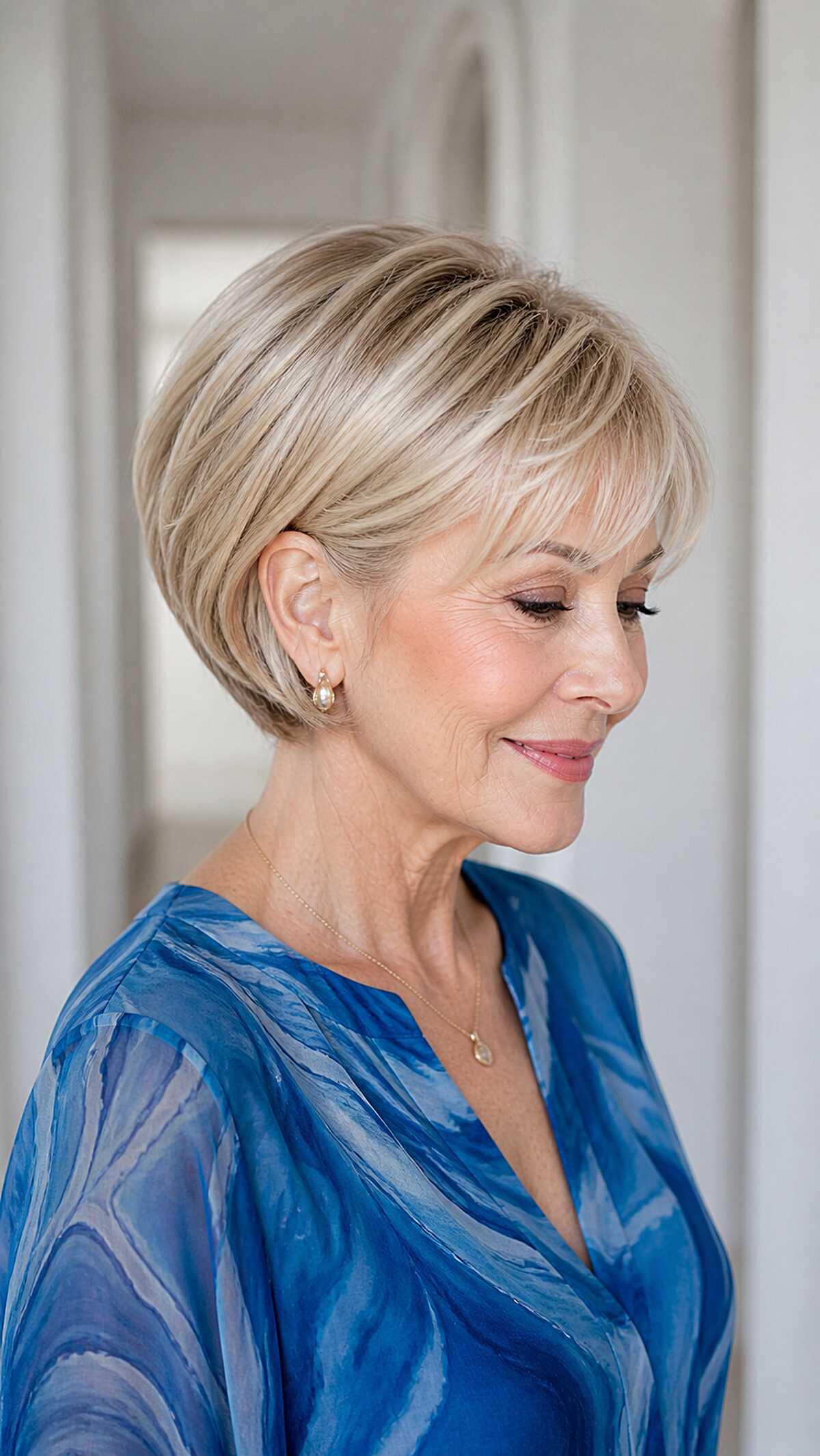
A feathered crop can work beautifully on fine hair when the texture is controlled.
Instead of thinning every section, feathering can be concentrated around the crown and fringe. The nape can remain softly tapered for a clean silhouette.
Think airy rather than heavily textured.
Why it works for fine hair:
Light crown movement creates lift, while the controlled shape prevents the haircut from appearing sparse.
A soft side fringe can also make the overall style feel more feminine and wearable.
What to Avoid When Cutting Fine Hair
Fine hair doesn’t come with a universal list of forbidden haircuts, because density, texture, growth pattern, and styling routine all matter. However, there are a few techniques worth discussing with your stylist if your main goal is making your hair appear fuller.
Too Many Short Layers
Layers can create movement, but excessive short layering may remove density from the lower portion of fine hair.
Instead, consider keeping the perimeter stronger and concentrating subtle movement around the crown or face.
Excessive Thinning at the Ends
If your ends already appear fine, aggressive thinning or texturizing can make them look even lighter.
A fuller outline often creates a stronger visual impression.
Very Long Hair Without Shape
Long fine hair can be beautiful, but additional length also adds weight.
If your roots constantly appear flat, removing some length or introducing carefully positioned movement may help.
Lots of Volume on Top With Very Thin Ends
Balance matters.
Extreme crown volume combined with sparse-looking ends can emphasize the difference between the two areas rather than making the entire hairstyle appear fuller.
Are Layers Good for Fine Hair?
Yes — when they’re used strategically.
The idea that fine hair should never be layered is too simplistic. Soft internal layers, subtle crown movement, or delicate face-framing pieces can make a haircut feel lighter and more dynamic.
The problem usually isn’t layers themselves.
It’s removing too much hair from areas where you need density.
If fullness is your priority, ask your stylist about maintaining a stronger perimeter while introducing movement only where it’s needed.
What Hair Length Makes Fine Hair Look Thickest?
There isn’t one perfect length for everyone, but short to medium-length cuts often make fine hair easier to visually bulk up.
Jaw-length bobs, chin-length cuts, bixies, and longer pixies can all reduce excess weight while maintaining a defined silhouette.
If you prefer longer hair, a collarbone lob with a relatively full perimeter offers a good compromise between length and density.
Your natural texture and actual hair density should ultimately determine the best length.
The Bottom Line
The best haircut for fine hair isn’t necessarily the one promising the most volume.
Shape matters more.
Keeping density through the perimeter, controlling the amount of layering, and placing movement strategically can make fine hair appear noticeably fuller without requiring an elaborate styling routine.
Whether you prefer a polished bob, an airy pixie, a soft bixie, or a longer lob, look for a haircut that works with the amount of hair you naturally have rather than removing unnecessary density.
Which of these seven haircuts would you try?