7 Bob Haircuts for Fine Hair Over 50 That Don’t Fall Flat
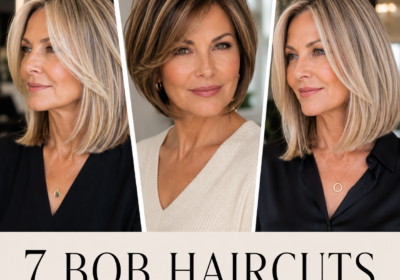
Fine hair can change noticeably after 50. It may feel softer, lose some of its natural density, or simply refuse to hold the volume it once did.
That doesn’t mean the answer is adding more and more layers.
In fact, when fine hair is over-layered, the ends can start looking even thinner. The right bob takes a different approach: keep enough weight through the perimeter, create shape where it’s needed, and use movement strategically.
That’s one reason bobs continue to work so well for fine, mature hair. Current stylist recommendations particularly favor blunt shapes for stronger-looking ends and softer, strategically layered versions when movement is needed.
If your current bob falls flat within an hour of styling, these seven variations are worth showing your stylist.
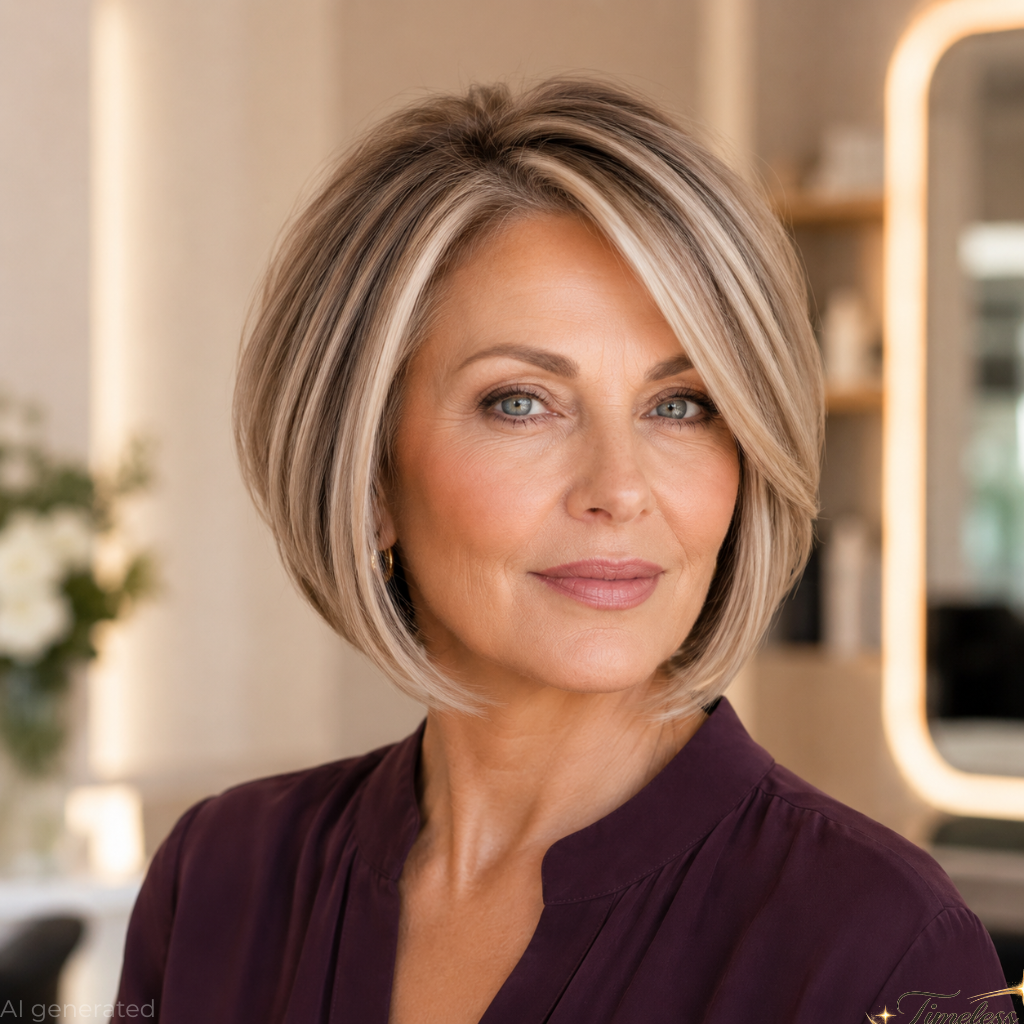
1. Chin-Length Blunt Bob
For fine hair, sometimes the simplest shape makes the biggest difference.
A chin-length blunt bob keeps the ends together instead of breaking them into lots of separate layers. That strong bottom line can make fine hair look noticeably denser through the ends. Stylists currently recommend blunt bobs for exactly this reason: a uniform perimeter creates the visual impression of stronger, fuller hair.
The shorter length also prevents fine strands from being pulled down by unnecessary weight.
Best for: straight to slightly wavy fine hair.
Ask your stylist for: a strong perimeter around chin length with minimal layering and just enough internal shaping to prevent the cut from feeling stiff.
Why it works after 50: it looks polished without relying on lots of volume at the crown.
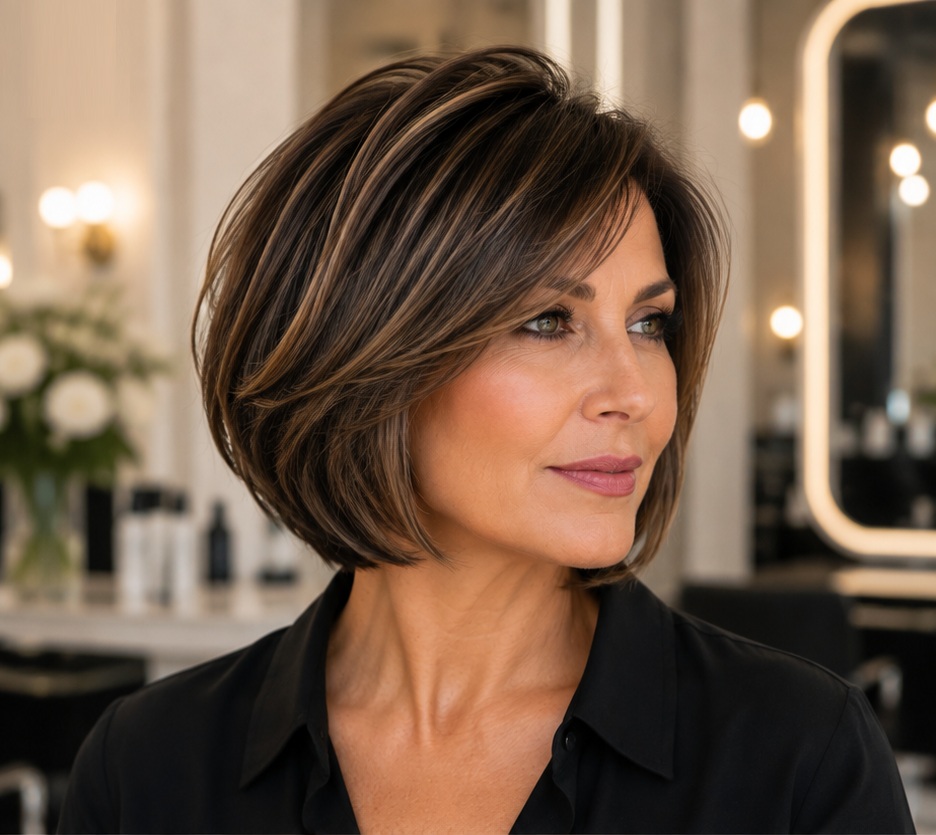
2. Softly Layered Bob
Layers aren’t the enemy of fine hair. Too many layers can be.
A softly layered bob keeps most of the density while introducing subtle movement through carefully placed pieces.
The goal isn’t to create obvious stacked layers. Instead, the shape should move naturally while the bottom still looks substantial.
Current stylist guidance for fine hair similarly cautions that excessive wispy layering can remove too much weight and make hair appear sparser.
This makes the softly layered bob particularly useful if a completely blunt cut feels too severe around your features.
Best for: fine hair that needs movement but loses density easily.
Ask your stylist for: minimal, blended layers with a relatively full perimeter.
Styling tip: a slight bend through the mid-lengths can make the layers visible without creating an overly curled finish.
If your hair tends to lose density when layered, see our guide to haircuts that make fine hair look thicker without adding too many layers.
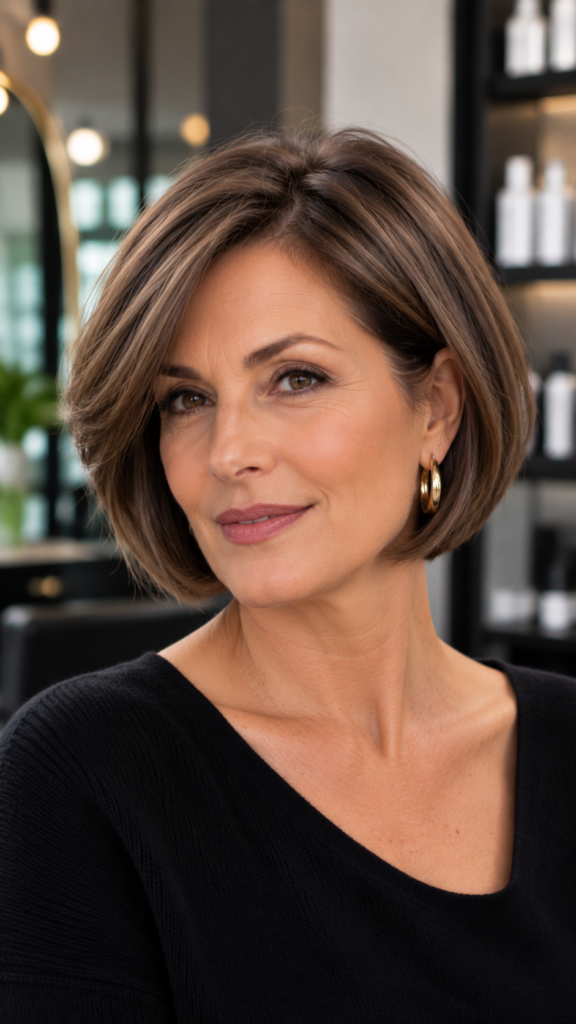
3. Side-Parted Bob
Sometimes you don’t need to change the entire haircut to make fine hair appear fuller.
Changing the part can make a surprisingly visible difference.
A slightly off-center or deeper side part shifts the hair against its usual growth direction, which can create extra lift around the root. Hairstylists specifically recommend experimenting with off-center and deeper side parts as a simple way to create more lift in fine-haired bobs.
Pair that with a clean bob shape and you get fullness without sacrificing density to additional layers.
Best for: fine hair that looks especially flat around the crown or part line.
Ask your stylist for: a bob that can comfortably be worn with either an off-center or deeper side part.
Styling tip: occasionally switch the direction of your part instead of allowing the hair to settle permanently into one position.
4. Soft Graduated Bob
Forget the extremely stacked, rigid graduated bobs of years past.
The newer version is softer.
A graduated bob remains slightly shorter through the back and gradually gets longer toward the front, but the transition doesn’t need to look dramatic.
The advantage for fine hair is strategic: subtle graduation can create natural lift and shape through the back and crown without requiring layers everywhere.
The graduated bob has actually returned as a notable 2026 option for mature hair, with stylists emphasizing softer edges and controlled graduation rather than the aggressive stacked versions of the past.
Best for: fine hair that collapses around the back of the head.
Ask your stylist for: soft graduation at the nape with longer front sections and no exaggerated stacking.
Avoid: excessive graduation on very fine hair. Too much removal can defeat the entire purpose.
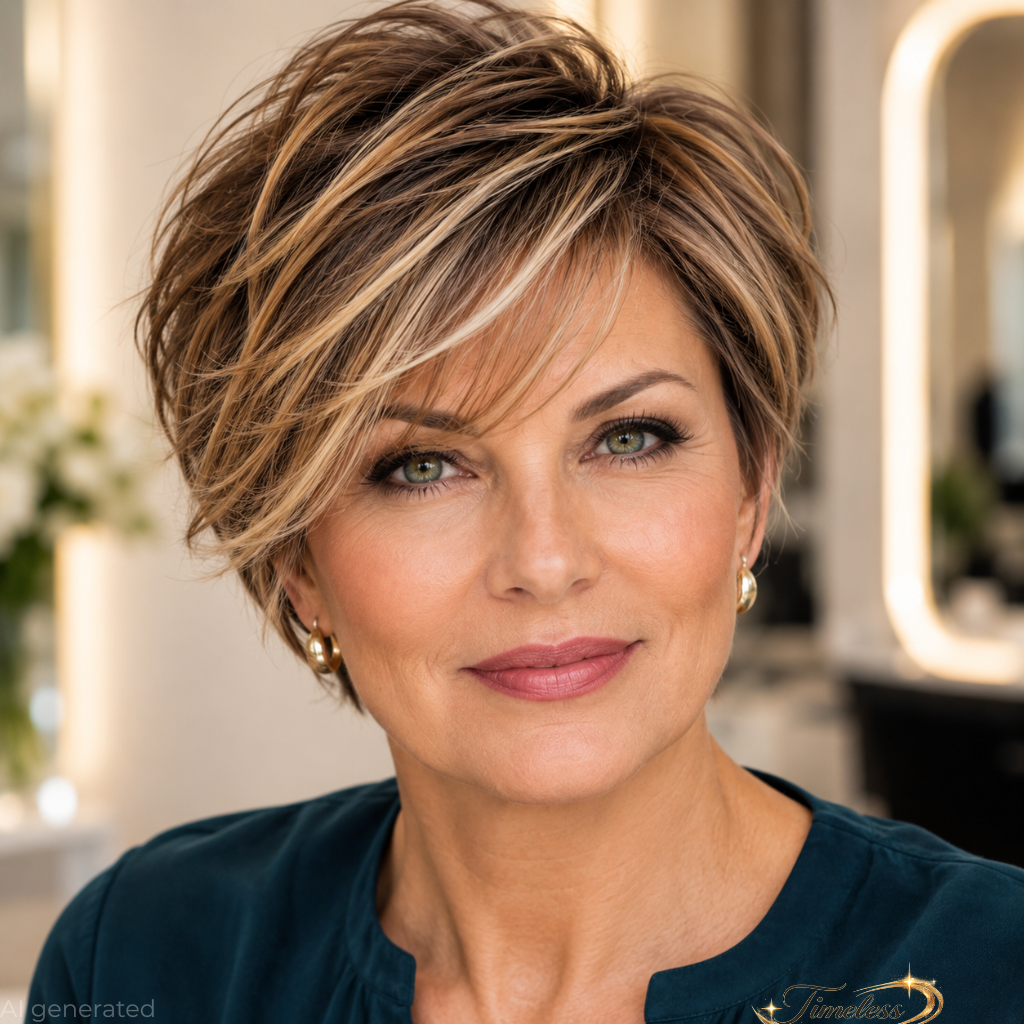
5. Soft A-Line Bob
An A-line bob is another way to create shape without filling the haircut with layers.
The back sits slightly shorter while the front remains longer, creating a subtle forward-moving silhouette.
For fine hair, the key word is subtle.
You don’t need the dramatic angled bob of the early 2000s. A small difference between the front and back can be enough to give the haircut structure while preserving a substantial-looking perimeter.
A-line shapes are also among the bob variations currently recommended by stylists for fine hair.
Best for: straight or slightly wavy fine hair that benefits from a defined shape.
Ask your stylist for: a gentle A-line rather than an extreme angle.
Why we like it: it creates visual interest through the silhouette rather than relying on lots of layers.
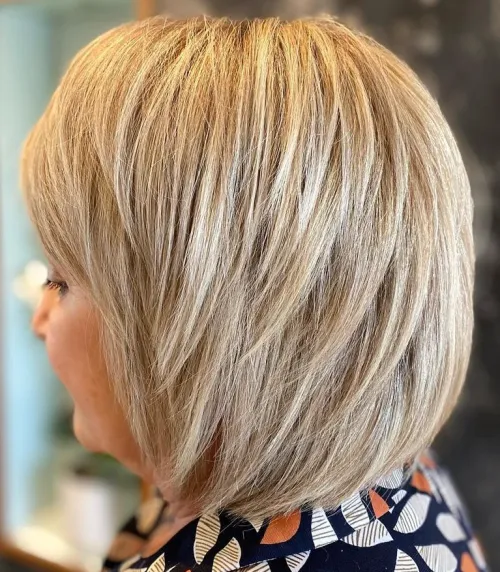
6. Lightly Textured Bob
What if you don’t like the polished look of a blunt bob?
You don’t have to choose between perfectly straight hair and heavily layered hair.
A lightly textured bob sits somewhere in between.
Small amounts of internal shaping can encourage natural movement while allowing the perimeter to remain relatively strong. Current 2026 recommendations for mature hair describe the textured bob in much the same way: subtle internal shaping and soft layering can create movement and natural lift without requiring a highly structured style.
This can be particularly flattering when your natural hair has a slight wave.
Best for: fine hair with natural movement or women who prefer a softer, less polished finish.
Ask your stylist for: subtle internal texture rather than visibly thinned or heavily razored ends.
Styling tip: don’t try to make every piece identical. Slight irregularity is what gives this bob its relaxed fullness.
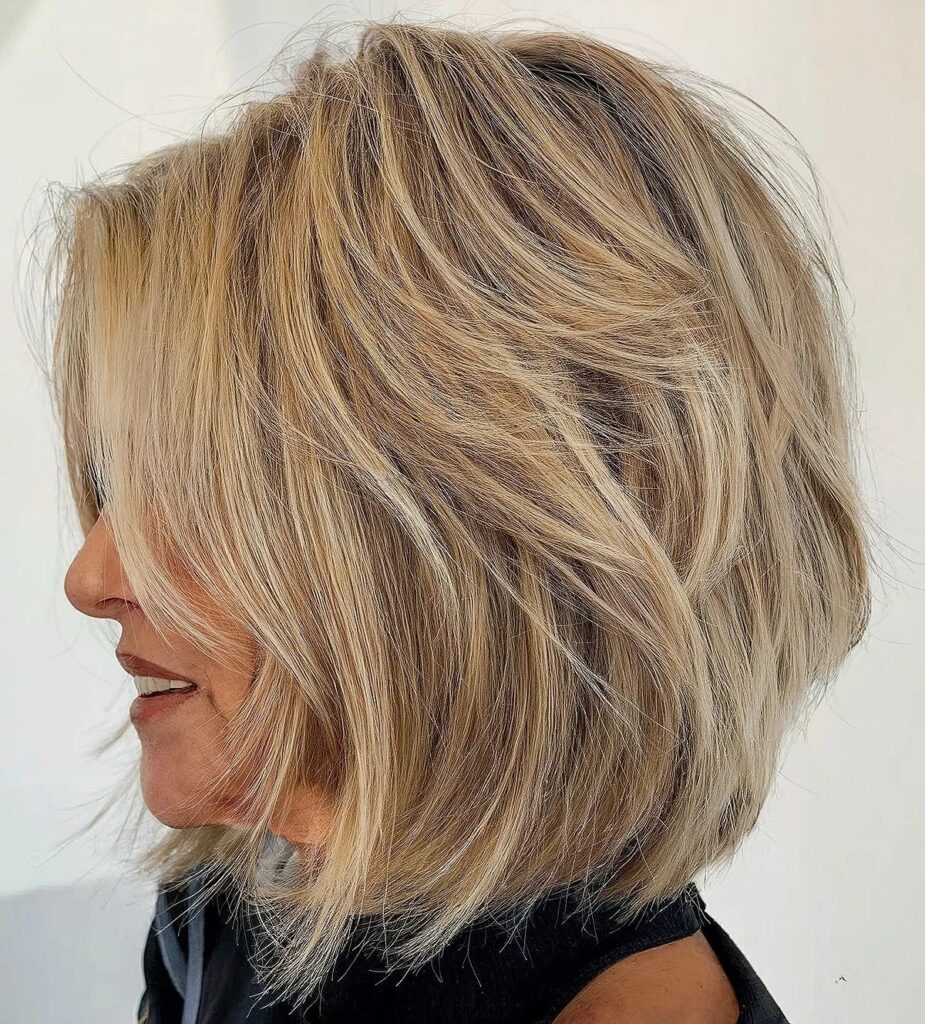
7. Blunt Lob With Face-Framing Pieces
Not everyone over 50 wants short hair.
And you certainly don’t have to cut your hair to your chin simply because it’s fine.
A blunt lob — usually sitting somewhere around the collarbone — gives you additional length while keeping the ends visually substantial. Experts currently describe the blunt lob as a particularly useful compromise for fine hair because minimal layering allows the hair to retain weight and structure through the bottom.
A few longer face-framing pieces can then soften the front without removing significant density from the rest of the haircut.
Best for: women who want the benefits of a bob but aren’t ready for a short cut.
Ask your stylist for: a strong baseline around the collarbone with long, subtle face-framing pieces.
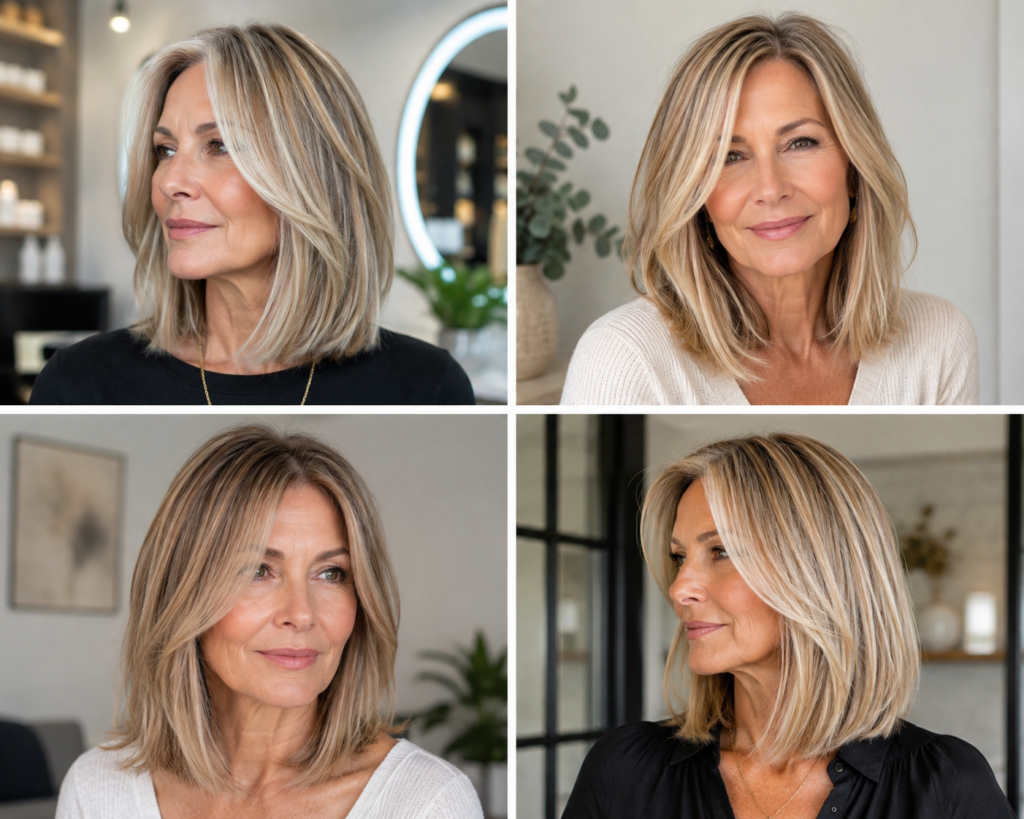
Which Bob Makes Fine Hair Look Thickest?
If maximum visual density is your priority, start with the chin-length blunt bob.
The clean perimeter keeps fine ends together, which can make them appear stronger and more substantial.
However, the best choice depends on where your hair looks flat.
If the ends look thin, try a blunt bob.
If the crown looks flat, consider subtle graduation.
If the overall shape feels lifeless, a softly layered or lightly textured bob may work better.
If you want to keep more length, choose the blunt lob.
This makes the article more useful than simply declaring one haircut the universal winner.
Should Fine Hair Over 50 Be Layered?
Yes — but strategically.
Fine hair can absolutely benefit from layers when they create shape or movement. The problem begins when too much hair is removed.
For very fine hair, keeping a substantial perimeter while using only a few blended or internal layers is often a better starting point than heavily feathered ends. Stylists similarly caution that excessive layering can leave fine hair looking more sparse.
The conversation with your stylist should therefore be less:
“Should I get layers?”
and more:
“Where does my hair actually need layers?”
That small distinction can completely change the result.
What Bob Length Is Best for Fine Hair Over 50?
There isn’t one perfect length for everyone.
A bob somewhere between the chin and collarbone gives your stylist plenty of room to balance density, movement and face shape. Current expert recommendations for fine hair similarly emphasize that length matters: excessive length can make fine hair appear limp, while overly short cuts combined with heavy layering can become wispy.
Your natural texture matters too.
Straighter fine hair often benefits from a cleaner perimeter, while slightly wavy hair can usually handle a little more texture and movement.
How to Keep a Fine-Hair Bob From Falling Flat
The haircut should do most of the work, but styling still matters.
Start with lightweight products. Heavy oils, rich conditioners applied near the roots and too much styling cream can quickly weigh fine hair down.
When blow-drying, concentrate on lifting the roots first rather than trying to create volume only through the ends. Lightweight mousse, root-lifting products and texturizing sprays are commonly recommended for this purpose.
And don’t underestimate the part.
Simply moving it slightly off-center can sometimes create more visible lift than adding another layer to the haircut.
The Bottom Line
The best bob haircuts for fine hair over 50 aren’t necessarily the ones with the most volume or the most layers.
They’re the cuts that preserve density while creating shape in the right places.
A blunt bob can make fine ends appear stronger. A soft graduated bob can create lift through the back. Subtle layers can introduce movement. And a blunt lob lets you keep more length without sacrificing the appearance of fullness.
The important part is tailoring the cut to your actual density, texture and styling routine, rather than choosing a bob based only on how it looks in a photo.
Which would you choose: blunt, softly layered, graduated or textured?
FAQ – Bob Haircuts for Fine Hair Over 50
Is a bob good for fine hair over 50?
Yes. A well-designed bob can preserve weight through the ends while creating a more defined shape, making it a particularly versatile option for fine or mature hair.
Does a blunt bob make fine hair look thicker?
It can make the ends appear fuller and denser because the hair is cut into a strong, uniform perimeter rather than separated into many wispy layers.
Should a fine-hair bob have layers?
It can, but they should be intentional. Too much layering may remove density, while subtle internal or blended layers can add movement without sacrificing the overall shape.
Is a chin-length bob or lob better for fine hair?
Both can work. A shorter bob usually provides a stronger, more compact silhouette, while a blunt lob is useful when you want to retain length. Your density and natural texture should determine the final length.
What should I tell my hairstylist?
Bring reference images, but also explain the problem you want the haircut to solve: flat roots, thin-looking ends, lack of movement or difficulty styling. The same bob shouldn’t be cut identically on every head of fine hair.