Fine Hair Looks Flat After 50? 12 Haircuts That Create Volume Without Teasing
Fine hair can behave very differently after 50. It may lose some of its natural density, fall flatter at the crown, or simply refuse to hold the shape it once did.
The good news? You don’t necessarily need more styling products, endless teasing, or a complicated morning routine.
Sometimes, the right haircut can make fine hair look noticeably fuller by placing weight in the right areas, creating movement through the crown, and keeping the ends from looking thin or wispy.
If your hair tends to fall flat, these 12 haircuts for fine hair over 50 are worth saving for your next salon visit.
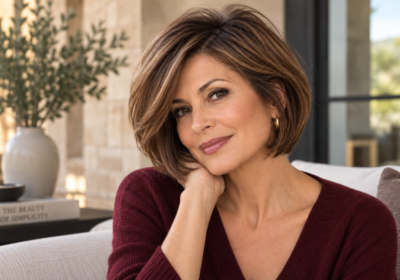
1. Soft Stacked Bob for a Fuller Back
A soft stacked bob is one of the most useful cuts when fine hair looks especially flat around the crown and back of the head.
The key is controlled graduation rather than an exaggerated stack. Slightly shorter layers underneath help support the shape above them, creating a naturally rounded silhouette without requiring heavy teasing.
Keep the front a little longer for a modern, flattering finish.
Best for: straight to slightly wavy fine hair that needs more shape through the back.
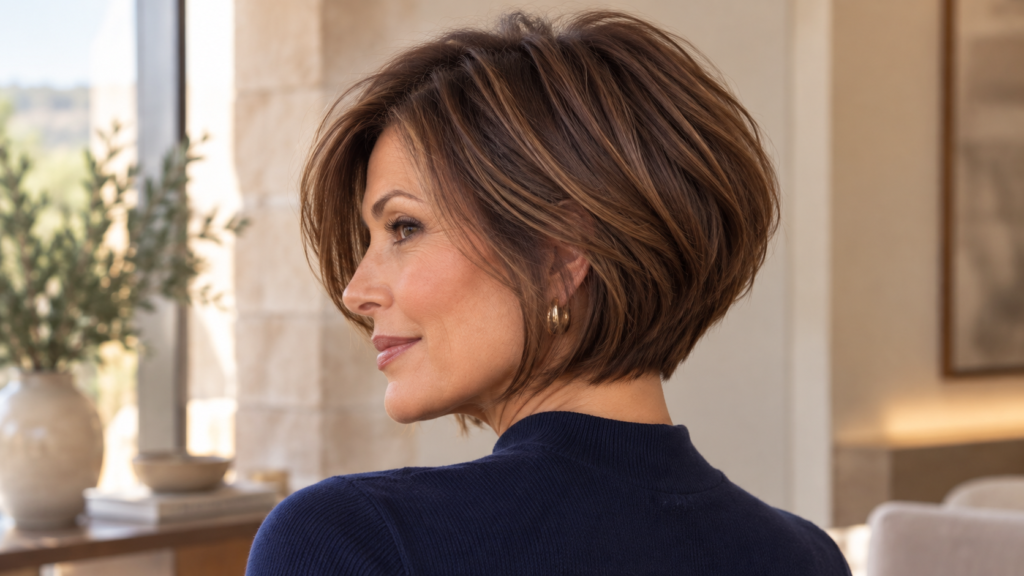
2. Jaw-Length Blunt Bob
Sometimes adding more layers is exactly the wrong solution.
When the ends of fine hair look sparse, a clean jaw-length perimeter can make them appear considerably denser. Because most of the weight stays along one strong line, the haircut creates the visual impression of thicker hair.
A subtle side part can add movement without sacrificing that valuable fullness at the ends.
Best for: fine, relatively straight hair with thin-looking ends.
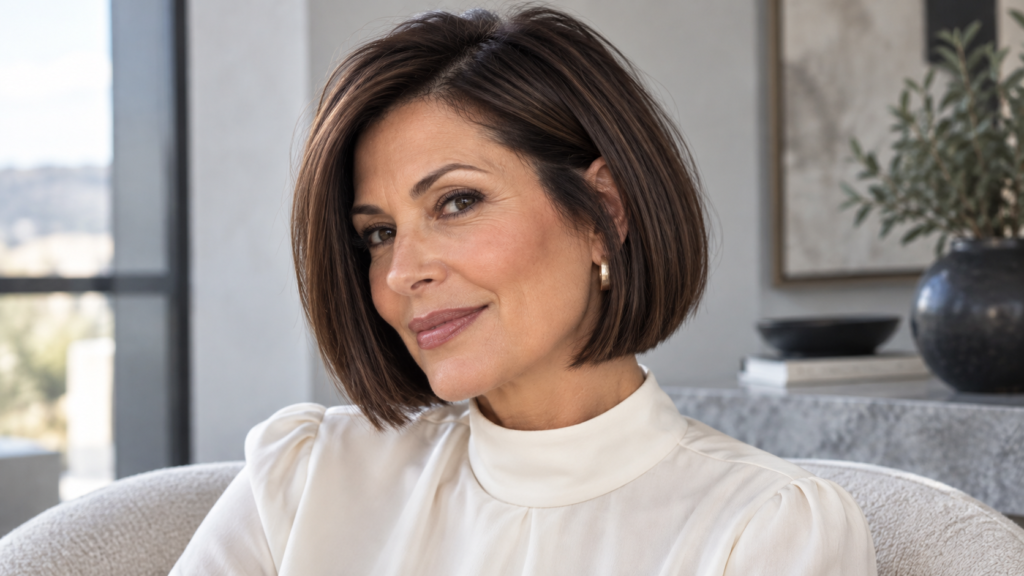
3. Layered Pixie With Crown Lift
Short hair doesn’t automatically create volume. A pixie cut that is too flat or too heavily thinned can actually emphasize fine hair.
Instead, ask for a softly layered pixie with enough length through the crown to create lift. Shorter sides and a neat nape provide contrast, making the textured upper section look fuller.
The result is light and modern without requiring a lot of hair to create the shape.
Best for: women who want an easy short cut with visible crown volume.
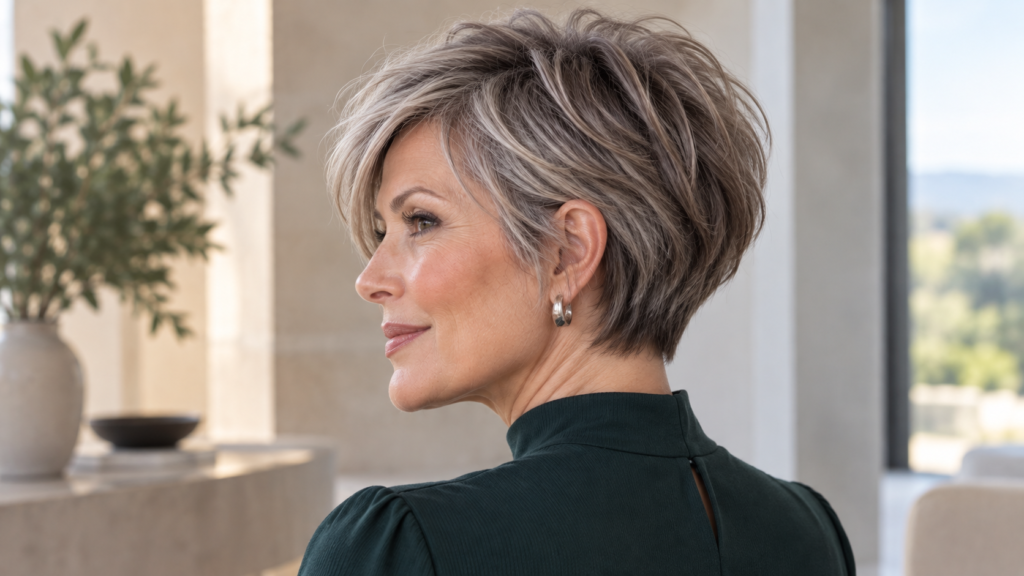
4. Soft Graduated Bob
The graduated bob sits somewhere between a classic blunt bob and a stacked cut.
A little graduation through the back builds shape, while the surface remains smooth enough to keep fine hair looking substantial. The front can stay around jaw length or slightly below it.
The important word here is soft. Too many short layers can remove the density we’re trying to preserve.
Best for: fine hair that needs both structure and movement.
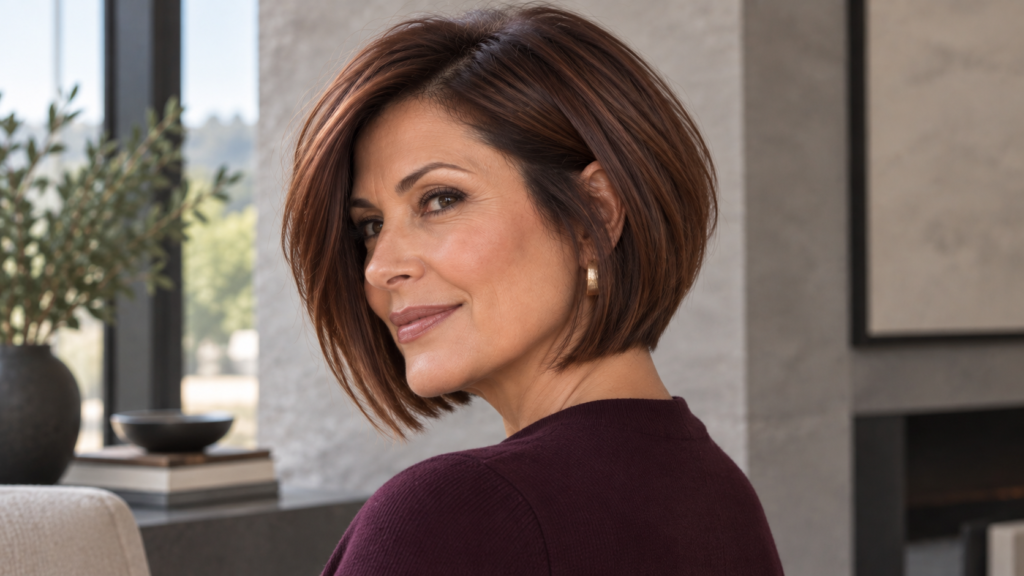
5. Side-Parted Bob With Gentle Lift
Changing where the hair naturally falls can sometimes make as much difference as changing its length.
A bob cut with a soft side part and subtle internal layering can create instant height around the top and prevent the hair from separating into a flat center part.
Keeping the ends relatively full maintains the illusion of density.
Best for: fine hair that becomes noticeably flat around the part line.
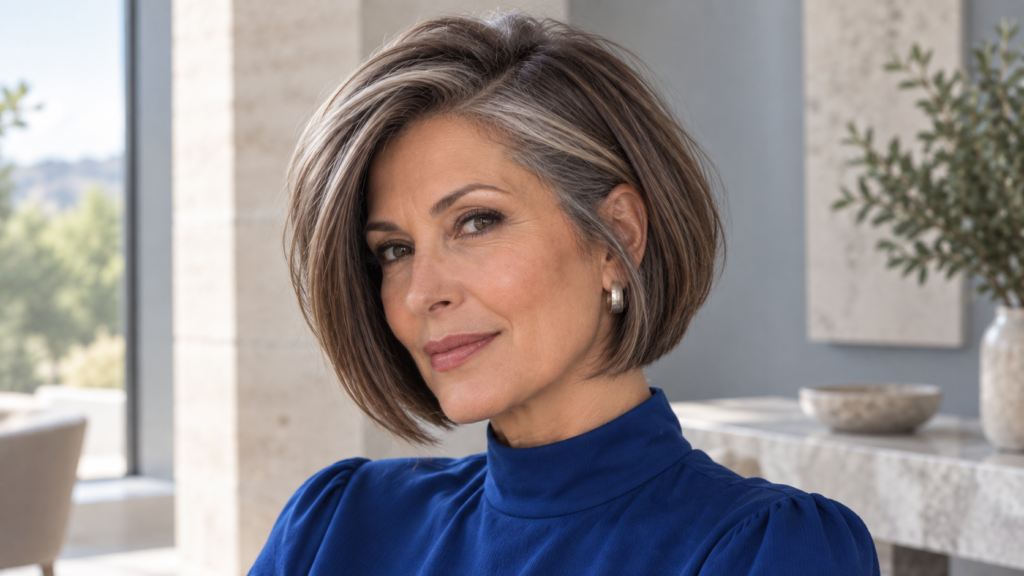
6. Textured Bixie
Not quite a bob and not quite a pixie, the bixie offers enough length to create movement while keeping the overall silhouette light.
For fine hair, the best version has soft texture through the crown and longer pieces around the face, rather than aggressive razor cutting throughout the ends.
This gives the haircut personality without making the perimeter disappear.
Best for: women who want something shorter than a bob but softer than a traditional pixie.
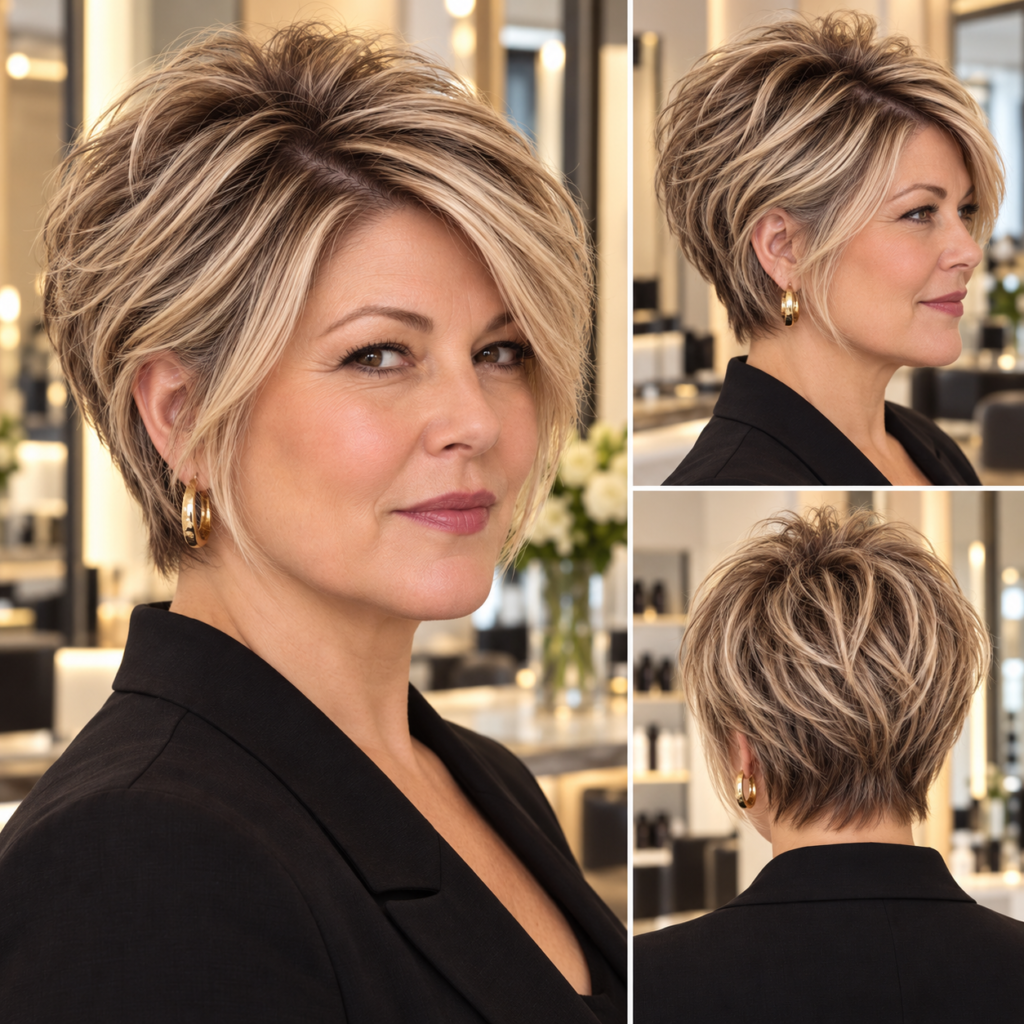
7. Feathered Short Crop
A feathered crop can work beautifully when fine hair has enough natural movement but struggles to maintain volume.
Short, carefully placed layers around the crown create separation and air between the strands. A soft fringe or longer front section keeps the haircut feminine and contemporary.
Avoid excessive thinning shears — fine hair already needs all the visual density it can get.
Best for: fine hair that responds well to lightweight styling.
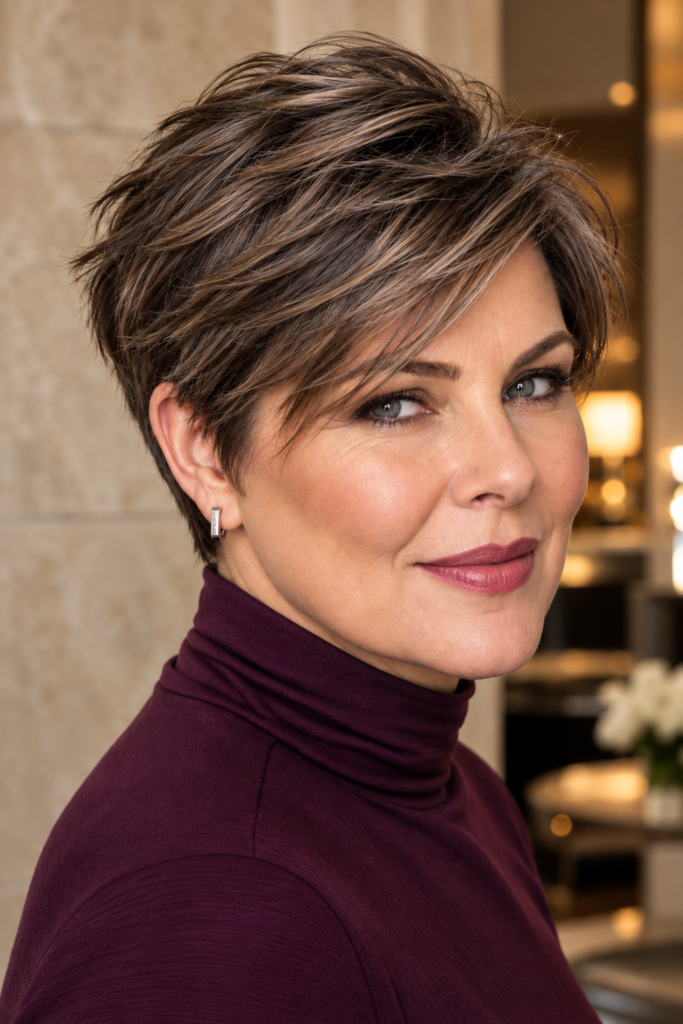
8. Chin-Length Bob With Soft Face-Framing
If you love layers but worry about losing fullness, concentrate them around the face rather than throughout the entire haircut.
A chin-length bob with a substantial perimeter and a few subtle face-framing pieces creates movement while leaving most of the density intact.
It can also soften the transition around the jaw without turning the haircut into a heavily layered style.
Best for: fine hair that looks healthy at the ends but needs more movement near the face.
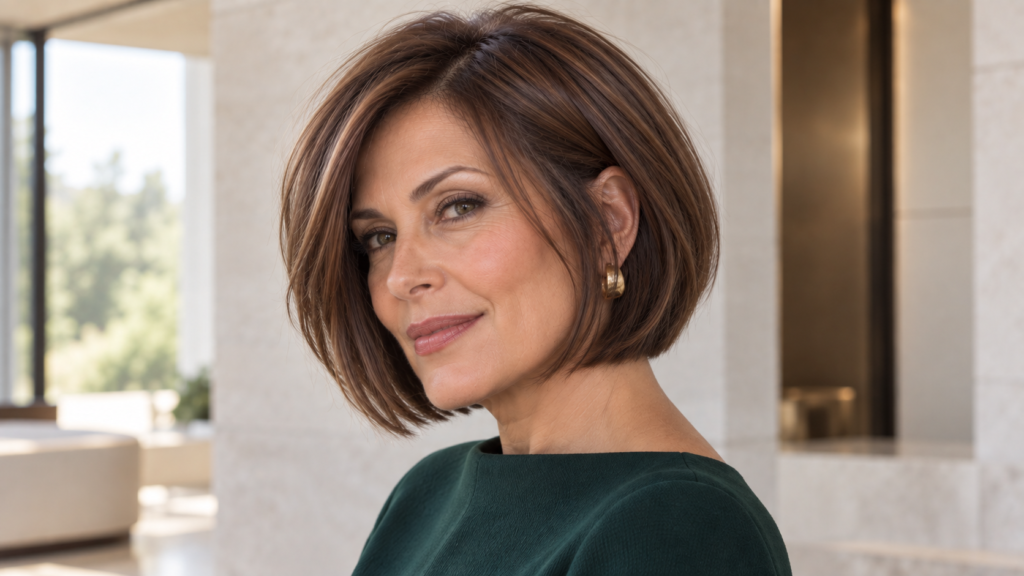
9. Short Layered Bob With Airy Crown
For women whose biggest concern is a flat crown, strategically placed upper layers can help.
The trick is to keep the layers long enough to overlap one another. Extremely short crown layers may stick up or expose more scalp instead of creating the soft fullness you want.
Pair them with a stronger perimeter around the lower part of the bob for balance.
Best for: fine hair with reduced volume primarily at the crown.
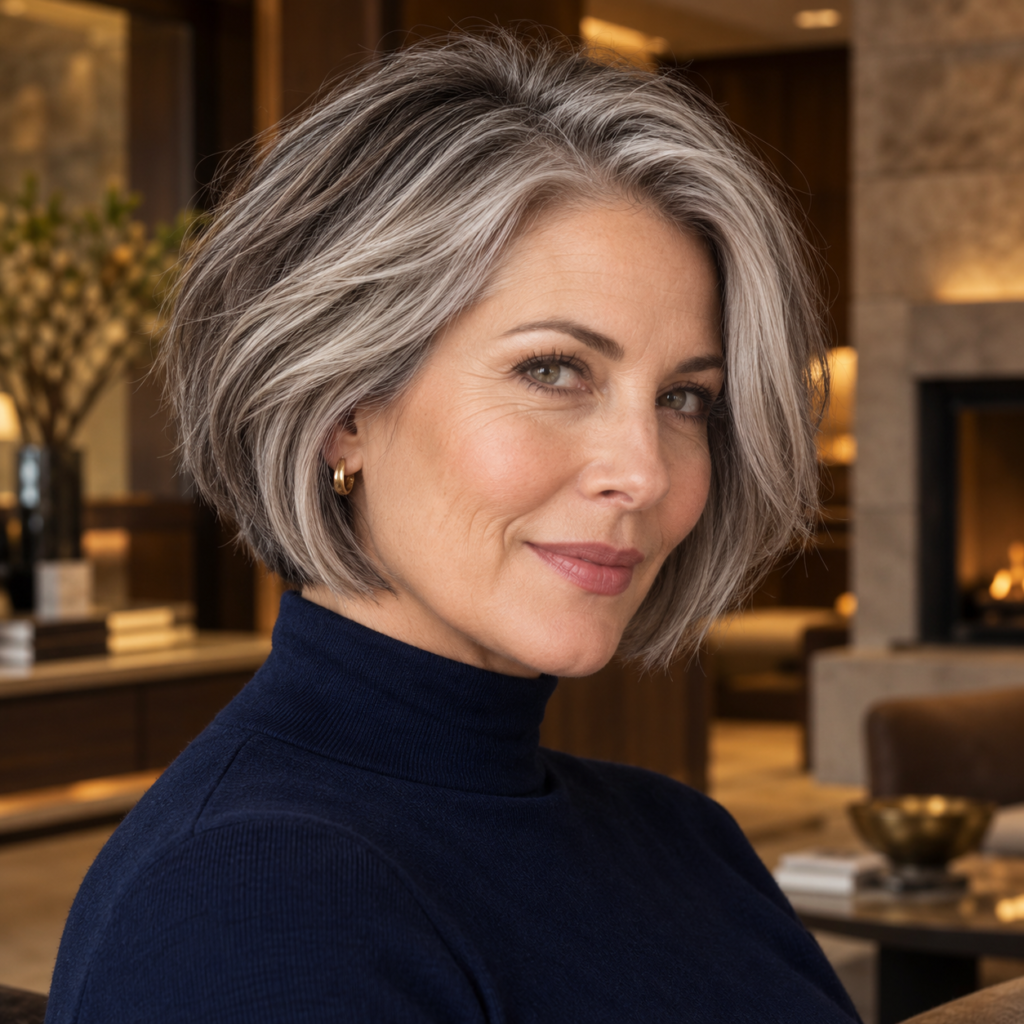
10. Long Pixie With Side-Swept Fringe
A long pixie creates volume through shape rather than sheer density.
Leaving additional length through the top and fringe gives the hair somewhere to move. Sweeping the front slightly to one side creates dimension, while shorter sides prevent the silhouette from becoming limp.
It’s also surprisingly versatile: the top can be worn smooth, softly lifted, or lightly textured.
Best for: fine straight hair that needs movement around the forehead and crown.
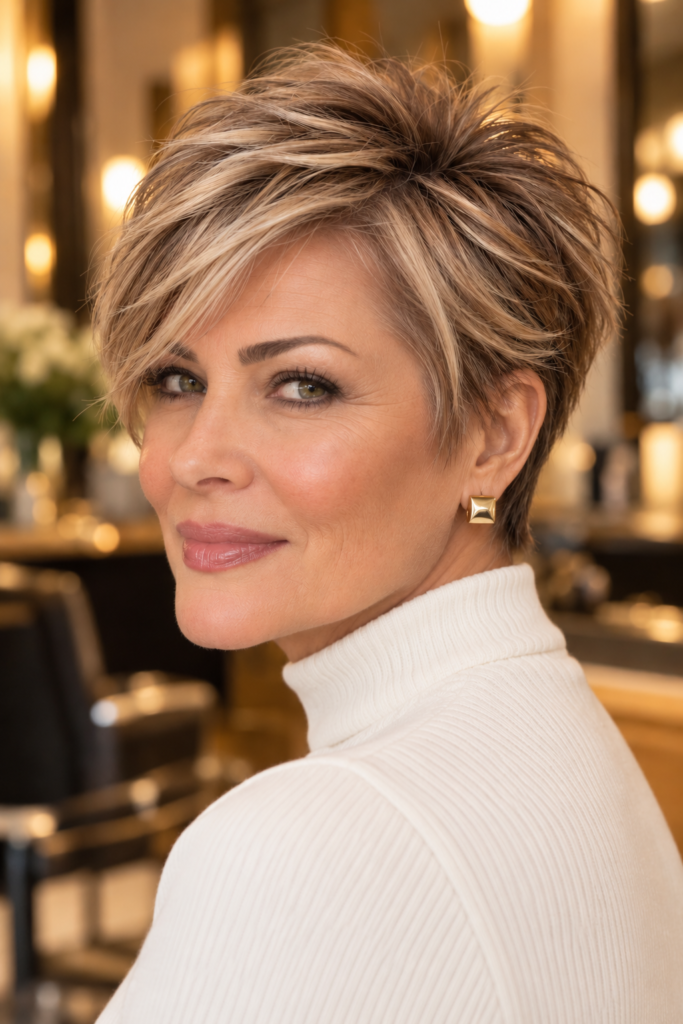
11. Collarbone Lob With Minimal Layers
Not everyone with fine hair needs to go short.
If you prefer medium-length hair, a collarbone lob with a strong baseline and very restrained layering can preserve fullness better than a heavily layered shoulder-length cut.
A few long internal layers can prevent the hair from hanging completely flat while keeping the bottom edge substantial.
Best for: women who want to keep some length without sacrificing the appearance of density.
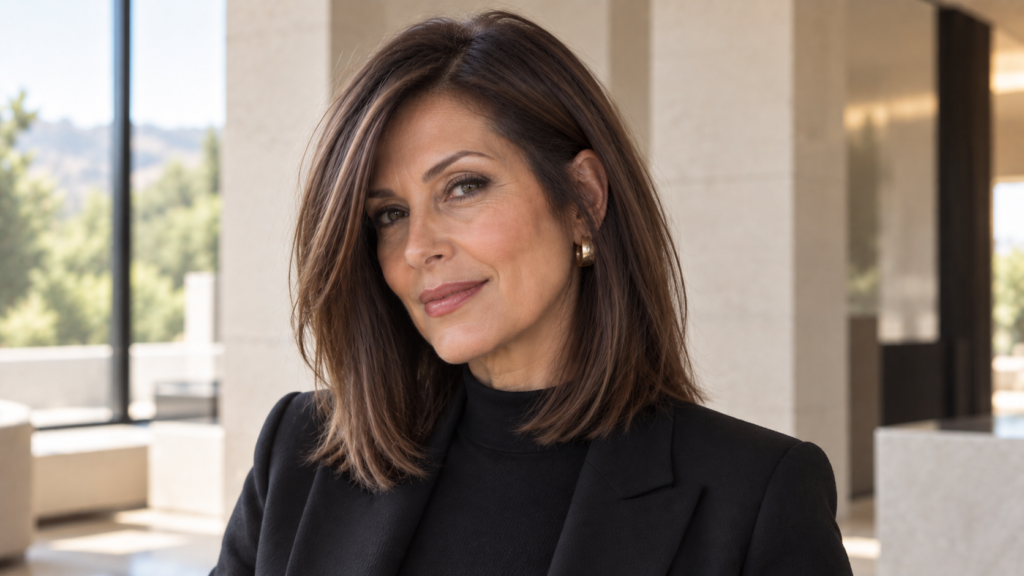
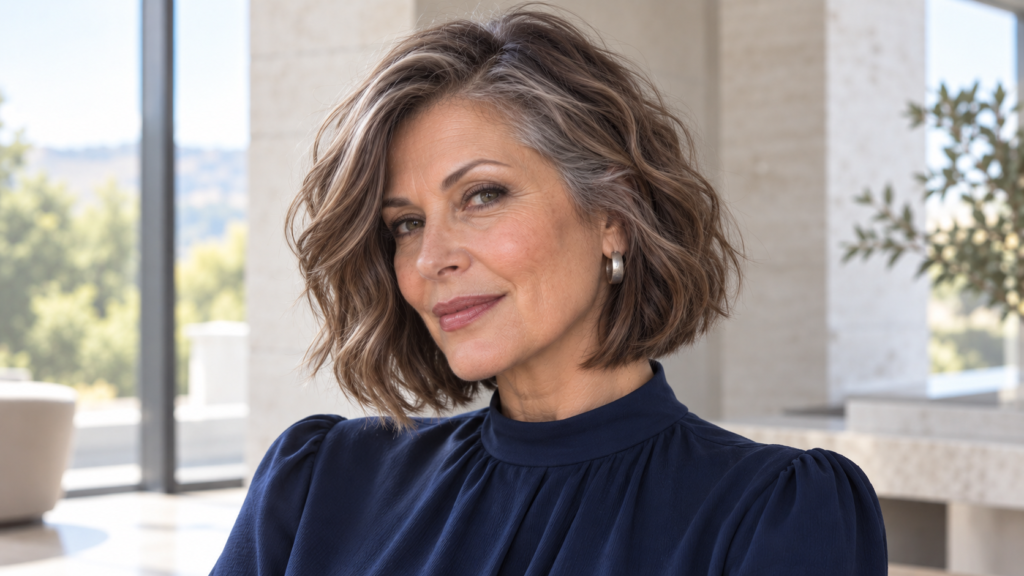
12. Soft Wavy Bob With a Strong Perimeter
Natural waves can be an advantage for fine hair because they create space and movement between individual strands.
A softly wavy bob works especially well when the perimeter remains relatively full and the layering is kept controlled. Rather than trying to create dramatic volume, the haircut allows the natural texture to do much of the work.
Best for: fine, naturally wavy hair that tends to lose shape as it grows longer.
What to Avoid When Fine Hair Looks Flat
The best haircut isn’t only about what you add. Sometimes it’s about what you don’t remove.
Be cautious with excessive thinning, very aggressive razor cutting, or too many short layers throughout the entire head. These techniques can be useful on thicker hair, but on already-fine hair they may leave the ends looking even thinner.
Likewise, growing fine hair longer isn’t always the answer. If the lower few inches have become sparse or transparent, taking the length up to a stronger point can immediately make the overall shape look healthier and fuller.
What Should You Ask Your Hairstylist For?
Instead of simply saying, “I want more volume,” explain where your hair feels flat.
Is it mainly at the crown? Do the ends look thin? Does your part expose more scalp than you’d like? Does your hair lose all its shape by midday?
Those details help your stylist decide whether you need graduation, a stronger perimeter, strategic crown layers, a different length — or simply fewer layers than you currently have.
And take reference photos with you. A clear front, side and back view can communicate the shape you want far better than the haircut name alone.
The Bottom Line
Fine hair after 50 doesn’t need to be teased into submission.
The most flattering haircuts usually work with the density you already have: preserving fullness where it matters, creating lift where the hair falls flat, and removing length or weight only where it improves the overall shape.
A strong blunt bob may be perfect for one woman, while another gets far more fullness from a softly graduated cut or textured pixie.
The goal isn’t to make fine hair pretend to be thick hair.
It’s to choose a haircut that makes your fine hair look its absolute best.