Hair Colors That Blend Gray Hair Beautifully Without Constant Root Touch-Ups
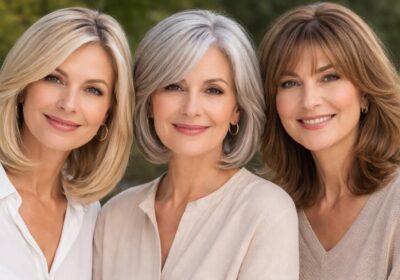
Gray hair doesn’t have to mean choosing between covering every silver strand and embracing an entirely gray hairstyle. There is a beautiful middle ground: hair colors that work with your natural grays rather than constantly fighting them.
Whether your first silver strands are appearing around your temples or you’re noticing a growing percentage of gray throughout your hair, the right color can soften the contrast between your roots and previously colored lengths. The result can be a more natural-looking transition and, depending on your starting color and technique, fewer noticeable roots between salon appointments.
The secret isn’t necessarily going lighter or darker. It’s choosing the right combination of depth, tone and strategically placed highlights or lowlights.
Here are some beautiful gray-blending hair colors worth discussing with your stylist.
Mushroom Brown: A Soft, Cool-Toned Brunette
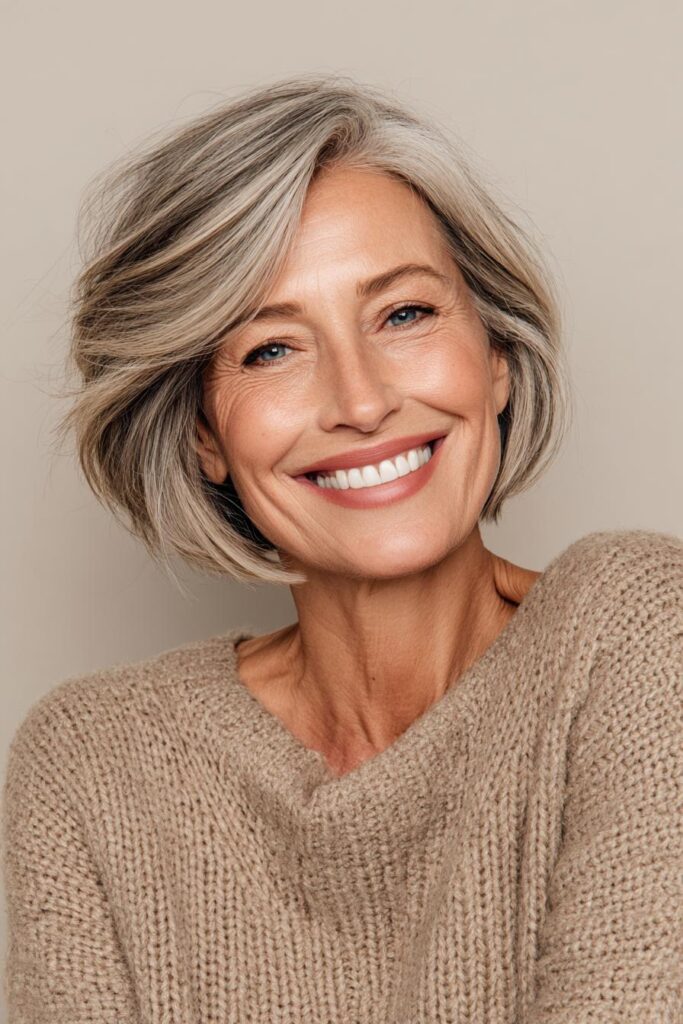
Mushroom brown combines cool brunette tones with subtle taupe, ash and beige dimensions. Its muted finish can complement naturally silver strands, particularly when the existing hair is already cool-toned.
Rather than covering every gray hair with a uniform dark brown, a stylist can introduce fine highlights and lowlights to create a softer transition between the natural roots and colored lengths.
This shade can be particularly attractive on a textured bob, layered lob or short pixie with enough length to show off its dimensional color.
Best for: Naturally medium to dark brown hair with cool or neutral undertones.
Maintenance tip: Avoid going excessively ashy if your complexion or natural hair color is warm. A personalized mixture of neutral and cool tones often looks more natural.
Soft Beige Blonde: A Gentle Way to Blend Silver Strands
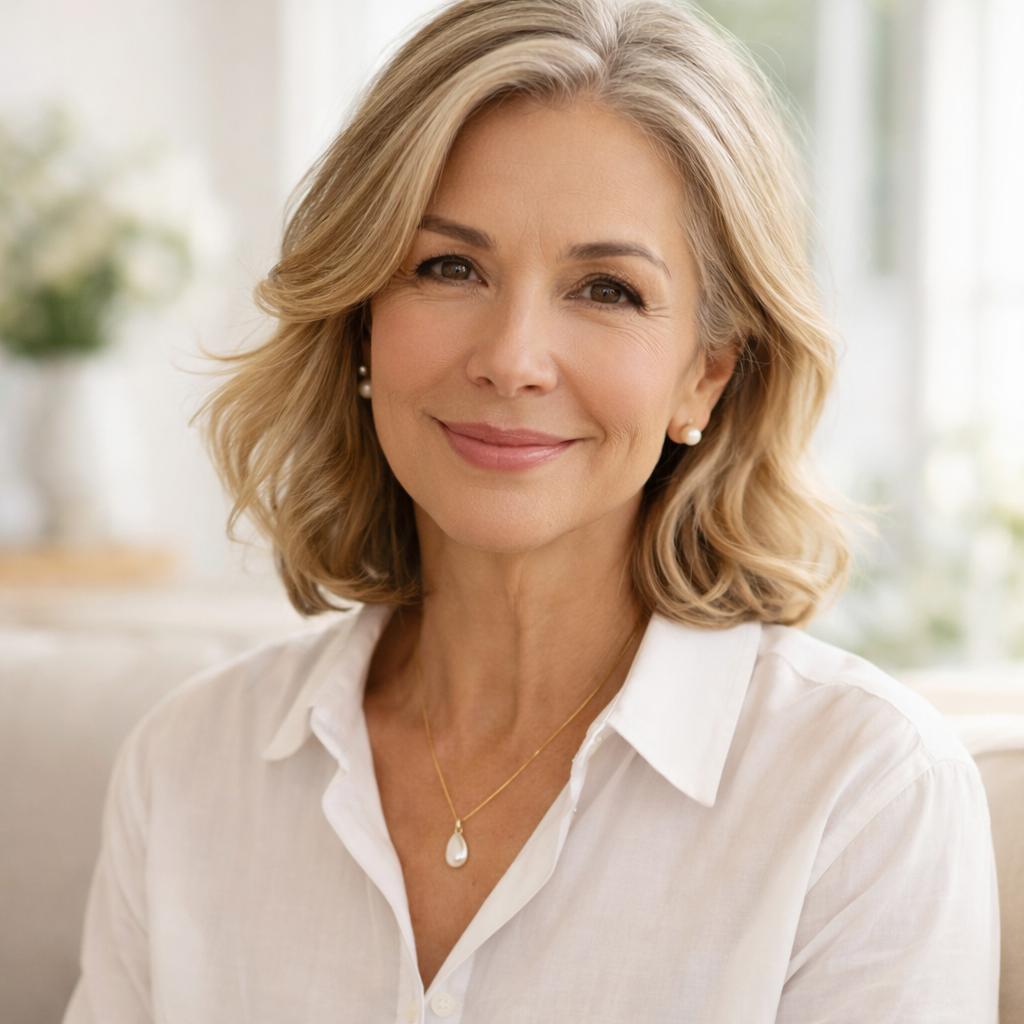
Soft beige blonde offers a balanced combination of warm and cool tones. It is less golden than honey blonde and less icy than platinum, making it a versatile option for women who want to soften the appearance of gray regrowth.
Fine beige highlights can help break up the contrast between naturally gray roots and previously blonde or light brown hair. When the highlights are placed strategically rather than uniformly, the overall color develops a softer, more dimensional appearance.
A beige blonde bob with gentle face-framing highlights can also bring brightness around the face without requiring an all-over light blonde color.
Best for: Naturally dark blonde or light brown hair with emerging gray strands.
Maintenance tip: Ask for fine highlights and a soft root transition rather than a solid blonde color from roots to ends.
Silver Balayage: Let Your Natural Gray Become Part of the Color

Silver balayage uses strategically placed cool highlights to connect naturally gray roots with darker lengths. It can be an appealing option for women who have substantial gray growth but aren’t ready to transition to completely silver hair.
The placement matters more than simply adding silver highlights everywhere. A stylist can concentrate lighter sections around existing gray areas, creating a more harmonious transition as the hair grows.
For women with very dark previously dyed hair, achieving silver balayage may require multiple lightening sessions. Hair condition should always take priority over reaching the lightest possible shade immediately.
Best for: Women with noticeable natural gray growth who want to transition gradually from darker colored hair.
Maintenance tip: Use a gentle color-care routine and ask your stylist how often toning will be necessary.
Dimensional Bronde: A Beautiful Balance of Brown and Blonde

Bronde sits between brunette and blonde, combining natural-looking brown depth with carefully placed lighter strands.
For women whose natural hair is medium brown, this combination can soften the visual contrast created by emerging gray hairs. Rather than maintaining one solid brunette shade, the hair contains several complementary tones that make new growth less immediately noticeable.
The most flattering bronde shades usually retain enough natural depth to prevent the hair from appearing overly highlighted.
Best for: Medium brown hair with scattered gray strands.
Maintenance tip: Keep highlights fine and dimensional. Very bright, thick blonde streaks can create more contrast than intended.
Ash Brown With Fine Silver Highlights
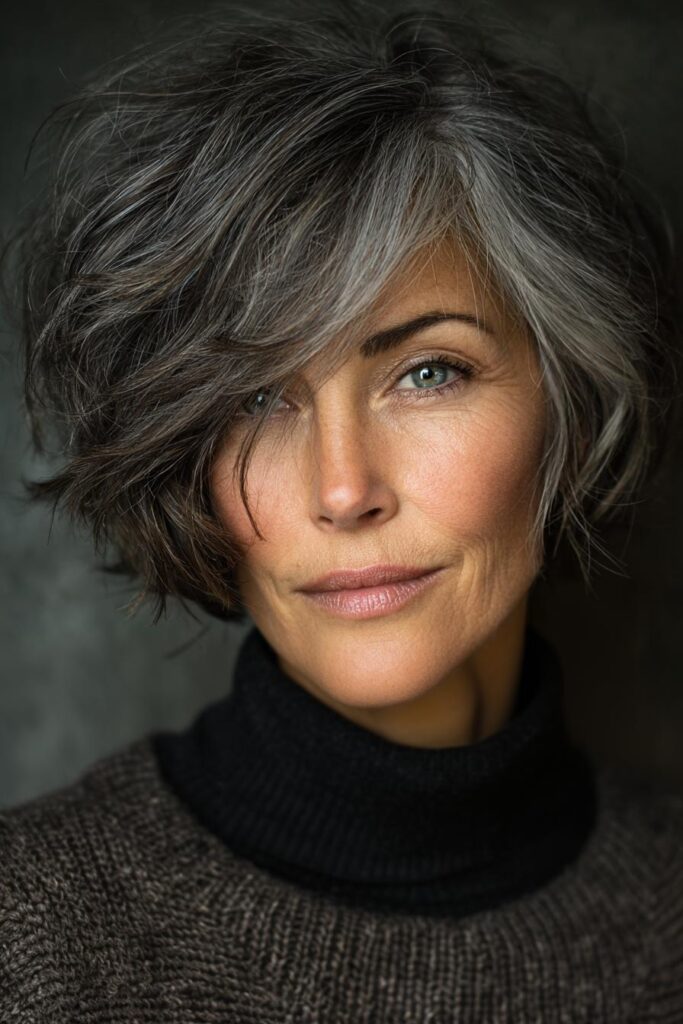
Ash brown is a cooler alternative to traditional chocolate or chestnut brown. When paired with delicate silver or ash-blonde highlights, it can help blend gray strands into a naturally brunette base.
This technique is particularly useful when gray hair first becomes noticeable around the temples and hairline. A few strategically placed highlights can connect these lighter areas with the rest of the hairstyle.
The result should still look brunette rather than heavily highlighted.
Best for: Naturally cool-toned brunettes with early gray growth.
Maintenance tip: Ask your stylist to preserve some natural depth, especially around the lower layers and nape.
Champagne Blonde: Soft Brightness Without an Icy Finish
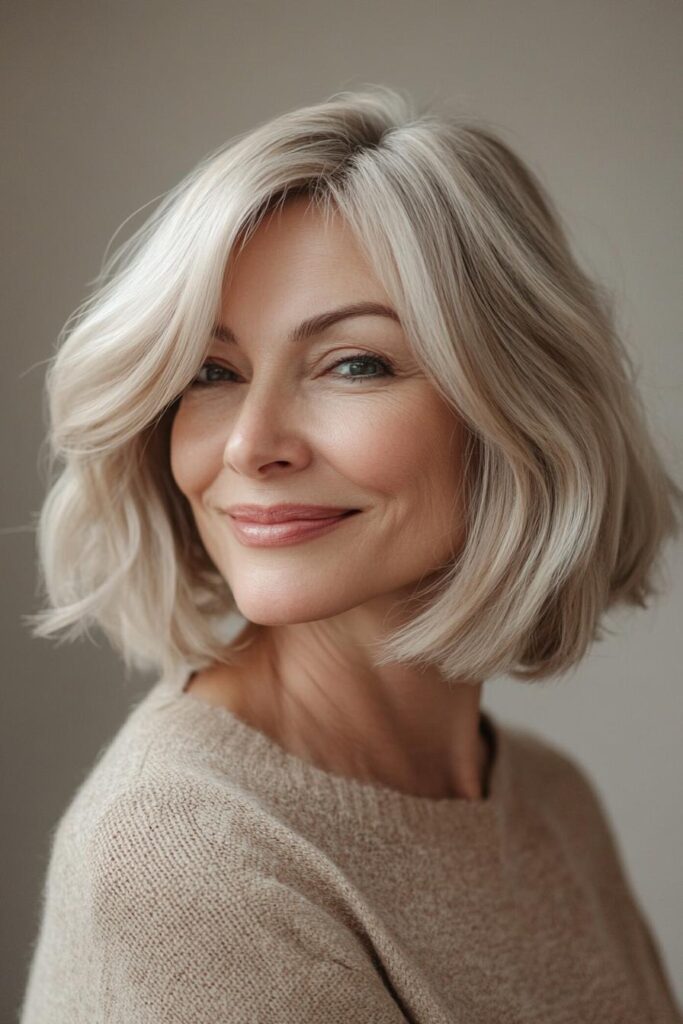
Champagne blonde combines delicate beige, pearl and soft golden tones. It offers a luminous finish without the stark contrast of very pale platinum blonde.
For naturally lighter-haired women, champagne highlights can create a gentle transition between blonde lengths and incoming silver strands.
It is especially attractive on short layered cuts, where the different tones become visible as the hair moves.
Best for: Natural blondes and light brunettes with increasing gray hair.
Maintenance tip: Choose a champagne shade that complements your natural undertone rather than automatically requesting the coolest possible blonde.
Salt-and-Pepper With Soft Lowlights
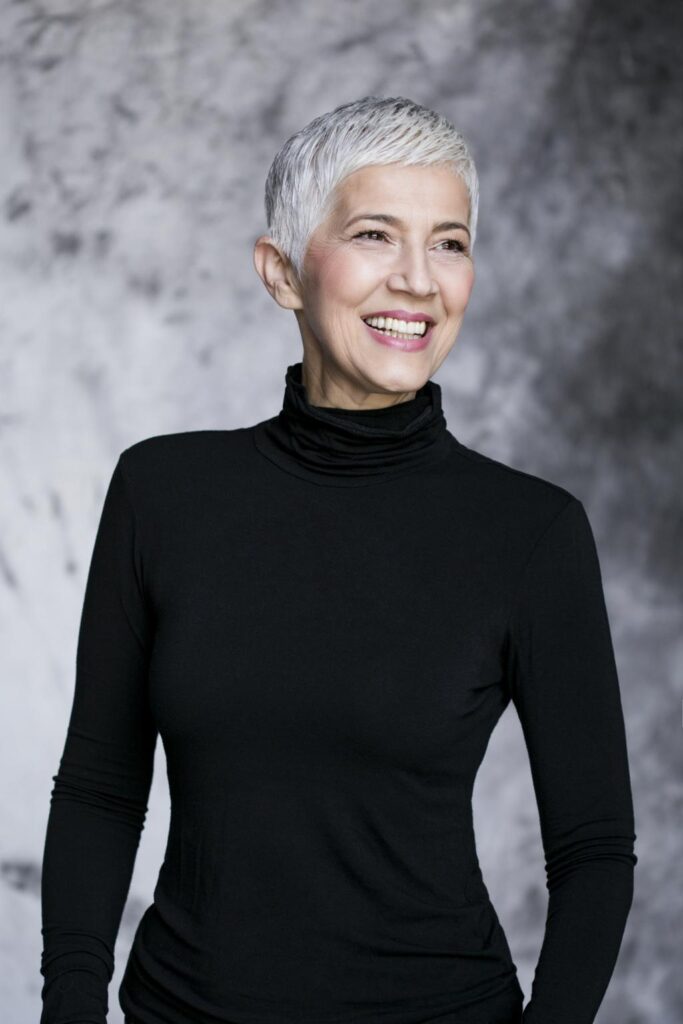
Not every gray-blending technique requires adding lighter highlights. For women who already have a significant amount of silver hair, carefully placed lowlights can restore dimension and definition.
Soft charcoal, cool brunette or neutral dark blonde lowlights can create depth within naturally gray hair, depending on the original color.
The objective is to enhance the natural salt-and-pepper pattern rather than conceal it.
On short pixies and textured bobs, this contrast can emphasize the haircut’s shape and layered construction.
Best for: Women who already have substantial natural gray or silver hair.
Maintenance tip: Avoid lowlights that are much darker than your remaining natural pigment. Excessively dark sections can create harsh regrowth.
Soft Caramel Brown: A Warmer Approach to Gray Blending

Cool-toned colors aren’t the only option for blending gray hair. Women with naturally warm brunette hair may prefer soft caramel brown with delicate beige and golden highlights.
The lighter strands introduce dimension, helping break up a solid brown base and making scattered gray hairs less visually prominent.
For a natural result, the caramel tones should complement the existing hair color rather than create dramatic stripes.
This shade looks particularly beautiful on shoulder-length layers, soft waves and face-framing haircuts.
Best for: Warm medium brunettes with scattered gray hair.
Maintenance tip: Keep highlights close to your natural color if low maintenance is the priority.
Pearl Blonde With a Soft Shadow Root
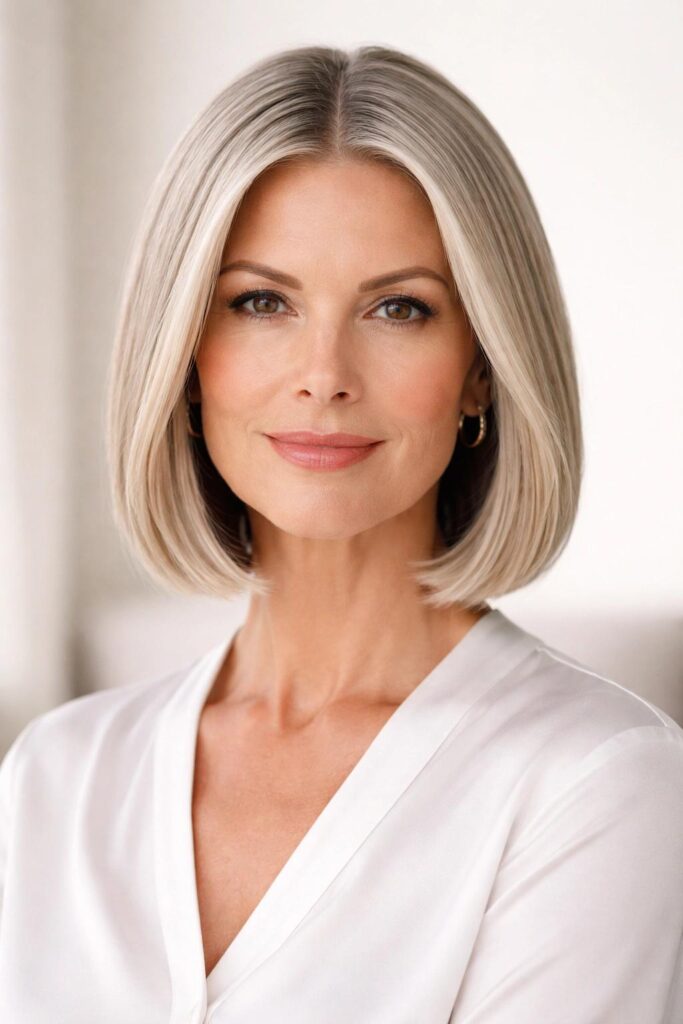
Pearl blonde combines soft silver, beige and cool blonde tones. When paired with a carefully blended shadow root, it can create a graceful transition between naturally gray hair and lighter blonde lengths.
Unlike a solid platinum blonde, a dimensional pearl blonde retains subtle variations in tone. This can help the color appear softer and more natural as the roots grow.
However, very dark natural hair may require significant lightening to achieve this result, making it less suitable for anyone seeking a truly low-maintenance transformation.
Best for: Naturally blonde or predominantly gray hair.
Maintenance tip: Discuss your desired root depth with your stylist. A shadow root should soften the transition rather than create a noticeable dark band.
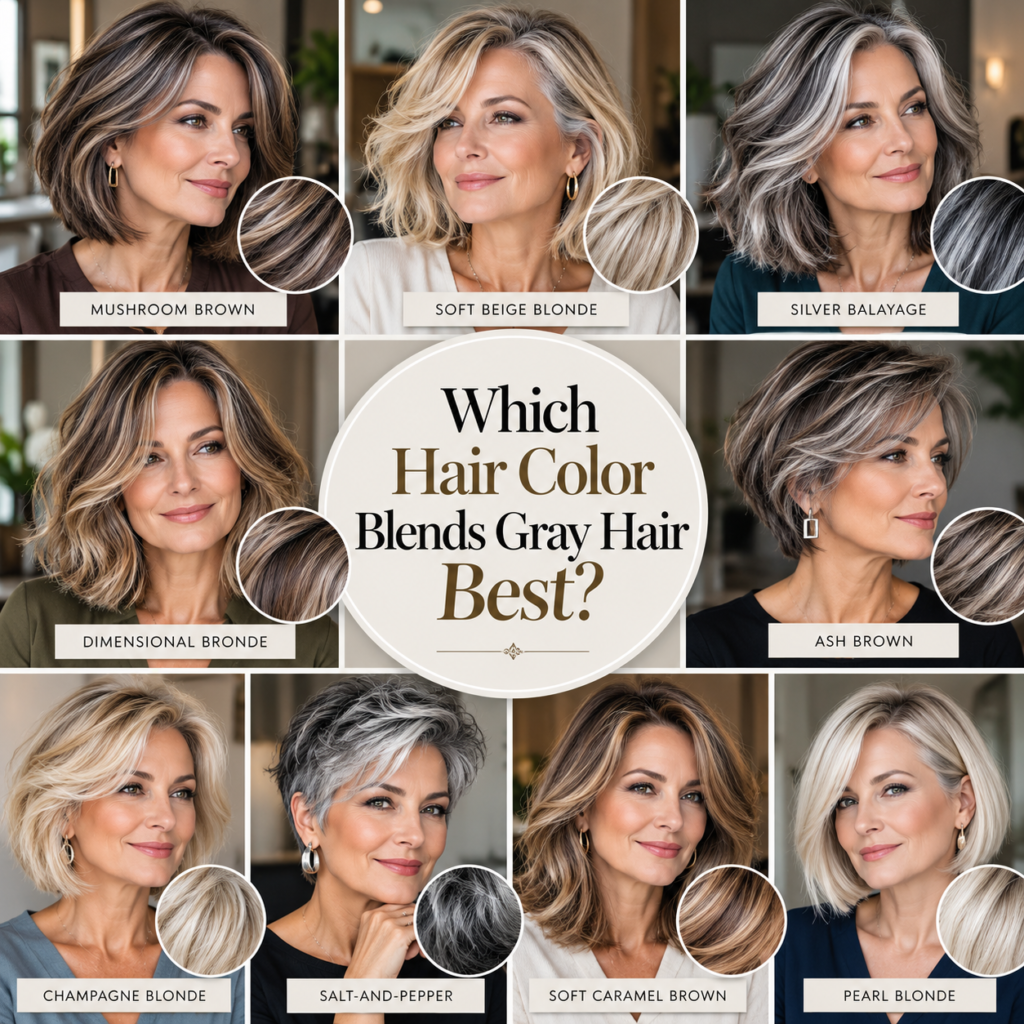
Which Hair Color Blends Gray Hair Best?
The most suitable gray-blending color depends on your natural hair color, the percentage and distribution of gray, your hair’s condition and how often you’re comfortable visiting the salon.
|
Your starting point |
Colors to consider |
|---|---|
|
Dark brown with scattered gray |
Mushroom brown, ash brown with silver highlights |
|
Medium brunette with early gray |
Dimensional bronde, soft caramel brown |
|
Naturally blonde with gray roots |
Beige blonde, champagne blonde |
|
Substantial gray with dark dyed lengths |
Silver balayage, gradual gray blending |
|
Predominantly silver hair |
Salt-and-pepper with lowlights, pearl blonde |
These are starting points rather than universal rules. A consultation is particularly important if your hair has accumulated several layers of permanent dark dye.
How to Make Gray-Blended Hair Easier to Maintain
The most important decision is often not the shade itself but the coloring technique.
Fine highlights, carefully placed lowlights and soft root transitions can make new growth less obvious than a uniform permanent color. The closer your chosen shade is to your natural hair and gray pattern, the easier the transition may be.
Ask your stylist to consider where your gray hair is most concentrated. Some women have predominantly silver temples, while others develop gray throughout the crown or around the entire hairline. Different patterns call for different highlight placement.
Remember that gray blending doesn’t necessarily mean zero maintenance. Highlights may still need refreshing, cool tones can fade, and previously lightened hair may require conditioning treatments.
If you want to transition from years of dark permanent dye to natural silver, a gradual approach is often kinder to your hair than trying to achieve the entire transformation in one appointment.
Final Thoughts
Gray-blending hair color is about creating a softer relationship between your natural hair and the silver strands that are becoming part of it.
Whether you love the muted elegance of mushroom brown, the brightness of champagne blonde or the dimension of silver balayage, the goal is to find a color that looks beautiful today and continues to look intentional as it grows.
A thoughtful combination of tone, placement and natural depth can make all the difference — without feeling that every new gray strand requires another appointment.