9 Haircuts for a Round Face That Add Shape Without Adding Width

A round face doesn’t need to be “hidden” or made to look like a completely different shape. The goal of a flattering haircut is much simpler: create balance.
Cuts that introduce vertical movement, subtle angles, or strategically placed layers can give a round face more definition without creating extra fullness around the widest part of the cheeks.
That doesn’t mean you’re limited to long hair, either. Pixies, bobs, lobs, and shoulder-length styles can all work beautifully on round faces when the proportions are right.
Here are nine haircuts worth considering.
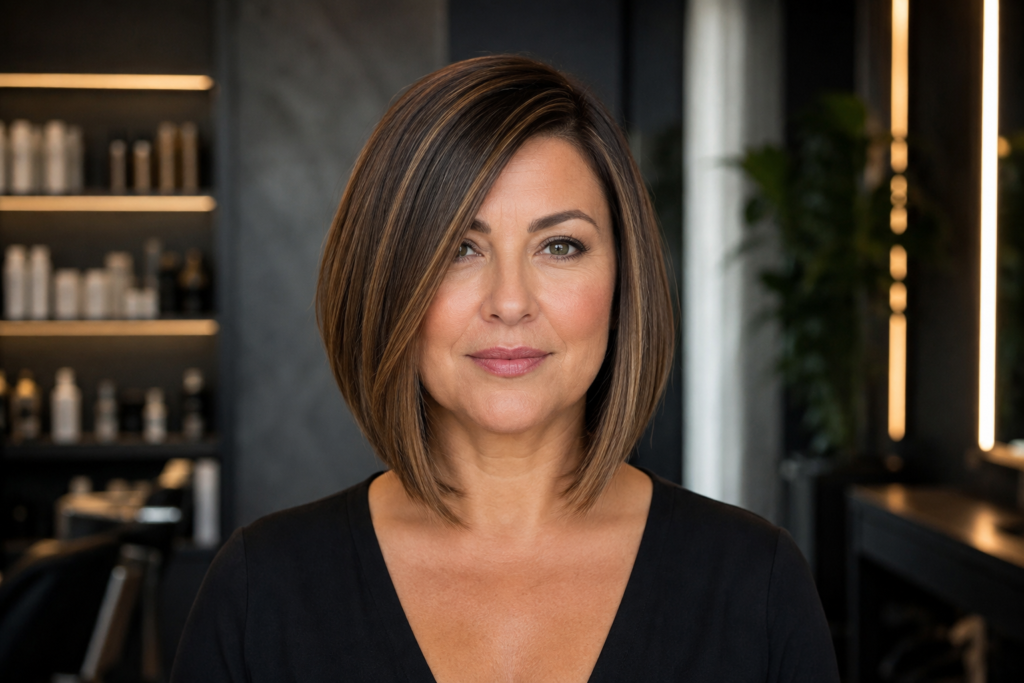
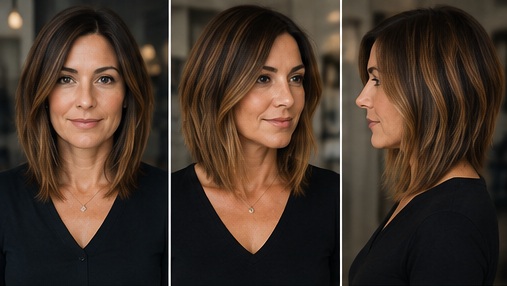
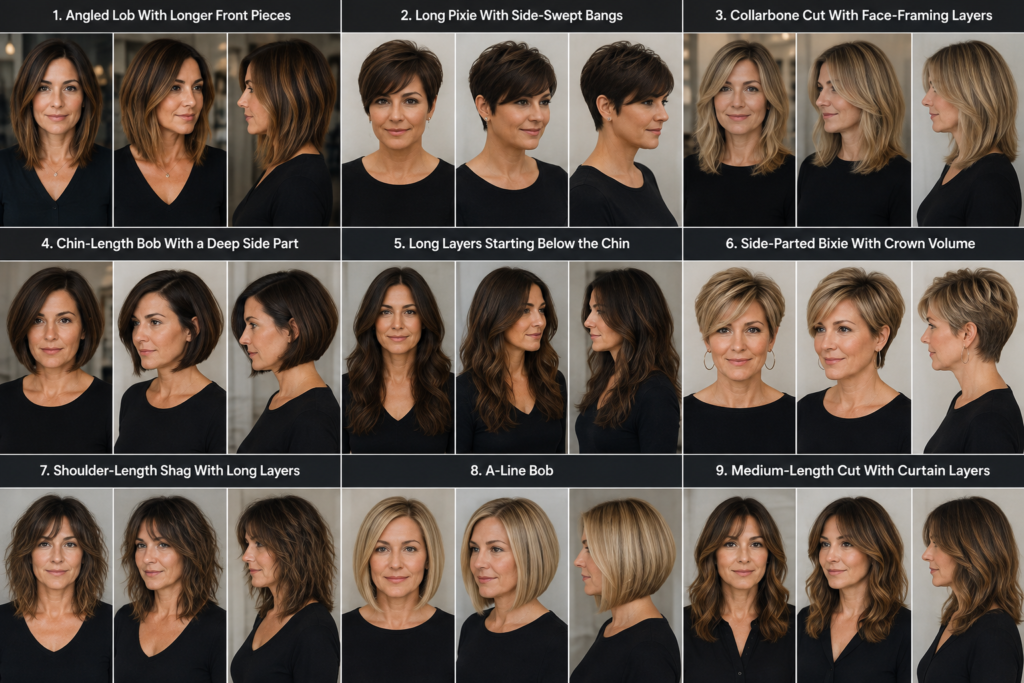
1. Angled Lob With Longer Front Pieces
An angled lob is one of the easiest ways to introduce definition around a round face without relying on dramatic layering.
Keeping the front slightly longer than the back creates diagonal lines that visually frame the cheeks and jaw. The length should ideally fall below the chin rather than directly at the widest part of the face.
The result feels polished without being overly structured.
Why it works: The longer front creates vertical lines while the subtle angle adds definition.
Best length: Just above the shoulders or around the collarbone.
Styling tip: Keep volume concentrated near the crown rather than directly beside the cheeks.
2. Long Pixie With Side-Swept Bangs
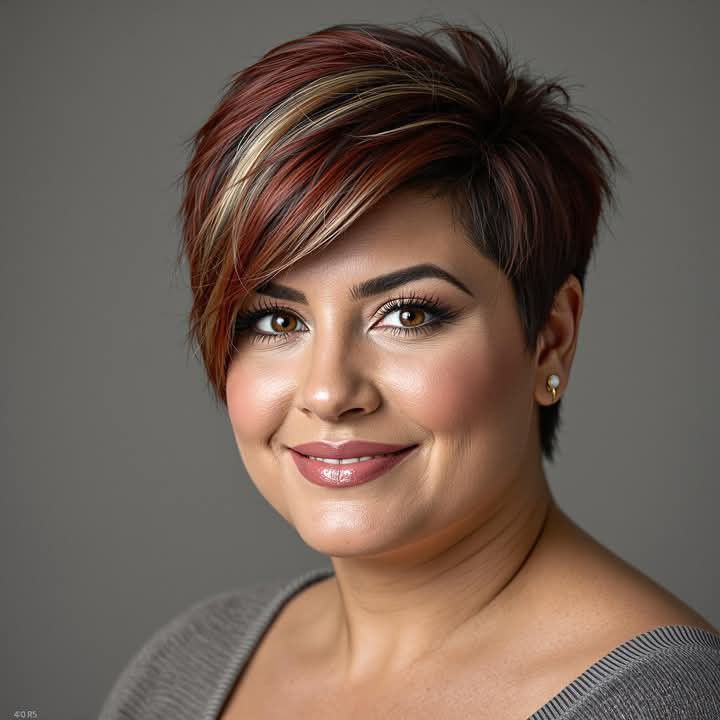
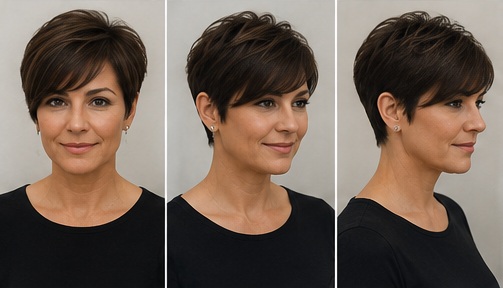
Yes, a pixie can work beautifully on a round face.
The key is keeping some length through the top and front rather than creating equal volume everywhere. A longer side-swept fringe introduces an asymmetrical line across the face, while a little crown height creates more vertical balance.
The sides can remain relatively neat to avoid making the face appear wider.
Why it works: Height on top and diagonal bangs interrupt the circular outline of the face.
Best for: Women who want a short haircut without losing softness around the face.
Styling tip: Sweep the fringe diagonally rather than styling it straight across the forehead.
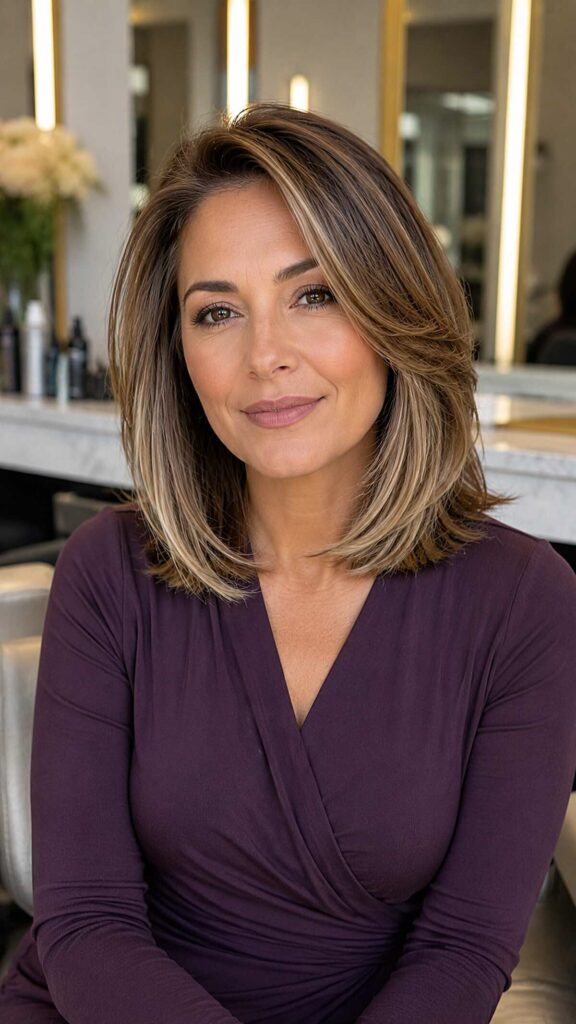
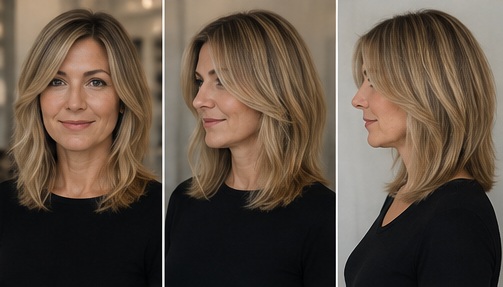
3. Collarbone Cut With Face-Framing Layers
A collarbone-length haircut gives a round face enough length to create vertical movement while remaining much easier to manage than very long hair.
The most flattering layers usually begin below the cheekbones or around the jaw rather than directly at cheek level.
This creates movement around the lower part of the face without adding unnecessary fullness through the middle.
Why it works: The longer silhouette visually balances facial width while the face-framing pieces introduce subtle angles.
Styling tip: Direct the front layers slightly away from the face for a softer, more open finish.
4. Chin-Length Bob With a Deep Side Part
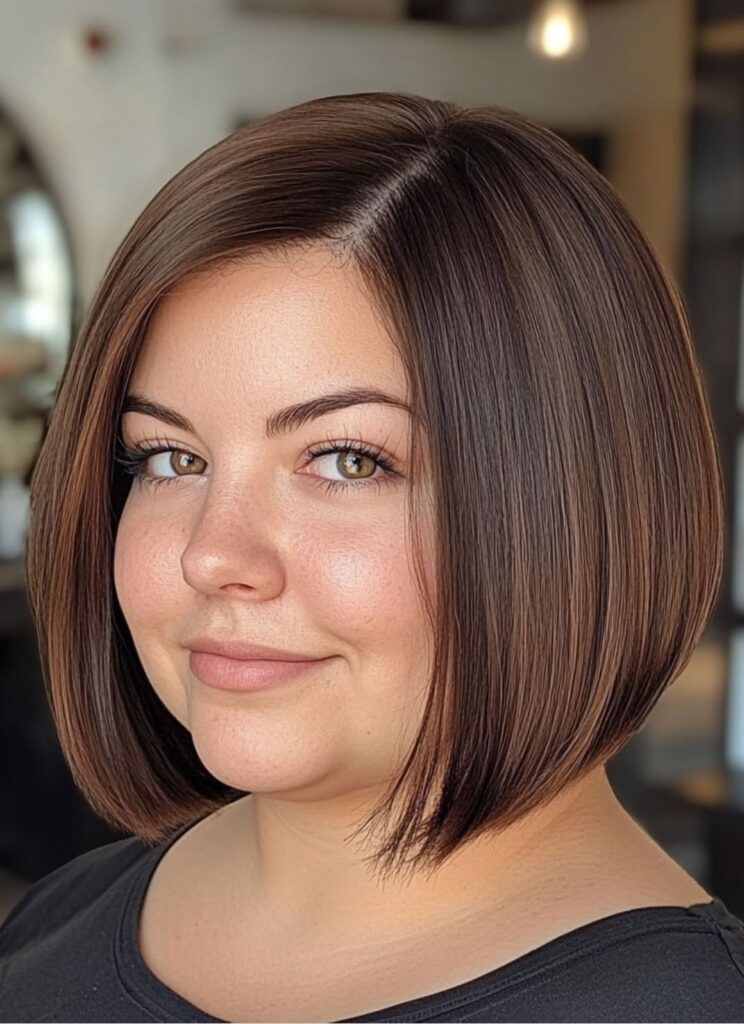
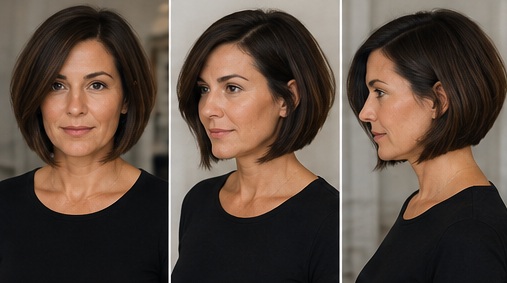
A round face doesn’t automatically rule out a short bob.
Instead of a perfectly symmetrical center-parted shape, try a deep side part with a slightly asymmetric finish. The diagonal part creates movement across the face and prevents the bob from emphasizing symmetry too strongly.
The perimeter can remain relatively blunt to preserve a modern, substantial shape.
Why it works: Asymmetry introduces visual angles that contrast with softer facial curves.
Styling tip: Avoid creating maximum volume on both sides at cheek level. Keep one side sleeker and allow the opposite side to carry more movement.
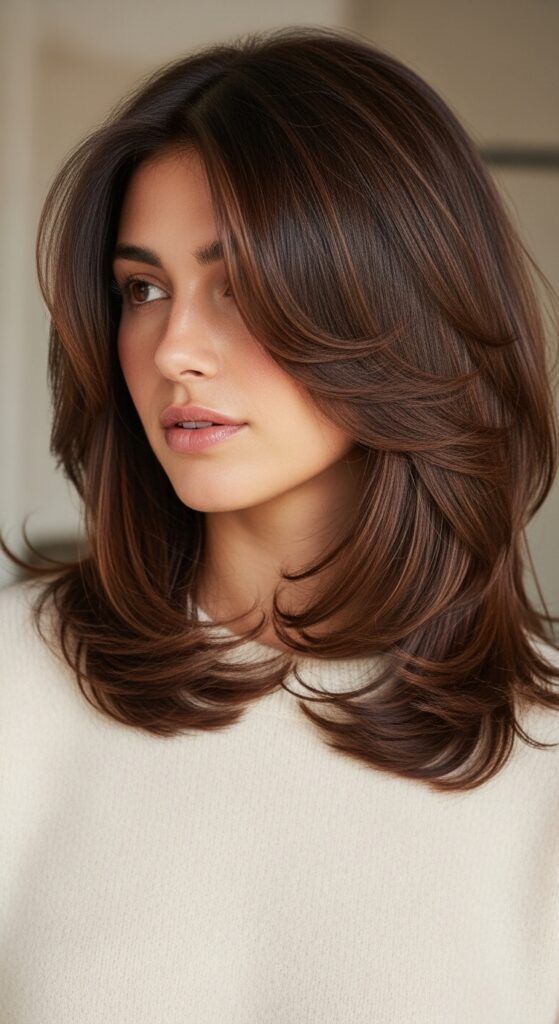
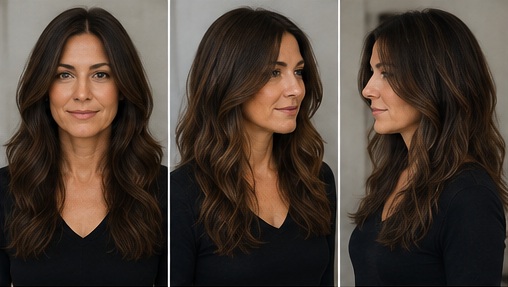
5. Long Layers Starting Below the Chin
Long hair can flatter a round face particularly well when the layers are positioned carefully.
Instead of short layers that create fullness around the cheeks, ask for longer layers beginning below the chin. This allows the hair to move while maintaining a predominantly vertical silhouette.
The result can be especially flattering on naturally straight, wavy, or softly textured hair.
Why it works: Long uninterrupted lines create length while lower layers add movement without widening the cheek area.
Styling tip: Soft bends and elongated waves generally work better than very tight curls concentrated beside the face.
6. Side-Parted Bixie With Crown Volume
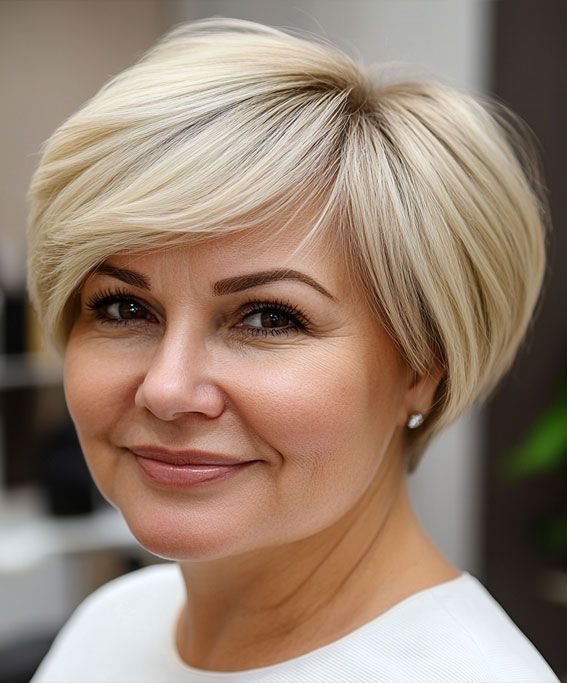
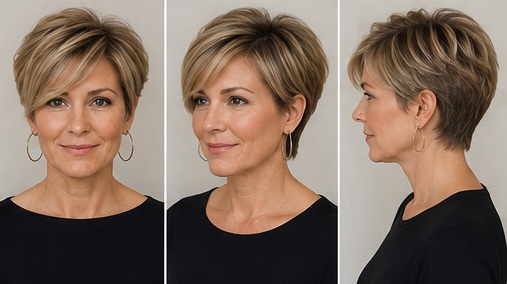
A bixie offers more softness than a traditional pixie while remaining shorter and lighter than a bob.
For a round face, the strongest version keeps subtle height through the crown, longer pieces around the front, and relatively controlled volume around the ears.
A side part adds another diagonal element that helps break up facial symmetry.
Why it works: Crown height introduces vertical balance while the longer front pieces subtly frame the face.
Styling tip: Don’t create equal volume all around the head. Concentrate movement through the top and fringe.
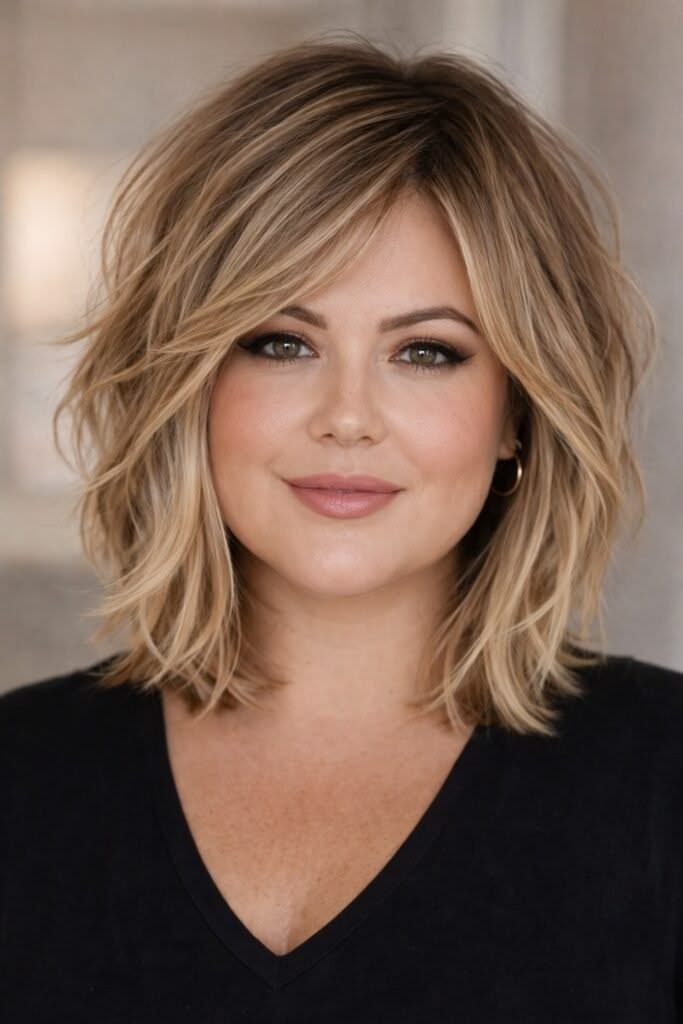
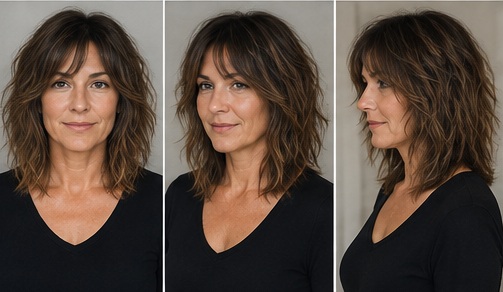
7. Shoulder-Length Shag With Long Layers
A shag doesn’t have to mean enormous volume and dozens of short layers.
A softer shoulder-length version with longer layers can create excellent movement around a round face. The important part is keeping the shortest layers away from the widest point of the cheeks.
A long, sweeping fringe can add another flattering diagonal line.
Why it works: Uneven movement and longer layers create definition without producing a rounded silhouette.
Styling tip: Encourage texture through the lengths while keeping the sides around the cheekbones relatively controlled.
8. A-Line Bob
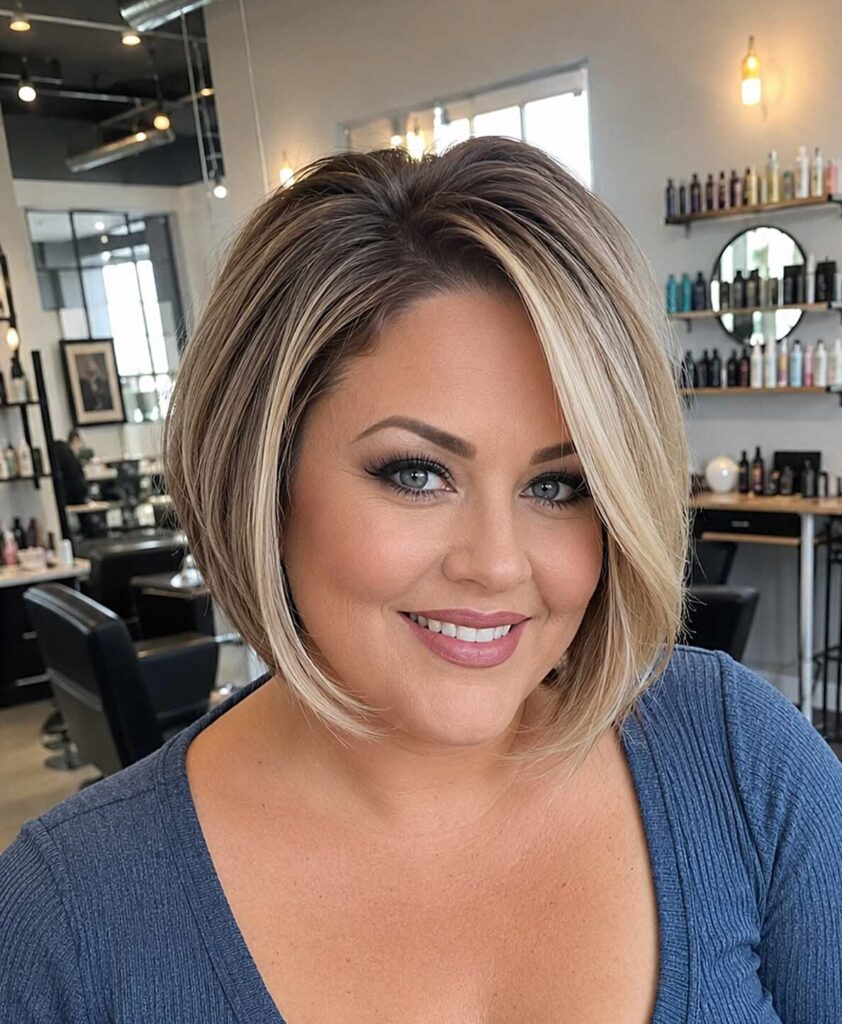
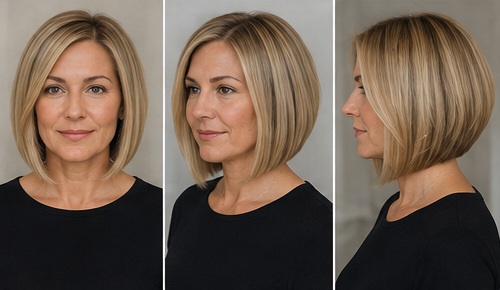
The A-line bob is slightly shorter at the back and gradually becomes longer toward the front.
That seemingly small difference can make it especially flattering for round faces because the front sections naturally create diagonal lines toward the jaw and neck.
Unlike a heavily stacked bob, a softer A-line version can remain sleek and modern.
Why it works: The forward angle creates definition around the lower face and draws the eye vertically.
Styling tip: A smooth finish shows the shape particularly well, but subtle texture through the ends can prevent it from looking too rigid.
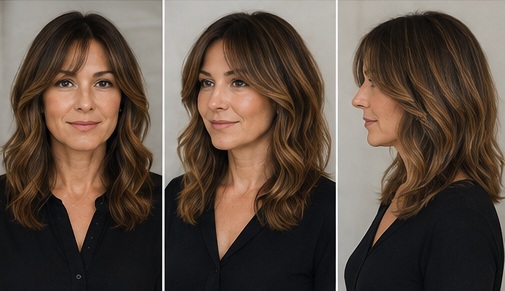
9. Medium-Length Cut With Curtain Layers
Curtain bangs themselves can sometimes add width when they’re very short and full. But longer curtain-style layers are a different story.
When the shortest pieces begin around the cheekbone or jaw and continue downward, they create an open frame around the face rather than a horizontal line across it.
Pair them with a medium-length cut falling below the shoulders for an especially versatile result.
Why it works: The parted front creates vertical space while longer framing pieces introduce movement and definition.
Styling tip: Keep the front pieces elongated and softly curved away from the face.

What Haircut Length Is Best for a Round Face?
There isn’t one ideal length.
A flattering haircut depends more on where volume, layers, and perimeter lines are placed than whether the hair is short or long.
Short hair can work beautifully when it creates height or asymmetry. Medium and long cuts can create vertical movement, while bobs can introduce definition through angles and strategic parting.
The goal isn’t to make a round face appear dramatically thinner. It’s to create a hairstyle whose proportions complement the natural proportions of the face.
What Should You Avoid With a Round Face?
There are no hairstyles that women with round faces are forbidden to wear.
However, if your goal is specifically to avoid emphasizing facial width, be cautious with cuts that create their greatest volume directly beside the cheeks.
Very rounded bobs, extremely full cheek-level curls, or heavy horizontal bangs can visually emphasize width.
Small modifications—such as changing the part, extending the fringe, moving layers lower, or adding crown height—can often make the same haircut work beautifully.
FAQ
Do layers look good on a round face?
Yes. Longer layers are particularly versatile because they create movement without necessarily adding volume around the cheeks. Placement matters more than the number of layers.
Are short haircuts good for round faces?
Absolutely. Long pixies, bixies, angled bobs, and other short styles can work particularly well when they incorporate crown height, asymmetry, or diagonal lines.
Is a bob flattering for a round face?
Yes. Angled, A-line, asymmetric, and side-parted bobs are especially useful when the goal is to introduce more definition.
Is a side part or middle part better for a round face?
Both can work. A side part naturally creates asymmetry and diagonal movement, while a center part can create strong vertical lines when paired with longer lengths.
Should a round face have bangs?
It can. Side-swept bangs and longer curtain-style fringe are particularly easy to adapt because they create movement rather than a strong horizontal line across the face.
Final Thoughts
The best haircuts for round faces aren’t necessarily the styles that promise to make the face look dramatically slimmer.
A better approach is to focus on balance, movement, and strategic shape.
Longer front pieces, subtle angles, crown height, asymmetry, and thoughtfully placed layers can all introduce definition while allowing the natural softness of a round face to remain part of the look.
Whether you prefer a pixie, bob, lob, shag, or longer haircut, small adjustments in proportion can often make a much bigger difference than changing the entire style.