Haircuts That Keep Their Shape Between Salon Visits

A great haircut should not look amazing only on the day you leave the salon.
The real test comes several weeks later, when the ends have grown, the layers have shifted, and you are styling your hair at home without a professional blowout.
Some haircuts lose their structure surprisingly quickly. Others continue to look intentional even as they grow, thanks to strong perimeter lines, balanced graduation, strategic layering, and shapes that work with the hair’s natural movement.
If you want a haircut that still feels polished between appointments, the goal isn’t necessarily choosing the simplest cut. It is choosing a shape that can evolve without immediately looking overgrown.
Below are some of the best haircut structures to consider when you want your hair to keep its shape for longer.
Soft Graduated Bob
Graduation can give a bob an internal structure that helps it maintain its silhouette as it grows.
Instead of creating an aggressively stacked back, a soft graduated bob uses subtle elevation to build gentle fullness through the lower back of the haircut.
The front can remain slightly longer, giving the overall shape a clean direction without creating an extreme angle.
As the hair grows, that graduation gradually relaxes rather than disappearing completely.
This can make the haircut particularly useful for straight or slightly wavy hair that tends to lose its shape when everything is cut at one length.
Why it holds its shape: the graduation creates an underlying structure rather than relying entirely on styling for volume.
Ask your stylist for: subtle graduation, a clean perimeter, and enough weight through the ends to prevent the haircut from looking overly layered.
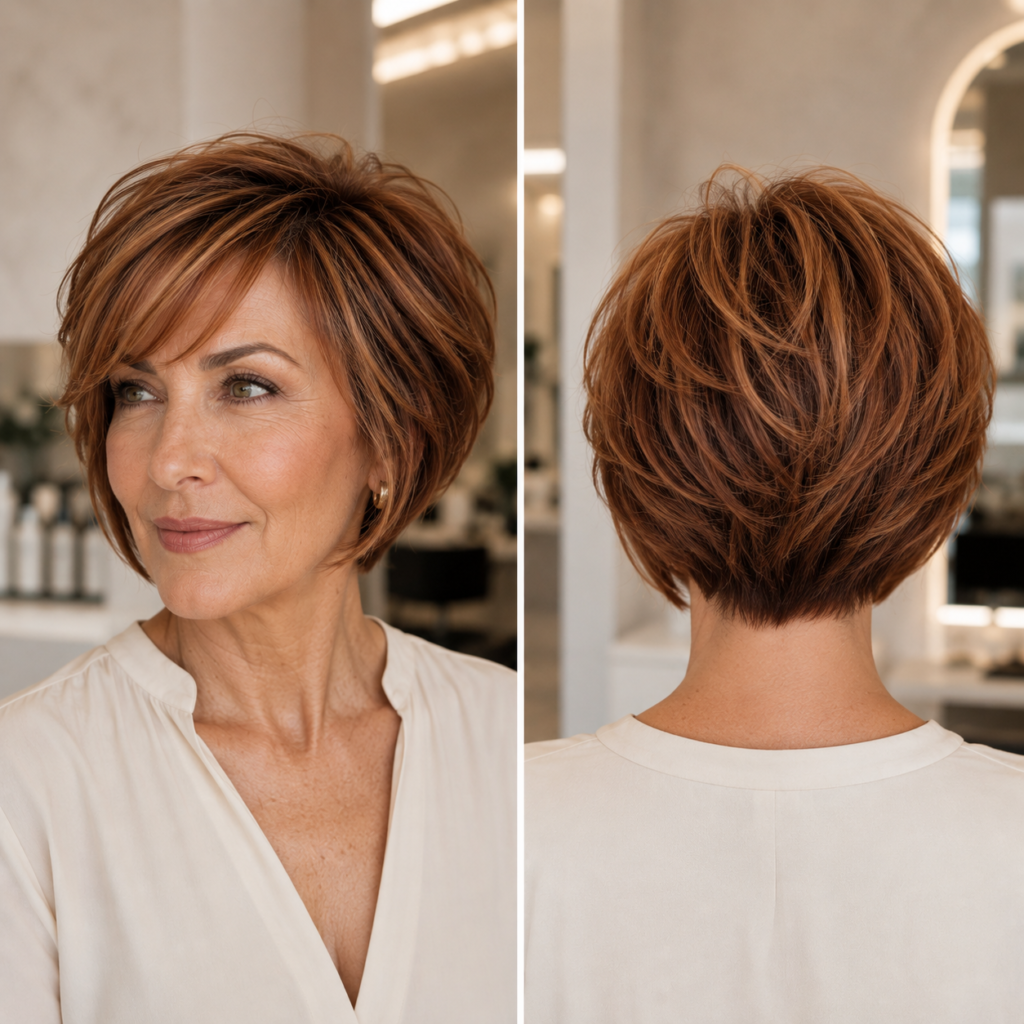
Sculpted Short Crop
A short crop can grow surprisingly well when the silhouette is carefully designed.
The key is avoiding an extremely tight cut that depends on perfectly clean edges to look intentional.
A softer sculpted crop leaves enough length through the crown and fringe for the hair to move naturally while keeping the neckline controlled.
After several weeks, the additional length can actually make the haircut look softer rather than simply overgrown.
This is particularly useful if you enjoy short hair but don’t want to feel that you need a salon appointment every few weeks.
Why it holds its shape: the crown, sides, and fringe are designed to grow into one another instead of becoming disconnected.
Best for: straight, fine, medium, or softly wavy hair.
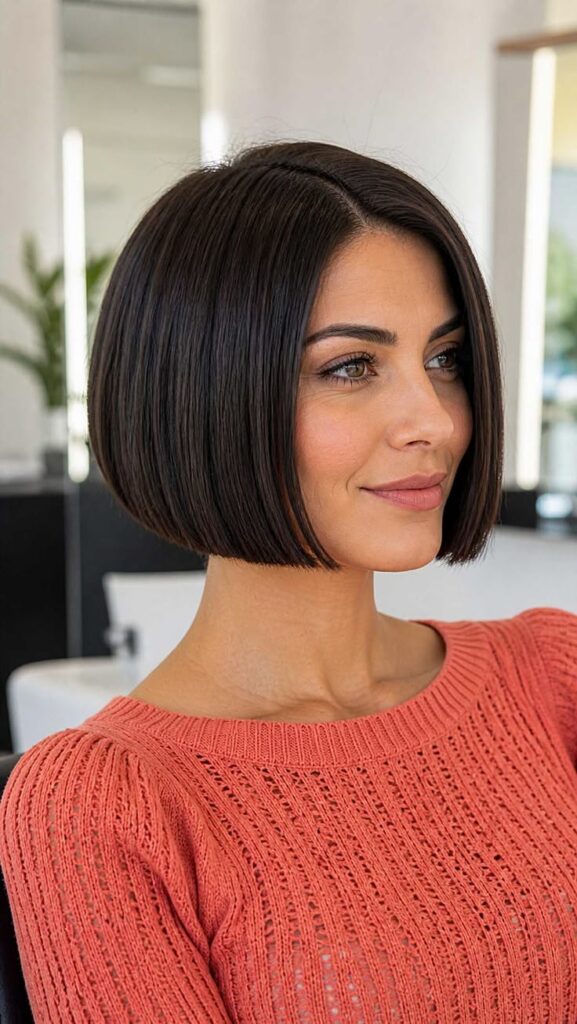
Compact Bob With a Strong Perimeter
Sometimes the simplest-looking haircut has the smartest structure.
A compact bob relies on a strong perimeter rather than numerous visible layers.
Keeping density through the bottom gives the haircut a recognizable outline even when the length starts moving downward.
This can be especially flattering for fine or medium-density hair because the ends continue to look substantial rather than becoming increasingly wispy.
The shape can be worn smooth, softly curved under, or slightly undone.
Why it holds its shape: the strong baseline remains visible as the hair grows.
Ask your stylist for: a defined perimeter with minimal thinning through the bottom few inches.
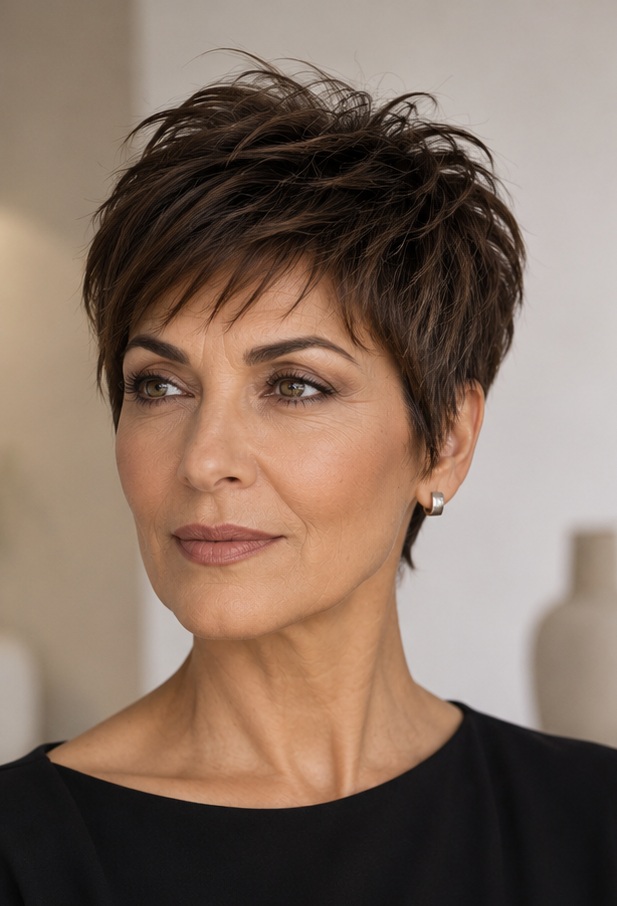
Tapered Pixie With a Longer Top
Very precise pixies can demand frequent maintenance, particularly when the sides are clipped extremely short.
A slightly softer version can be much more forgiving.
Keeping additional length through the top and fringe creates room for the haircut to evolve between appointments.
The neckline and sides are tapered rather than dramatically shaved, while the longer crown can be swept sideways, tousled, or styled with more volume as it grows.
Instead of suddenly looking overdue for a trim, the haircut gradually changes character.
Why it holds its shape: there is enough length on top to accommodate growth while the tapered lower sections preserve the overall silhouette.
Best for: anyone who loves short hair but wants more flexibility between trims.
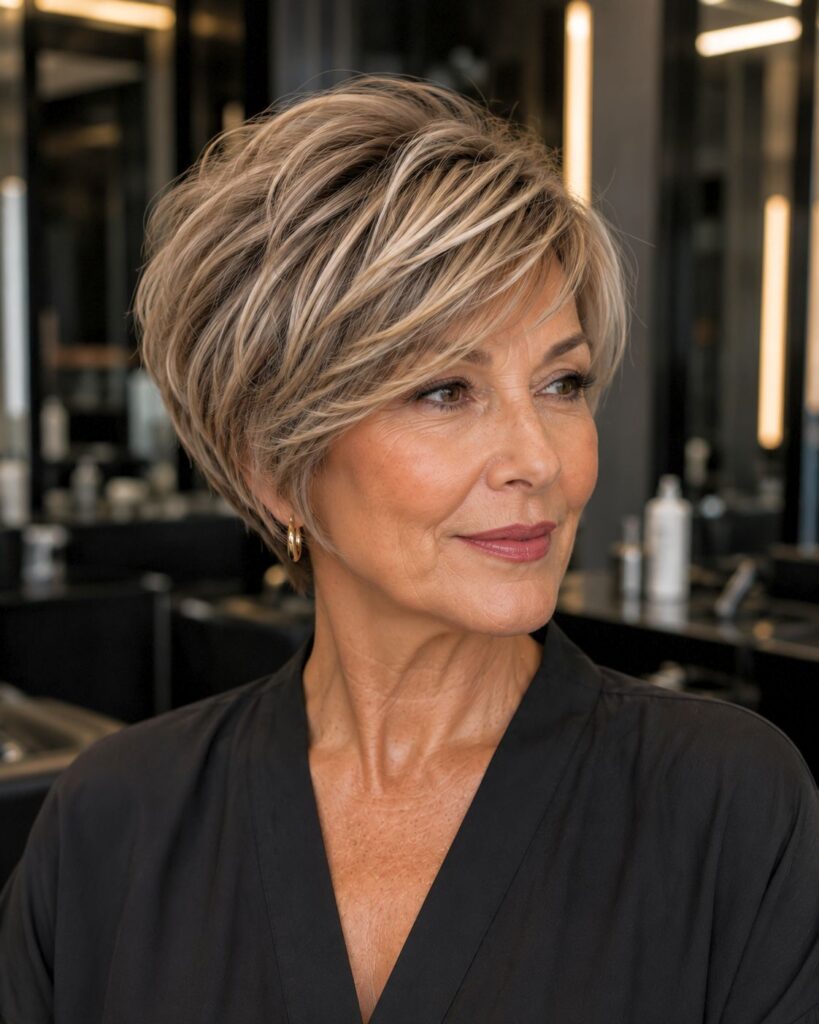
Rounded Short Cut
A rounded haircut is built around silhouette rather than individual layers.
The crown has gentle fullness, the sides follow the shape of the head, and the perimeter remains soft but intentional.
Because the overall outline is the main feature, a little additional length does not necessarily destroy the haircut.
In fact, the shape can gradually transition from a shorter rounded crop into a fuller, slightly longer style.
The important detail is controlling bulk around the sides. Too much weight there can make the haircut widen as it grows.
Why it holds its shape: the proportions are balanced from the beginning, allowing the entire silhouette to expand gradually.
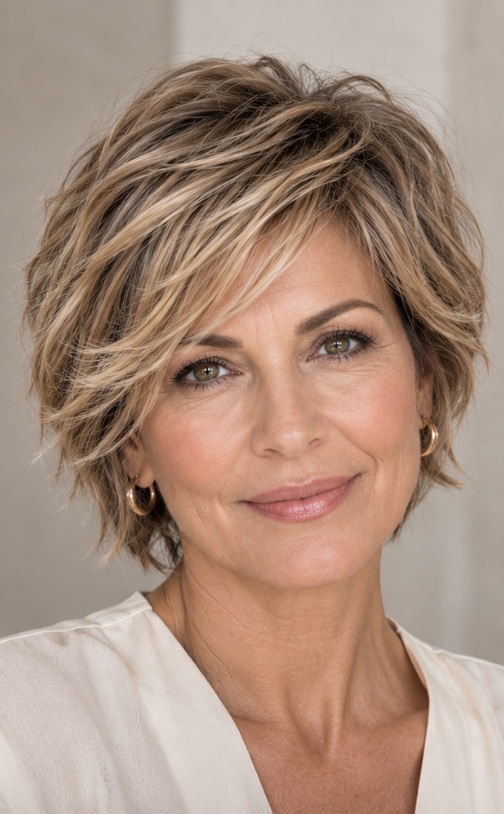
Structured Midi Cut
Medium-length hair often reaches an awkward point when layers begin growing at different speeds.
A structured midi avoids this by keeping a stronger overall outline and using layering selectively.
Instead of covering the entire haircut with short layers, movement is concentrated in areas where it actually improves the shape — often around the face or through selected interior sections.
The bottom remains substantial.
This gives the haircut enough movement to avoid looking heavy while preserving a clear shape as the length increases.
Why it holds its shape: fewer competing layer lengths mean fewer sections that can start looking disconnected during grow-out.
Best for: straight, wavy, or moderately thick hair.
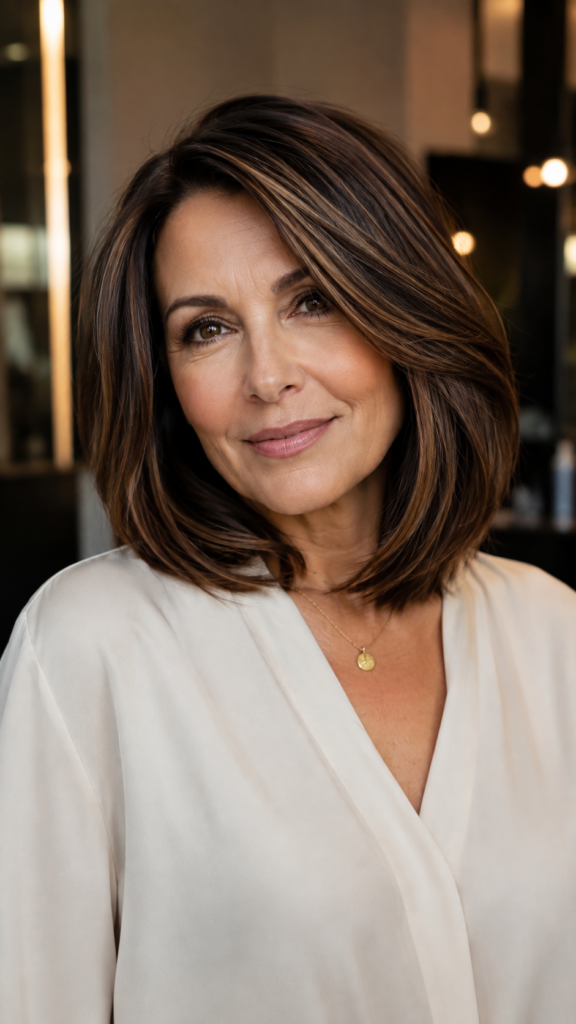
Soft A-Line Shape
An A-line haircut doesn’t need a dramatic short-back, long-front contrast.
A subtle version can create just enough direction to keep a haircut looking intentional for longer.
The back is slightly shorter while the front gradually gains length.
As the haircut grows, the angle becomes softer but doesn’t immediately disappear.
This works particularly well for people who like a polished shape but don’t want heavy layering.
Why it holds its shape: the haircut has a built-in direction that remains visible as the perimeter moves downward.
Ask your stylist for: a gentle forward angle rather than an extreme geometric line.
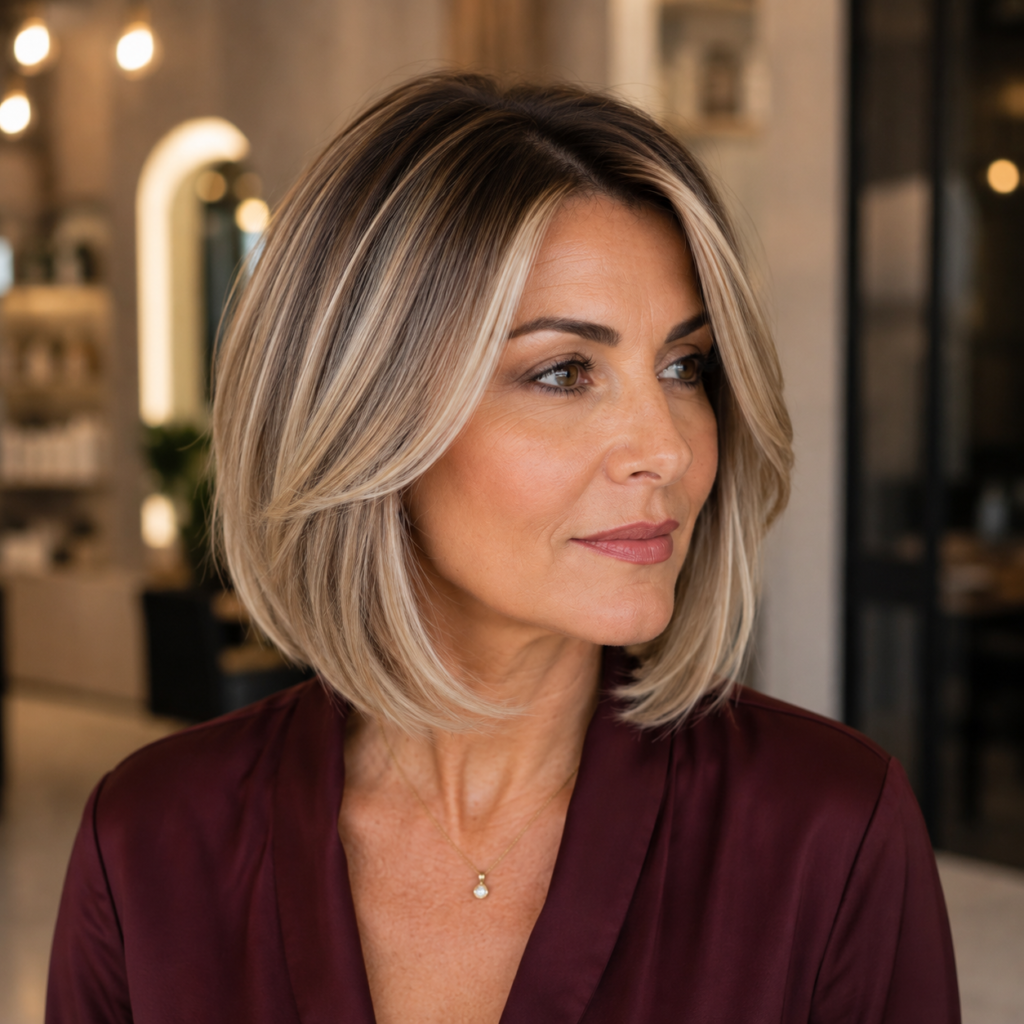
Controlled Shag
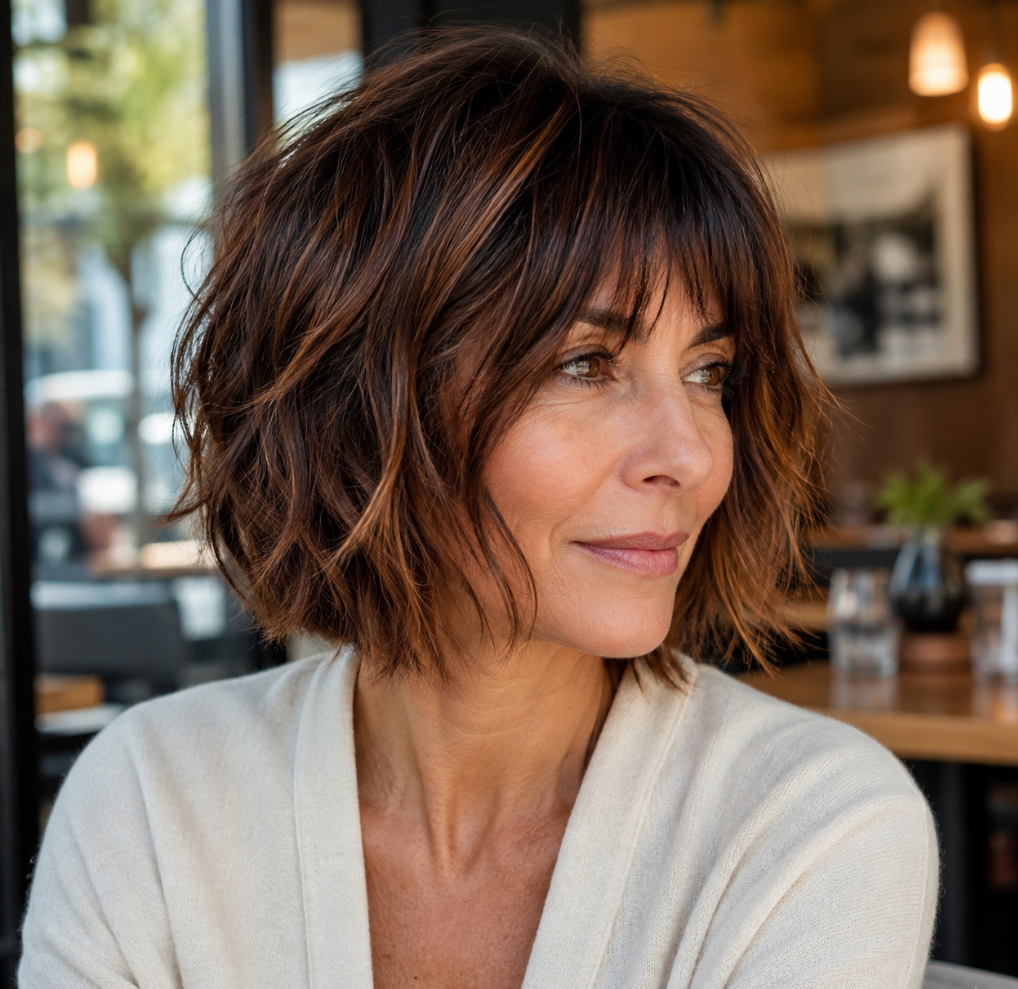
Shags are usually associated with lots of layers, but not every shag needs extreme disconnection.
A controlled shag uses longer, carefully placed layers to create movement while maintaining enough density through the ends.
The result has texture without depending on every section being perfectly positioned.
That slightly undone quality can actually become an advantage between salon appointments.
As the layers grow, the haircut simply becomes softer and less pronounced.
Why it holds its shape: natural movement is part of the design, so a little extra length doesn’t immediately make the haircut look unfinished.
Best for: naturally wavy hair or hair with some texture and movement.
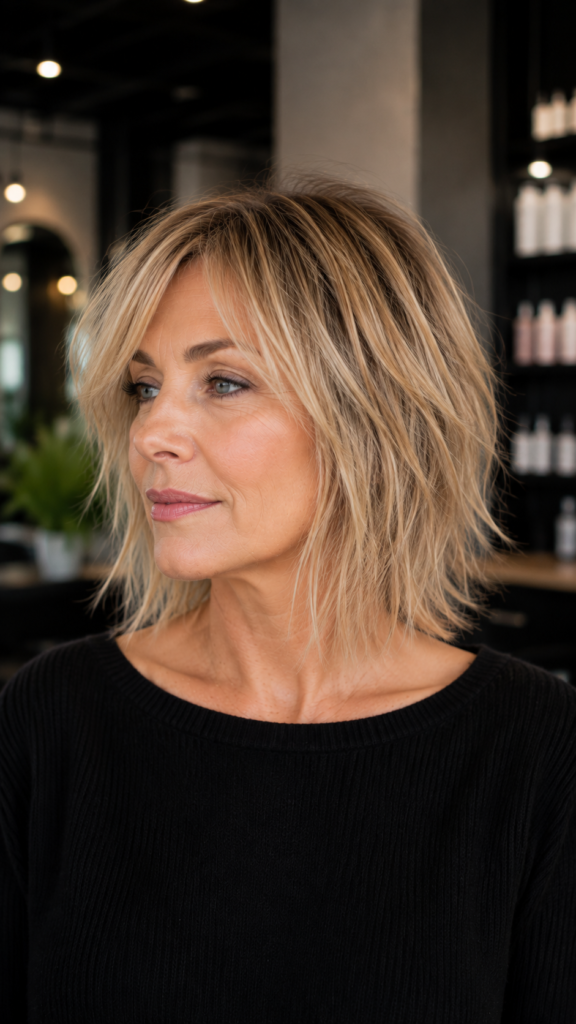
Full-Perimeter Shoulder Cut
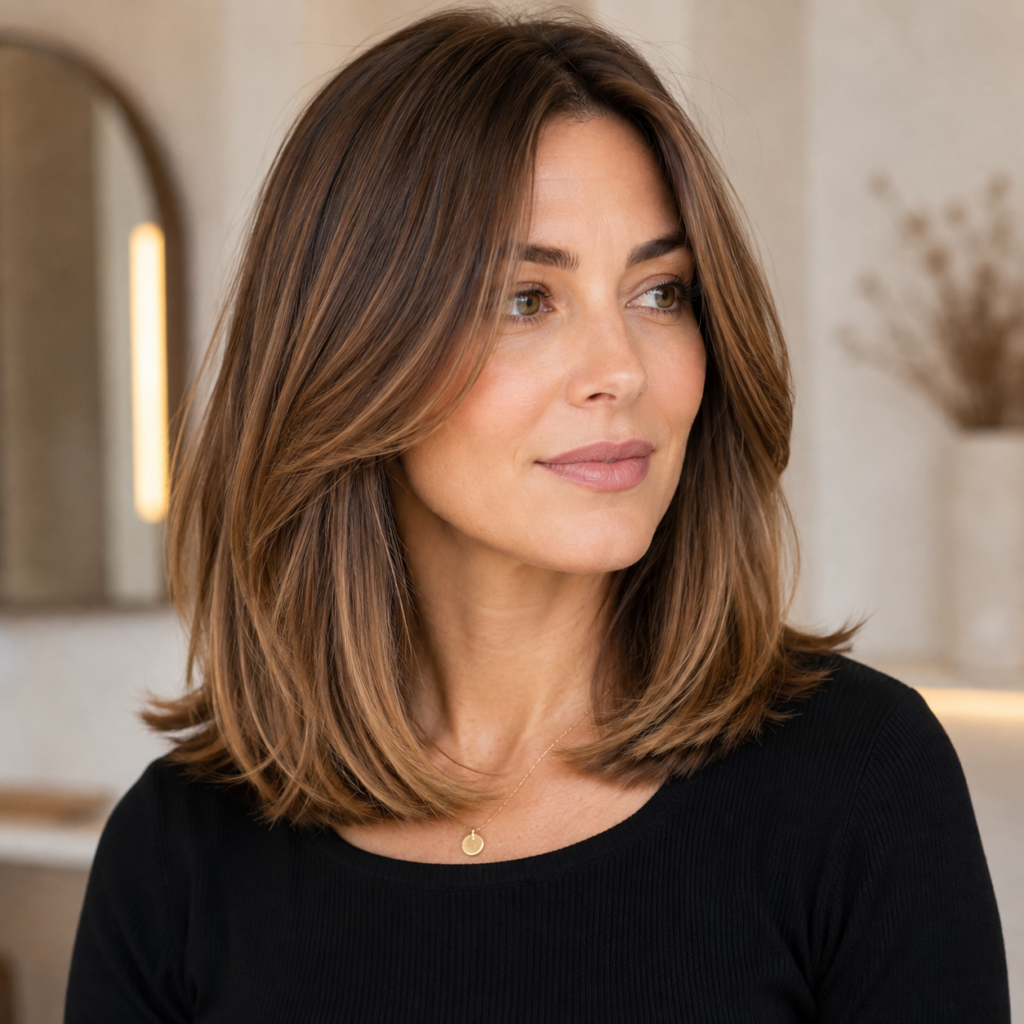
A shoulder-length cut with a strong perimeter is one of the simplest options for anyone who wants fewer awkward stages between trims.
Instead of relying on many short layers for movement, most of the visual density remains around the bottom.
Subtle internal shaping can remove excess bulk without changing the exterior line.
As the hair grows beyond the shoulders, the basic silhouette remains recognizable.
This also provides more flexibility if you sometimes wear your hair straight and other times add waves.
Why it holds its shape: the haircut doesn’t depend on a precise collection of short layers to maintain its identity.
Why Do Some Haircuts Lose Their Shape So Quickly?
A haircut can start looking different long before it becomes significantly longer.
The reason is often proportion.
When a haircut contains many different lengths, even a small amount of growth can change how those lengths interact.
Short crown layers may begin to collapse. A carefully positioned fringe can move into the eyes. Extremely short sides can become bulky. Heavily thinned ends may start looking sparse.
The haircut itself hasn’t necessarily become “bad.” Its original proportions have simply shifted.
Hair texture also matters.
Straight hair tends to reveal structural changes very clearly, while waves and curls may disguise small differences in length.
Growth patterns, density, styling habits, and even where you normally part your hair can influence how long a particular shape continues to work.
The Secret Is Often the Perimeter
Layers get a lot of attention, but the perimeter can be just as important when you want a haircut that lasts.
A strong perimeter gives the eye a clear outline.
Even when the hair grows half an inch or more, that outline may still be recognizable.
This is particularly useful for fine hair.
If too much density is removed from the ends, the haircut can begin looking thin before it actually needs a trim.
Keeping more weight around the bottom can help preserve the visual structure.
That doesn’t mean every haircut needs to be blunt.
Graduation, internal shaping, and selective layering can still create movement while allowing the exterior shape to remain strong.
Do Layers Make a Haircut Lose Its Shape Faster?
Not necessarily.
The issue is usually how many layers are added, how short they are, and where they are positioned.
Long Strategic Layers
Longer layers can create movement without dramatically changing the overall silhouette.
Because the difference between the shortest and longest sections is relatively small, the haircut can continue to blend naturally as it grows.
Short Crown Layers
Short layers around the crown can create excellent volume initially.
However, they can also change the proportions of the haircut more noticeably during grow-out.
If low maintenance is important to you, ask whether the same effect can be achieved with slightly longer crown shaping.
Heavily Thinned Ends
Removing too much density is another potential problem.
Freshly textured ends may look airy and effortless, but excessive thinning can become more noticeable several weeks later.
For hair that is already fine, preserving density through the perimeter is often especially important.
Which Haircuts Usually Need More Frequent Trims?
The more a haircut depends on precision, the sooner growth becomes visible.
Very short clippered sides, sharply defined geometric lines, micro fringes, extremely precise necklines, and dramatic disconnected sections may all require more regular maintenance.
That doesn’t make them bad haircuts.
They simply offer a different trade-off: more precision in exchange for more maintenance.
If you enjoy frequent salon appointments, that may not matter at all.
If you prefer going longer between visits, tell your stylist before the haircut begins.
That information can influence everything from the neckline to the amount of graduation used.
How to Choose a Haircut That Grows Out Gracefully
Instead of asking only, “What will this look like today?” ask what happens several weeks from now.
A good consultation should consider your natural texture, density, growth patterns, styling routine, and how frequently you realistically want to visit the salon.
Consider Your Natural Texture
A haircut that requires your naturally wavy hair to be perfectly straight every morning may not feel low maintenance at home.
Likewise, a heavily layered shape designed around waves may behave very differently on pin-straight hair.
Choose a structure that cooperates with what your hair naturally wants to do.
Be Realistic About Styling
If you rarely use a round brush, don’t choose a haircut whose entire silhouette depends on a professional blowout.
A good shape should still be recognizable when styled in the way you actually wear your hair.
Tell Your Stylist How Often You Want a Trim
This is surprisingly useful information.
Someone happy to return every four weeks can choose a much more precise shape than someone hoping to wait eight, ten, or twelve weeks.
Your maintenance preference should influence the haircut itself.
How Often Should You Actually Get a Haircut?
There is no universal schedule.
Short, highly structured cuts generally show growth sooner than medium or longer styles. Hair texture, condition, fringe length, and the precision of the original haircut also affect how quickly a trim feels necessary.
Rather than following an exact number of weeks, look at the shape.
If the crown has collapsed, the sides are becoming bulky, the perimeter has lost definition, or the haircut suddenly requires much more styling to behave, those can all be signs that the proportions need refreshing.
If the haircut still falls naturally into a recognizable shape, you may not need to rush back to the salon simply because a certain number of weeks has passed.
What to Ask Your Stylist for If You Want Longer-Lasting Shape
Be specific about your goal.
Instead of saying only that you want a low-maintenance haircut, you could say:
“I want a haircut that keeps a recognizable shape as it grows. I don’t come in for very frequent trims, so I’d rather avoid anything that depends on extremely precise short sections.”
You can also ask:
- Where will this haircut become bulky first?
- How will these layers look as they grow?
- Can we keep more density through the perimeter?
- Will the neckline grow out softly?
- Can the fringe be designed so it doesn’t need constant trimming?
- How will the haircut behave without a blowout?
Those questions give your stylist much more useful information than simply asking for something “easy.”
Shape Matters More Than Perfect Styling
One of the biggest advantages of a well-structured haircut is that styling becomes less responsible for creating the entire look.
When the haircut already has balance, direction, and an intentional perimeter, you don’t have to recreate its shape from scratch every morning.
This is especially important several weeks after your salon appointment.
A haircut that still falls into place with minimal effort is usually more useful in everyday life than one that looks spectacular only after a professional blowout.
The goal isn’t hair that never changes.
It is a haircut that changes gracefully
Final Thoughts
The best haircut between salon visits isn’t necessarily the longest, bluntest, or simplest option.
It is the haircut whose structure works with your hair rather than depending on constant correction.
Strong perimeters can preserve density. Soft graduation can maintain shape. Strategic layers can create movement without producing an awkward grow-out. Longer tops and softer necklines can make short cuts more forgiving.
Before your next appointment, think beyond the salon mirror.
Ask yourself not only how you want your hair to look when it is freshly cut, but how you want it to behave five or six weeks later.
Because a truly successful haircut should still feel like a haircut long after the salon finish is gone.
Frequently Asked Questions
What haircut keeps its shape the longest?
Haircuts with balanced proportions and a strong underlying structure generally maintain a recognizable shape well. Compact bobs, softly graduated shapes, structured medium cuts, and full-perimeter shoulder cuts can all be relatively forgiving, depending on hair texture.
Do blunt haircuts grow out better than layered haircuts?
They can, particularly when preserving density is important. However, strategically placed longer layers can also grow beautifully. The amount and placement of layering matter more than simply choosing between “blunt” and “layered.”
What short haircut grows out well?
A tapered pixie with additional length through the top, a softly sculpted crop, or a rounded short cut can provide more flexibility than an extremely tight, precision-cut style.
How can I make my haircut last longer between appointments?
Choose a shape suited to your natural texture, avoid unnecessary over-thinning, maintain healthy ends, and ask your stylist to design the haircut around your realistic trim schedule.
Why does my haircut look good at the salon but different at home?
Professional styling can create volume, smoothness, and movement that may not reflect your everyday routine. The haircut may also have been designed around a particular styling technique. Tell your stylist how you normally dry and style your hair so the cut can be adapted accordingly.
Are layers bad if I don’t want frequent haircuts?
No. Longer, strategically positioned layers can remain balanced for quite a while. Very short or highly disconnected layers tend to make changes in proportion more noticeable as the hair grows.
Should fine hair have fewer layers?
Often, preserving enough density through the ends is important for fine hair. That doesn’t mean fine hair can never be layered. Subtle internal or strategic layering can create movement without sacrificing too much visual fullness.