Layered Haircuts for Fine Hair Over 50 That Add Shape Without Losing Fullness
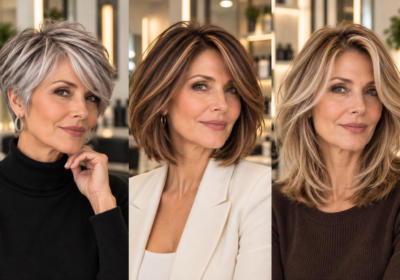
Fine hair can become more challenging with age, but cutting it shorter isn’t always the answer. In fact, the wrong short haircut can make fine hair look even flatter, while the right layers can create movement, shape and dimension without sacrificing the fullness you still have.
The key is strategic layering.
For women over 50 with fine hair, layers should support the overall shape rather than remove too much weight. That means keeping enough density through the ends, choosing face-framing carefully and avoiding excessive thinning through the crown and perimeter.
Whether you prefer a short pixie, a polished bob or hair that reaches your shoulders, these layered haircuts show how fine hair can look fuller, softer and more modern.
Why Can Layers Make Fine Hair Look Thinner?
Layers are often recommended for fine hair because they can create movement and prevent a haircut from falling completely flat. But more layering does not automatically mean more volume.
When too much hair is removed, especially around the ends, the result can be the opposite: a thin perimeter, wispy pieces and a silhouette that lacks substance.
For fine hair, the goal is usually to create shape while protecting density.
Longer layers, subtle internal layering and carefully placed shorter pieces can give the hair movement without making the bottom look sparse.
That distinction becomes especially important with mature hair, which may have changed in density or texture over time.
1. Soft Layered Bob With Full Ends
A soft layered bob is one of the most versatile choices for fine hair because it offers movement without requiring aggressive layering.
The strongest versions keep a relatively solid perimeter around the jaw or upper neck while using subtle layers through the interior of the haircut.
This creates enough separation to prevent the bob from looking heavy or rigid, but the ends still appear substantial.
A few longer pieces around the cheekbones can also soften the face without removing too much density from the front.
Best for: fine hair that has reasonable density but tends to fall flat.
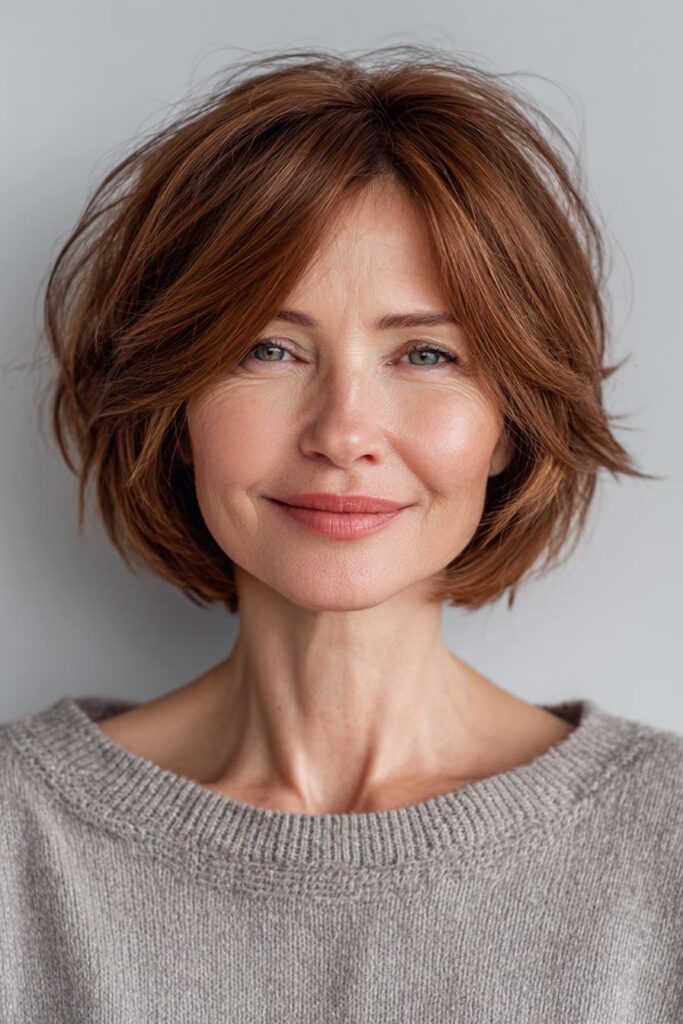
2. Collarbone Cut With Long Invisible Layers
Fine hair does not automatically need to be cut above the shoulders.
A collarbone-length cut can work beautifully when the layering is restrained. Instead of short, obvious layers throughout the haircut, long invisible layers can remove just enough internal weight to encourage movement.
The perimeter should remain relatively full.
Face-framing can begin around the cheekbones or jaw and gradually blend into the longer lengths rather than creating a dramatic staircase of layers.
This is an especially good option for women who want movement but aren’t ready to give up their length.
Best for: fine straight or slightly wavy hair with enough density to support a medium-length cut.
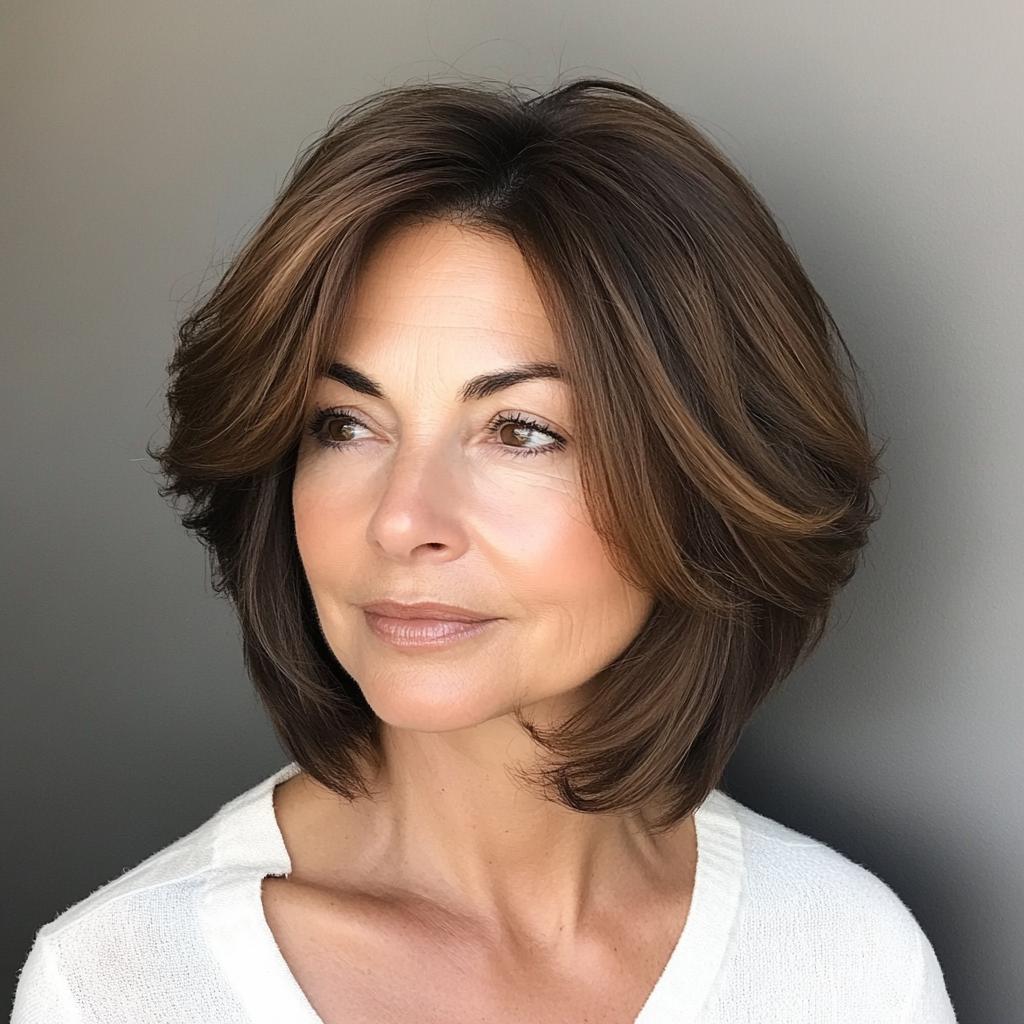
3. Jaw-Length Bob With Subtle Internal Layers
This haircut proves that a bob doesn’t have to be heavily layered to have shape.
The overall silhouette remains compact and full, while subtle internal layering prevents the hair from sitting like one solid block.
Keeping the length around the jaw can also make the perimeter appear noticeably denser.
Instead of thinning the ends, the movement comes from the interior of the haircut and a longer side-swept section around the face.
Best for: women who want a polished bob with a stronger visual density.
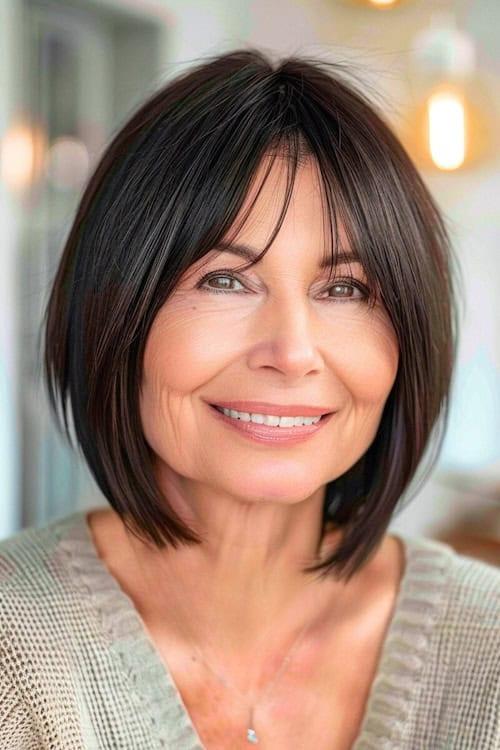
4. Layered Bixie With a Longer Fringe
Sitting somewhere between a bob and a pixie, the bixie can be particularly flattering on fine hair when the top isn’t excessively thinned.
A longer sweeping fringe creates movement across the forehead, while controlled layers around the crown give the haircut lift.
The important detail is keeping some length around the temples and nape. Those slightly longer pieces prevent the haircut from looking too severe and give it a softer, more contemporary finish.
Best for: women who want short hair without committing to a very cropped pixie.
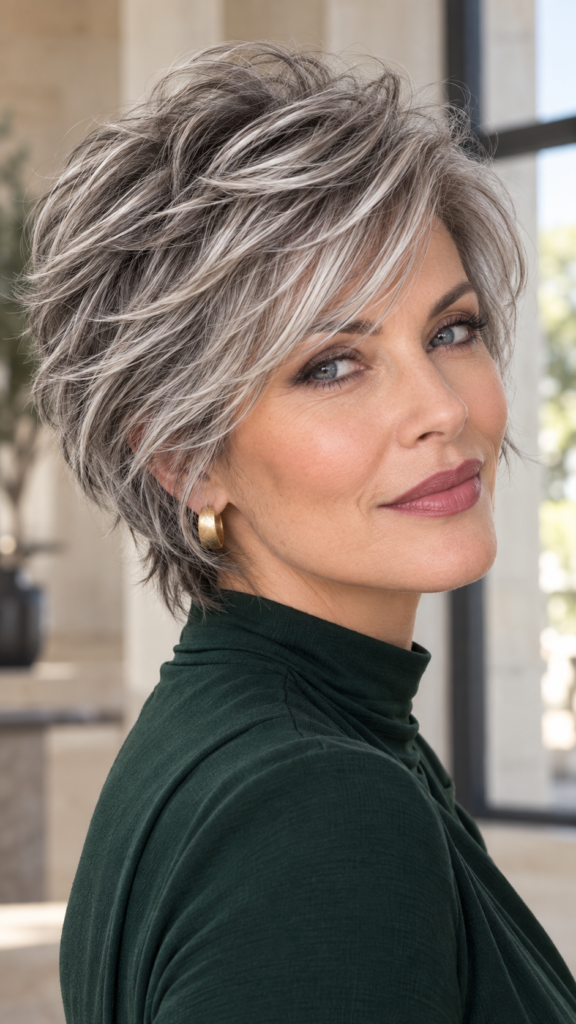
5. Short Layered Bob With Side-Swept Bangs
Side-swept bangs can completely change the balance of a short bob.
Instead of creating a heavy fringe that requires a lot of hair, a longer diagonal bang uses less density and blends naturally into the side layers.
The result is movement around the face without sacrificing the fullness of the rest of the haircut.
Keep the lower edge strong and let most of the layering happen higher in the silhouette.
Best for: fine hair that needs movement around the face but still benefits from a strong perimeter.
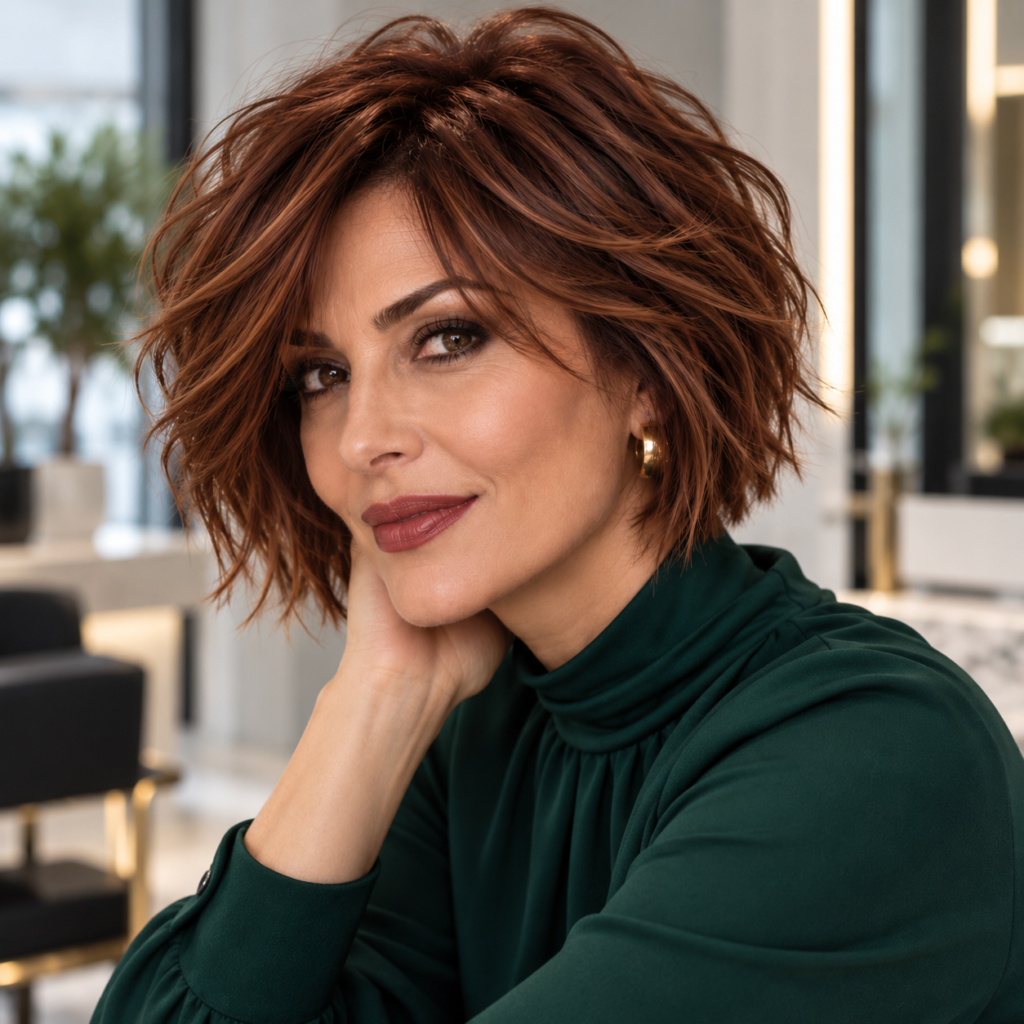
6. Textured Long Pixie With Controlled Volume
A pixie is often suggested for fine hair, but the most flattering version isn’t necessarily the shortest one.
Leaving extra length through the top gives the stylist enough hair to create direction and texture. A longer fringe can be swept sideways, while subtle separation through the crown makes the hair appear more dimensional.
The trick is controlled volume rather than a dramatically teased crown.
Too much height can make the lower sections appear even thinner by comparison.
Best for: fine hair that naturally lacks lift at the roots.
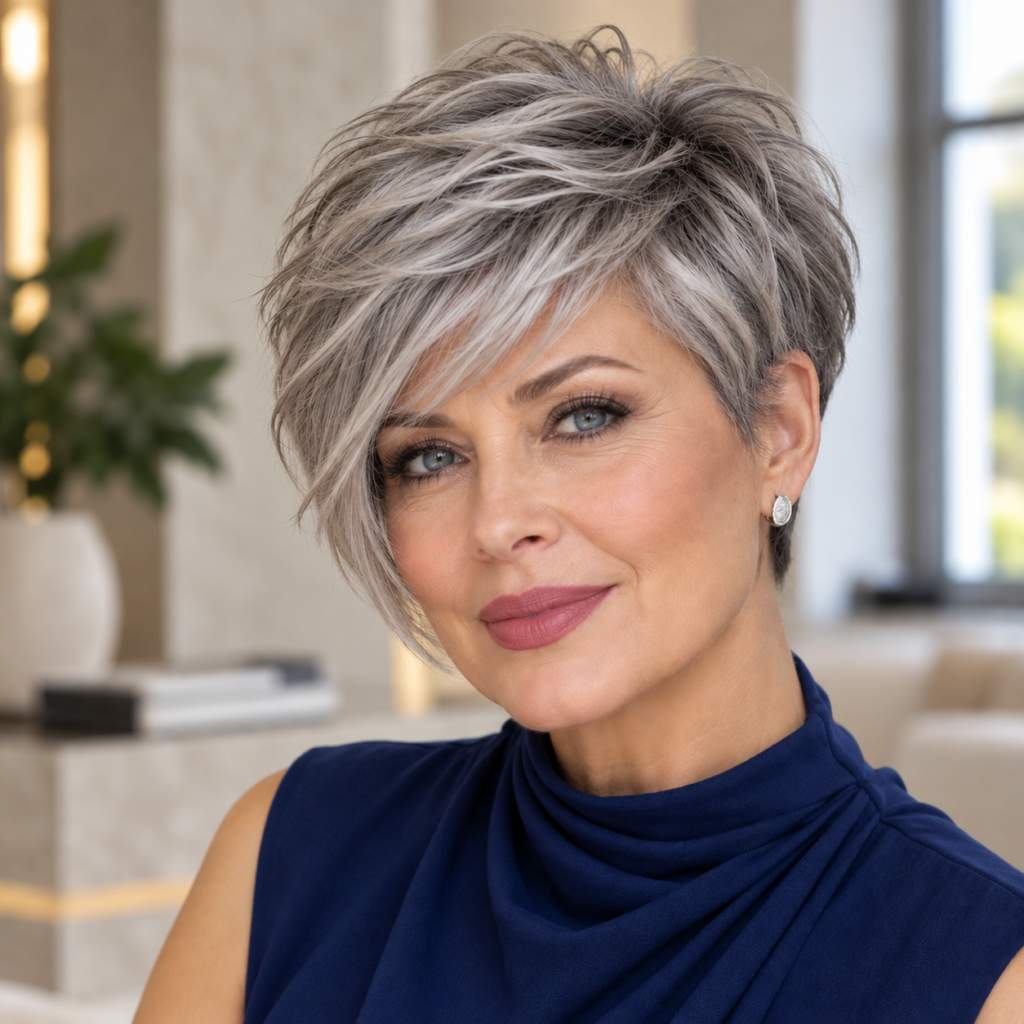
7. Rounded Bob With Strategic Layering
A softly rounded bob can create the illusion of density because the shape itself does much of the work.
Instead of relying on dozens of visible layers, the haircut uses carefully controlled graduation and subtle internal layering to create a fuller silhouette.
The result should feel soft rather than stacked.
Keeping some movement through the front also prevents the rounded shape from becoming stiff or dated.
Best for: straight or slightly wavy fine hair that needs structure.
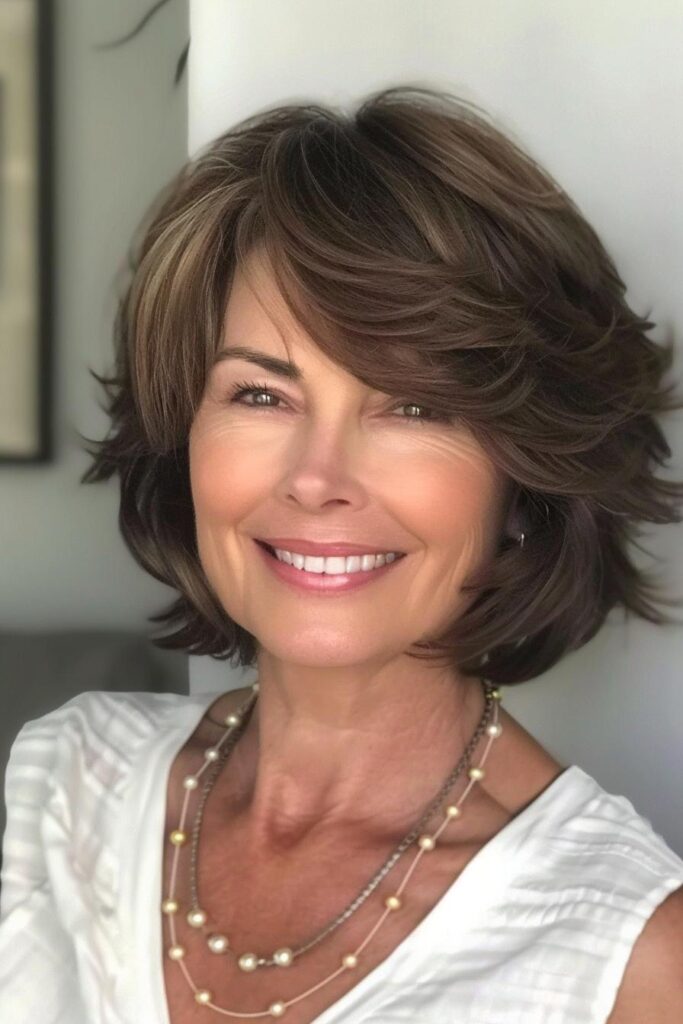
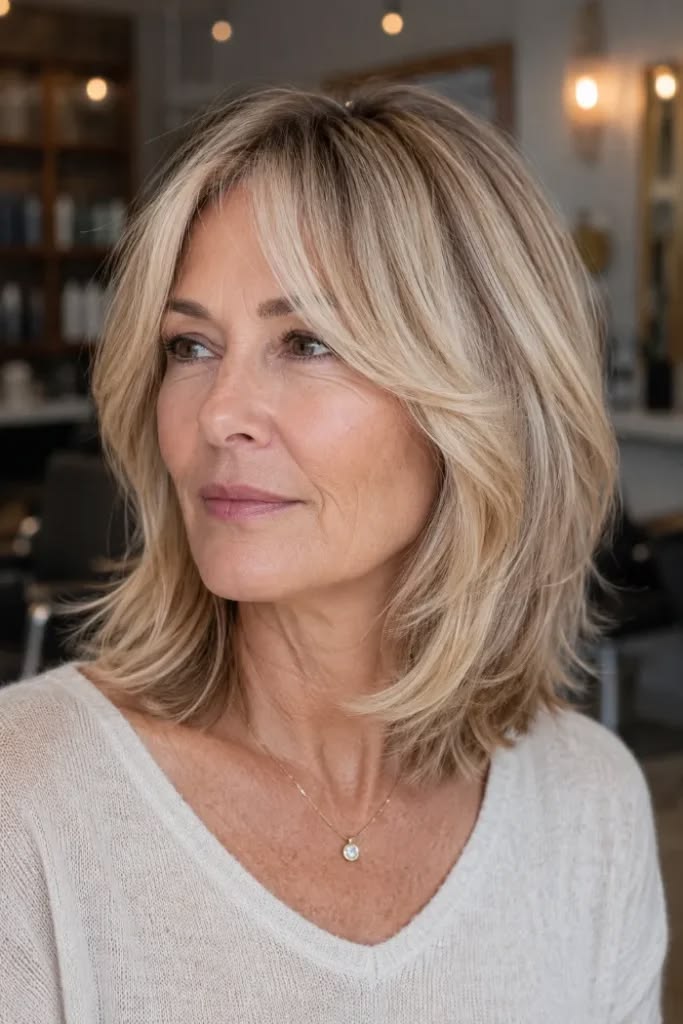
8. Shoulder-Length Cut With Face-Framing Layers
Shoulder-length fine hair can sometimes look flat simply because everything falls at the same length.
That doesn’t mean the entire haircut needs layers.
Adding strategic face-framing around the cheekbones, jaw and collarbone can introduce movement while leaving most of the perimeter intact.
The contrast between the shorter front pieces and fuller back length creates shape without dramatically reducing density.
Best for: women who want to preserve length.
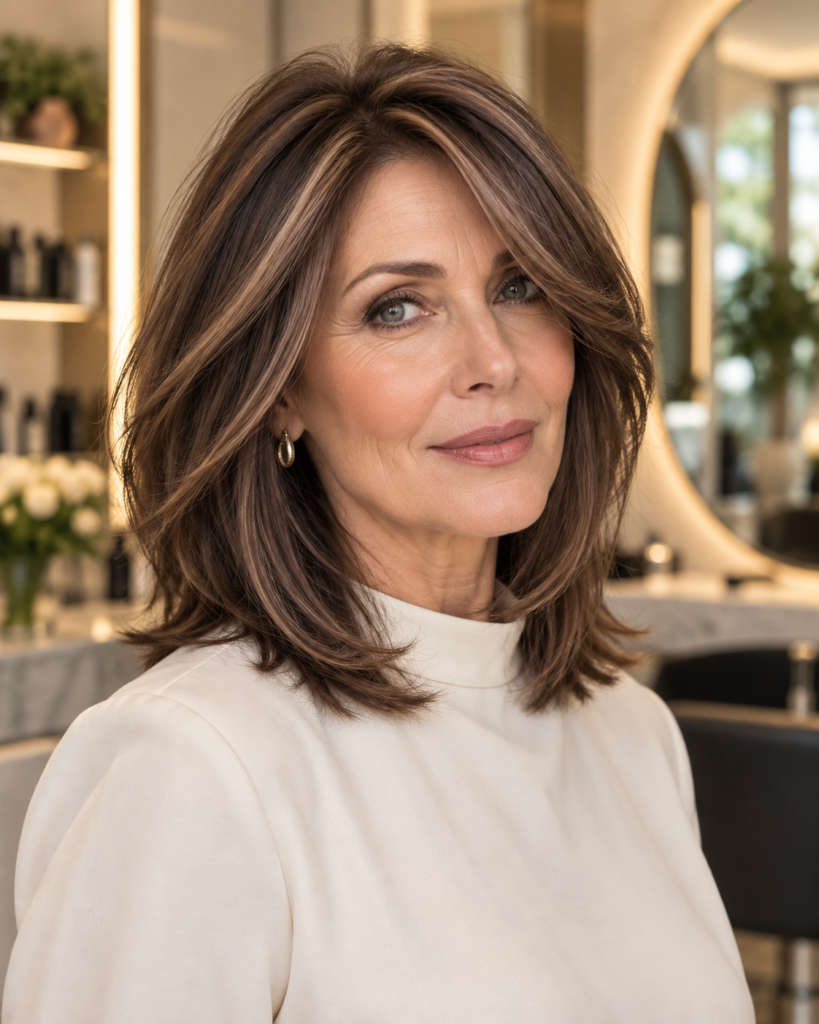
9. Soft Shag With a Strong Perimeter
The words fine hair and shag may sound like a risky combination, but a softer interpretation can work beautifully.
Instead of aggressively razored layers and extremely wispy ends, choose longer overlapping layers with a stronger baseline.
The haircut still has the relaxed movement associated with a shag, but it doesn’t sacrifice all of its density to achieve it.
A soft curtain or side-swept fringe can complete the look.
Best for: fine hair with some natural wave or texture.
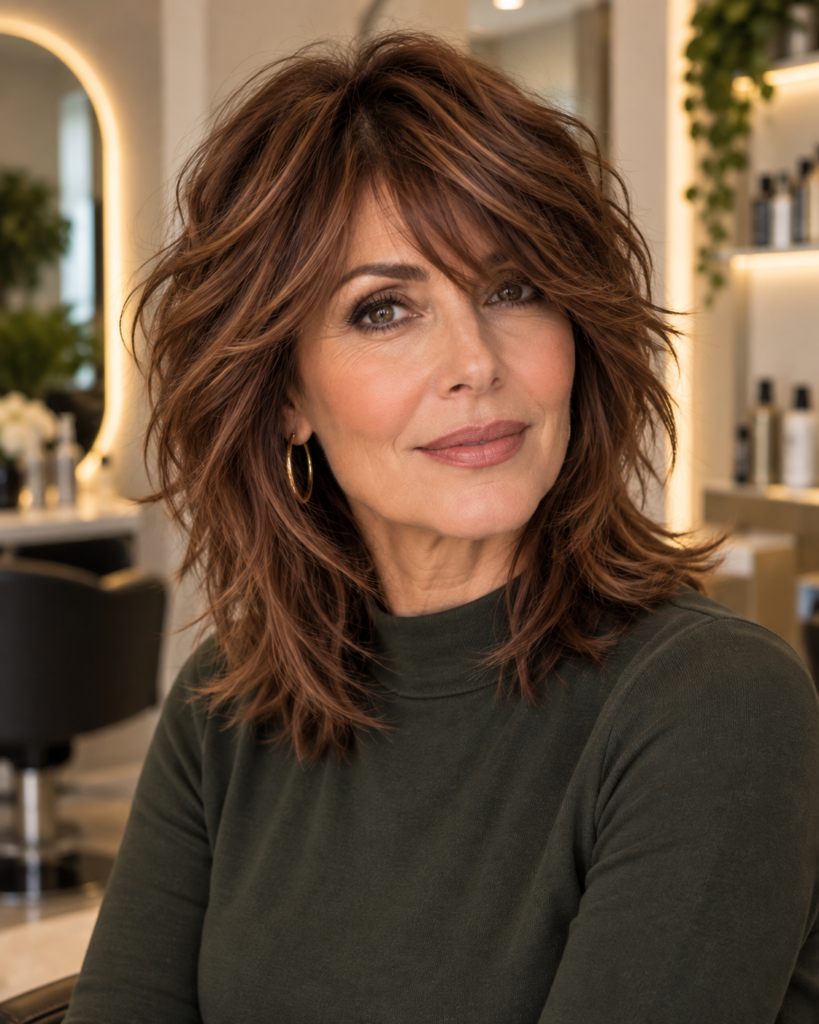
10. Graduated Bob Without Heavy Stacking
Graduation can create beautiful shape at the back of a bob, but there’s a fine line between subtle structure and an overly stacked silhouette.
For a modern result, keep the graduation soft.
The nape can be slightly shorter while the sides remain longer and fuller. This creates a gentle forward direction and allows the back to hold its shape without producing an exaggerated rounded crown.
Best for: fine hair that tends to collapse around the back of the head.
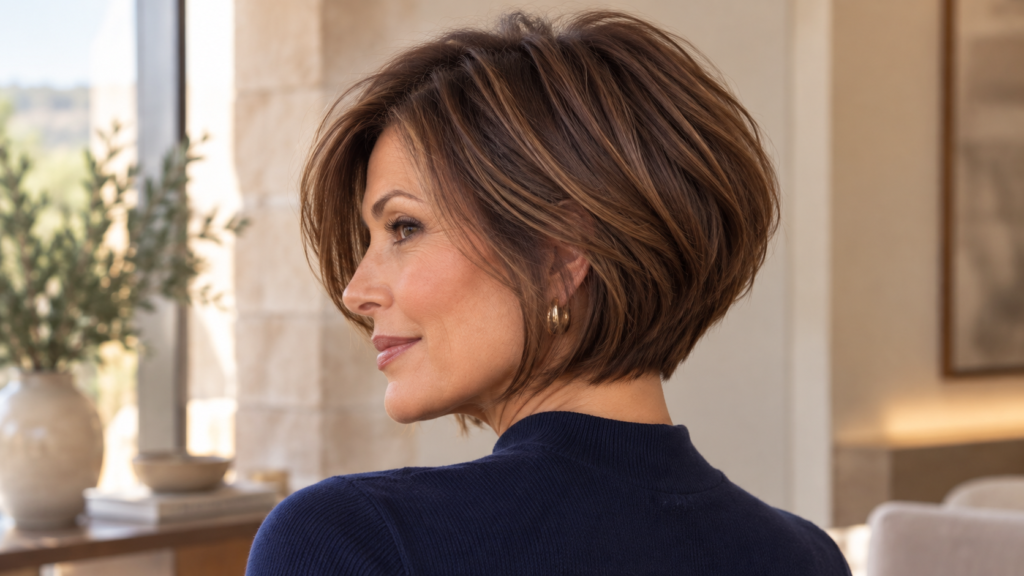
11. Side-Parted Medium Cut With Soft Layers
Sometimes the biggest visual change doesn’t come from cutting significantly more hair.
A strong side part combined with long, soft layers can immediately change where the volume sits.
The asymmetry creates movement across the top, while the longer layers maintain density through the lower half of the haircut.
This can be particularly effective on fine hair that has become accustomed to sitting flat in the same center part.
Best for: medium-length fine hair that needs movement more than additional layering.
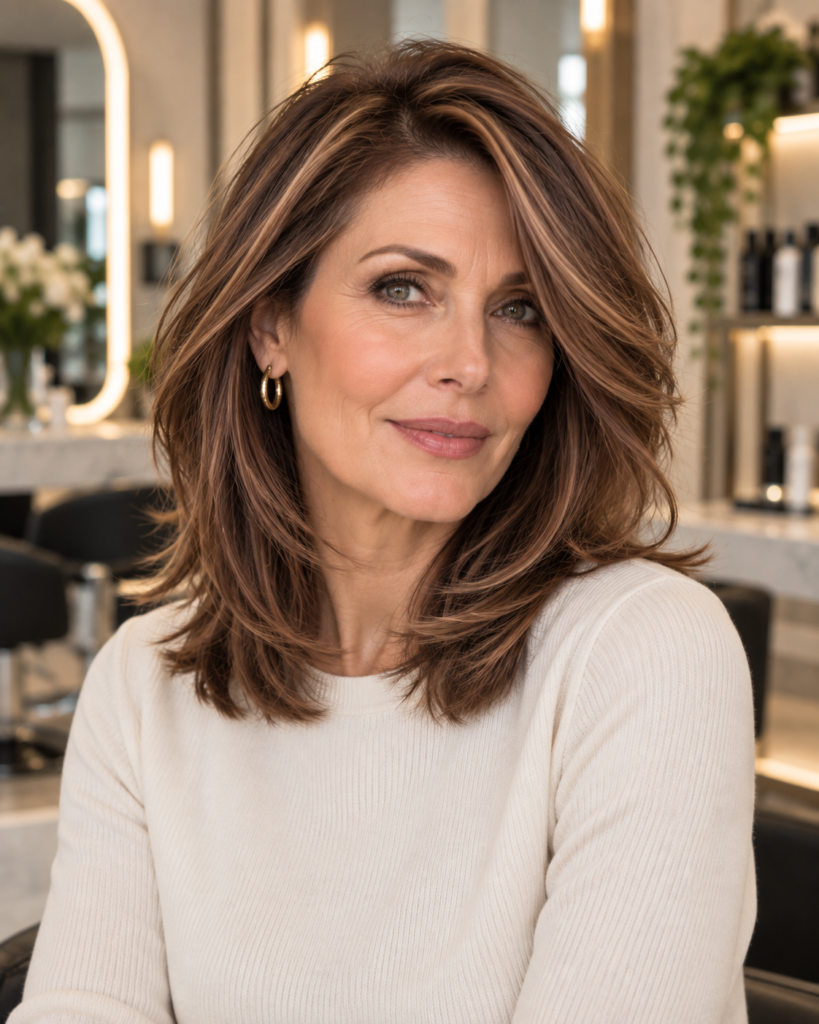
12. Layered Lob With a Full Baseline
A long bob offers a useful middle ground between a classic bob and shoulder-length hair.
For fine hair, the baseline is crucial.
Keep the bottom relatively strong and introduce layering selectively through the upper sections and around the face. This gives the lob enough movement to feel modern without producing thin, feathery ends.
Styled with a gentle bend rather than tight curls, it can create the impression of significantly more body.
Best for: women who want an easy transition from longer hair to a shorter shape.
Where Should Layers Start on Fine Hair?
This may matter more than the number of layers you have.
If layers begin too high and too much hair is removed from the crown, the haircut may gain temporary volume at the top while losing density everywhere else.
For many women with fine hair, longer layers beginning around the cheekbone, jaw or below can be more flattering.
On shorter cuts, layering can begin higher, but it still needs to be balanced against the perimeter.
Think of layers as a way of directing the hair rather than simply removing it.
Layers to Avoid If You Want Fine Hair to Look Fuller
Some layering techniques can work beautifully on thick hair but become problematic when there isn’t much density to spare.
Be cautious with extreme thinning, aggressively razored ends, very short crown layers and excessive texturizing throughout the entire haircut.
None of these techniques is universally wrong. Hair density, texture and growth pattern matter.
But if your primary goal is making fine hair appear fuller, removing large amounts of hair is rarely the best starting point.
The strongest visual density usually comes from balancing movement above with weight below.
Does Fine Hair Over 50 Have to Be Short?
Absolutely not.
Short hair can be wonderful for fine hair because reducing length can remove weight and make the hair easier to lift. But that doesn’t mean every woman with fine hair needs a pixie.
A bob can preserve considerably more density.
A collarbone cut can work when the perimeter remains strong.
Even shoulder-length hair can look full when the layering is minimal and strategically placed.
The better question isn’t:
“How short should I cut my fine hair?”
It’s:
“Where does my hair need shape, and where do I need to preserve weight?”
That distinction can completely change the haircut you choose.
How to Ask Your Stylist for Layers Without Losing Fullness
Rather than simply asking for “lots of layers,” explain what you actually want the haircut to accomplish.
Tell your stylist that you want movement and shape while maintaining density through the ends.
You can also ask whether long internal layers, subtle graduation or selective face-framing would work better for your individual hair density than traditional all-over layering.
And bring reference photos that show more than the front.
A beautiful front view can hide a haircut that is heavily layered or stacked in the back. Seeing the front, side and back gives your stylist a much clearer picture of the shape you actually want.
The Bottom Line
Fine hair after 50 doesn’t need one specific haircut, and it certainly doesn’t always need to be cut short.
The most successful layered cuts create a balance: enough layering to produce movement and shape, but enough weight to keep the hair looking full.
That could mean a textured pixie, a jaw-length bob, a collarbone cut or even shoulder-length hair.
The goal isn’t simply more volume.
It’s a haircut that makes the hair you already have look intentional, healthy and beautifully shaped from every angle.