Short haircuts for women over 50 with thick hair
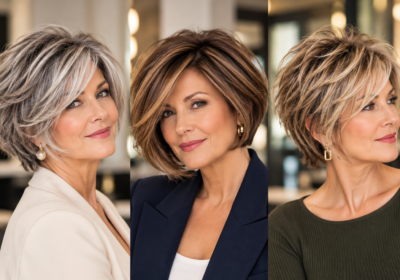
Thick hair can be a wonderful advantage. It has natural density, body and the ability to hold a beautiful shape.
But when thick hair is cut short, that same density can create a completely different problem.
Instead of looking light and polished, the haircut may become wide at the sides, heavy around the ears, bulky at the back or difficult to control without daily styling.
The solution isn’t simply removing more hair.
In fact, aggressive thinning can sometimes make thick hair harder to manage, especially when shorter pieces begin pushing against the longer ones as they grow.
A successful short haircut for thick hair is about controlling where the weight sits while preserving enough structure to keep the shape polished.
Here’s what makes the biggest difference.
Why Thick Hair Can Look Bulky When It’s Cut Short
When long thick hair is shortened, its weight changes dramatically.
Longer hair naturally pulls downward. Once that length disappears, the hair can spring outward—especially around the sides, crown and back of the head.
This is why a haircut that looked sleek when it was longer can suddenly develop a rounded or boxy silhouette after being cut short.
The problem isn’t necessarily that you have too much hair.
It’s often that too much density has been left in the wrong places.
A well-designed short haircut redistributes that weight rather than simply removing as much hair as possible.
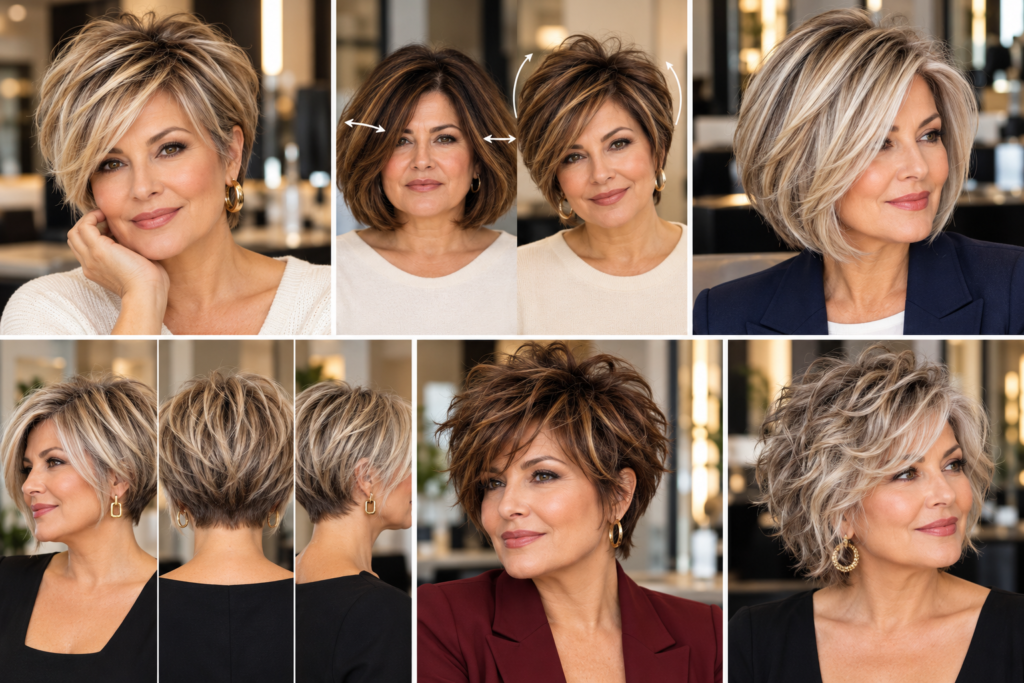
The Layered Pixie: Remove Weight Without Making the Hair Puffy
A layered pixie can work beautifully on thick hair, but the layers need to be strategic.
The goal isn’t to create lots of short pieces everywhere.
Instead, keeping some length through the top while controlling the density around the sides and nape creates a more balanced silhouette.
The upper layers provide movement, while a cleaner perimeter prevents the haircut from expanding outward.
For particularly dense hair, your stylist may also remove some internal weight underneath the visible surface of the haircut.
That allows the hair to move more naturally without making the ends look overly thin.
Best for: thick straight or slightly wavy hair that tends to become heavy around the sides.
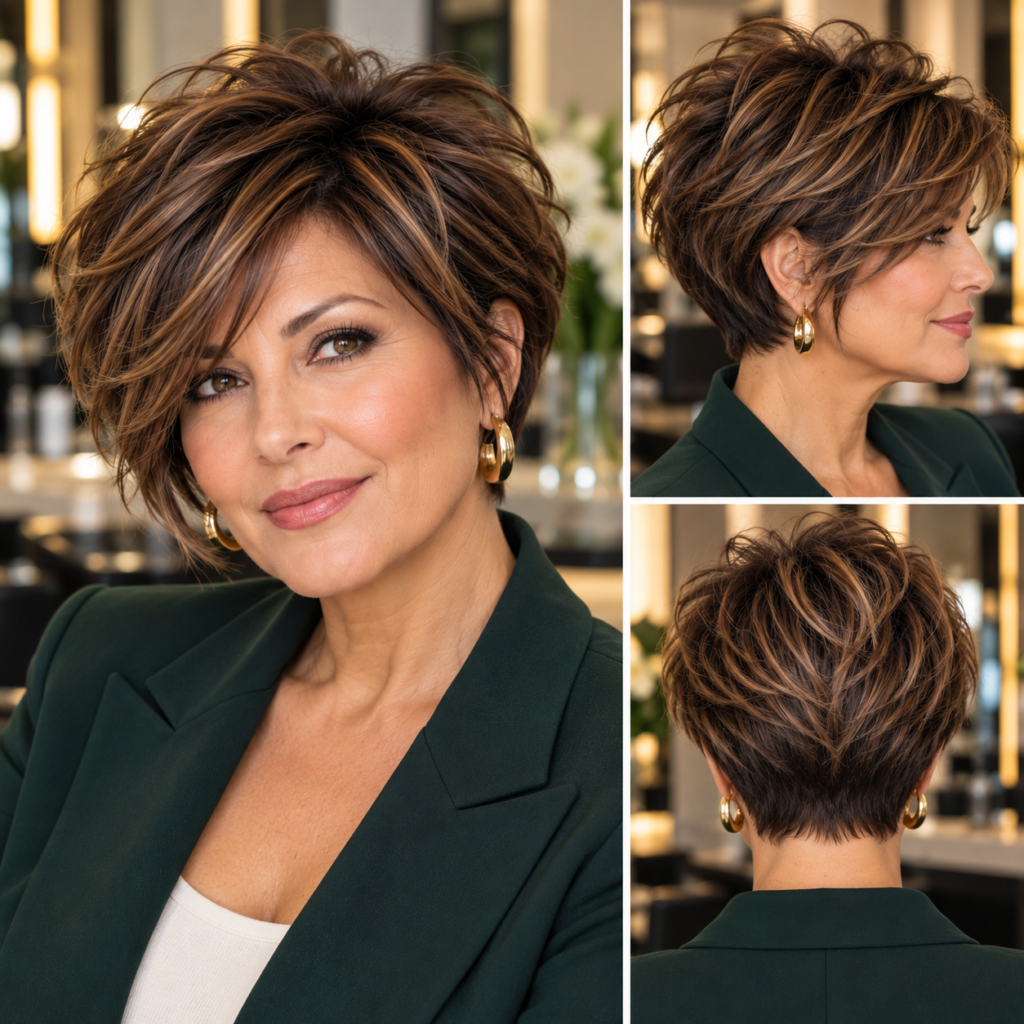
A Longer Pixie Can Be Easier to Control Than an Ultra-Short Cut
Going extremely short isn’t always the easiest solution for thick hair.
When dense hair is cut very close all over, it may stand away from the head or require frequent trims to maintain its shape.
A longer pixie leaves enough length for the hair to settle naturally.
The top can remain soft and movable, while the area around the ears and nape is shaped more closely.
This difference in length gives thick hair somewhere to go.
It can also make the haircut much easier to style with minimal product.
A longer side-swept fringe is particularly useful because it creates direction rather than allowing all that density to sit in one rounded shape.
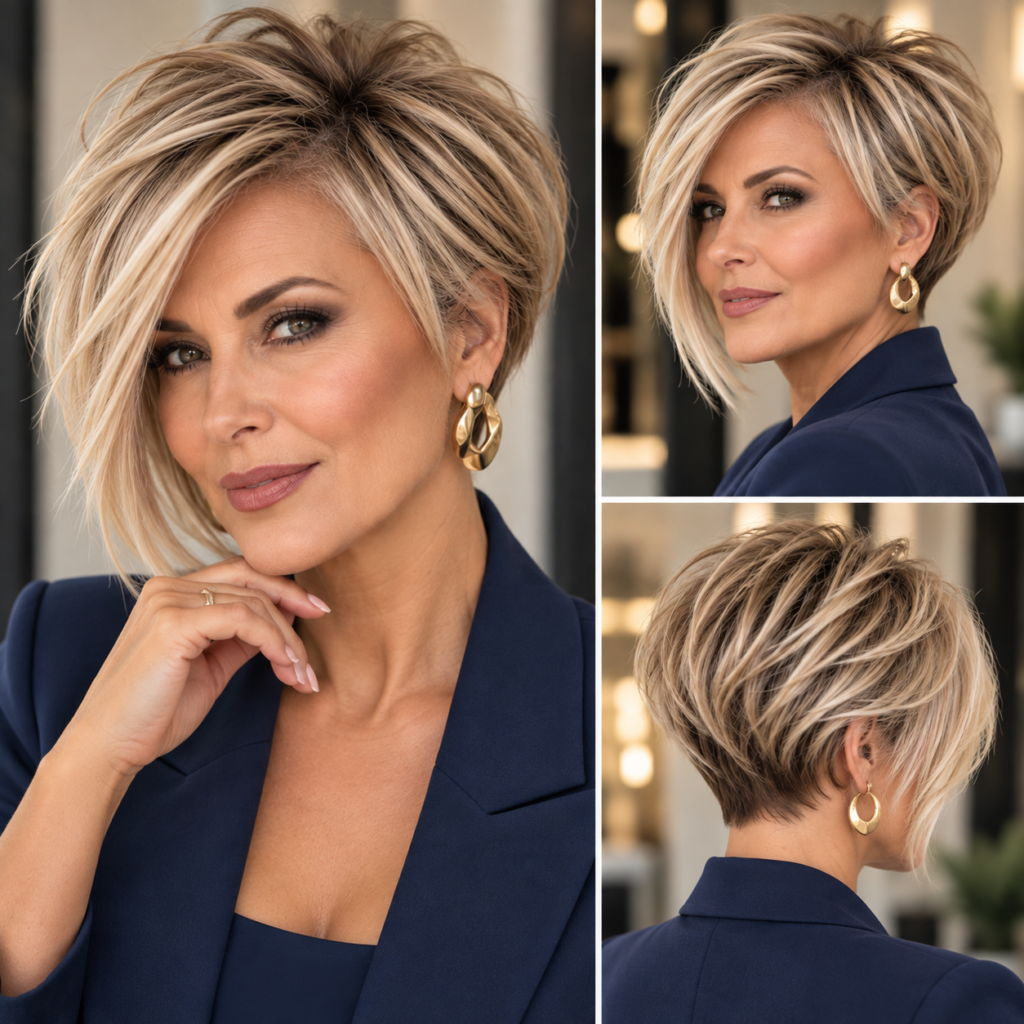
The Textured Bob: Internal Layers Matter More Than You Think
A bob on thick hair can look incredibly polished—or surprisingly heavy.
The difference often comes from what happens inside the haircut.
If every strand is left at nearly the same length, a dense bob may accumulate too much weight through the lower half. The result can be a triangular silhouette: flatter at the top and increasingly wide toward the ends.
Strategic internal layering removes some of that hidden weight without sacrificing the strong outer shape of the bob.
From the outside, the perimeter can still look full and expensive.
Inside, however, the haircut has enough space to move.
This is very different from aggressively thinning the ends.
The goal is less bulk—not visibly thinner hair.
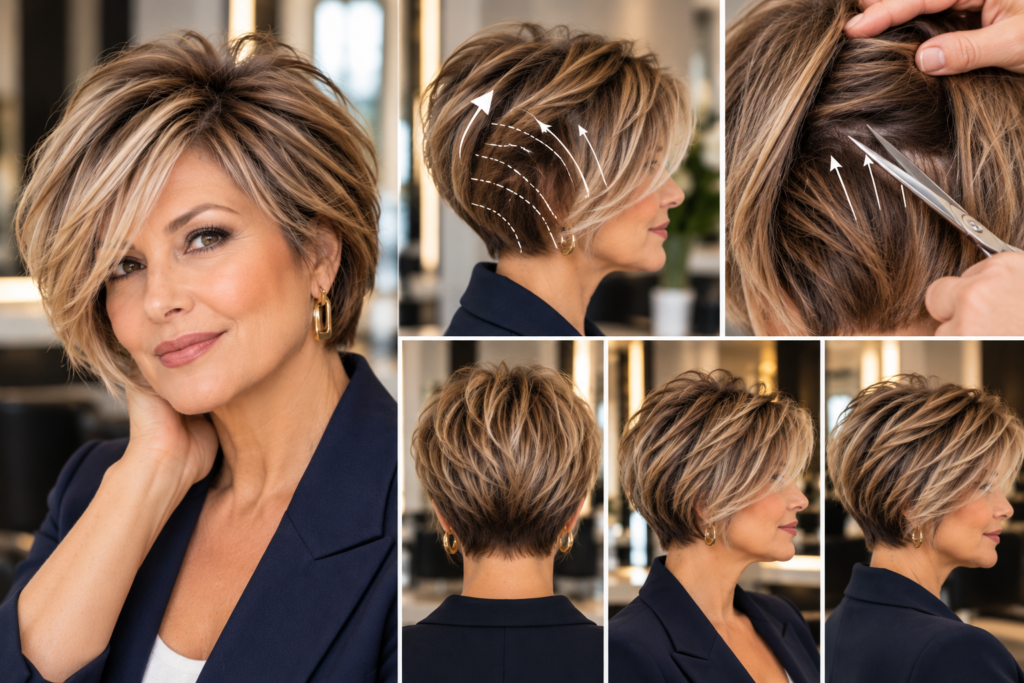
A Graduated Bob Can Control a Heavy Back
Some women with thick hair notice that the back of a short haircut becomes heavy long before the front does.
This is where a softly graduated bob can help.
A little more structure through the nape removes unnecessary weight and allows the back of the haircut to follow the shape of the head.
The front can remain slightly longer, creating a cleaner line toward the jaw.
The graduation doesn’t need to be dramatic.
In fact, subtle graduation often looks more modern and grows out more naturally than a heavily stacked bob.
Why the back matters
When thick hair is left too heavy at the nape, the haircut can lose its shape surprisingly quickly.
A properly constructed back gives the entire haircut a stronger foundation.
Thick Hair That Gets Wide at the Sides Needs a Different Strategy
This is one of the most common problems with short, dense hair.
The crown may look perfectly fine, while the sections around the temples and ears begin expanding outward.
Adding more layers everywhere isn’t necessarily the answer.
Instead, the stylist can reduce internal weight through the sides while preserving enough length on the surface to keep the hair controlled.
A little additional length through the top can also create a more vertical silhouette.
Think:
movement at the top + controlled density at the sides.
Not:
maximum volume everywhere.
A Short Shag Works Best When the Layers Are Balanced
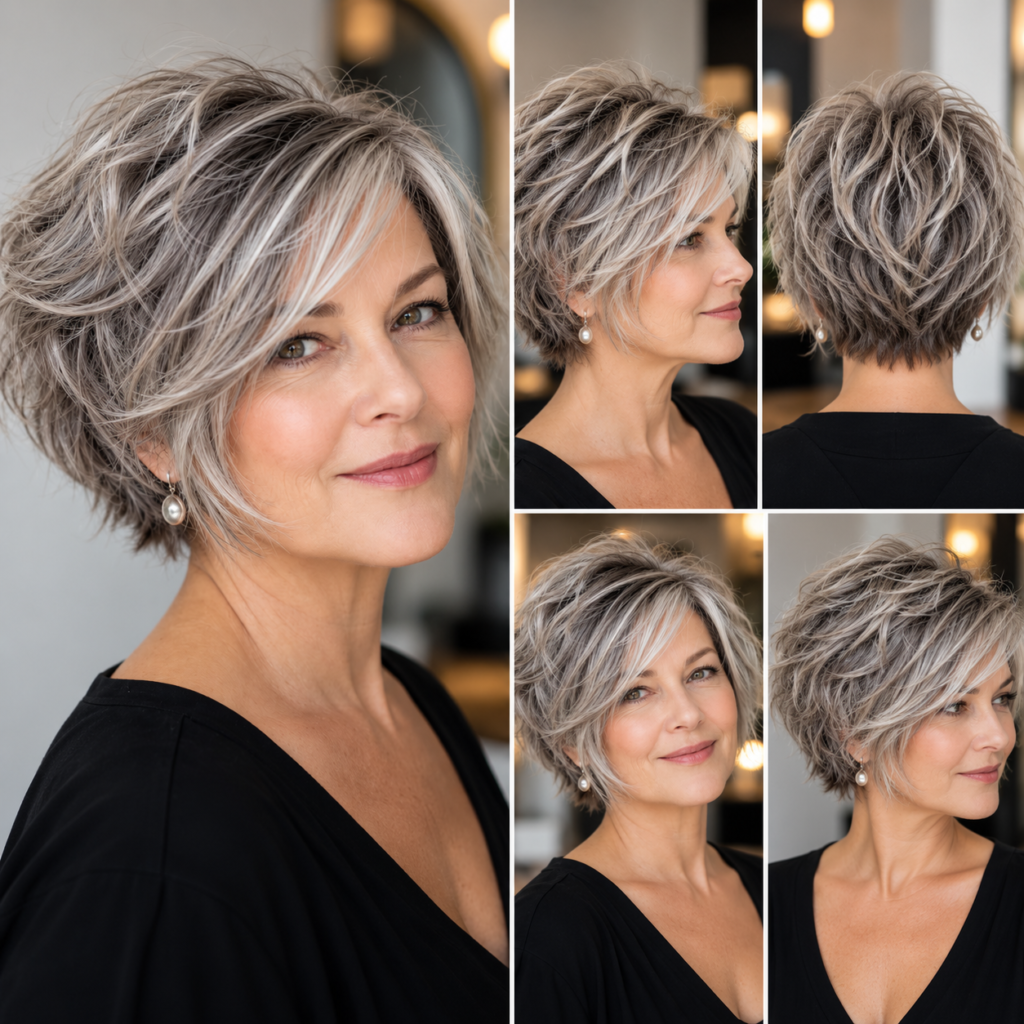
A short shag can be an excellent choice for thick hair because dense hair naturally supports texture and movement.
But there is an important distinction between texture and bulk.
If too many short layers are concentrated around the sides, the haircut may become wider rather than lighter.
A more balanced shag keeps movement through the crown and upper sections while allowing the lower layers to taper naturally toward the neck.
For thick wavy hair, this can be especially flattering because it works with the natural movement instead of trying to force the hair into a perfectly smooth shape.
Don’t Automatically Ask Your Stylist to “Thin It Out”
This phrase is extremely common:
“My hair is too thick. Can you thin it out?”
But it doesn’t tell the stylist where the problem actually is.
Removing density indiscriminately can create short internal pieces that push the longer hair outward.
It can also leave the ends looking wispy while the haircut still feels bulky closer to the scalp.
A better conversation is more specific.
Show your stylist where the haircut feels heavy.
Is it behind the ears?
At the nape?
Through the lower half of a bob?
Around the temples?
Once the problem area is identified, weight can be removed much more strategically.
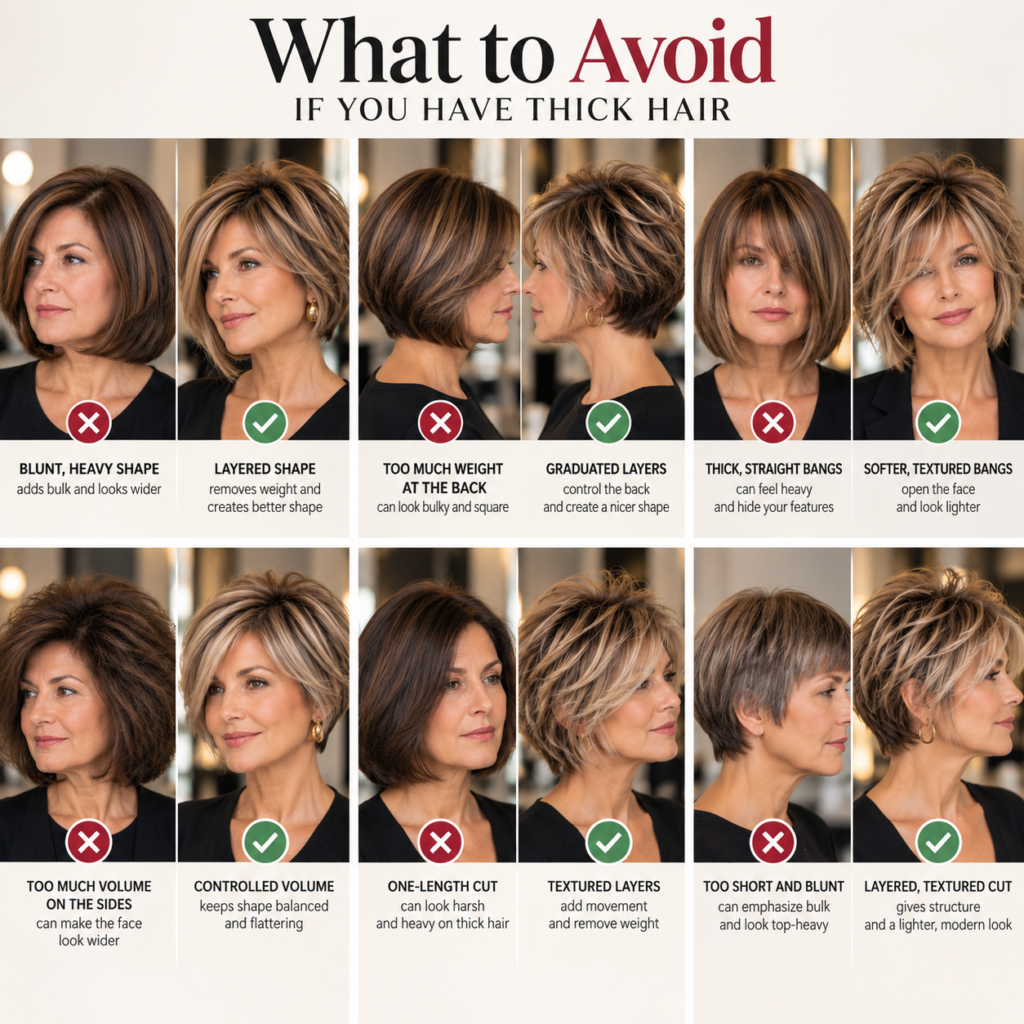
What to Avoid When Thick Hair Becomes Boxy
A short haircut can become boxy when the width through the sides and lower sections is almost equal to the width through the top.
The entire silhouette starts looking square rather than shaped.
This can happen when there is:
- too much uninterrupted density around the sides
- a heavy perimeter combined with very little internal movement
- excessive bulk behind the ears
- too little shaping through the nape
- layers that all finish in approximately the same area
The answer isn’t necessarily a shorter haircut.
Often, better weight distribution makes a bigger difference than removing more length.
Be Careful With Too Much Razor Cutting or Thinning
Texturizing techniques can be extremely useful on thick hair when they’re used intentionally.
But more isn’t always better.
Over-texturizing can leave the surface fuzzy, make the ends appear weak or create short pieces that become difficult to control as the haircut grows.
This matters particularly if your hair is coarse, naturally wavy or prone to frizz.
You still want the haircut to have enough weight to behave.
The objective should be to create movement and manageability while maintaining a strong overall shape.
What to Ask Your Hairstylist
Instead of arriving at the salon and simply asking for a short haircut, describe the problem you want the haircut to solve.
You might say:
“My hair gets very bulky around the sides. I’d like to keep movement through the top but reduce some of the internal weight.”
Or:
“The back becomes heavy very quickly. Can we shape the nape so the haircut grows out more cleanly?”
For a bob:
“I’d like to keep a strong-looking perimeter, but I don’t want all the density sitting at the bottom.”
These descriptions give your hairstylist much more useful information than simply saying you want your hair “thinner.”
Read: 9 short haircuts that look expensive at 50
Consider How the Haircut Will Grow Out
A haircut shouldn’t only look good on the day you leave the salon.
Thick hair can reveal changes in shape relatively quickly as it grows.
Before committing to a very short cut, ask:
How often will the nape need reshaping?
Will the sides become bulky after several weeks?
Does the haircut rely on very short internal layers?
Can the shape still work when it’s an inch longer?
Sometimes leaving slightly more strategic length creates a haircut that stays attractive for longer between appointments.
Your Hair Texture Still Matters
Two women can have equally thick hair and need completely different haircuts.
Straight thick hair often needs help creating movement and preventing a heavy, solid shape.
Thick wavy hair may need enough length to allow the wave pattern to form naturally.
Coarse hair may react poorly to excessive thinning.
And dense but fine-stranded hair behaves differently from dense hair made up of thicker individual strands.
That’s why density and texture should be considered together.
A good haircut works with both.
The Goal Isn’t Less Hair. It’s Better Shape.
Having thick hair doesn’t mean you need to remove as much of it as possible.
The density is part of what can make a short haircut look beautiful.
The goal is to use that density strategically.
A strong perimeter can make a bob look polished. Natural fullness can give a pixie beautiful movement. Dense wavy hair can create incredible texture in a short shag.
What matters is where the weight remains and where it is removed.
Once that balance is right, thick hair can feel lighter and easier to manage without losing the fullness that makes it special.
Final Thoughts
The best short haircuts for women over 50 with thick hair don’t fight density—they shape it.
Look for a haircut that controls excessive width, removes weight strategically and maintains enough structure to hold its silhouette.
A layered pixie can keep the sides controlled while preserving movement on top. A bob can retain a strong perimeter while hiding internal weight removal. A shaped nape can prevent the back from becoming heavy, while carefully balanced layers can transform thick wavy hair without creating unnecessary volume.
Most importantly, don’t ask only for less hair.
Ask for better weight distribution, better movement and a shape that will still work as the haircut grows.