Haircuts for Fine Hair Over 50 That Lift a Flat Crown
Haircuts for Fine Hair Over 50 That Lift a Flat Crown
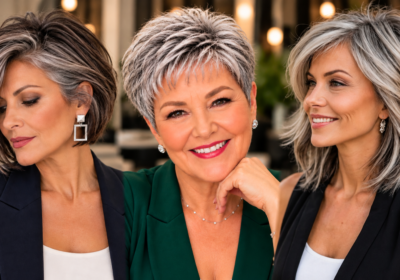
Fine hair can look beautiful at any age, but one of the most frustrating changes after 50 is losing volume at the crown. Your hair may still have movement around your face and fullness through the ends, yet the top seems to fall flat just minutes after styling.
The solution isn’t always more layers, stronger hairspray, or a shorter haircut.
Sometimes, the right haircut can create a more lifted silhouette by changing where the hair’s weight sits and how the layers support one another.
If your fine hair tends to lie flat at the crown, these flattering haircut ideas can help you achieve better shape, natural-looking fullness, and a hairstyle that feels easier to manage.
If you’re looking for more ways to create movement without sacrificing density, explore our guide to layered haircuts for fine hair over 50.
Why Fine Hair Often Falls Flat at the Crown After 50
As hair changes with age, individual strands may become finer, overall density may decrease, and natural texture can shift.
These changes can make the crown appear flatter, particularly when the haircut has too much length or weight concentrated at the top.
Several factors can contribute:
- Long, heavy sections that pull the hair downward.
- Layers that remove too much density without creating support.
- A haircut that doesn’t account for the natural growth pattern at the crown.
- A parting that emphasizes areas with less volume.
- Styling techniques that create temporary lift but don’t complement the haircut’s shape.
The goal isn’t simply to make the hair shorter. It’s to create a balanced shape that makes the crown appear fuller without leaving the ends looking thin.
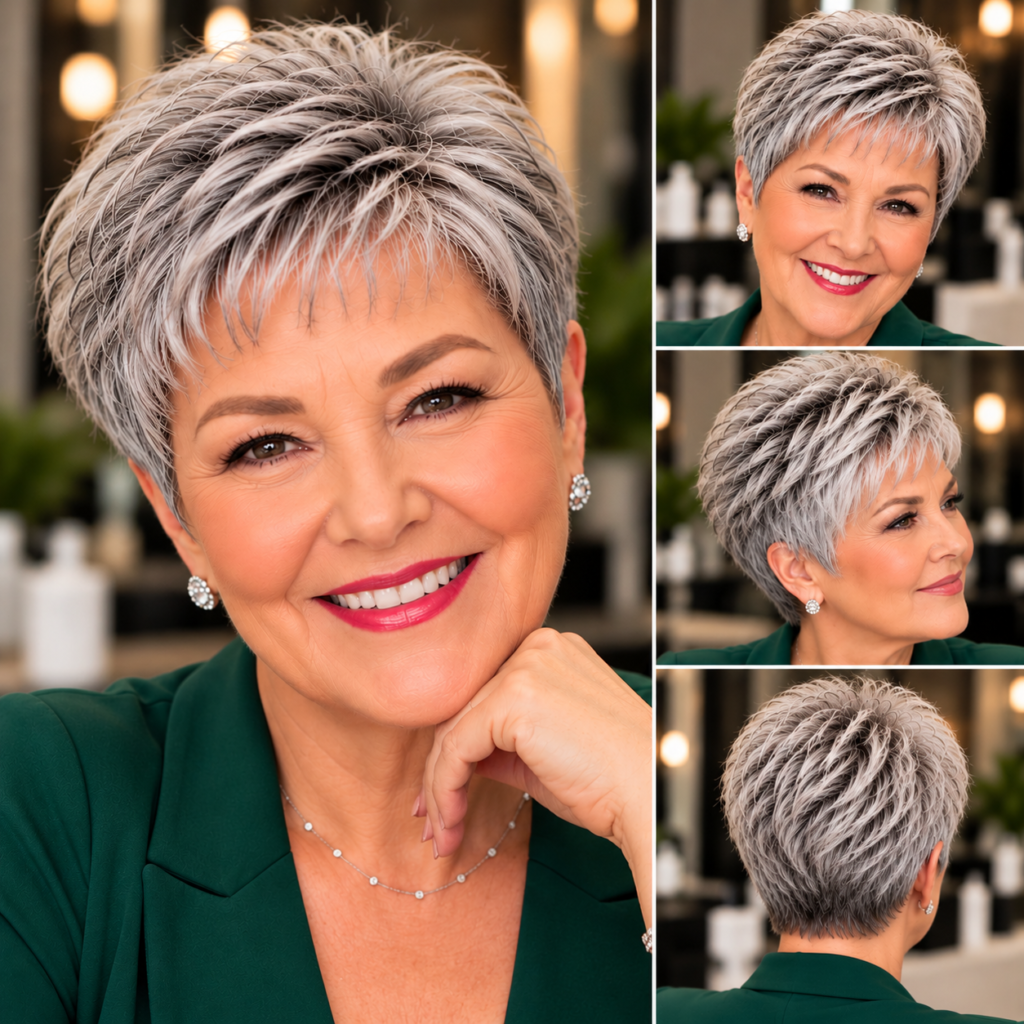
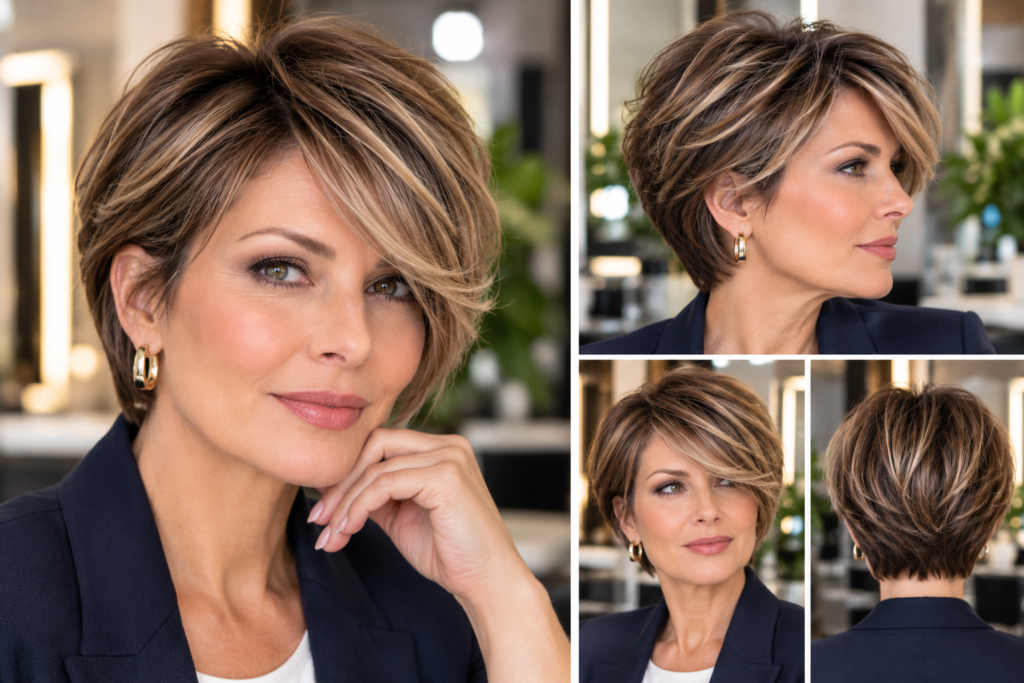
1. The Textured Pixie With Crown Lift
A textured pixie is one of the most practical options for fine hair that struggles to maintain volume on top.
The key is keeping enough length through the crown to create movement while removing unnecessary weight from the sides and neckline.
Soft, carefully placed layers can give the upper sections more flexibility, helping the hairstyle appear lifted rather than compressed.
Why it works: A shorter overall silhouette can reduce the weight pulling the hair downward, while textured crown sections create visual dimension.
Ask your stylist for: A softly textured pixie with a slightly longer crown, controlled side volume, and a neatly shaped nape.
Avoid excessively short or heavily thinned crown layers if your hair has limited density.
2. The Softly Stacked Bob
A stacked bob creates shape through the back of the head, making it particularly appealing when the crown looks flat.
Rather than relying on dramatic layering, a softly stacked bob uses graduated lengths to build a rounded silhouette.
The result can be a fuller-looking back profile with a polished, structured finish.
Why it works: The graduated shape creates visual fullness around the back of the head and helps support the overall silhouette.
Ask your stylist for: Gentle graduation through the back, a softly rounded shape, and enough weight at the perimeter to keep fine ends looking substantial.
A subtle stacked bob is often more flattering for fine hair than an aggressively layered version.
For more flattering styles that create natural-looking lift, discover our favorite haircuts that add volume to thin hair.
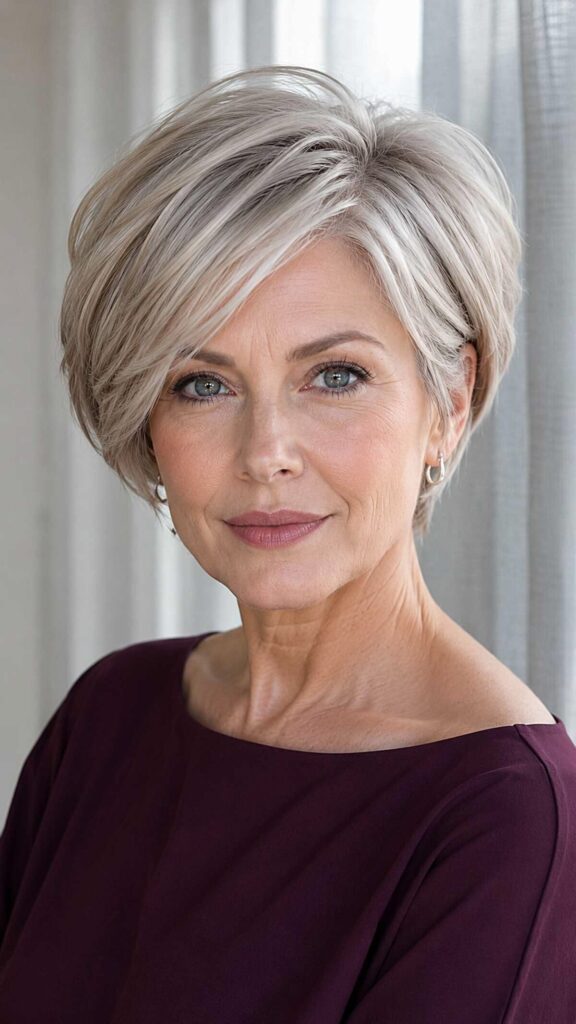
3. The Short Bixie With a Rounded Crown
The bixie combines the compact structure of a pixie with the softness and movement of a bob.
For women over 50 with fine hair, this hybrid haircut can offer a useful balance between short, manageable lengths and a feminine, softly layered shape.
The most flattering versions feature a rounded crown, light texture, and slightly longer pieces around the face.
Why it works: The shorter back helps define the silhouette, while the longer upper sections allow movement without excessive bulk.
Ask your stylist for: A rounded bixie with crown-focused shaping, soft face-framing pieces, and a natural-looking transition into the neckline.
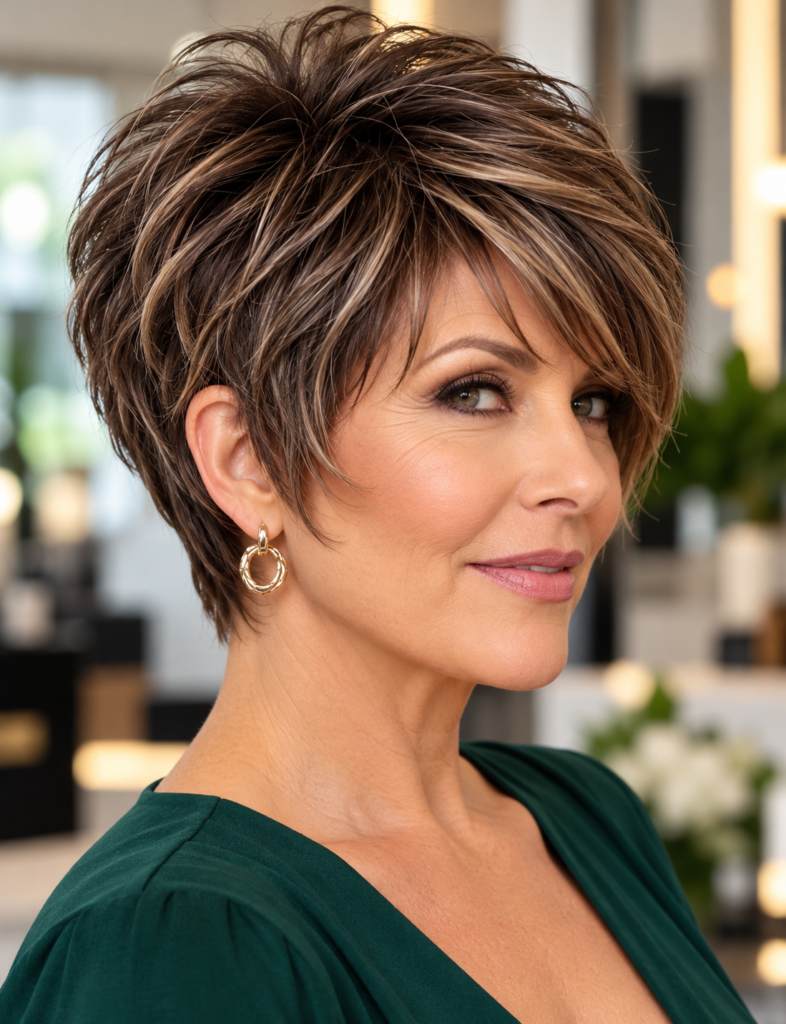
4. The Graduated Bob With a Lifted Back
A graduated bob can be especially effective when fine hair looks flat from the side.
Its defining feature is the gradual change in length from the back toward the front.
When carefully tailored, this construction creates a rounded shape that makes the back of the head appear fuller.
Why it works: Graduation redistributes the haircut’s visual weight and creates a more defined silhouette.
Ask your stylist for: A softly graduated back with a fuller perimeter and slightly longer front sections.
For very fine hair, keeping the graduation controlled helps prevent the ends from appearing sparse.
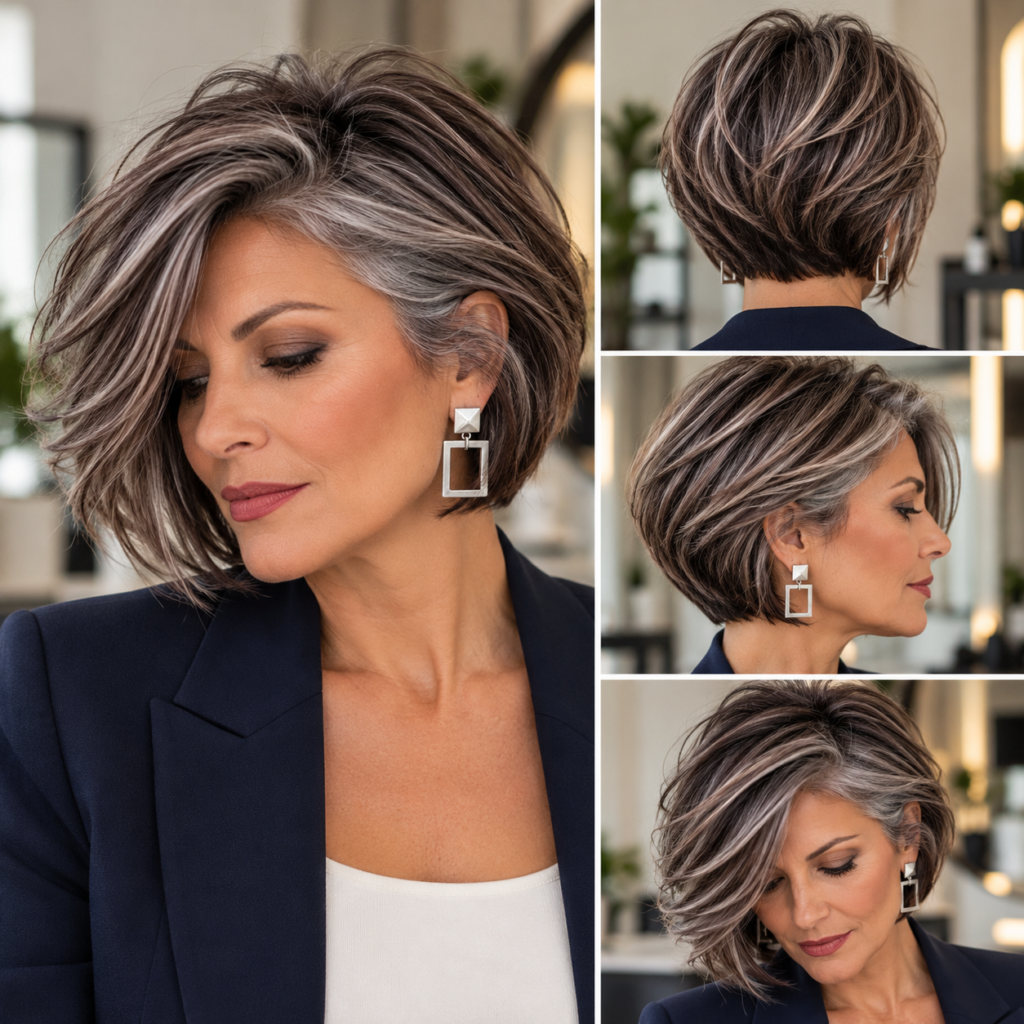
5. The Side-Parted Layered Bob
Sometimes, a flat crown becomes more noticeable because the hair has settled into the same parting for years.
A side-parted bob can introduce asymmetry and create the appearance of greater height on one side.
Combined with carefully placed layers, this shape can make fine hair look more dynamic without requiring an extremely short cut.
Why it works: The deeper part creates a fuller-looking sweep across the top, while the bob’s structure keeps the overall shape polished.
Ask your stylist for: A chin-length or slightly longer bob with soft internal shaping and a flexible side part.
This is particularly useful for women who prefer a classic haircut rather than a heavily textured pixie.
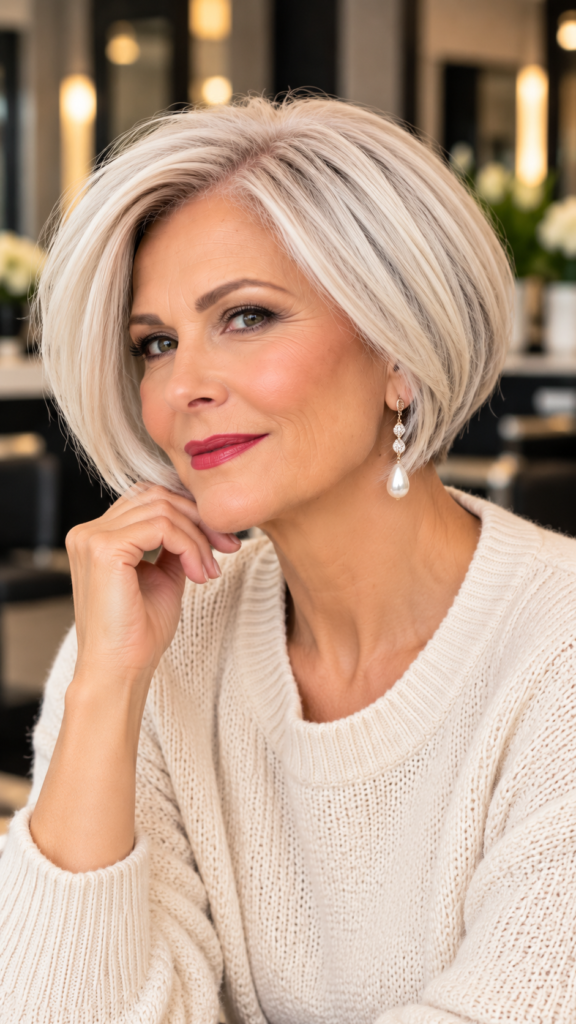
6. The Feathered Short Crop
A feathered crop offers a softer alternative to a sharply structured pixie.
Lightly feathered sections around the crown and upper sides create movement, while a controlled neckline keeps the haircut neat.
The result is a hairstyle that can look airy and elegant without appearing overly styled.
Why it works: Feathered texture creates separation between sections, adding visual movement around the crown.
Ask your stylist for: Soft feathering through the upper layers, gentle height at the crown, and enough density through the front to frame the face.
The important distinction is between feathering for movement and excessive thinning that removes valuable fullness.
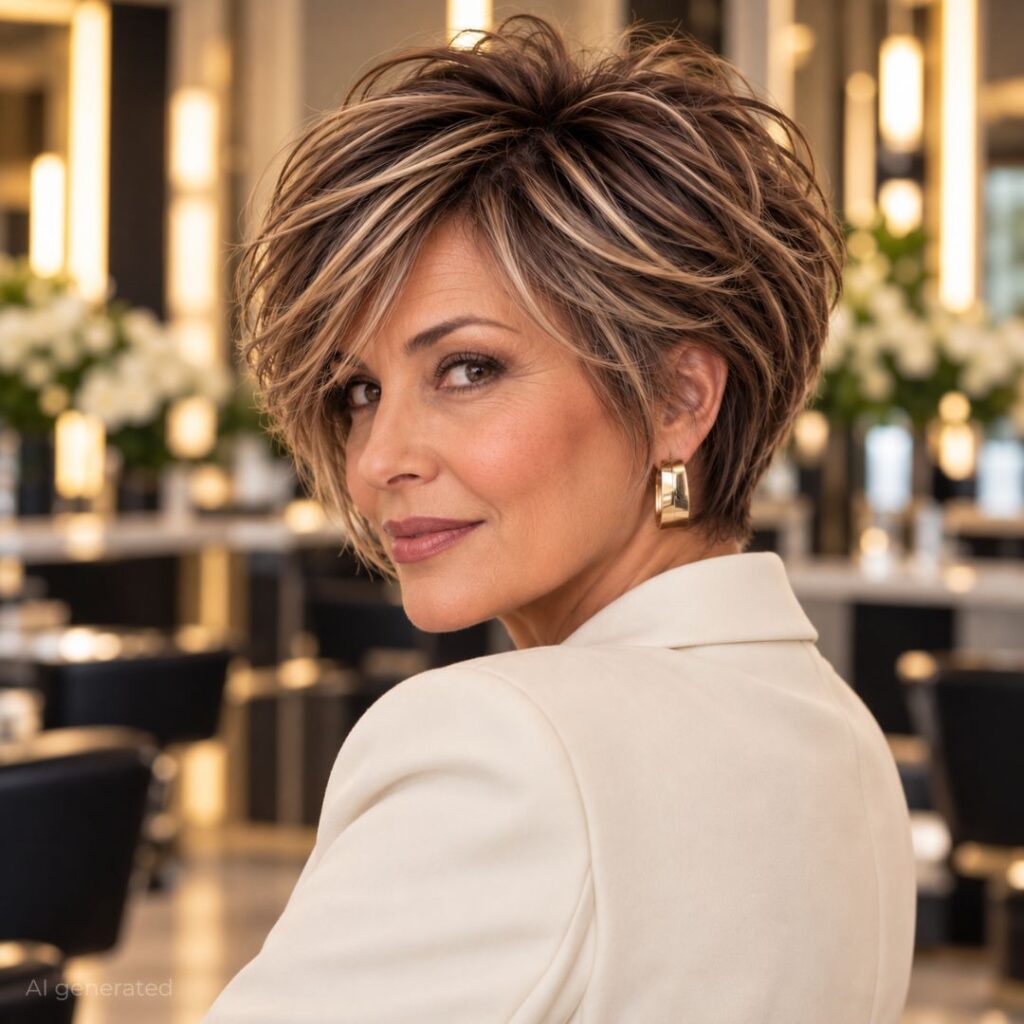
7. The Rounded Short Bob With Minimal Layers
Not every woman with fine hair needs a layered haircut.
In fact, when hair density is limited, a short bob with minimal layering may create a stronger-looking silhouette than a heavily textured style.
A rounded bob can make the hair appear more substantial by preserving weight through the ends while introducing gentle shaping around the back.
Why it works: A fuller perimeter gives the impression of thicker hair, while subtle graduation can improve the crown’s overall shape.
Ask your stylist for: A short, softly rounded bob with a clean perimeter and only the layers necessary to support the shape.
This haircut is especially appealing if you prefer an elegant, understated finish.
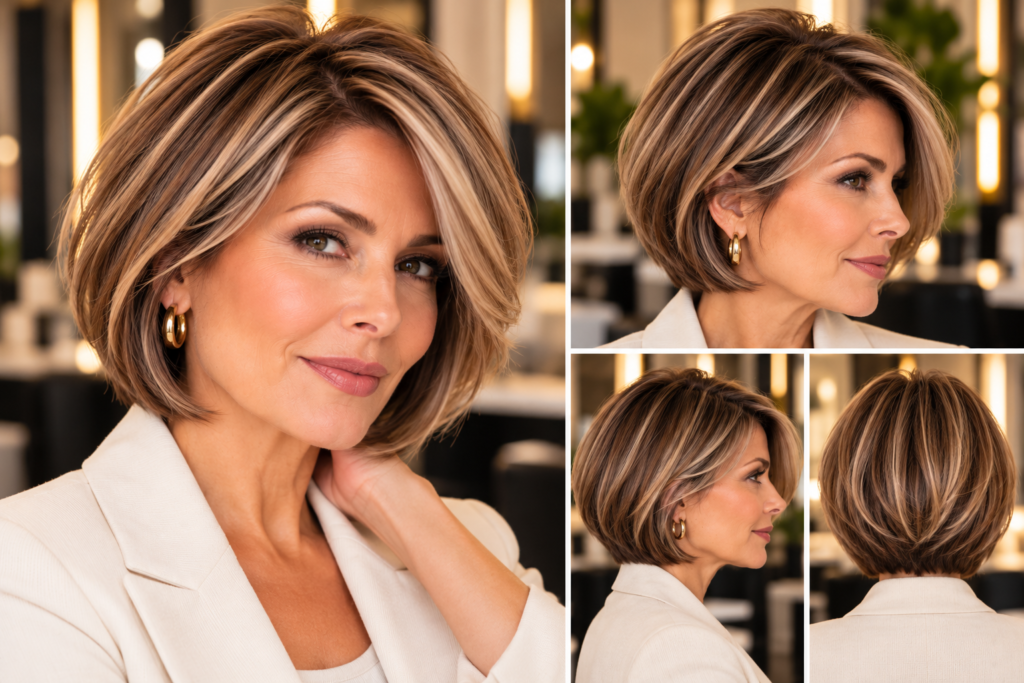
8. The Short Layered Cut With a Sweeping Fringe
A sweeping fringe can change the visual balance of a haircut.
For fine hair that appears flat at the crown, longer fringe sections can introduce movement across the forehead and create a more dimensional profile.
The trick is maintaining enough hair through the top so the fringe doesn’t remove too much density from the crown.
Why it works: The diagonal movement of the fringe draws attention across the face, while strategically shaped upper layers can improve the overall silhouette.
Ask your stylist for: A soft side-swept fringe that blends into the crown, with restrained layering and a balanced neckline.
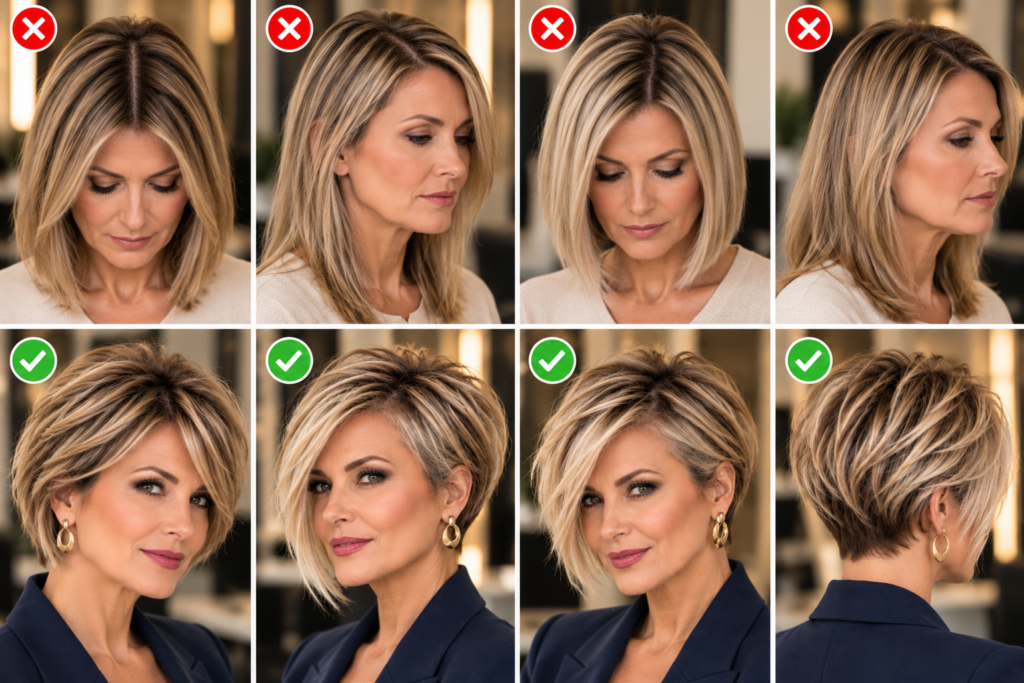
Haircut Mistakes That Can Make a Flat Crown More Noticeable
Even a fashionable haircut may disappoint if it isn’t adapted to fine hair.
If you’re considering going shorter, take a look at these short haircuts for thin hair that don’t look flat.
Too Many Short Layers
Short layers can create texture, but excessive layering may leave the crown looking separated or sparse.
The best approach depends on your hair’s density and growth pattern.
Excessive Thinning
Thinning shears aren’t automatically harmful, but removing too much hair can reduce the fullness that fine hair needs.
Ask your stylist how they plan to preserve density through the ends.
Too Much Length Without Structure
Longer hair isn’t necessarily a problem, but a heavy, shapeless cut can emphasize a flat crown.
Strategic shaping often matters more than the exact length.
Ignoring the Natural Growth Pattern
Cowlicks and changes in hair direction can affect how the crown sits.
A haircut that works with these patterns is usually easier to maintain than one that requires constant correction.
How to Make Crown Volume Last Longer
A good haircut provides the foundation, but a few simple styling habits can help maintain its shape.
Dry the roots in the opposite direction. Briefly lifting the hair away from its natural fall can help create temporary height.
Use lightweight products. Heavy creams and oils may weigh down fine hair, especially near the roots.
Avoid overloading the crown. A small amount of volumizing mousse or root-lifting product is often enough.
Experiment with your parting. Moving the part slightly can create a fresher, fuller-looking silhouette.
Maintain the haircut’s shape. Regular trims can help preserve the structure, particularly with pixies, bixies, and graduated bobs.
These techniques can improve the appearance of volume, although results depend on hair density, texture, and growth patterns.
Which Haircut Is Best for Fine Hair With a Flat Crown?
The best choice depends on how much length you want to keep and where your hair needs support.
If you prefer very short hair, a textured pixie or feathered crop may offer the most flexibility.
If you want a polished, structured silhouette, consider a softly stacked or graduated bob.
If you prefer something between a pixie and a bob, a rounded bixie can provide softness with a compact shape.
For women who want to preserve more length, a side-parted layered bob may be the most comfortable option.
The most important consideration is preserving enough density while creating shape where the hair naturally falls flat.
Final Thoughts
Fine hair after 50 doesn’t need dramatic layering or complicated daily styling to look beautiful.
A thoughtfully designed haircut can improve the appearance of crown volume by balancing length, weight, texture, and shape.
Whether you choose a textured pixie, softly stacked bob, rounded bixie, or elegant short crop, the goal is the same: a flattering silhouette that looks fuller without sacrificing the hair’s natural density.
Bring a few reference photos to your next salon appointment and ask your stylist which construction would work best with your hair’s texture, density, and growth pattern.