Haircuts That Look Good Without Styling: 12 Easy, Flattering Cuts
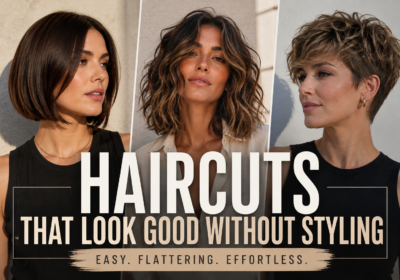
Some haircuts seem effortless at the salon but become surprisingly difficult the moment you wash your hair at home. If a cut only looks good after a professional blowout, a round brush, and several styling products, it probably isn’t truly low-maintenance.
The best haircuts that look good without styling are designed around the way your hair naturally falls. They have enough shape to look intentional when air-dried, work with your natural texture instead of fighting it, and don’t require perfect placement of every strand.
From soft bobs and collarbone cuts to natural waves and easygoing shags, these 12 flattering haircuts prove that great hair doesn’t have to mean spending half the morning in front of the mirror.
1. Soft Blunt Bob
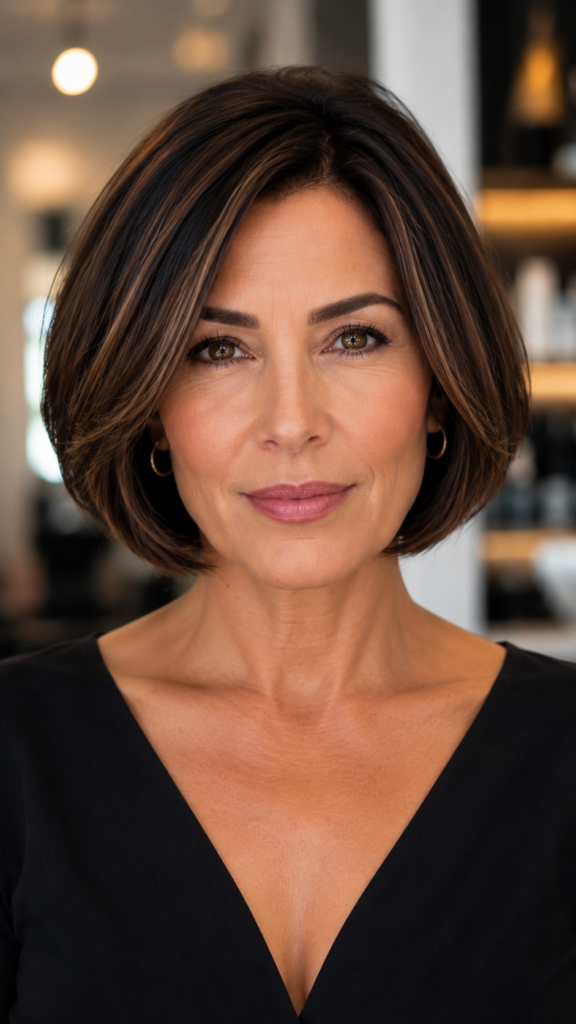
A soft blunt bob is one of the simplest ways to make straight or slightly wavy hair look polished with minimal effort.
The strong perimeter gives the haircut an obvious shape even when you don’t style it, while slightly softened ends keep it from looking too severe. Unlike heavily layered bobs, there aren’t multiple sections that need to be blow-dried into place.
It’s an especially smart option for fine hair because keeping more weight at the ends can create the appearance of greater density.
Rather than asking for a razor-sharp finish, choose a softer version that allows the hair to move naturally.
Best for: Fine to medium hair with straight or slightly wavy texture.
Why it works: The clean baseline creates the shape, so styling doesn’t have to.
2. Textured French Bob
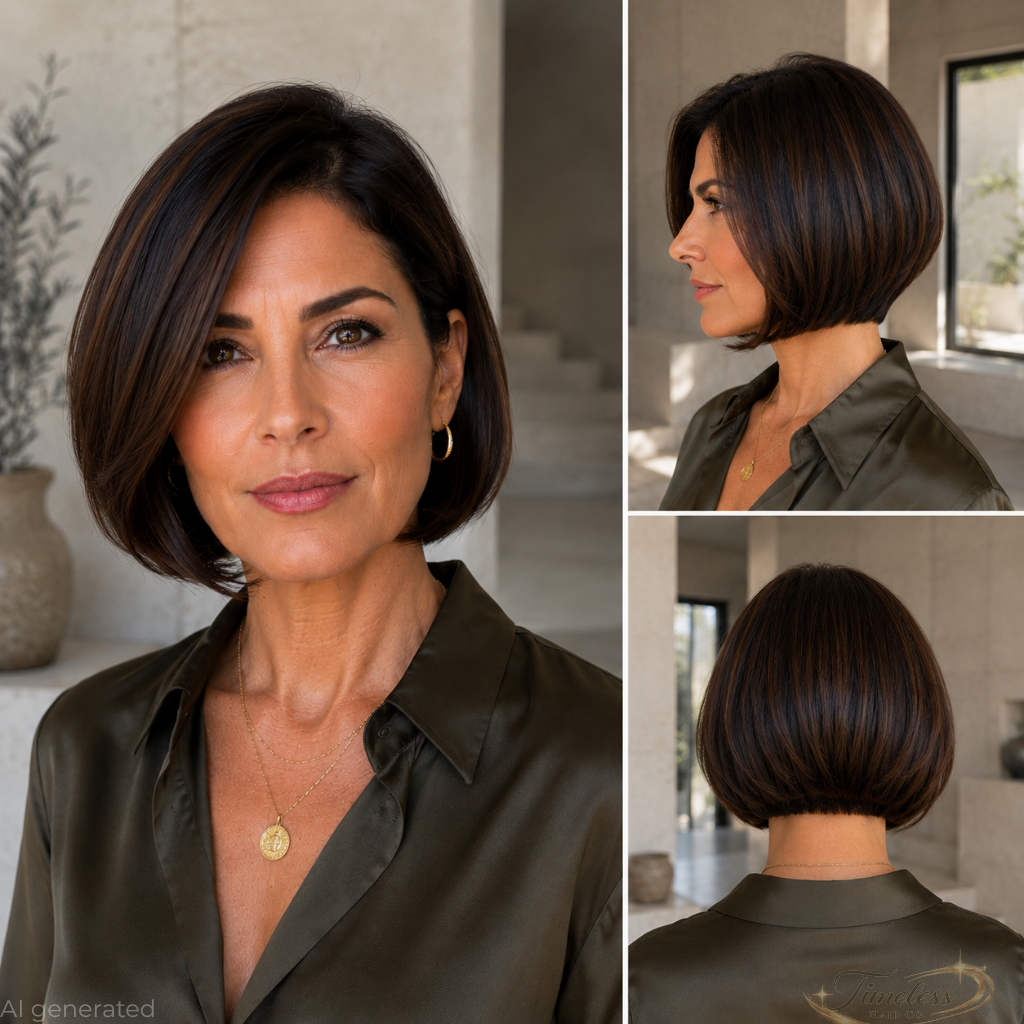
The French bob is often pictured perfectly smooth and curved under, but its more relaxed version can be even easier to wear.
Cut around the chin or jawline, a textured French bob allows subtle bends, movement, and even a little imperfection to become part of the style.
That’s exactly what makes it such a good option for women who don’t want to reach for a flat iron every morning.
A soft fringe is optional. If your bangs naturally cooperate, they can make the cut even more distinctive. If they don’t, skipping them will make the haircut significantly easier to maintain.
Best for: Straight, slightly wavy, or naturally tousled hair.
Why it works: It actually benefits from a slightly undone finish.
3. Collarbone Lob
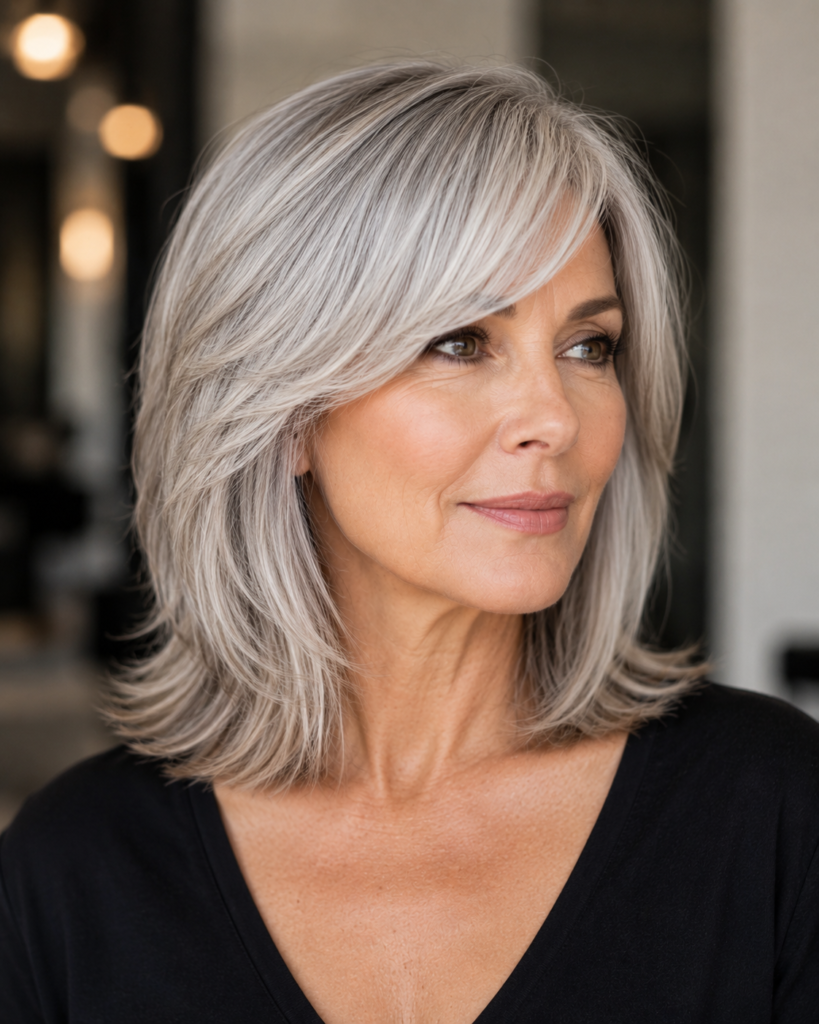
Not ready to go short? The collarbone lob might be one of the most practical lengths you can choose.
Sitting around the collarbone, it’s short enough to remove some of the weight and heaviness of long hair but long enough to avoid the precision required by many shorter bobs.
A small amount of face framing can give the front movement without creating dozens of layers that need to be styled individually.
And there’s another practical advantage: it’s still long enough to pull into a ponytail on days when even air-drying feels like too much effort.
Best for: Fine, medium, or thick hair; straight and wavy textures.
Why it works: The length provides movement while remaining extremely forgiving.
4. Modern Bixie
The bixie sits somewhere between a pixie and a bob, combining the lightness of short hair with enough length to create natural movement.
For a genuinely low-maintenance version, avoid an overly sculpted crown that only looks right when lifted with a brush and styling product.
Instead, keep soft length through the top, a flexible fringe, and gently tapered sides. The result should look good slightly tousled rather than requiring every piece to sit perfectly.
Best for: Fine to medium hair with straight or softly textured movement.
Why it works: The slightly undone shape doesn’t depend on perfectly styled volume.
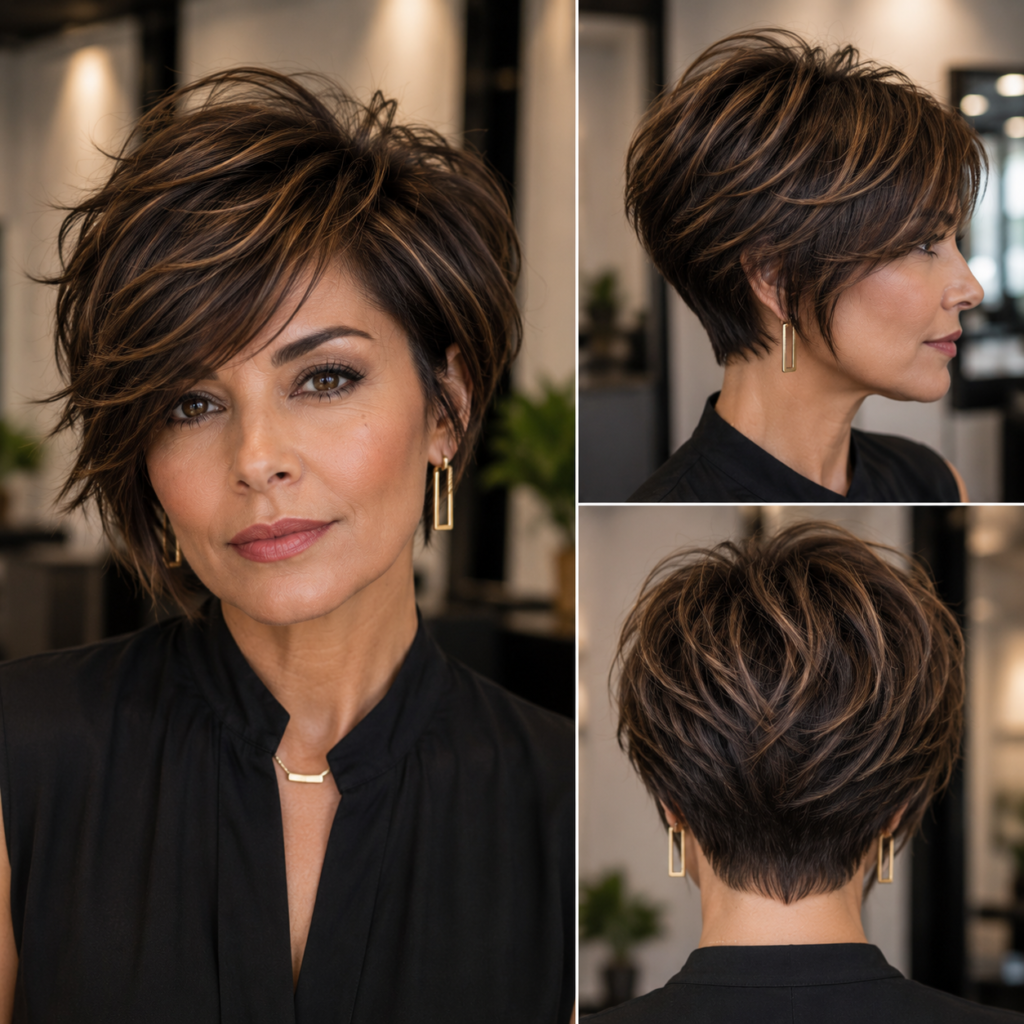
5. Soft Shag
If your hair naturally bends, waves, or refuses to stay perfectly smooth, a soft shag can turn those characteristics into an advantage.
Modern shags don’t need extremely short layers or a dramatic retro shape. A softer interpretation uses longer layers to release weight and encourage natural movement.
The biggest consideration is customization. Too many short layers can create additional styling work, particularly on very fine or frizz-prone hair.
Best for: Wavy, textured, and naturally voluminous hair.
Why it works: Natural movement becomes part of the haircut instead of something you need to control.
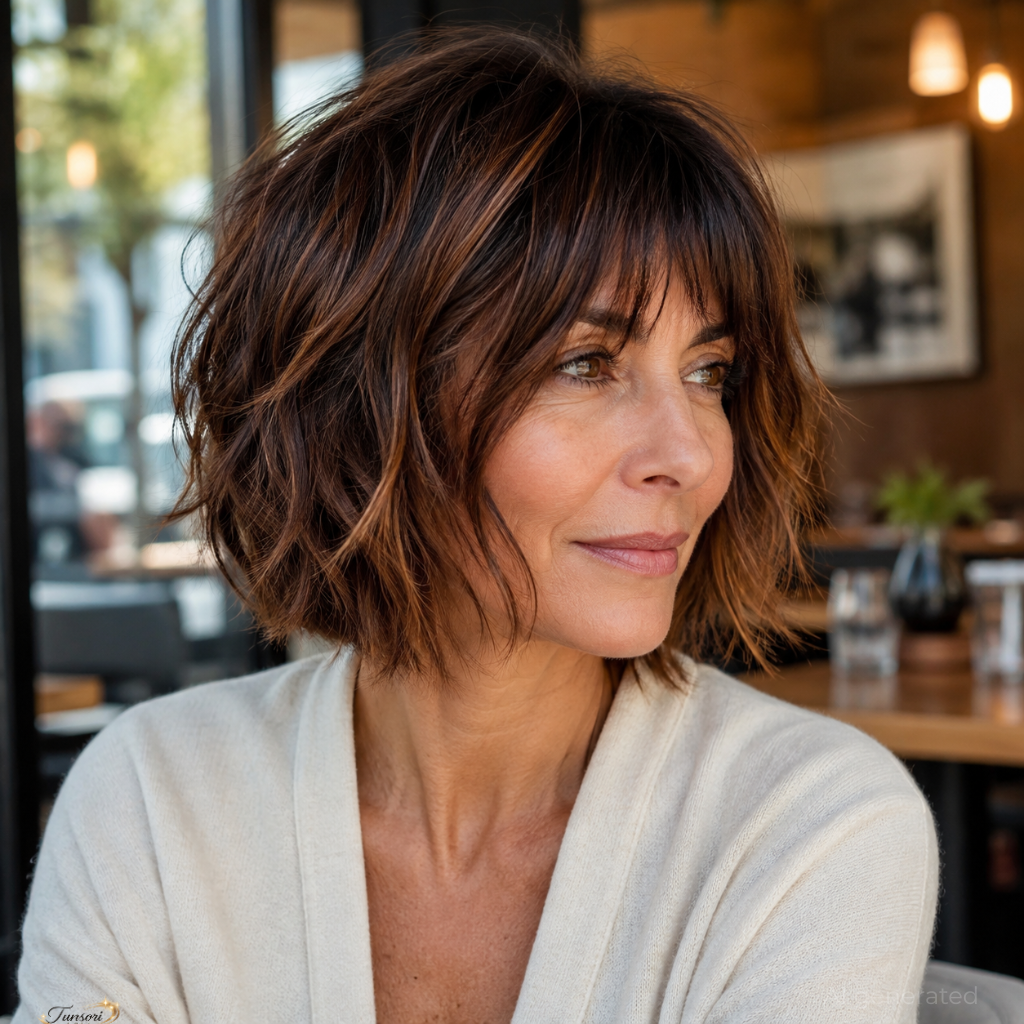
6. Italian Bob
The Italian bob has become popular for its fuller, more luxurious shape, but it’s also surprisingly practical on the right hair type.
Typically longer than a classic chin-length bob, it maintains substantial weight through the perimeter. That gives the hair a naturally full appearance without depending on lots of short layers.
Gentle bends, natural volume, and slightly imperfect ends can give the Italian bob an effortless finish that looks intentional rather than unfinished.
Best for: Medium to thick hair with straight or softly wavy texture.
Why it works: Its fuller perimeter provides shape and movement without complicated layering.
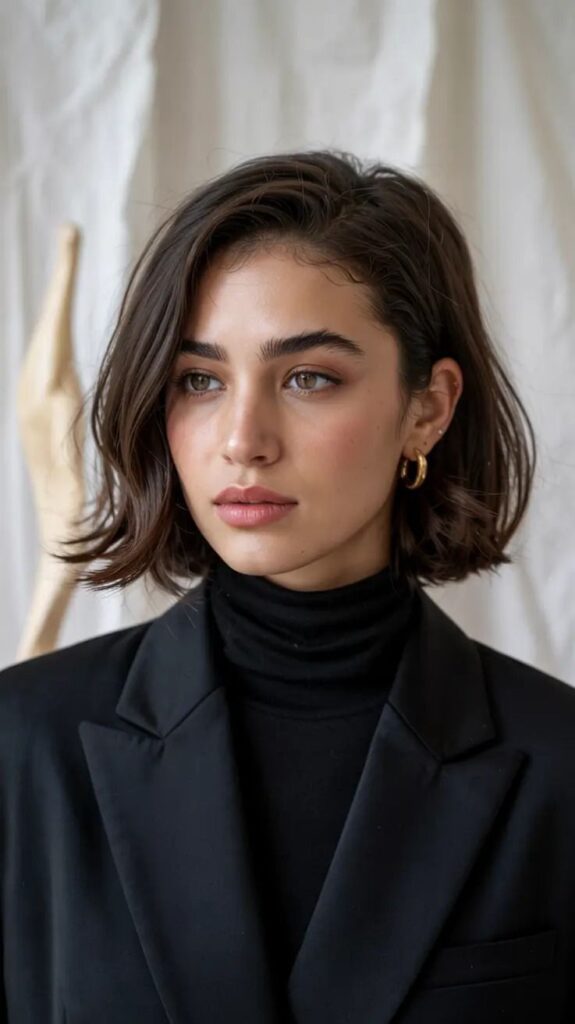
7. Curly Bob
One of the easiest ways to reduce styling time on naturally curly hair is to stop choosing haircuts designed primarily for straight hair.
A properly shaped curly bob allows the curls themselves to create the finished style.
The haircut can be customized around your curl pattern, density, shrinkage, and the areas where your hair naturally carries more volume.
Best for: Naturally curly and coily hair.
Why it works: The haircut follows the curl pattern instead of forcing the hair into another texture.
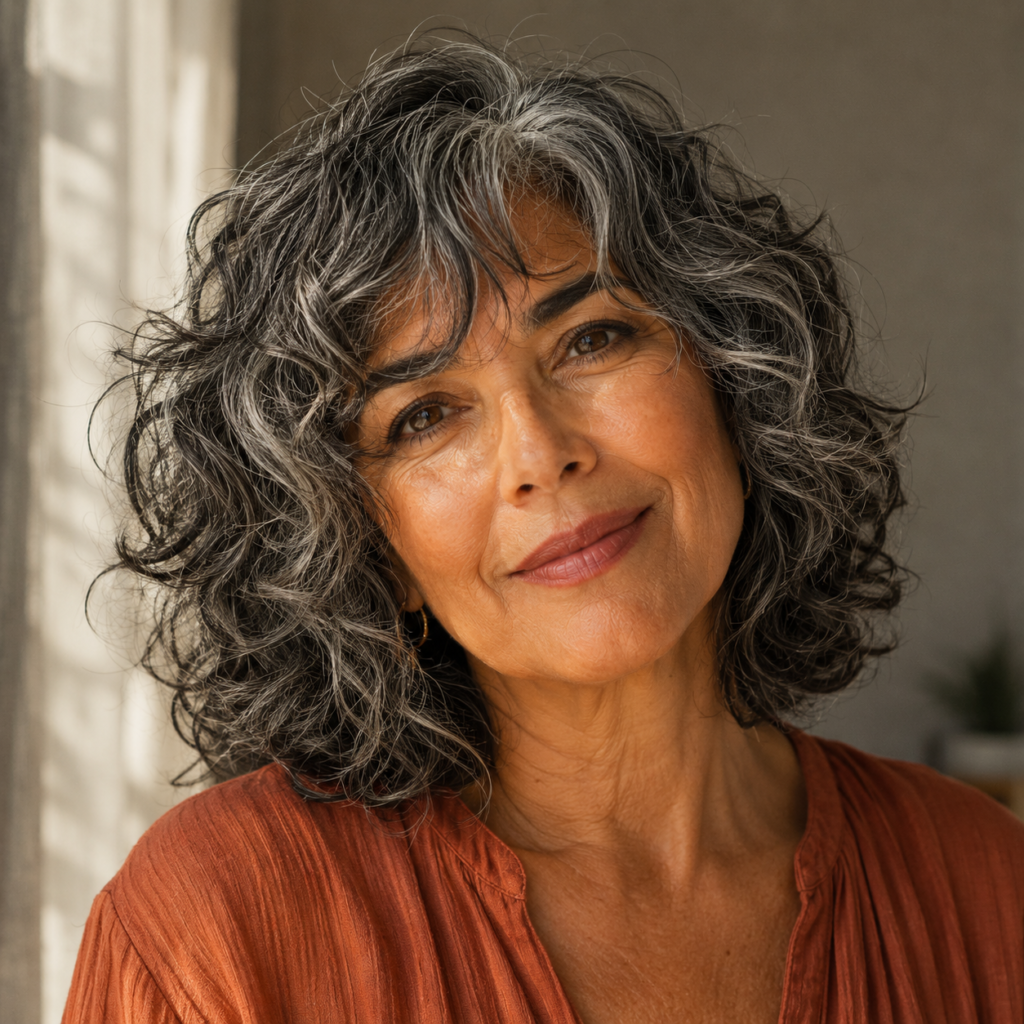
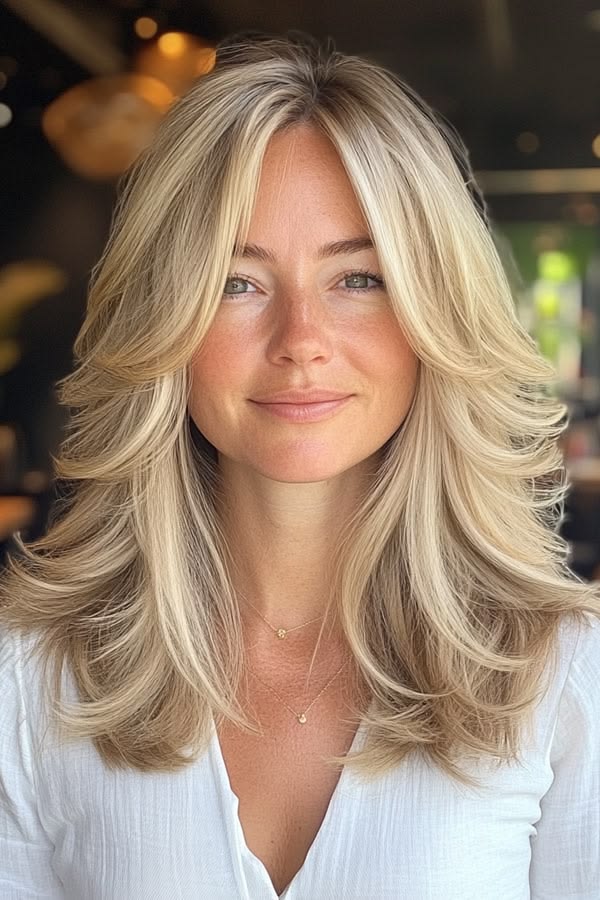
8. Long Layers With Soft Face Framing
You don’t have to cut your hair short to make your routine easier.
For longer hair, carefully placed long layers can remove heaviness and add movement without creating a haircut that requires a blowout to look finished.
Very short layers can flip, separate, or create extra volume in areas where you don’t necessarily want it. Longer layers preserve enough weight for the hair to fall naturally.
Best for: Medium to thick straight, wavy, or softly textured hair.
Why it works: Long layers add movement while preserving the natural weight of the hair.
9. Rounded Bob
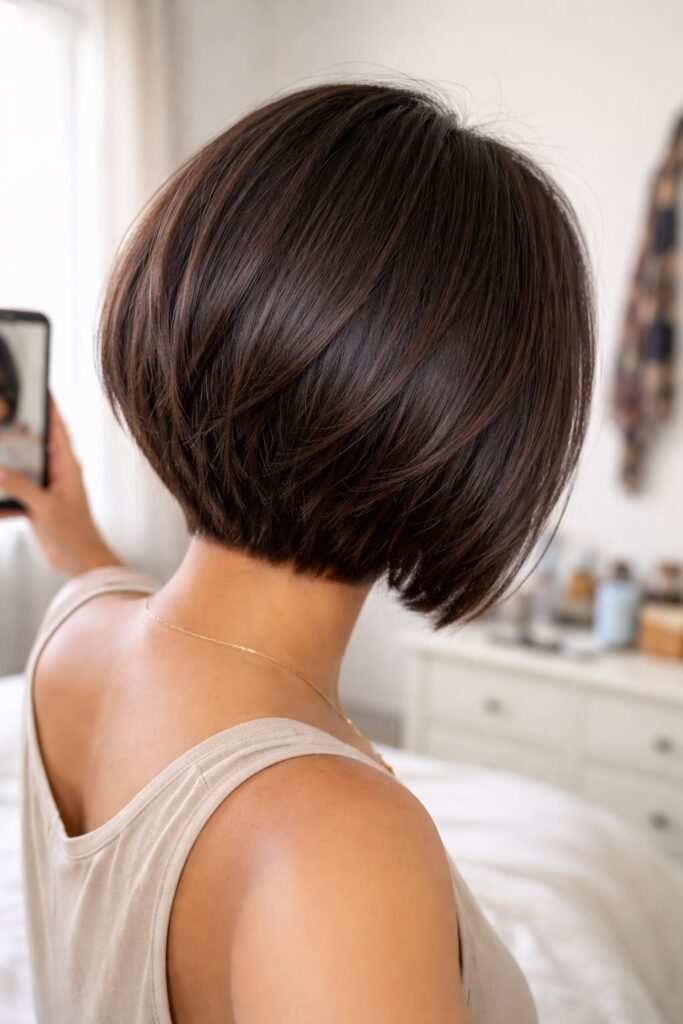
A rounded bob offers softness without relying on obvious layers.
Instead of creating dramatic graduation, the stylist can use subtle internal shaping to help the hair settle into a gently rounded silhouette while keeping the perimeter substantial.
The exact length matters. A bob that ends where your hair naturally wants to flip may become frustrating, while moving the perimeter slightly higher or lower can make the same basic haircut much easier.
Best for: Straight to slightly wavy, medium-density hair.
Why it works: The haircut itself creates the silhouette.
10. Wavy Midi Cut
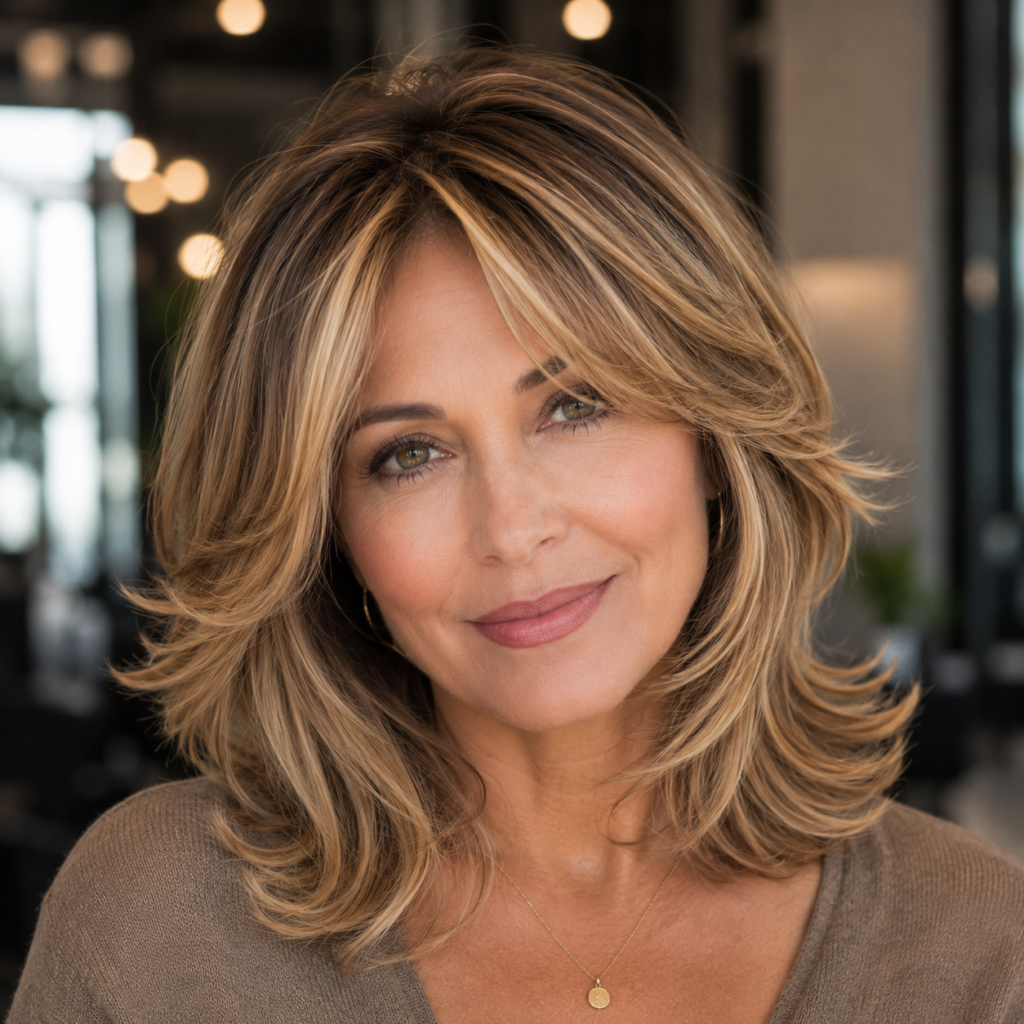
Natural waves are often easiest to manage when they have enough length and weight to settle properly.
Usually sitting around the shoulders or collarbone area, this haircut can include subtle shaping to encourage movement while avoiding excessive layers that make wavy hair expand.
This is also a haircut that doesn’t need to look identical every day. Slight variations in the wave pattern contribute to its relaxed character.
Best for: Naturally wavy hair.
Why it works: It gives waves enough freedom to form without allowing the overall shape to become uncontrolled.
11. Grown-Out Pixie
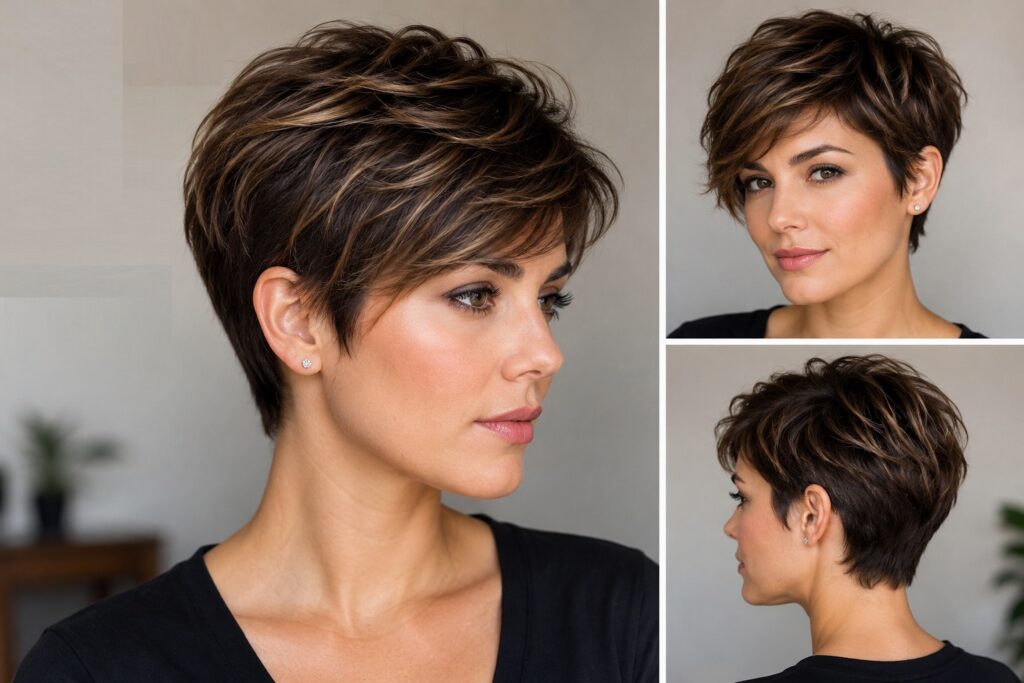
A very short, highly sculpted pixie isn’t always as low-maintenance as it looks.
A softer, slightly grown-out pixie is different. Additional length through the crown and fringe gives the hair more freedom to fall naturally.
Instead of fighting a piece that falls in the “wrong” direction, the haircut embraces a little natural movement. It also tends to transition more gracefully between appointments.
Best for: Fine to medium straight or softly textured hair.
Why it works: The softer shape doesn’t depend on precision.
12. One-Length Shoulder Cut
Sometimes the least complicated haircut really is the best one.
A mostly one-length shoulder cut keeps enough weight in the hair to encourage it to settle naturally while maintaining a clear, deliberate shape.
For fine hair, the stronger perimeter can also help the ends appear thicker. On slightly wavy hair, the shoulder length can produce an easy natural bend.
Best for: Fine to medium straight or slightly wavy hair.
Why it works: A strong, simple perimeter does most of the visual work.
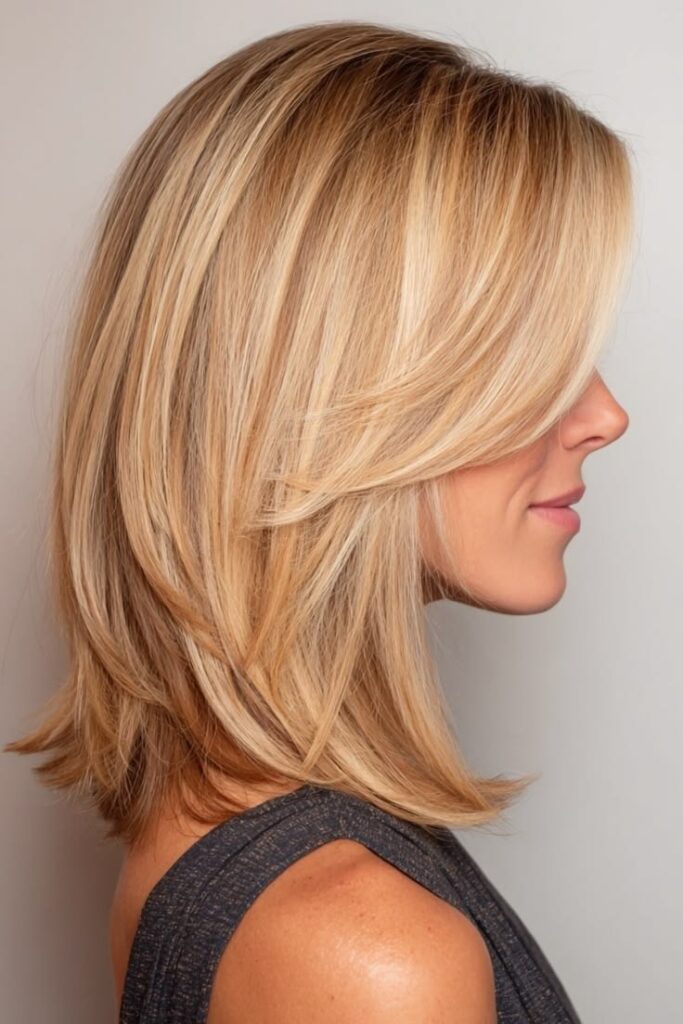
What Makes a Haircut Look Good Without Styling?
The biggest secret isn’t choosing a haircut labeled “wash and wear.” It’s choosing a haircut that matches your natural hair texture, density, and growth pattern.
A blunt bob might be almost effortless on naturally straight fine hair but require significant daily work on thick, tightly curled hair. A soft shag may air-dry beautifully on naturally wavy hair but need considerably more effort on pin-straight hair.
The goal isn’t to force your hair to behave differently. It’s to create a shape that makes its natural behavior look intentional.
Are Layers Good for Low-Maintenance Hair?
They can be — but more layers don’t automatically mean easier hair.
Strategic layering can remove excess weight, encourage waves and curls, and give thick hair more movement. Too many short layers, however, may create additional volume, make fine ends appear thinner, increase frizz, or produce pieces that need to be styled individually.
If minimal styling is your priority, ask your stylist whether the proposed layers will still fall correctly when you air-dry your hair without using a round brush.
How to Choose a Haircut You Can Actually Air-Dry
Bring reference photos to your appointment, but don’t focus only on the finished hairstyle.
Consider Your Natural Texture
Choose a cut that allows your straight, wavy, curly, or coily texture to remain visible rather than requiring you to recreate a completely different texture every morning.
Realistic About Your Routine
If you’re willing to spend five minutes on your hair, say so. Don’t choose a haircut that requires 30 minutes because you hope you’ll suddenly enjoy styling it.
Pay Attention to Your Growth Pattern
Cowlicks, strong partings, areas that naturally flip, and the direction your hair grows should influence fringe placement, length, and layering.
The best low-effort haircut isn’t necessarily the simplest haircut. It’s the one designed for the hair you already have.
Do Haircuts That Look Good Without Styling Really Require Zero Styling?
Usually, no — and that’s an important distinction.
“Without styling” doesn’t have to mean washing your hair and literally doing nothing.
Most hair benefits from basic care. Curly hair might need leave-in conditioner. Wavy hair may look better with a small amount of wave cream. Fine hair might benefit from a lightweight volumizing product.
The difference is that you shouldn’t need to reconstruct the haircut every morning with a blow dryer, flat iron, curling iron, and several brushes.
A genuinely easy haircut already has its shape. Products should enhance it, not create it from scratch.
Which Low-Styling Haircut Is Right for You?
If your hair is fine and straight, consider a soft blunt bob, collarbone lob, or one-length shoulder cut.
If it’s naturally wavy, a soft shag, wavy midi, or relaxed French bob can allow that texture to become the focal point.
For thicker hair, an Italian bob or longer layered cut can remove unnecessary bulk while preserving movement.
And for curly hair, a shape specifically designed around your curl pattern will almost always be easier than trying to maintain a cut intended to look smooth and straight.
The common thread isn’t length. It’s compatibility.
Final Thoughts
The easiest haircuts aren’t necessarily the shortest, and the most flattering cuts aren’t necessarily the ones that look perfectly polished.
A great haircut should make your natural hair easier to live with.
Whether that’s a soft blunt bob, relaxed shag, collarbone lob, curly bob, or simple shoulder-length cut, the right shape can dramatically reduce the amount of time you spend styling your hair.
Instead of asking your stylist only, “Will this haircut suit me?”, try asking one more question:
“What will this look like when I let it air-dry?”
The answer may be much more useful than the salon blowout.
Frequently Asked Questions
What haircut requires the least styling?
The easiest haircut depends on your natural texture. Soft blunt bobs and one-length shoulder cuts can require very little styling on straight hair, while soft shags and properly shaped curly cuts can be easier for naturally textured hair.
What haircut looks best when air-dried?
Collarbone lobs, wavy midi cuts, soft shags, curly bobs, relaxed French bobs, and simple shoulder-length cuts can all work beautifully when air-dried if they’re adapted to the natural texture.
Is a bob easy to maintain without styling?
It can be. Softer bobs with a strong perimeter are generally easier than highly precise shapes that require the ends to sit perfectly.
Are layers low-maintenance?
Long, strategic layers can be very low-maintenance. Excessive short layering may require more styling, particularly on fine, straight, or frizz-prone hair.
What is the best low-maintenance haircut for fine hair?
A soft blunt bob, collarbone lob, or one-length shoulder cut can help fine hair appear fuller because they preserve density through the ends.
Is short hair easier than long hair?
Not always. Very short cuts can require frequent trims and daily styling. Medium-length cuts with simple shapes are sometimes easier to maintain than highly structured pixies or crops.