10 Haircuts That Add Volume to Thin Hair Without Making It Look Puffy
Thin hair can be surprisingly tricky to cut. You want enough volume to make your hair look fuller, but too many short layers or too much height at the crown can quickly create the opposite effect: hair that looks puffy on top and sparse through the ends.
The secret isn’t simply adding more volume. It’s creating volume in the right places while preserving enough weight and density through the perimeter.
A well-designed haircut can make thin hair appear noticeably fuller without relying on excessive teasing, heavy styling products, or exaggerated root lift. Strong outlines, carefully placed layers, subtle graduation, and strategic face-framing can all change how much density the hair appears to have.
If you’re looking for a haircut that gives thin hair movement and body while still looking polished and natural, these 10 styles are excellent places to start.
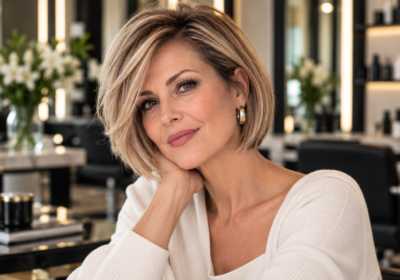
1. Blunt Bob With a Strong Perimeter
One of the simplest ways to make thin hair look fuller is to keep the bottom edge of the haircut strong.
A blunt bob creates a clean, substantial perimeter instead of allowing the ends to taper into wispy pieces. Because more hair reaches approximately the same length, the bottom of the haircut can appear noticeably denser.
This doesn’t mean the entire haircut has to be completely layer-free. A stylist can introduce subtle internal movement while maintaining the strong outer line that gives the bob its visual weight.
For thin hair, a length somewhere between the jaw and just above the shoulders can work particularly well. Going significantly longer may allow gravity to flatten the roots and make sparse ends more noticeable.
Why it works: the strong baseline creates the impression of thicker, healthier ends without adding unnecessary height.
Best for: straight to slightly wavy thin hair that tends to look sparse toward the ends.
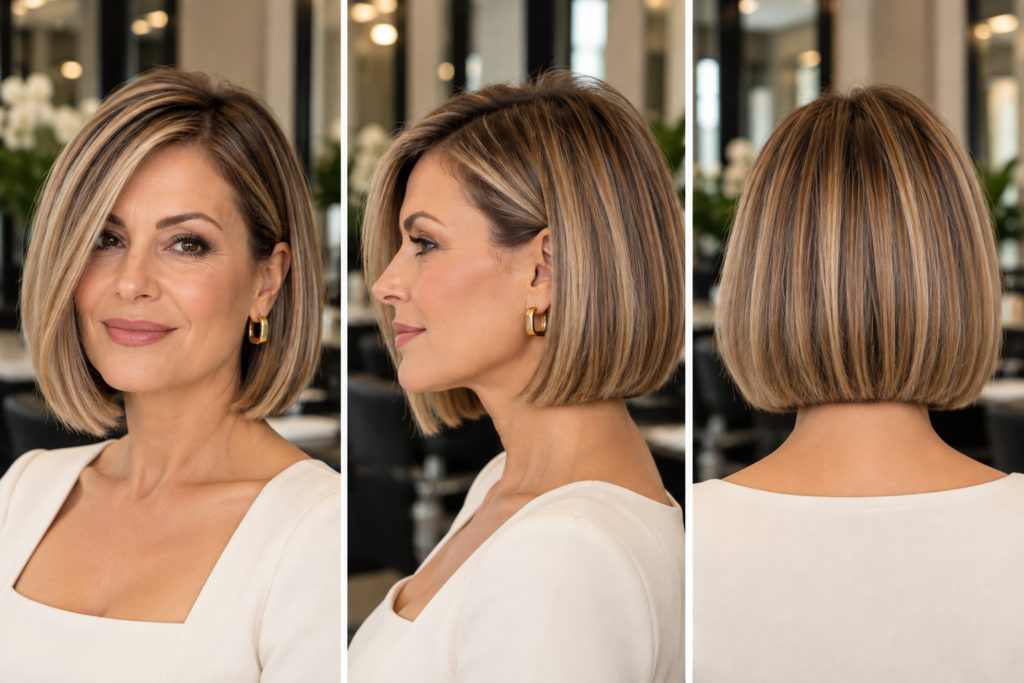
2. Soft Graduated Bob
A graduated bob can create beautiful volume without requiring a dramatically stacked back.
The key is soft graduation rather than aggressive stacking.
Slightly shorter sections underneath support the hair above them, creating gentle lift through the back of the head. Meanwhile, the outer layers remain long enough to preserve a smooth, substantial silhouette.
This makes the haircut particularly useful for women whose hair tends to collapse around the crown but who don’t want a very round or heavily styled bob.
Keeping the graduation subtle also prevents the back from becoming overly bulky while the sides appear thin.
Why it works: carefully placed graduation creates structural lift from inside the haircut rather than relying on excessive styling.
Best for: thin hair that needs more shape through the back while maintaining a sophisticated profile.
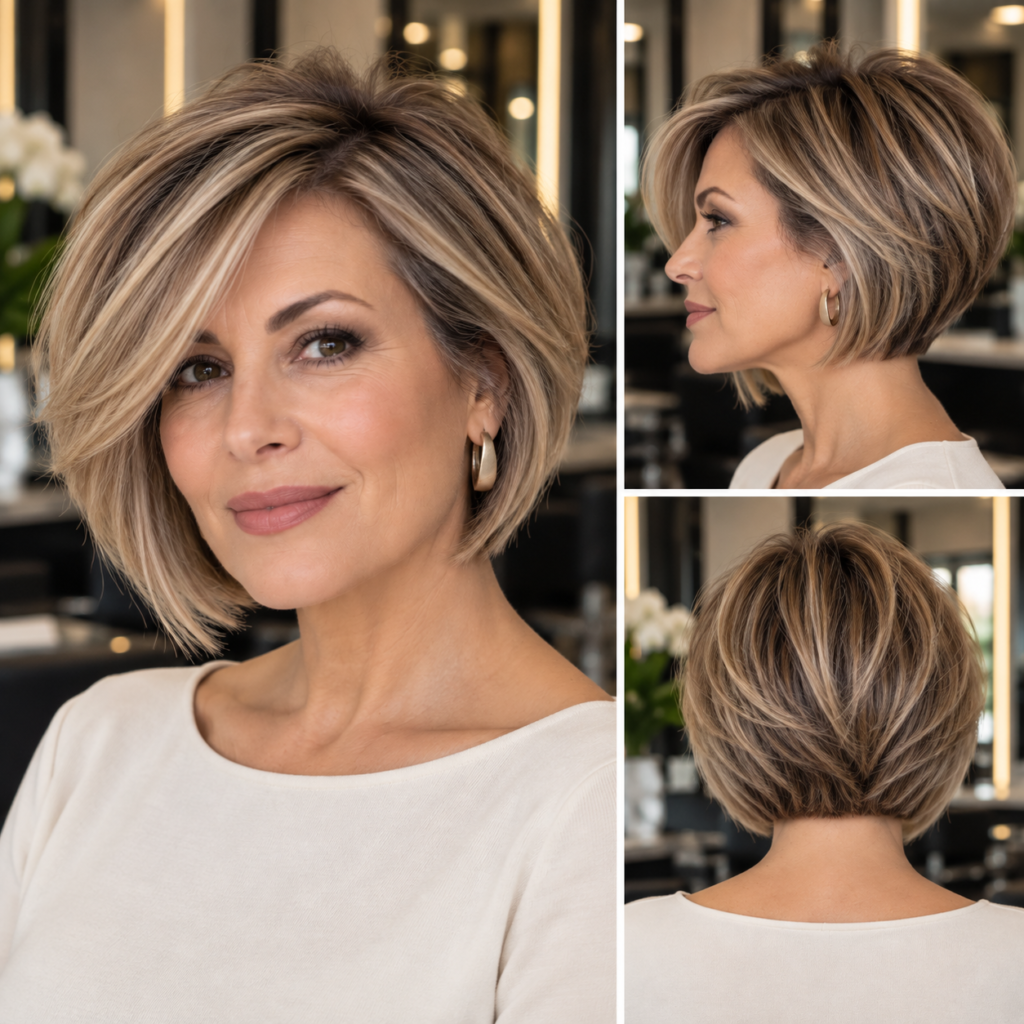
3. Layered Pixie With Controlled Crown Lift
Pixies can work beautifully on thin hair, but the placement of the layers matters enormously.
Very short layers throughout the crown may initially create height, but they can also produce an exaggerated spiky or puffy appearance. Instead, a modern pixie can use slightly longer crown layers that overlap naturally.
This creates lift while maintaining enough hair to form a cohesive shape.
A longer side-swept fringe can also make the haircut feel fuller by creating movement across the forehead rather than concentrating all the volume directly on top of the head.
The result should look airy and dimensional rather than stiff.
Why it works: longer overlapping layers create controlled height while preserving visual density.
Best for: women who want a short haircut with noticeable volume but don’t want a heavily teased or overly rounded pixie.
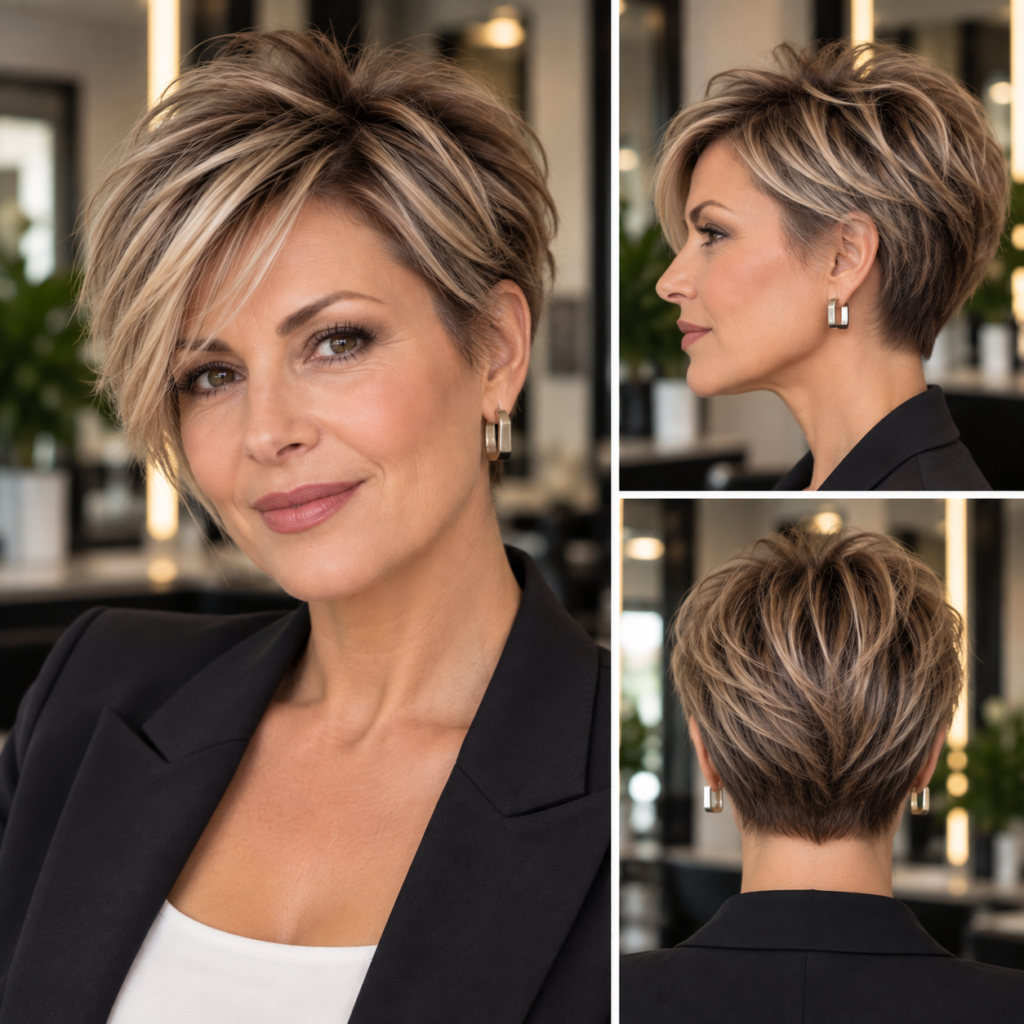
4. Jaw-Length Bob With Minimal Layers
Sometimes the best strategy for thin hair is not adding more layers — it’s removing them.
A jaw-length bob with minimal layering keeps most of the hair concentrated around one strong length. This can make the ends appear significantly thicker than they would in a heavily layered cut.
A few subtle pieces around the face can soften the shape without sacrificing density.
The jaw-length silhouette also naturally creates structure around the face, making the haircut feel intentional even with very simple styling.
A gentle side part or slight bend through the ends is often enough to give this cut movement.
Why it works: minimal layering preserves maximum density while the shorter length prevents the hair from becoming weighed down.
Best for: very fine or thin hair with ends that easily look transparent.
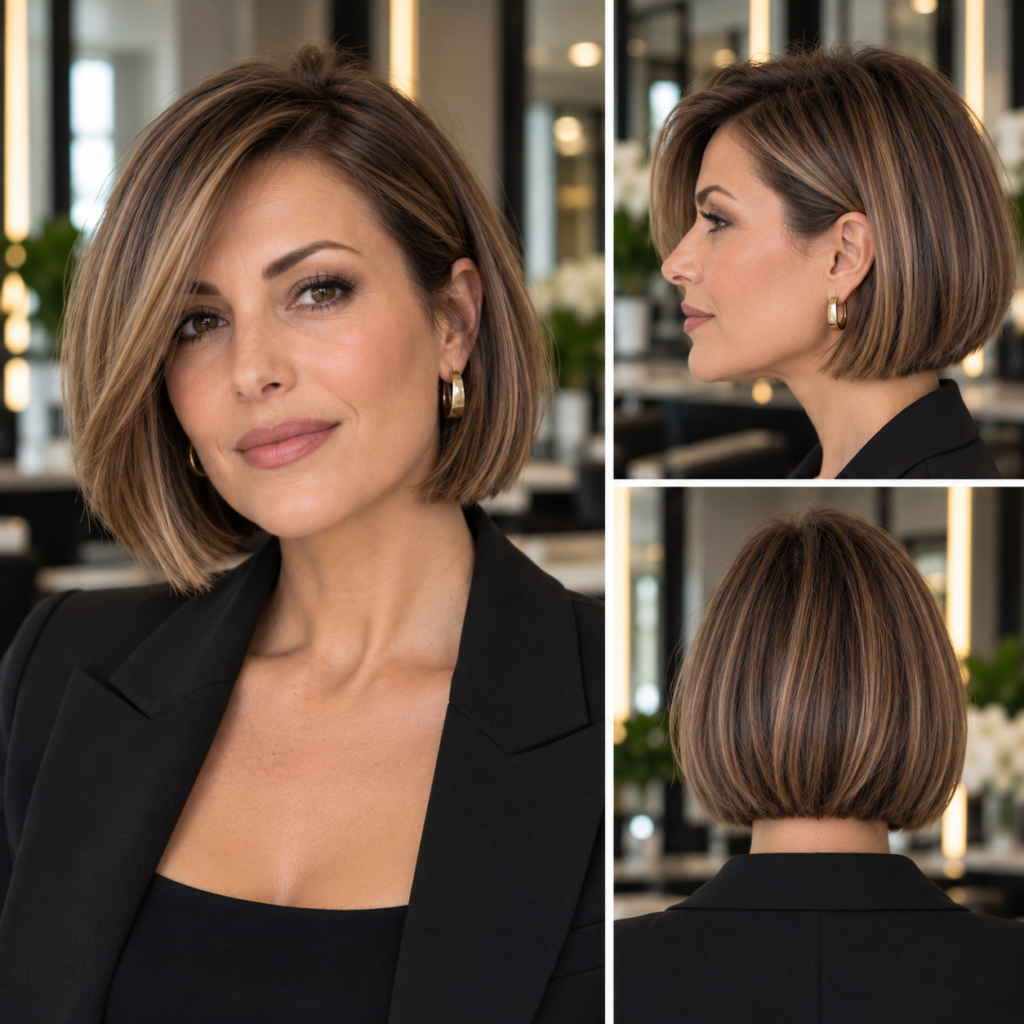
5. Soft Textured Bixie
The bixie sits somewhere between a bob and a pixie, making it an excellent option for women who want short hair without committing to a very cropped silhouette.
For thin hair, the most flattering version usually has soft, elongated layers rather than lots of tiny choppy pieces.
Keeping some length around the sides and back allows the hair to overlap, creating the impression of greater density. Texture can then be introduced selectively to prevent the shape from becoming heavy.
A slightly longer fringe also adds movement and gives the haircut more styling possibilities.
Why it works: overlapping sections create natural body while the shorter overall length reduces weight.
Best for: thin hair that needs movement and fullness but still benefits from some length around the face.
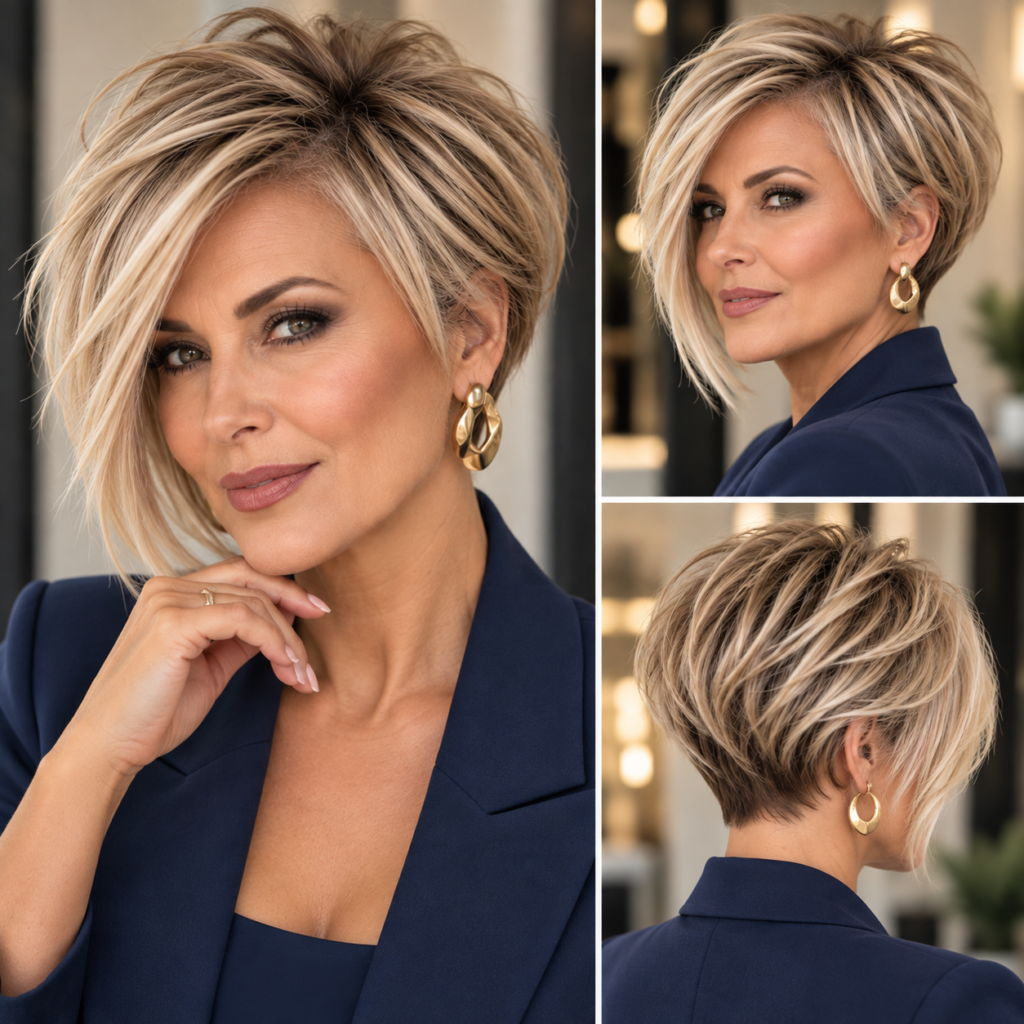
6. Side-Parted Bob With Gentle Root Lift
Sometimes volume comes from direction rather than layers.
A side-parted bob naturally shifts more hair toward one side, creating lift around the front and crown without requiring dramatic teasing.
The haircut itself can remain relatively simple, with a strong perimeter and only minimal internal layering.
This is particularly effective for hair that has been worn in the same center part for years and tends to fall very flat. Changing the direction of the part can immediately create more movement at the roots.
The important word here is gentle. The goal isn’t towering crown volume. It’s a soft lift that makes the overall shape appear fuller.
Why it works: changing the direction of the hair creates natural root elevation without sacrificing density through the ends.
Best for: straight or slightly wavy thin hair that tends to lie flat around the top of the head.
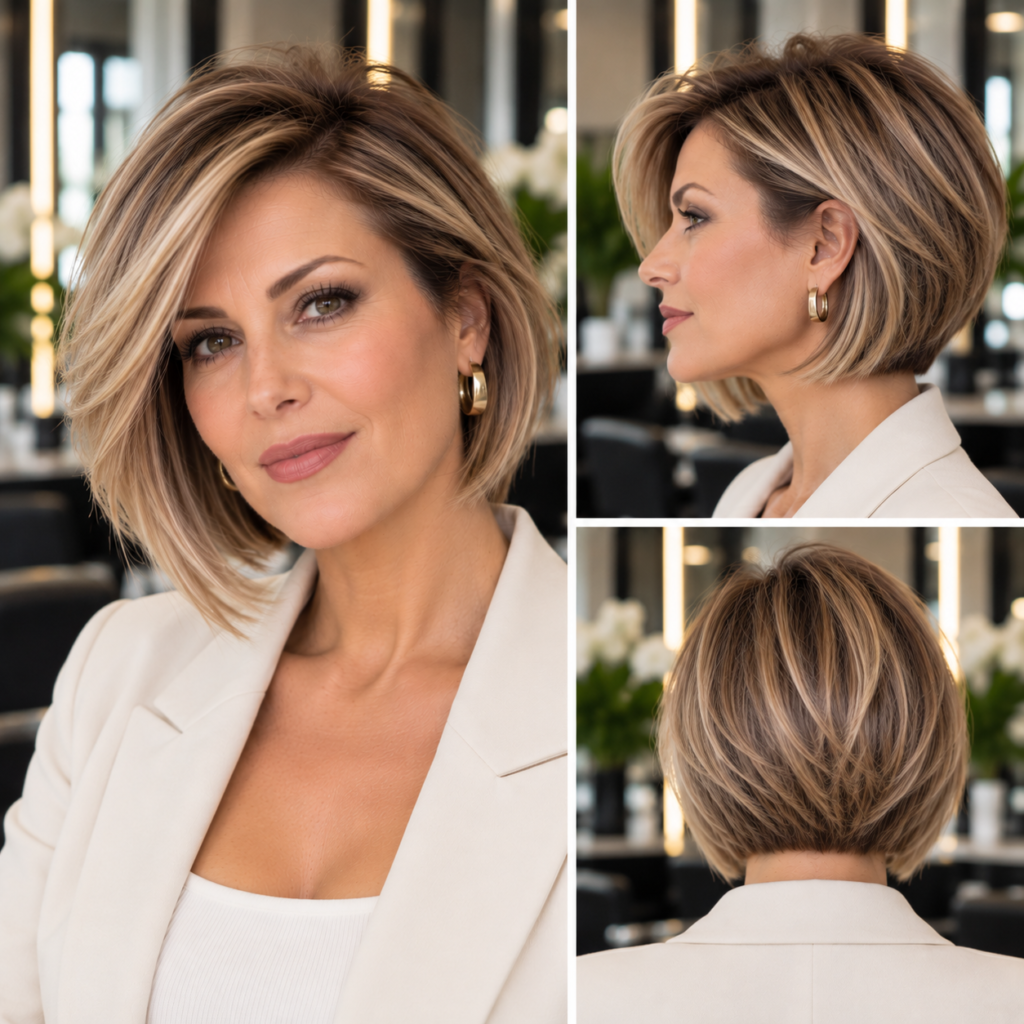
7. Chin-Length Bob With Strategic Face-Framing
Face-framing layers can be beautiful on thin hair — provided they don’t remove too much hair from the perimeter.
Instead of creating numerous short pieces around the face, keep the framing sections relatively long, beginning around the cheekbone or jaw and blending smoothly into the rest of the haircut.
Combined with a chin-length bob, this gives the front of the haircut movement while maintaining a substantial baseline.
The result feels softer than a completely blunt bob without becoming wispy.
This is also a useful option for women who want a flattering frame around the face but worry that layers will make their thin hair look even thinner.
Why it works: selective face-framing adds movement where it is most visible while protecting the density of the overall haircut.
Best for: thin hair that needs softness around the face without extensive layering.
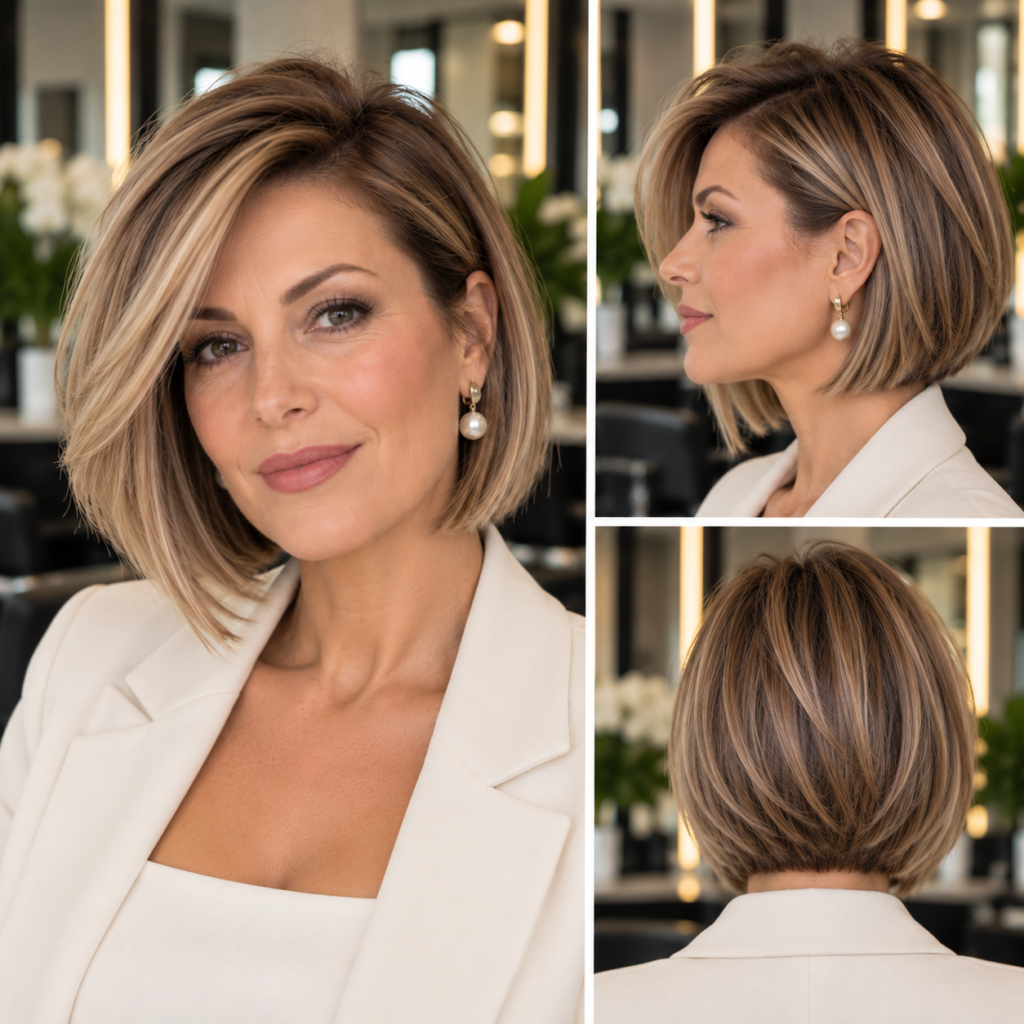
8. Collarbone Lob With Long Invisible Layers
Not everyone with thin hair wants a short haircut.
For women who prefer more length, a collarbone lob can provide a useful compromise. It’s long enough to feel versatile but short enough to avoid some of the flattening that can occur with very long fine hair.
The secret is using long, almost invisible layers.
Rather than obvious short layers, subtle internal sections can remove just enough weight to encourage movement. The perimeter should remain relatively strong so the ends don’t become transparent.
Soft face-framing can begin around the jaw and gradually blend into the length.
Why it works: the medium length maintains versatility while long internal layers create movement without sacrificing the appearance of density.
Best for: women with thin hair who want to retain length while gaining more shape and body.
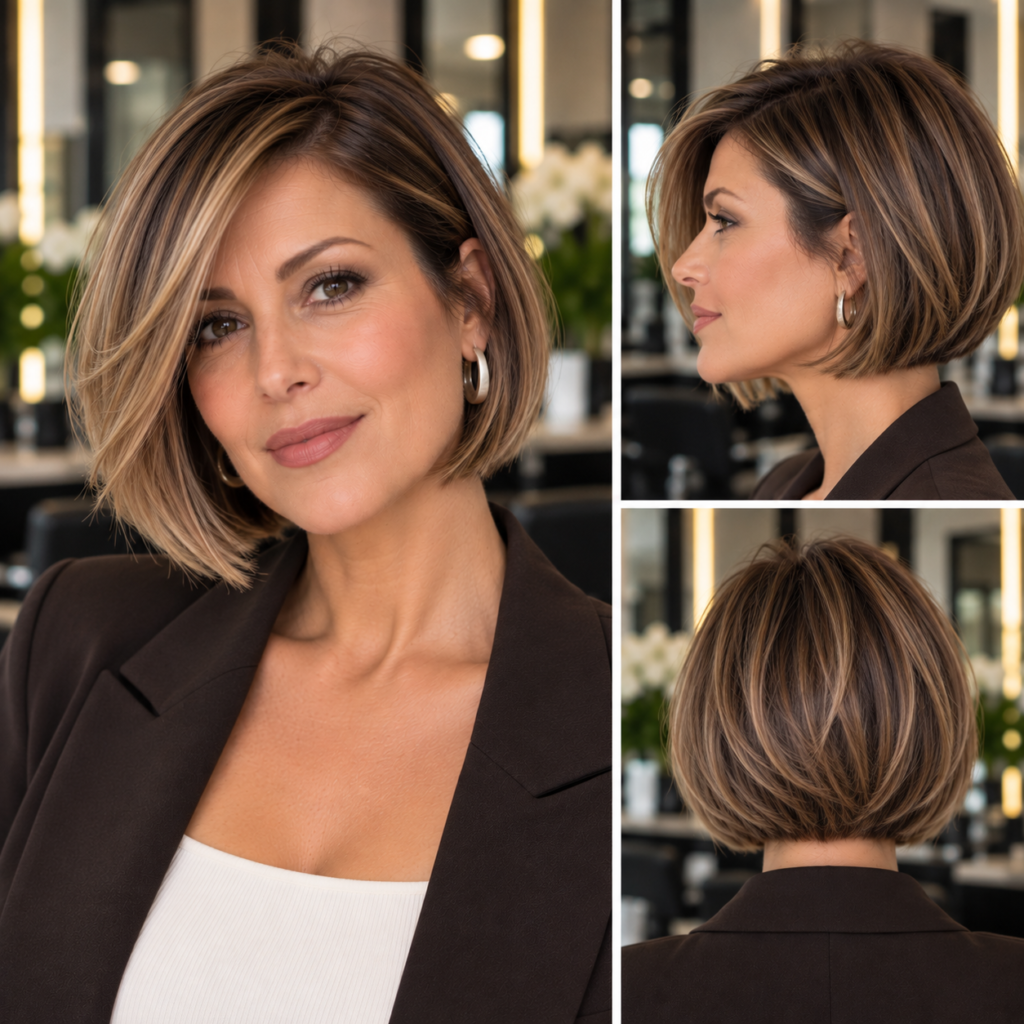
9. Soft Wavy Bob With a Strong Perimeter
Texture can make thin hair appear fuller, but the haircut underneath the waves still matters.
A softly wavy bob works particularly well when it has a strong perimeter beneath the movement. The solid baseline provides visual density while gentle bends create dimension through the mid-lengths.
The waves shouldn’t be overly uniform or heavily curled. Loose, irregular movement generally creates a more contemporary result and prevents the hairstyle from expanding into a round, puffy shape.
Keeping the crown relatively controlled also allows the movement through the sides to become the focus.
Why it works: the strong perimeter provides density while soft texture creates dimension and movement.
Best for: naturally wavy hair or straight thin hair that holds a gentle bend.

10. Short Rounded Bob With Subtle Internal Layers
A rounded bob doesn’t have to mean excessive volume.
The modern version uses a softly curved silhouette with subtle internal layering, allowing the hair to follow the shape of the head without becoming overly stacked.
Rather than creating maximum height at the crown, the fullness is distributed through the sides and back.
This creates a balanced shape that can make thin hair look naturally substantial from several angles.
Keeping the perimeter relatively clean is especially important. If both the interior and the outer edge are heavily layered, the haircut can quickly lose the density we’re trying to create.
Why it works: controlled internal layering creates shape while the intact perimeter keeps the haircut looking full.
Best for: thin hair that needs structure and softness without dramatic crown volume.
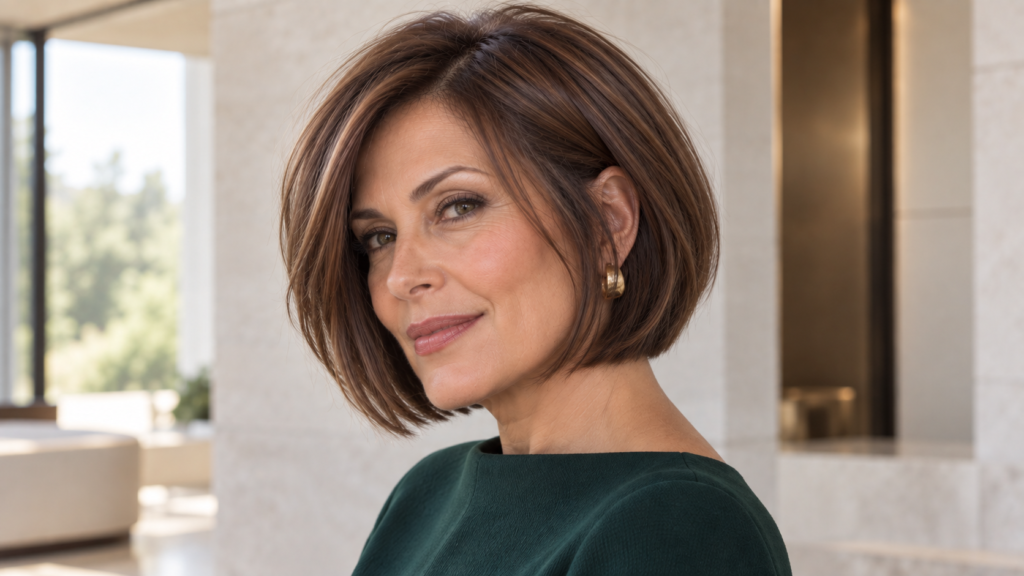
What Makes Thin Hair Look Fuller — Not Puffy?
There is an important difference between fullness and volume.
Volume describes how much space the hair occupies. Fullness describes how dense and substantial the hair appears.
Thin hair can have plenty of volume and still look thin.
For example, very short layers at the crown may create impressive height, but if too much hair has been removed from the sides and ends, the overall haircut can still appear sparse.
That’s why some of the most flattering haircuts for thin hair don’t necessarily create maximum volume.
Instead, they balance several elements.
A strong perimeter helps the ends appear denser. Strategic graduation can provide support underneath longer sections. Long internal layers encourage movement without removing excessive weight. And carefully positioned face-framing adds softness without sacrificing too much hair from the outer shape.
The objective is not to make every part of the haircut bigger.
It’s to create fullness exactly where the hair needs it.
Haircut Mistakes That Can Make Thin Hair Look Too Puffy
One of the most common mistakes is adding too many short layers in an attempt to create volume.
This can produce height around the crown while leaving the lower sections noticeably thinner. The result is often a triangular or mushroom-like silhouette rather than naturally fuller-looking hair.
Excessive thinning or texturizing can cause a similar problem. Removing too much internal density may initially create movement, but thin hair often needs that weight to maintain a healthy-looking perimeter.
Another mistake is concentrating all the volume at the top of the head. A more balanced haircut usually distributes movement through the sides, fringe, and perimeter rather than creating one large area of crown lift.
Finally, the haircut needs to work with the hair’s natural density. A style designed for thick hair may require removing substantial weight — exactly the opposite of what many women with thin hair need.
How to Style Thin Hair for Natural-Looking Volume
The right haircut should do much of the work before styling even begins.
When blow-drying, focus root lift only where it’s needed rather than trying to elevate the entire head of hair. Changing the direction of the part can also create instant movement at the front.
For bobs and lobs, a slight bend through selected sections often creates more convincing fullness than tightly curled ends. Irregular movement allows light and shadow to reveal the shape of the haircut.
Pixies and bixies benefit from separation between sections, but avoid pulling every piece upward. Some strands should move sideways or forward so the style retains a natural silhouette.
And don’t underestimate the ends. Thin hair often looks fuller when the perimeter remains visible and substantial rather than being curled or texturized into tiny wisps.
The most successful styling should enhance the haircut’s architecture rather than hide it beneath excessive volume.
Final Thoughts
The best haircut for thin hair isn’t necessarily the one that creates the biggest silhouette.
It’s the haircut that creates volume in the right places while preserving enough weight to make the hair look naturally fuller.
For some women, that may mean a blunt jaw-length bob with a substantial perimeter. For others, it might be a softly graduated bob, an elongated bixie, or a pixie with carefully controlled crown lift.
If your hair tends to look flat, don’t automatically assume that you need more and shorter layers. Sometimes preserving density, shortening the overall length, changing the part, or introducing very subtle graduation can make a much greater difference.
Most importantly, the haircut should be adapted to your individual hair density, texture, growth pattern, and face shape. A good stylist can use these principles as a starting point and adjust the structure so that the finished haircut looks naturally full — not artificially puffy.
Frequently Asked Questions
What haircut gives thin hair the most volume?
Short to medium-length cuts often make thin hair appear fuller because there is less length weighing down the roots. Blunt bobs, softly graduated bobs, textured bixies, and carefully layered pixies can all create volume. The best option depends on where your individual hair needs additional fullness.
Are layers good for thin hair or can they make it look thinner?
Both are possible. Strategic layers can introduce movement and lift, but excessive layering may remove too much density and make thin hair appear even finer. Longer internal layers and selective face-framing are generally safer than numerous short layers when preserving fullness is the priority.
What is the best bob for thin hair that needs volume?
A bob with a relatively strong perimeter is an excellent starting point. Depending on the hair, subtle graduation or minimal internal layering can then be added to create lift without making the ends appear sparse.
How do I add volume to thin hair without making it look puffy?
Focus on localized volume rather than making the entire hairstyle bigger. A strong perimeter, gentle root lift, strategic graduation, a side part, and subtle movement through the mid-lengths can create fullness while maintaining a controlled silhouette.
Is short or long hair better for thin hair?
There is no universal rule, but very long thin hair can sometimes become flat at the roots and sparse toward the ends. Short and medium lengths often make it easier to maintain a stronger perimeter. Women who prefer longer hair may find a collarbone lob with minimal or long internal layers a good compromise.
Should thin hair have a blunt or layered perimeter?
A stronger, more blunt perimeter often helps thin hair look denser. That doesn’t mean the entire haircut must be blunt. Layers can still be incorporated internally or around the face while preserving a substantial outer edge.