Haircuts That Look Even Better From the Back

A great haircut shouldn’t only look beautiful from the front.
Some of the most flattering cuts reveal their best details when you turn around — a softly tapered neckline, perfectly placed layers, a rounded silhouette, or movement that simply isn’t visible in a front-facing photo.
That’s why the back view matters more than many people realize.
Whether you love short hair, a polished bob, or longer layers, the shape at the back can completely change how finished and intentional a haircut looks.
Here are the haircut shapes that deserve to be seen from every angle — especially from behind.
Why the Back of a Haircut Matters
Most haircut inspiration photos focus on the face. That makes sense: the front shows how a cut works with your features, fringe, and face-framing pieces.
But the back tells you something different.
It reveals the overall silhouette of the haircut.
From behind, you can clearly see whether the shape is rounded or straight, where the weight sits, how the layers connect, how much movement the hair has, and how cleanly the neckline has been finished.
This is particularly important with shorter cuts, where even small changes at the crown or nape can dramatically alter the final shape.
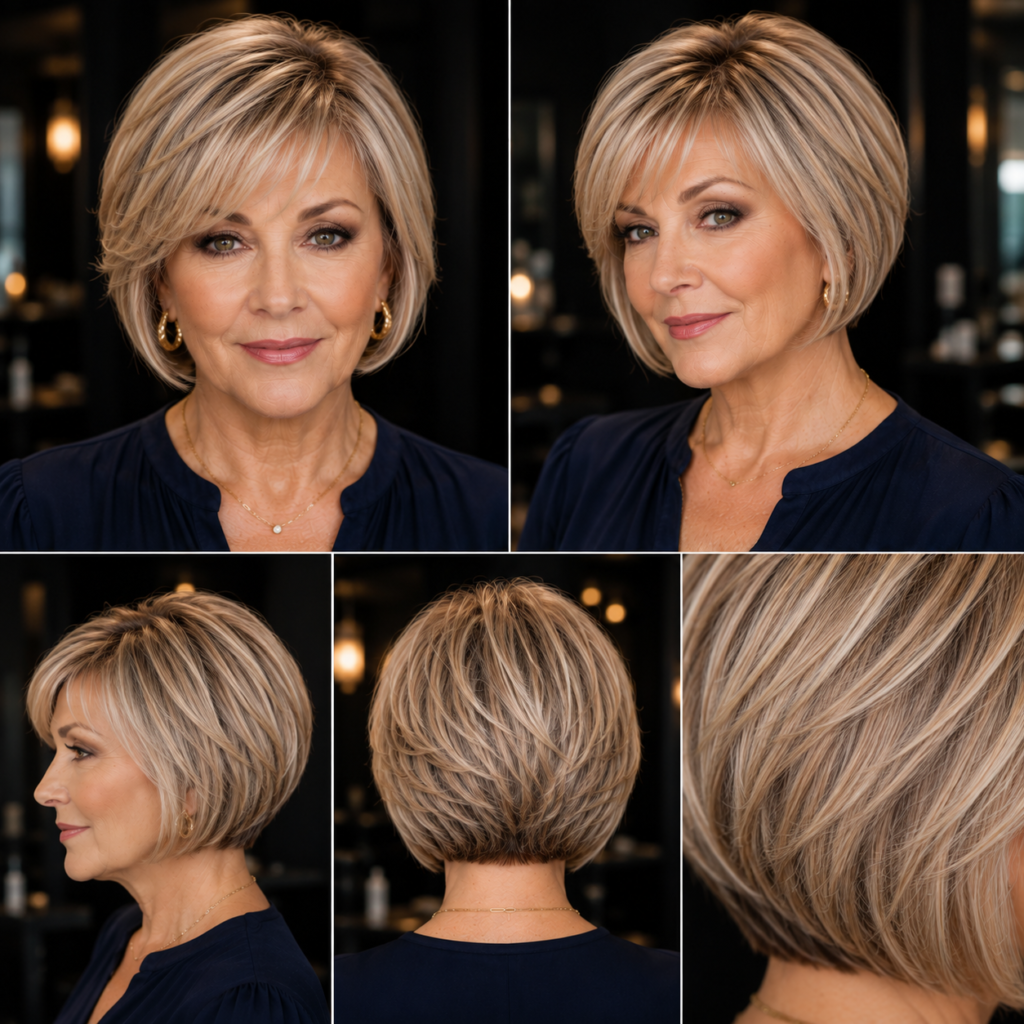
The Softly Stacked Bob
A softly stacked bob is one of those haircuts that can look surprisingly different from behind.
Rather than creating an exaggerated stacked effect, modern versions use subtle graduation through the back to create a smooth, rounded silhouette.
The result is polished without looking stiff.
From the side, you notice the angle. From the back, however, you see what really makes the haircut work: the gentle build-up of shape from the nape toward the crown.
What Makes the Back View Work
The key is controlled graduation rather than extremely short, choppy layers.
A softly tapered nape combined with slightly longer sections above it creates a seamless curve that looks beautiful from almost every angle.
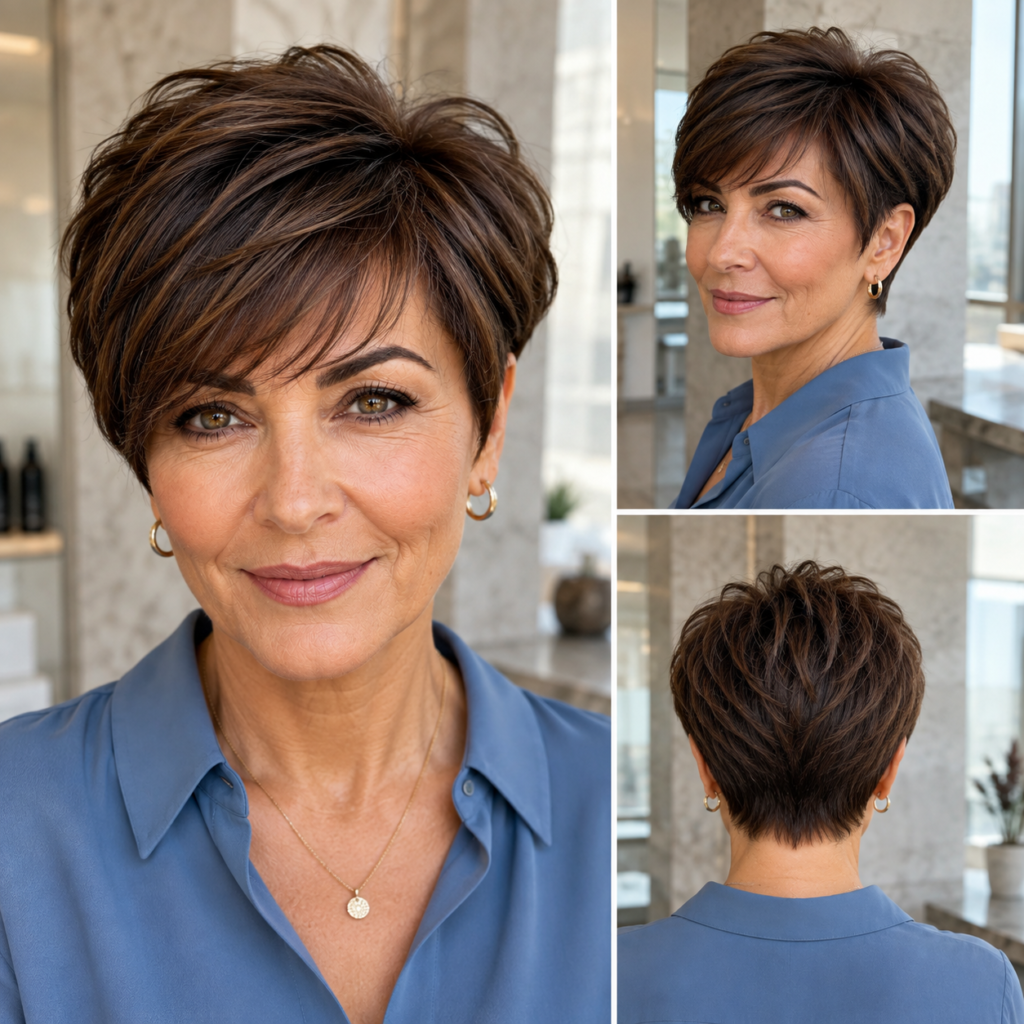
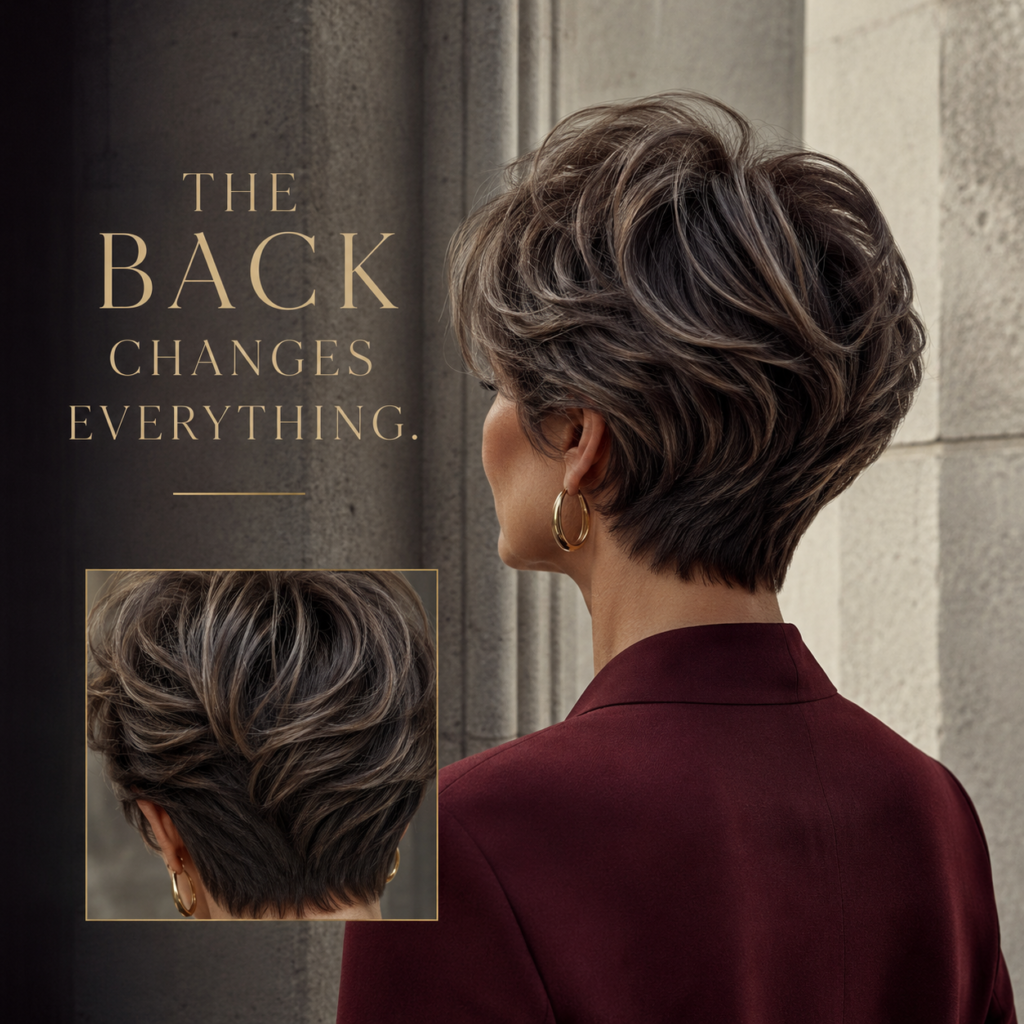
The Tapered Pixie
Few haircuts depend on the back view as much as a pixie.
A beautiful front can be ruined by a bulky or poorly blended neckline, while a carefully tapered back can make even a very simple pixie look exceptionally polished.
The most modern versions usually keep enough softness around the nape to avoid an overly severe finish.
Look for a Soft Neckline
Instead of a hard horizontal line, consider a neckline that follows the natural shape of the head.
Soft tapering creates a cleaner transition between the hair and neck while allowing the longer crown to remain the focus.
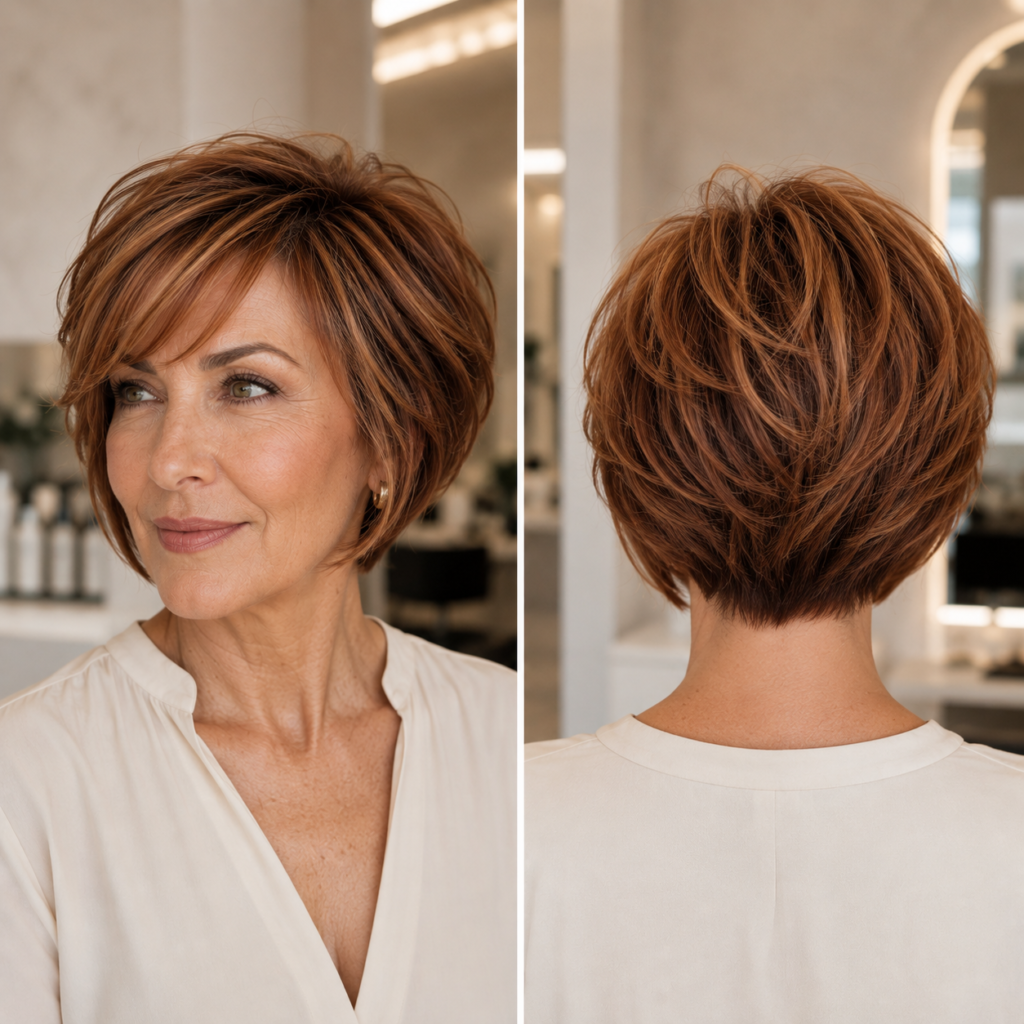
The Rounded Bob
The rounded bob creates one of the most recognizable silhouettes from behind.
Unlike a completely blunt box-shaped bob, this version gently follows the curve of the head before falling toward a clean perimeter.
The effect can be particularly beautiful on straight or softly wavy hair because the shape remains visible without requiring excessive layering.
From the back, it looks balanced, deliberate, and beautifully finished.
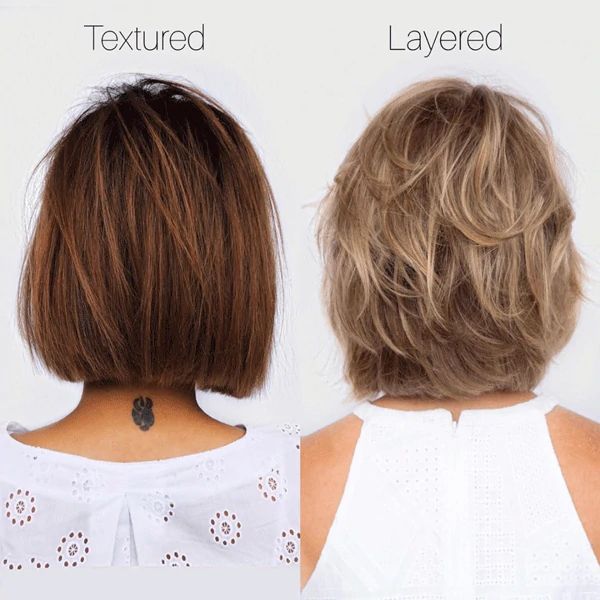
The Layered Lob With Back Movement
Not every great back view needs to be perfectly sculpted.
A layered lob can look even better when the hair moves.
Long, connected layers create separation through the back without leaving the ends looking overly fragmented. When the wearer turns her head or walks, those layers become much more visible than they are in a static front-facing photograph.
Keep the Layers Connected
The most wearable version avoids a dramatic difference between very short crown layers and long ends.
Instead, gradual layering creates movement while preserving the overall silhouette.
The Short Crop With a Sculpted Nape
A short crop can look incredibly sophisticated from behind when the neckline becomes part of the design.
The hair may be slightly fuller through the crown and gradually become shorter toward the nape.
That contrast gives the cut structure without requiring complicated styling.
This is also one of those haircuts where a back-view reference photo can be extremely useful at the salon. Two short cuts may look similar from the front while having completely different shapes at the back.
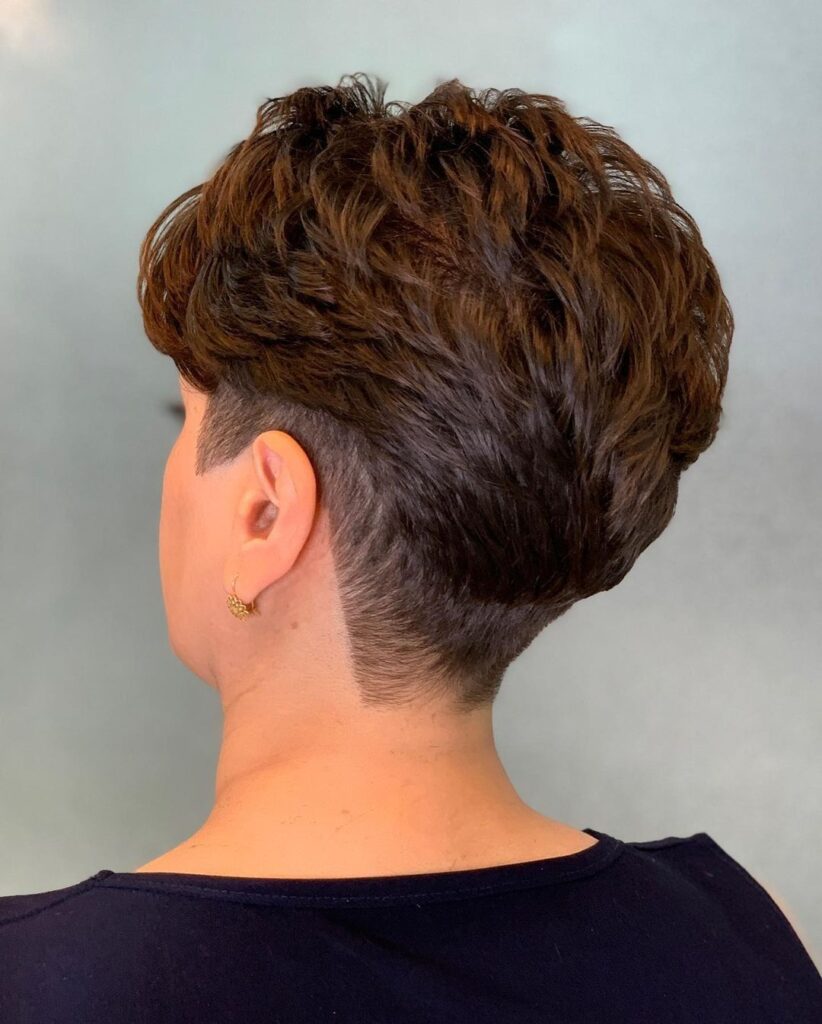
The Soft A-Line Bob
The beauty of an A-line bob becomes especially obvious when you see the haircut from several angles.
The back is slightly shorter, while the hair gradually becomes longer toward the front.
But modern A-line cuts don’t need an extreme angle.
A subtle difference in length is often enough to create a beautifully clean silhouette while keeping the haircut soft and wearable.
Subtle Usually Looks More Modern
Very dramatic angles can make the shape dominate the entire haircut.
A softer transition tends to feel more contemporary and allows the natural movement of the hair to remain visible.
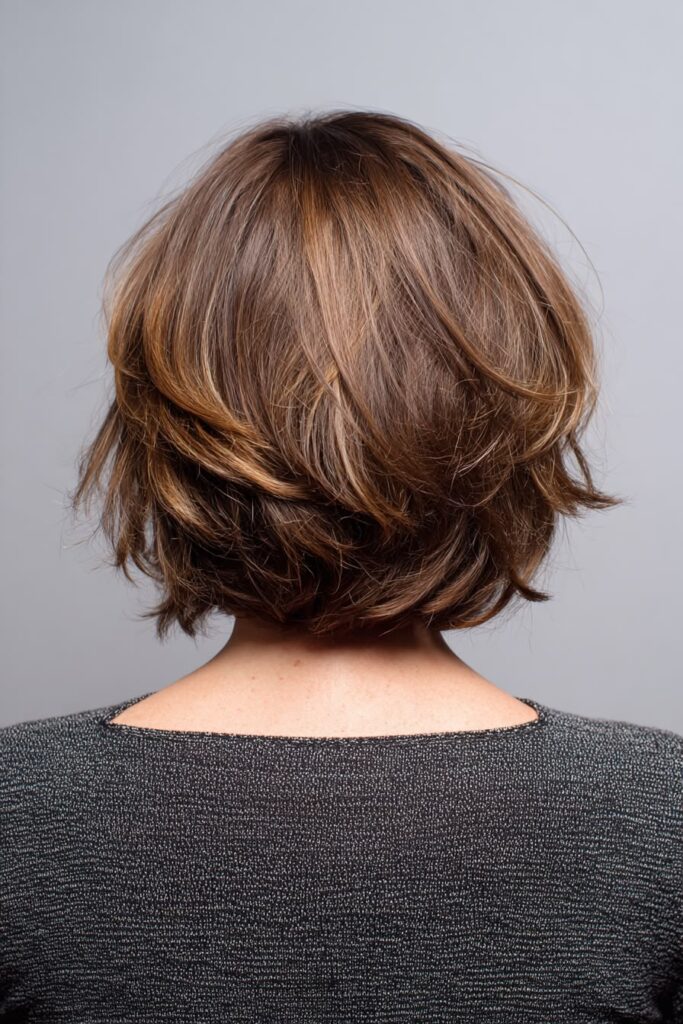 The Textured Bixie
Sitting somewhere between a bob and a pixie, the bixie becomes particularly interesting from behind.
The extra length allows for more movement than a traditional pixie, while shorter sections around the nape keep the shape defined.
From behind, you can see the individual layers, crown texture, and slightly undone finish that give the haircut its personality.
The best versions look intentionally textured rather than simply messy.
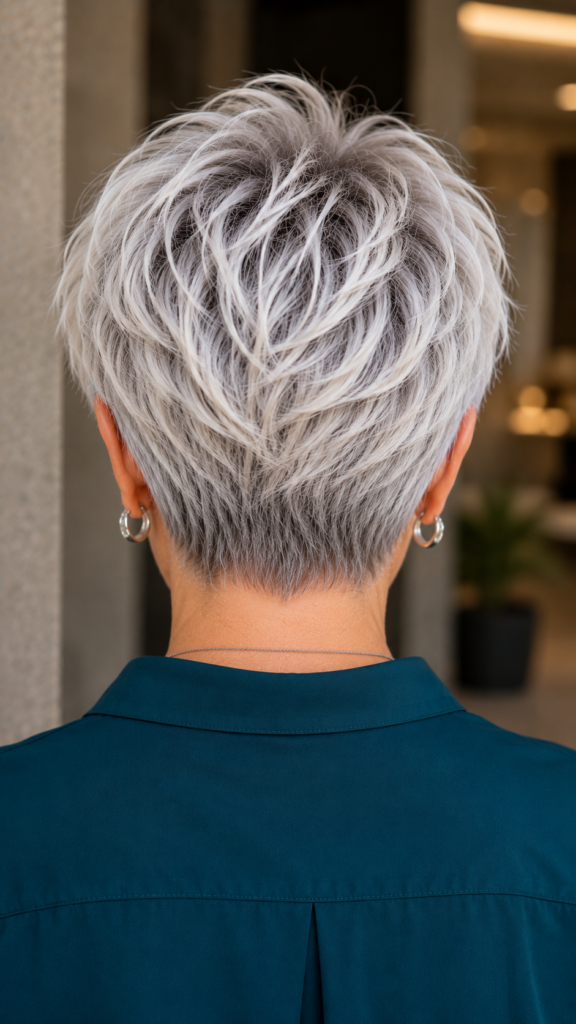
H2: The Curly Bob
Curly hair can create an entirely different back silhouette from straight hair — and that’s exactly what makes a curly bob so beautiful.
Instead of relying on a perfectly straight perimeter, the shape is created through the distribution of curls.
A thoughtfully cut curly bob may appear softly rounded, slightly triangular, or naturally irregular depending on the curl pattern.
Curl Placement Matters
The goal isn’t necessarily perfect symmetry.
A good curly haircut allows individual curls to fall naturally while still maintaining an intentional overall shape.
That is why seeing the haircut from behind can be particularly helpful when choosing inspiration for naturally curly hair.
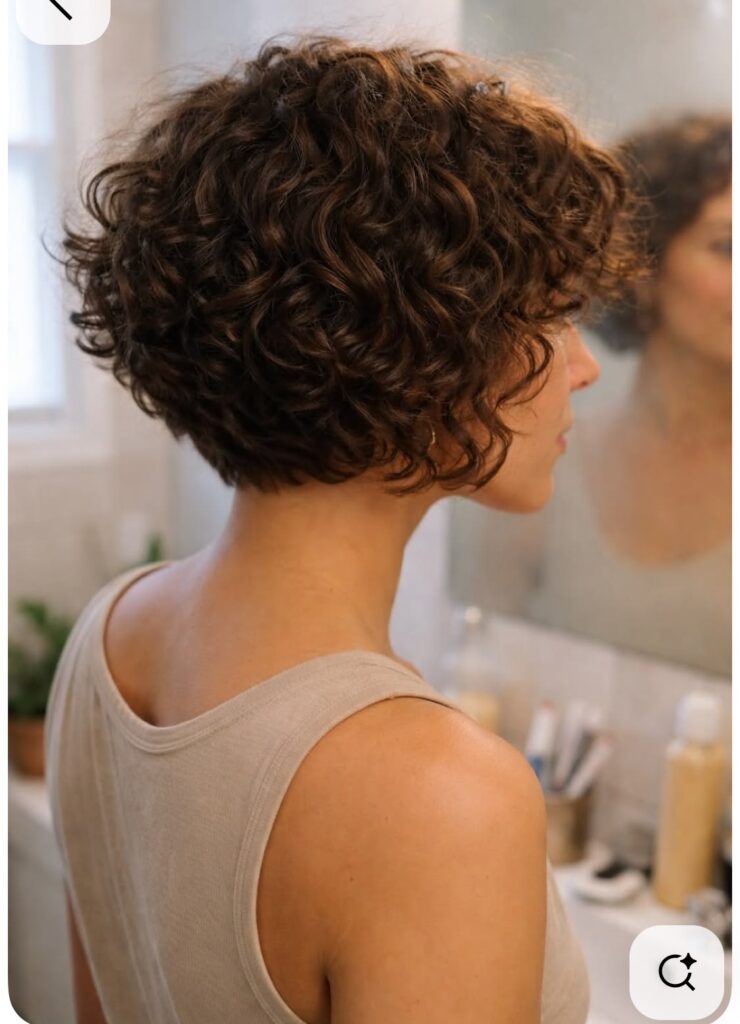
Long Layers With a U-Shaped Back
Long hair can have an impressive back view too.
A U-shaped perimeter creates a softer silhouette than a completely straight line across the bottom. The center remains slightly longer while the sides gradually become shorter.
Add long, flowing layers and the back develops movement without sacrificing the feeling of length.
This shape works especially well when you want long hair to look designed rather than simply grown out.
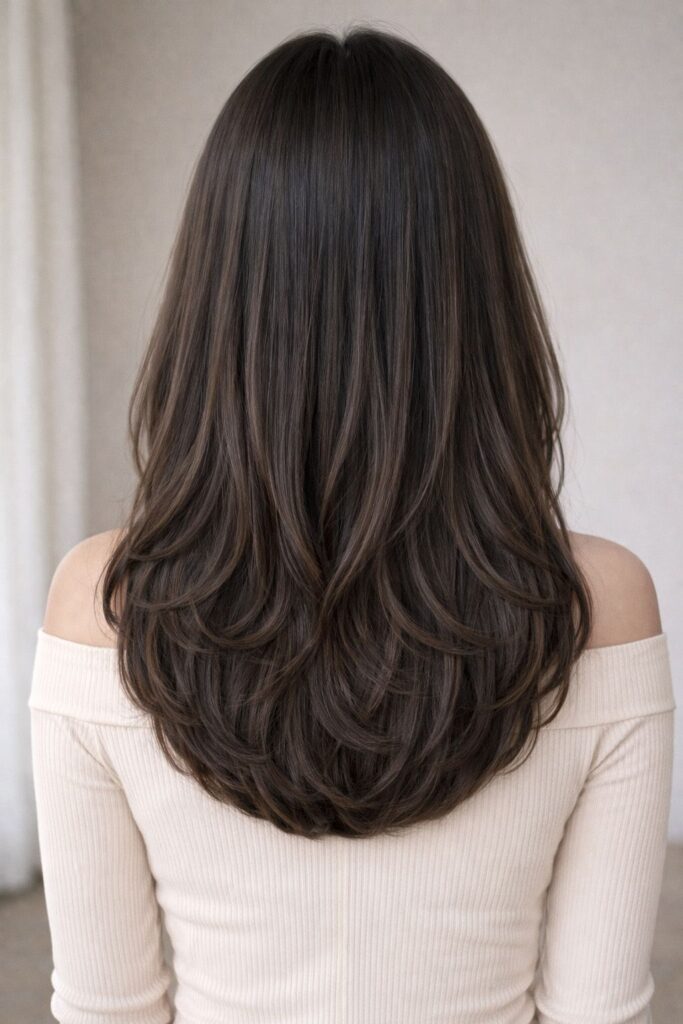
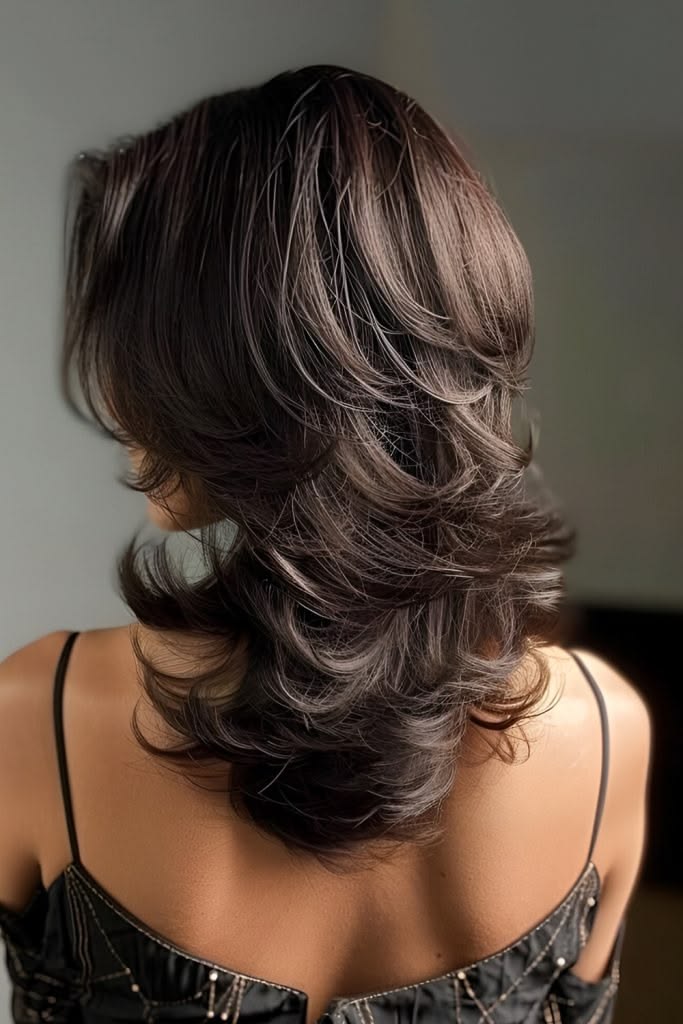
The Butterfly-Inspired Back Shape
The dramatic movement associated with butterfly-style layering is often most noticeable from behind.
Long layers cascade through the lengths while shorter sections create movement higher up.
The result can look particularly striking when the hair is worn with a soft blowout or natural movement.
However, the layers don’t need to be extreme. A softer interpretation can deliver the same flowing back silhouette while remaining easier to wear every day.
The Shoulder-Length Cut With a Curved Perimeter
A shoulder-length haircut may seem simple from the front, but a subtle curved perimeter can completely change the back view.
Instead of ending in one perfectly horizontal line, the perimeter gently follows a rounded or slightly U-shaped silhouette.
It is a small detail, but it can make the haircut appear softer and more intentional.
This is a particularly good option for anyone who wants movement without committing to exte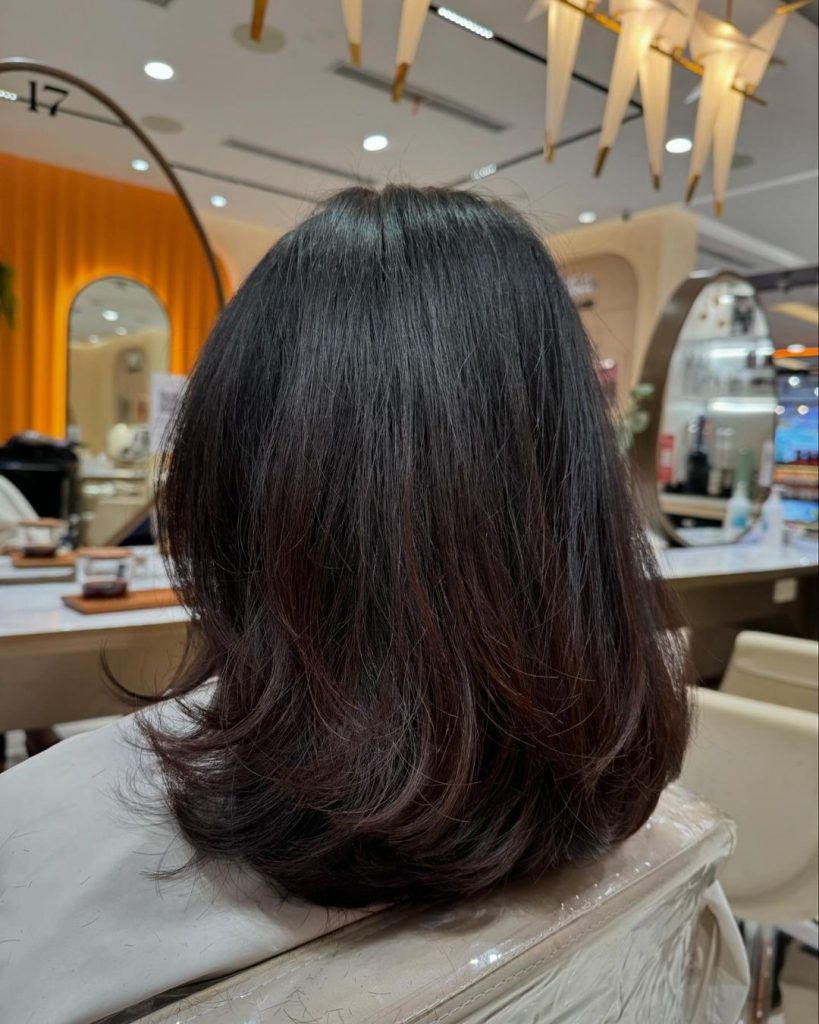 nsive layering.
Back View Details That Can Completely Change a Haircut
Sometimes it isn’t the haircut itself that creates the impact. It’s one small design choice at the back.
Several details can dramatically alter the final result.
The Neckline
A straight, rounded, tapered, or softly pointed neckline can make the same short haircut look completely different.
Crown Placement
Volume positioned higher at the crown creates a different silhouette from weight concentrated lower toward the nape.
Graduation
Even subtle graduation can create visible roundness and structure from behind.
Layer Length
Short layers create more separation, while longer connected layers tend to produce softer movement.
The Perimeter
Blunt, curved, U-shaped, and angled perimeters each create a different impression when the haircut is viewed from behind.
Why You Should Bring a Back-View Photo to Your Hair Appointment
If you’re saving haircut inspiration, don’t save only the front view.
A front-facing photograph tells your stylist what you like around the face, but it may reveal very little about the construction of the haircut.
For example, two bobs may look almost identical from the front. One could have a completely blunt back, while the other has graduation and a tapered nape.
Those are two very different haircuts.
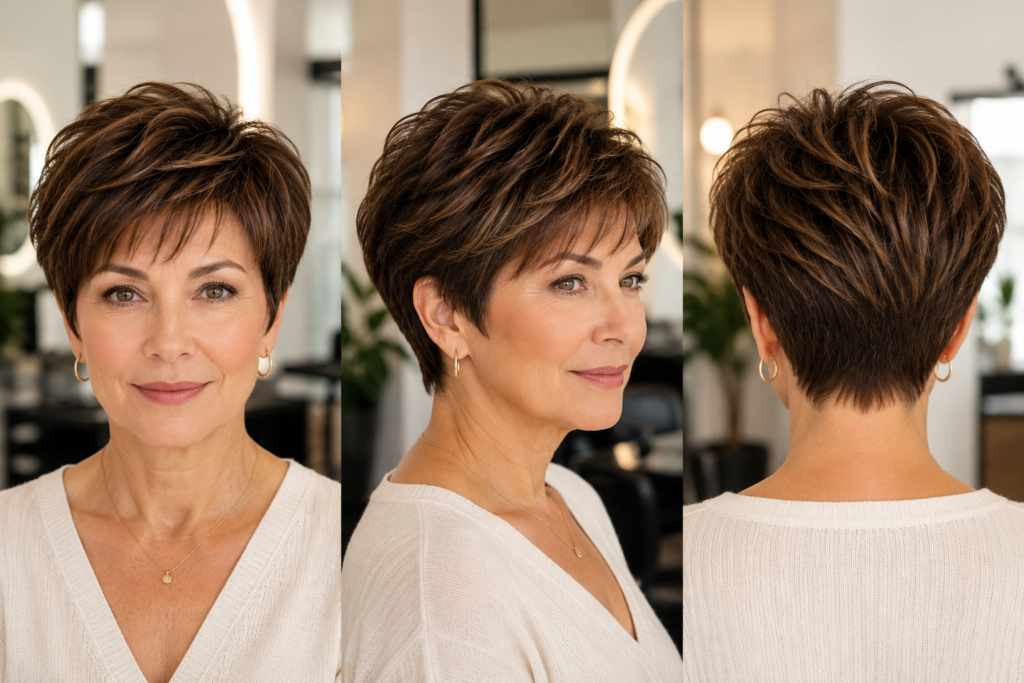
Whenever possible, save inspiration showing the front, side, and back of the same haircut.
That gives your stylist a much clearer picture of the result you actually want.
Which Back Shape Is Right for You?
The most beautiful back view isn’t necessarily the most complicated one.
Think about your natural texture, density, styling routine, and how frequently you want to maintain the haircut.
If you prefer a polished short style, a tapered or softly graduated shape may work beautifully.
If you love movement, connected layers can make the back of medium or long hair much more interesting.
And if you prefer simplicity, a strong perimeter with minimal layering can be just as striking.
The goal is not to create detail for the sake of detail. It is to choose a shape that still works when the hair moves naturally.
Don’t Judge a Haircut From the Front Alone
The front may be what you see most often in the mirror, but it doesn’t tell the entire story.
Some haircuts are defined by the curve of the crown. Others come alive through layers at the back. And sometimes a beautifully finished neckline is the detail that makes a short haircut feel truly polished.
So the next time you save a haircut for inspiration, look for another angle before deciding.
The haircut you love from the front might be even better when you turn around.
Frequently Asked Questions
What haircuts look best from the back?
Tapered pixies, softly stacked bobs, rounded bobs, layered lobs, curly bobs, and long layered cuts can all create distinctive back silhouettes. The best option depends on hair texture, length, and the amount of structure you prefer.
Why does my haircut look different from the back?
The back reveals crown volume, graduation, layering, neckline shape, and the distribution of weight throughout the haircut. These details may be difficult to see from the front.
Should I show my hairstylist a back-view photo?
Yes. Ideally, bring front, side, and back references, especially for bobs, pixies, crops, and heavily layered haircuts. Multiple angles help communicate the complete shape you want.
What is the difference between a blunt and graduated back?
A blunt cut maintains a stronger, more uniform perimeter, while graduation gradually changes the length to create shape and often more roundness through the back.
Can long hair have a defined back shape?
Absolutely. U-shaped and softly curved perimeters, combined with strategic long layers, can create a clearly defined silhouette while preserving length.