12 Haircuts that instantly make your face look softer
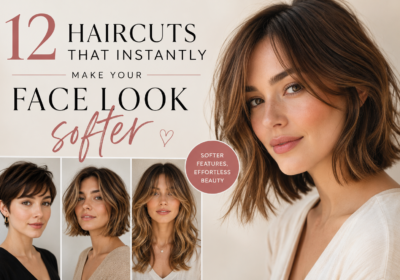
A haircut can change much more than the length of your hair. The placement of a fringe, the shape around the jaw and even the direction of a few face-framing pieces can completely change how your features appear.
If your current haircut feels too severe, flat or geometric, you don’t necessarily need a dramatic transformation.
Sometimes, softness comes from small details.
Wispy bangs can break up strong lines around the forehead. Face-framing layers can soften the jaw. Movement around the cheekbones can make a structured haircut feel considerably more relaxed.
The goal isn’t to hide your face or follow rigid face-shape rules. It’s to create balance between the haircut and your natural features.
From short pixies to flowing layers, here are 12 haircuts that can make your face look softer while still feeling modern and wearable.
What Makes a Haircut Look Soft?
Softness usually comes from a combination of shape, movement and placement.
Very sharp lines naturally draw attention to the geometry of the face. Softer edges, subtle layers and pieces that move around the cheekbones or jaw can create a more fluid effect.
Several details can make a noticeable difference:
- side-swept or wispy fringe rather than a very heavy straight bang;
- gentle face-framing pieces;
- rounded rather than extremely angular silhouettes;
- movement through the lengths;
- soft texture around the jaw;
- slightly imperfect rather than rigid styling.
That doesn’t mean every haircut needs lots of layers.
In fact, strategically placed movement is often more flattering than layering the entire head.
Haircuts That Can Make Your Face Look Softer
1. Soft Pixie With Side-Swept Fringe
A pixie doesn’t have to look sharp or severe.
Keeping additional length through the top and allowing the fringe to sweep gently across the forehead creates a much softer effect than an ultra-short, highly structured pixie.
The diagonal direction of the fringe can also break up stronger facial lines.
Why it works: The fringe creates softness around the forehead while the longer top prevents the haircut from feeling overly exposed.
Best for: Anyone who wants short hair without a very edgy finish.
2. Long Feathered Pixie
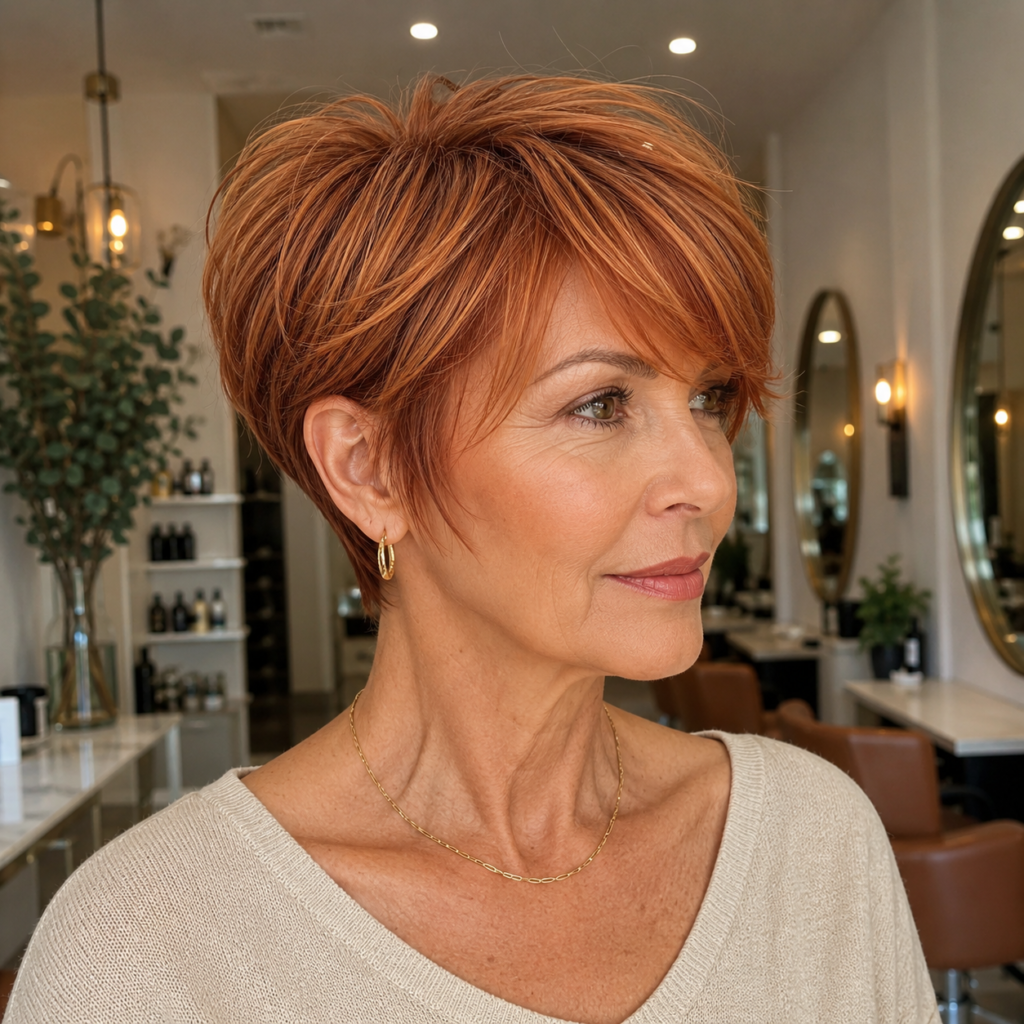
If a classic pixie feels too short, a feathered version offers more movement around the face.
The ears may remain partially covered, while longer pieces around the temples and fringe create a gentle transition between the haircut and facial features.
The crown can still have volume, but it should feel airy rather than heavily styled.
Why it works: Feathered edges soften the outline of the haircut and create movement around stronger features.
3. Soft Bixie
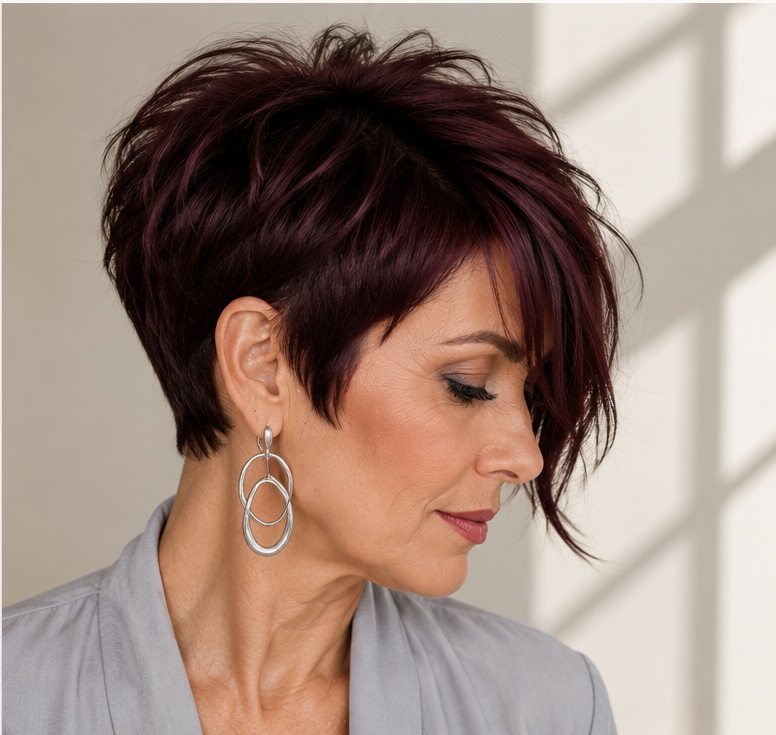
Somewhere between a bob and a pixie, the bixie is ideal if you want the lightness of short hair without losing all the softness around the face.
Keep the perimeter slightly longer around the sides and use subtle layering through the crown.
A relaxed side fringe can make the style even softer.
Best for: Straight, slightly wavy or naturally textured hair.
Why it works: The longer perimeter frames the face while the shorter crown keeps the haircut light.
4. Jaw-Length Layered Bob
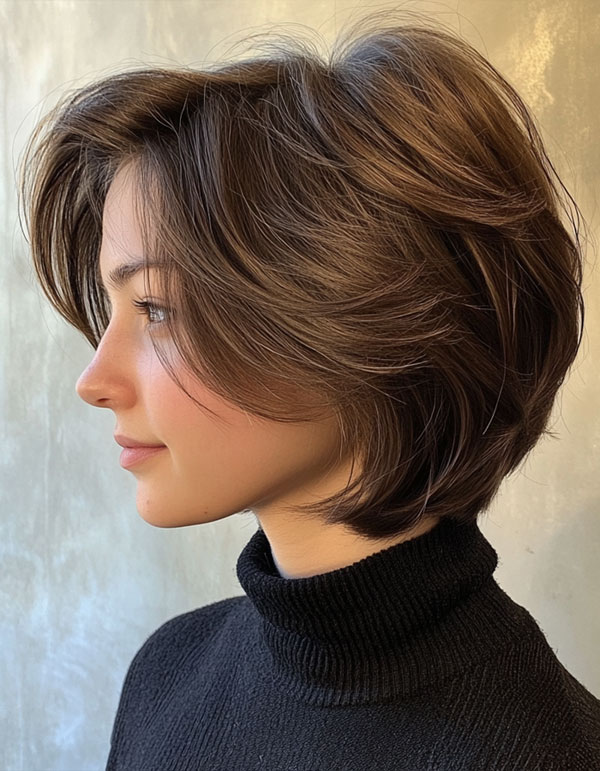
A jaw-length bob can either emphasize the jaw or soften it — and the difference often comes down to the finish.
Instead of an extremely sharp line, subtle layering around the front creates movement that gently follows the face.
A slight bend through the ends can enhance the effect.
Why it works: Movement around the jaw interrupts a rigid horizontal line and creates a more relaxed silhouette.
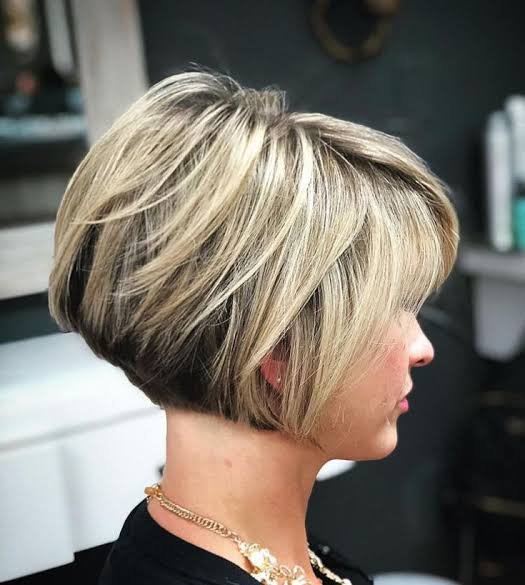
5. Soft Rounded Bob
The rounded bob is a beautiful alternative to very angular bob shapes.
Rather than creating a dramatic A-line or razor-sharp perimeter, the silhouette gently curves around the head and face.
The result feels polished without looking severe.
Best for: Straight or slightly wavy hair that naturally holds a smooth shape.
Styling tip: Keep the finish soft rather than creating an exaggerated under-turned effect.
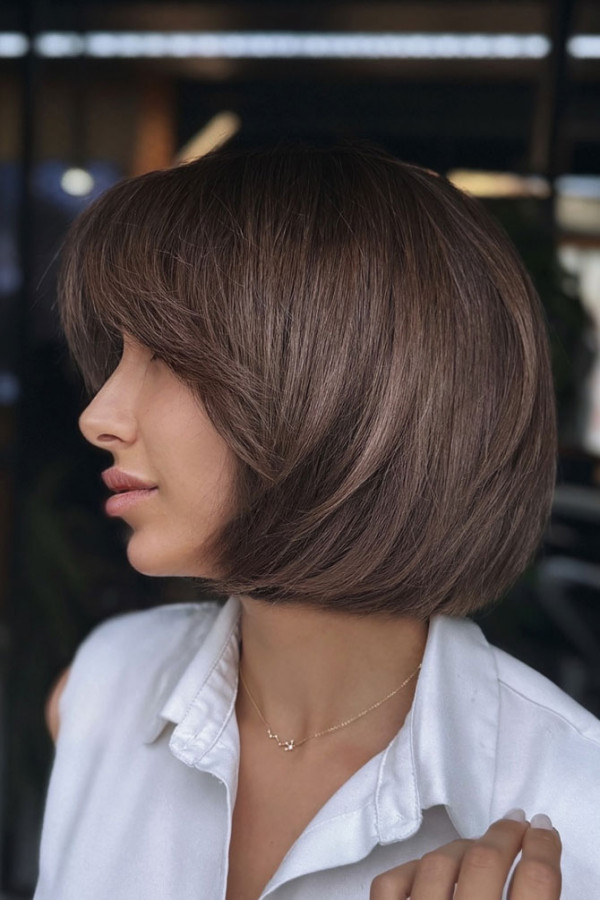
6. French Bob With Wispy Fringe
A French bob combines a shorter length with effortless texture, making it particularly effective when you want to soften facial features.
Adding a light, wispy fringe can draw attention toward the eyes while reducing the visual emphasis on the forehead.
The key is keeping the fringe airy rather than dense and perfectly straight.
Why it works: The combination of soft bangs and movement around the jaw frames the face from both directions.
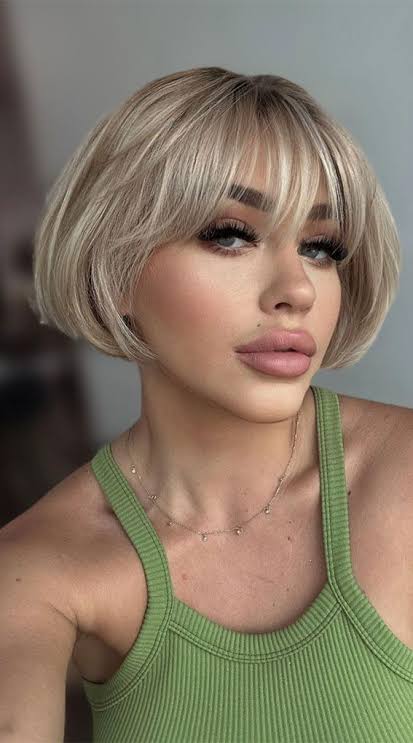
7. Face-Framing Lob
If you prefer a little more length, a lob with carefully positioned face-framing pieces is one of the easiest ways to create softness.
The overall perimeter can remain relatively strong while the front sections gradually become shorter around the cheekbones and jaw.
This keeps the haircut full without making it feel heavy.
Best for: Anyone who wants visible movement without extensive layering.
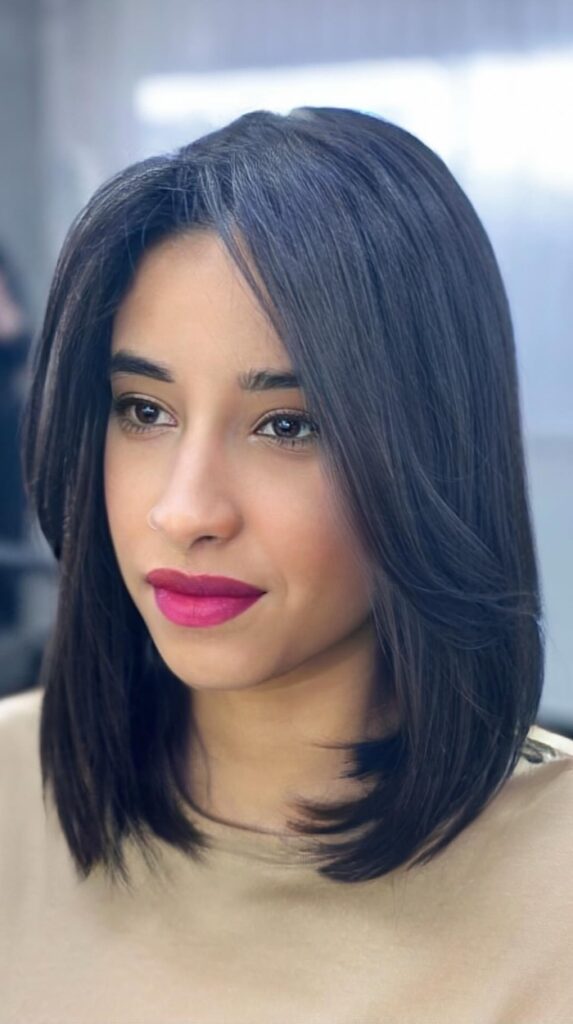
8. Collarbone Cut With Curtain Bangs
Curtain bangs have become popular for a reason: they can change the entire balance of a haircut without requiring a full fringe.
When paired with collarbone-length hair, longer curtain pieces can sweep away from the face and blend naturally into the rest of the haircut.
Why it works: The curved shape creates movement around the cheekbones and visually connects the fringe with the longer lengths.
This is particularly useful if you want bangs but don’t want the maintenance of a shorter fringe.
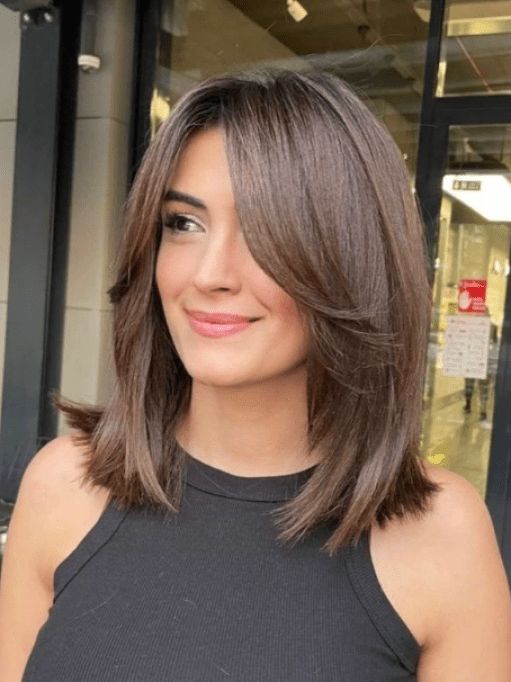
9. Airy Midi Shag
The modern shag doesn’t need to be dramatically choppy.
An airy midi shag uses soft layers through the crown and lengths while maintaining enough density at the bottom.
Add a wispy curtain fringe and the entire haircut gains movement around the face.
Why it works: Multiple soft lines replace one strong geometric outline.
Avoid: Extremely short, disconnected layers if your goal is a gentle rather than edgy finish.
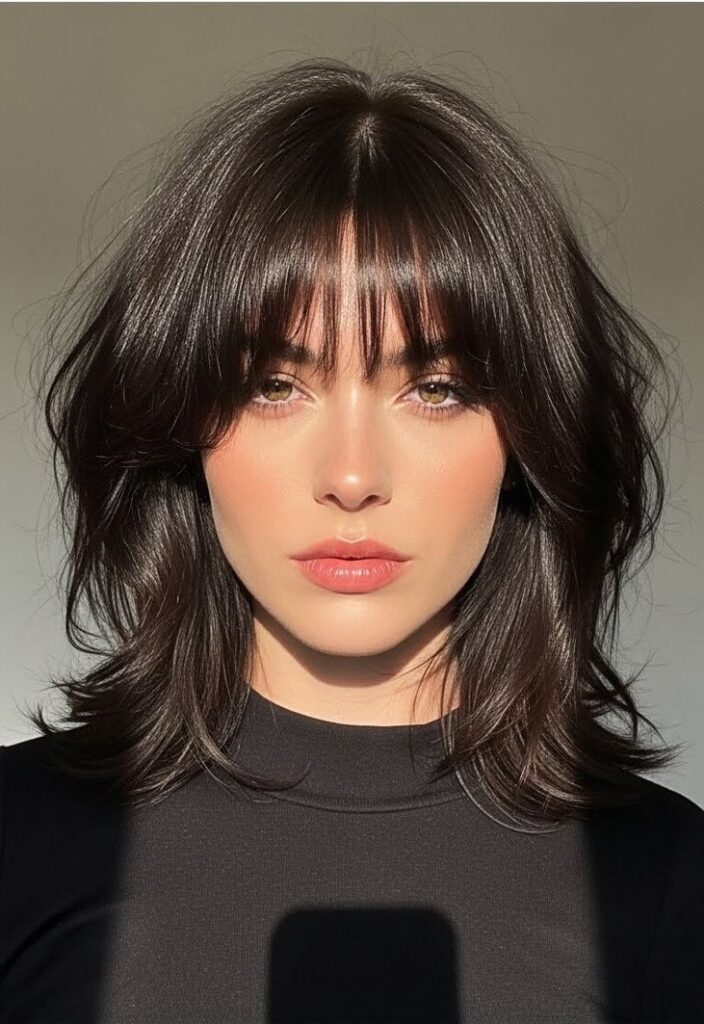
10. Medium Layers With Face-Framing Pieces
You don’t need to cut your hair short to change how it interacts with your face.
Medium-length hair with longer layers can create beautiful movement while still maintaining plenty of length.
Start the shortest face-framing pieces around the cheekbones or jaw depending on the area you want to emphasize.
Why it works: The layers create curved lines around the face instead of allowing all the hair to fall vertically.
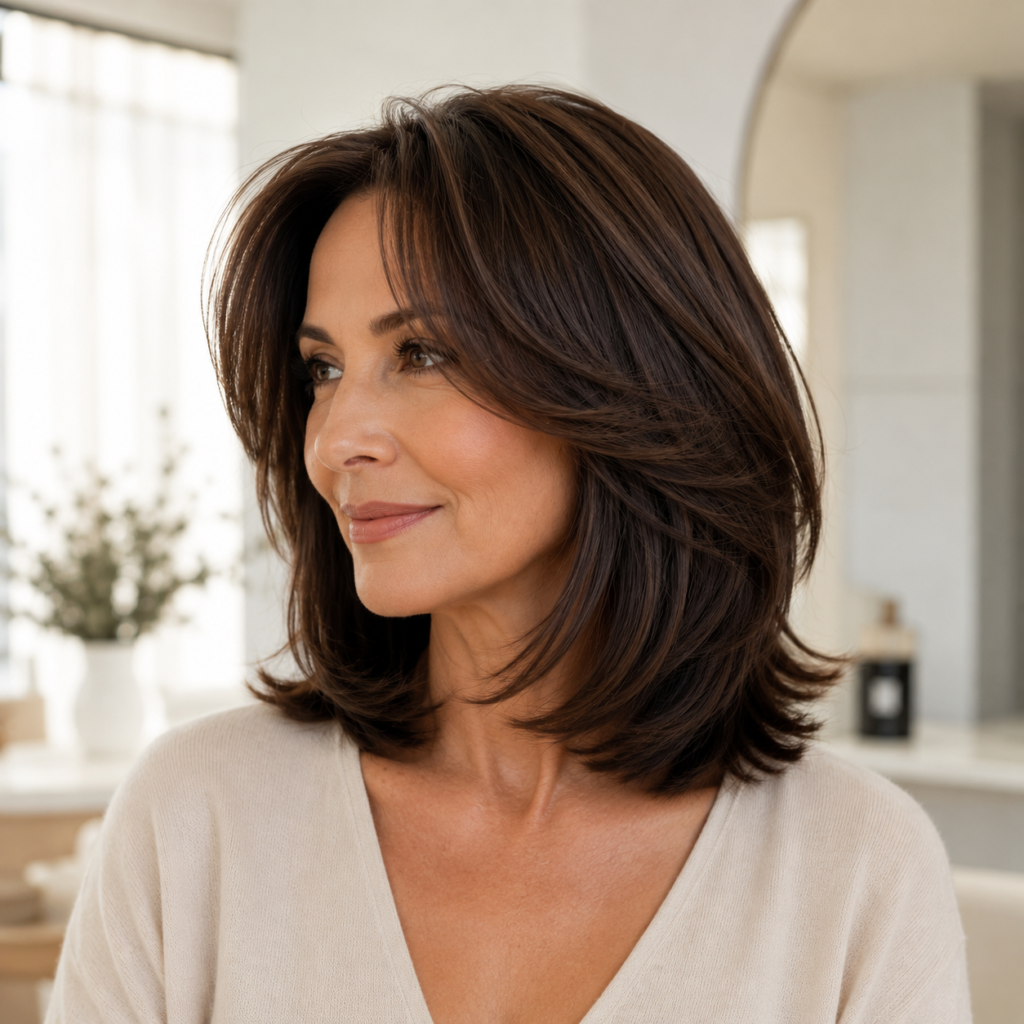
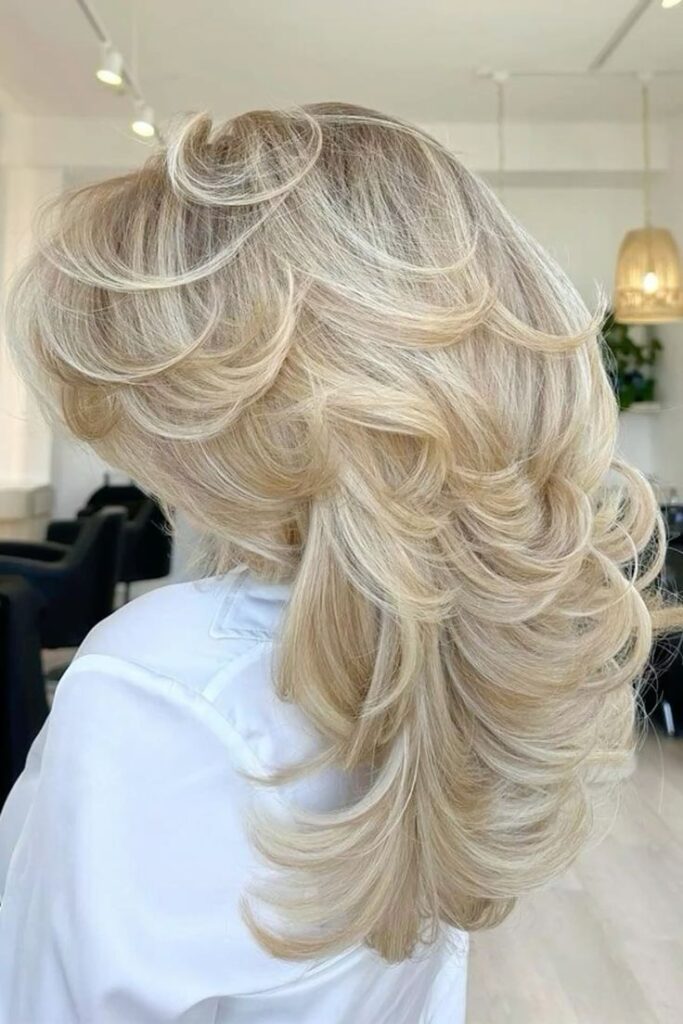
11. Soft Butterfly Cut
The butterfly cut is all about movement.
Shorter layers around the front gradually blend into longer lengths, creating a flowing silhouette that opens away from the face.
For a softer result, avoid creating an enormous, rigid blowout. The haircut can look equally beautiful with more relaxed movement.
Best for: Medium to long hair with enough density to support layering.
Why it works: The flowing front sections frame the cheekbones and jaw without creating a hard perimeter.
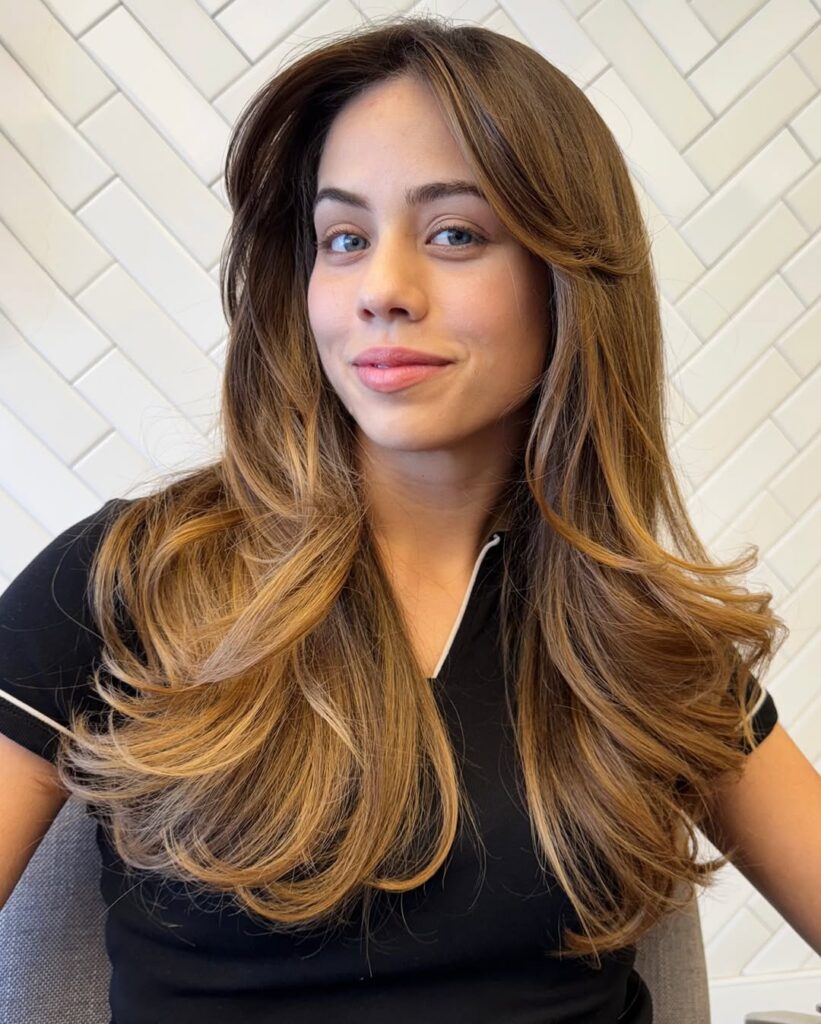
12. Long Layers With Curtain Fringe
If you love long hair, you don’t need to sacrifice length to soften the overall look.
Long layers combined with a curtain fringe can prevent very long hair from appearing heavy or visually pulling the face downward.
The fringe introduces movement near the eyes and cheekbones while the longer layers maintain flow through the rest of the hair.
Why it works: It distributes movement from the top of the haircut through the lengths rather than concentrating everything at the ends.
Best Haircuts for Softening a Strong Jawline
A strong jawline can look beautiful with both structured and soft hairstyles. But if your goal specifically is to make the area appear less angular, avoid placing the strongest line of the haircut directly at the widest part of the jaw.
Instead, consider:
A slightly longer bob that falls below the jaw.
Face-framing layers that move around rather than stop directly against it.
Soft waves or bends that break up straight horizontal lines.
A collarbone lob, airy shag or medium layered cut can work particularly well.
If you love a jaw-length bob, you don’t necessarily need to avoid it. Simply choosing a softer, slightly textured finish instead of a perfectly rigid perimeter can change the effect considerably.
Best Haircuts for a Longer Face
If you’d like to visually balance a longer face, movement through the sides can be particularly useful.
Curtain bangs can reduce the amount of uninterrupted vertical space through the forehead, while waves and layers around the cheekbones create additional width.
A French bob, softly layered bob or medium cut with curtain fringe can all work beautifully.
Very long, completely straight hair with no movement around the face can sometimes emphasize vertical length.
That doesn’t mean long hair is off-limits — adding face-framing pieces may be all that’s needed.
Best Haircuts for a Rounder Face
There’s a common misconception that round faces should avoid short hair.
They don’t have to.
The placement of volume and layers matters much more than simply choosing long versus short.
A longer pixie with height through the crown, a lob that falls below the jaw or soft face-framing layers can create beautiful balance.
If you want a softer appearance rather than an elongated one, don’t become overly focused on trying to make the face look thinner.
Sometimes embracing gentle movement around the cheeks creates the most flattering result.
Best Haircuts for a Square Face
Square faces often have beautifully defined jawlines.
If you’d like to soften that structure, contrast it with movement rather than adding even more strong geometric lines.
Consider:
- a feathered pixie;
- a rounded bob;
- a wavy lob;
- curtain bangs;
- an airy shag;
- medium-length face-framing layers.
A little asymmetry can also help. A relaxed side part, for example, creates a diagonal line across the face rather than reinforcing its natural symmetry.
Best Haircuts for a Heart-Shaped Face
Heart-shaped faces typically have more width through the forehead and a narrower chin.
Haircuts that introduce softness around the lower half of the face can create beautiful balance.
A chin-length bob with movement, textured French bob or collarbone cut can all work particularly well.
Curtain bangs can also create a gentle transition from the forehead toward the cheekbones.
Can Bangs Really Make Your Face Look Softer?
Absolutely — but the type of fringe matters.
A very thick, perfectly straight fringe creates a strong horizontal line. That can look fantastic if you want something graphic and bold, but it isn’t always the softest option.
For a gentler effect, consider:
Wispy Bangs
Light pieces allow some forehead to remain visible and create an airy finish.
Curtain Bangs
Curtain bangs open around the center and create curved movement toward the cheekbones.
Side-Swept Fringe
A diagonal fringe can soften the forehead while creating asymmetry.
Long Face-Framing Bangs
If you’re not ready for true bangs, longer pieces beginning around the cheekbones can create a similar framing effect with much less commitment.
Does Hair Color Affect How Soft a Haircut Looks?
The haircut itself matters most, but color placement can enhance its shape.
Very solid, high-contrast color can make the outline of a haircut appear stronger.
Subtle dimensional highlights, balayage or slightly lighter pieces around the face can emphasize movement and make layers more visible.
That doesn’t mean everyone needs highlights.
A rich brunette, deep blonde, silver or red shade can look beautifully soft when the haircut itself contains movement.
Haircut Details That Can Make Features Look More Defined
Sometimes you may want the opposite effect.
Sharp blunt bobs, micro bangs, very precise center parts and geometric pixies can emphasize facial structure beautifully.
That’s why there isn’t really a universally “most flattering” haircut.
A woman with a strong jaw may want to highlight it rather than soften it.
The question isn’t:
“Which haircut hides my features?”
It’s:
“Which features do I want my haircut to emphasize?”
That small change in perspective makes choosing a hairstyle much easier.
What to Ask Your Hairstylist
Instead of simply asking for a haircut that makes your face look softer, describe the specific effect you’re trying to create.
You might say:
“I’d like some movement around my jaw rather than a very sharp line.”
“I want face-framing pieces around my cheekbones.”
“I’d like bangs, but I don’t want a heavy fringe.”
“I want my pixie to look soft and feminine rather than very edgy.”
Reference photos are particularly useful because words such as soft, textured and layered can mean very different things to different people.
A good stylist can then adapt the inspiration to your hair texture, density and facial features.
Final Thoughts
Making a face look softer doesn’t require hiding your features or following strict rules about face shape.
Often, the smallest haircut details make the biggest difference.
A side-swept fringe can change the balance of a pixie. Wispy bangs can soften a short bob. Face-framing layers can introduce movement around the jaw, while curtain bangs can completely reshape how longer hair sits around the face.
If you prefer short hair, consider a soft pixie, feathered crop or rounded bob.
For medium lengths, a face-framing lob, airy shag or collarbone cut offers plenty of movement.
And if you love long hair, long layers with curtain fringe can create softness without sacrificing your length.
The best haircut isn’t the one that follows every face-shape rule.
It’s the one that makes your natural features look intentional, balanced and unmistakably yours.
Which would you choose: soft pixie, face-framing bob or flowing layers?