12 Low-Maintenance Pixie Bob Haircuts for Women Over 50
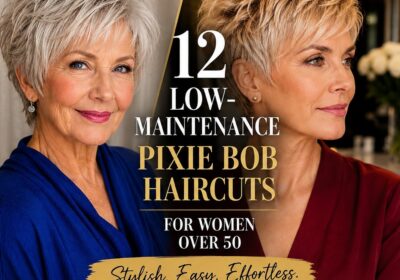
A great short haircut should make your morning easier, not give you another styling project. That is exactly why the pixie bob has become such an appealing choice for women over 50 who want a modern shape without spending too much time on their hair.
Sitting between a classic pixie and a short bob, the pixie bob—or bixie—keeps enough length for softness and movement while removing some of the weight that can make shorter styles fall flat. The right version can work with straight, wavy, fine, or naturally textured hair.
The secret to keeping it low-maintenance is choosing a cut that works with your natural texture. Here are 12 pixie bob ideas designed to look polished without demanding a complicated daily routine.
What Makes a Pixie Bob Low-Maintenance?
“Low-maintenance” doesn’t mean the same thing for everyone.
For some women, it means being able to air-dry their hair. For others, five minutes with a blow dryer and a small amount of styling product is perfectly manageable.
A genuinely easy pixie bob should work with your natural growth pattern and texture instead of requiring you to reshape your hair every morning. The amount and placement of layers also matter. A well-designed shape can create movement naturally, while an overly complicated cut may require more styling to look intentional.
There is one trade-off: short haircuts generally need regular salon trims to maintain their shape. Hairstylists commonly recommend recurring trims for pixie and pixie-bob styles, even when everyday styling is simple.
1. Soft Layered Pixie Bob
Soft layering is one of the easiest ways to give a pixie bob movement without creating a highly styled look.
Instead of lots of short, choppy layers, this version keeps enough length through the top and sides for the hair to fall naturally. The result feels relaxed and feminine rather than overly structured.
It is especially useful if you want a haircut that can look good slightly tousled instead of perfectly blow-dried.
Best for: straight, slightly wavy, fine to medium hair.
Easy styling: Apply a small amount of lightweight mousse and either air-dry or briefly lift the crown with a blow dryer.
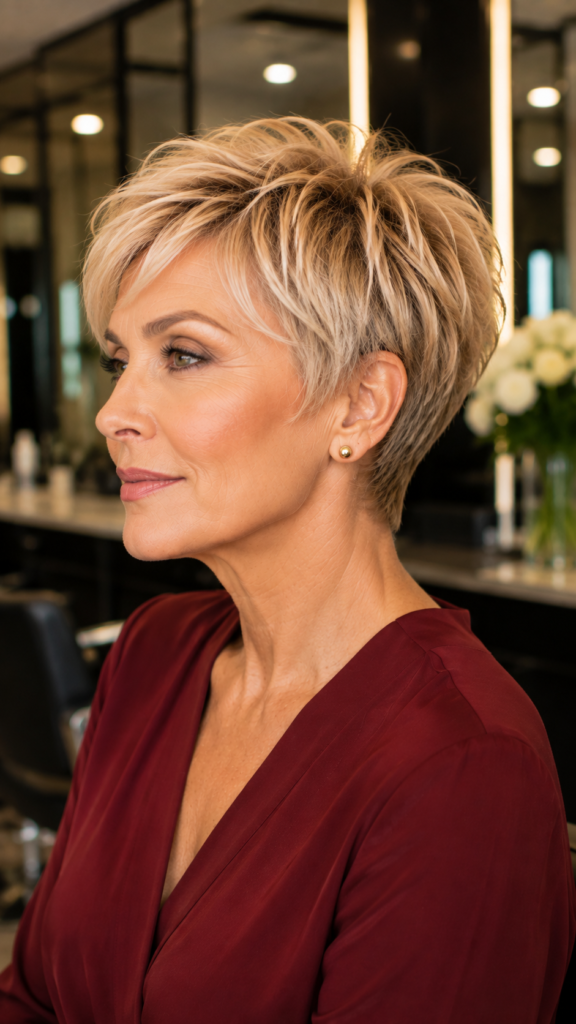
2. Wash-and-Wear Textured Bixie
If your hair already has some natural bend or wave, don’t fight it.
A textured bixie can use that movement as part of the haircut. Softly separated layers prevent the shape from becoming bulky while allowing the natural texture to create dimension.
This is one of the cases where choosing the haircut for your actual hair texture can reduce styling considerably.
Best for: naturally wavy or slightly tousled hair.
Easy styling: Scrunch a lightweight styling cream or mousse through damp hair and let your natural texture do most of the work.
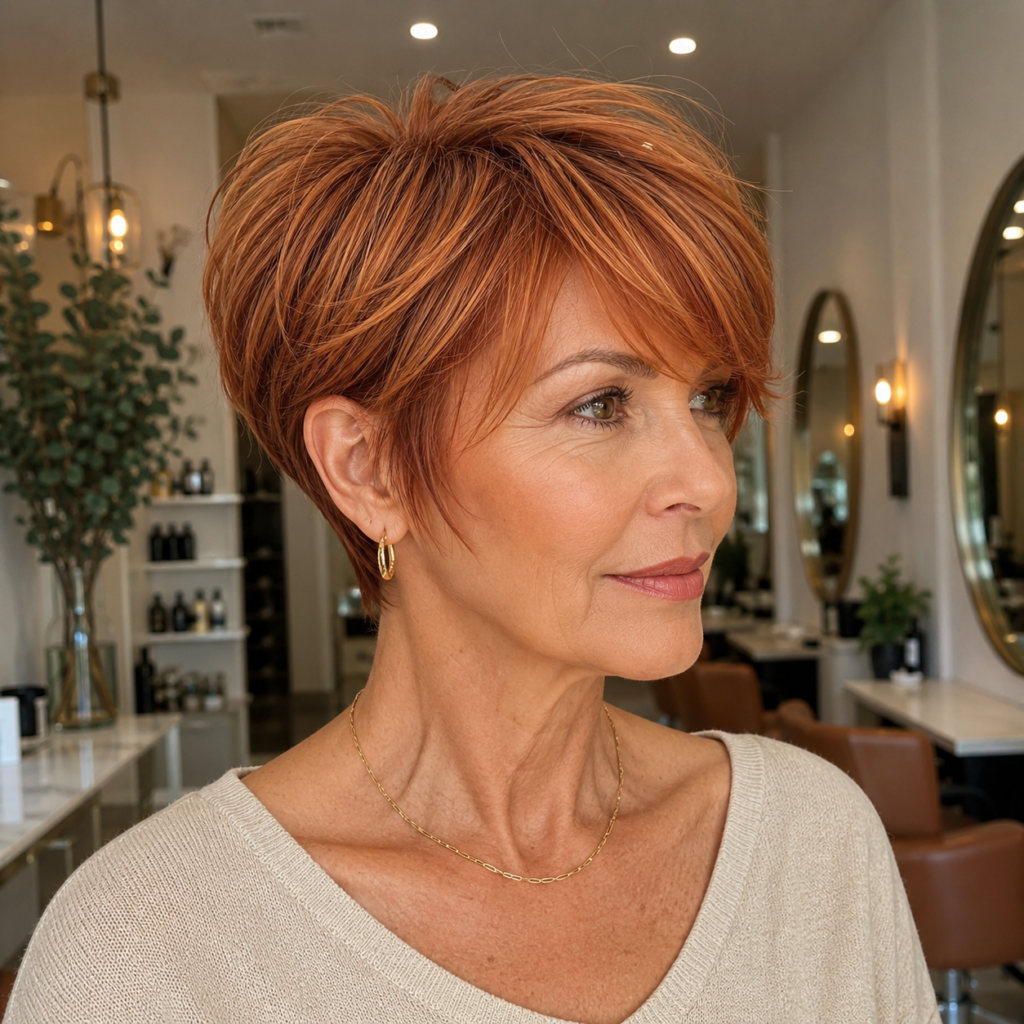
3. Tapered Pixie Bob
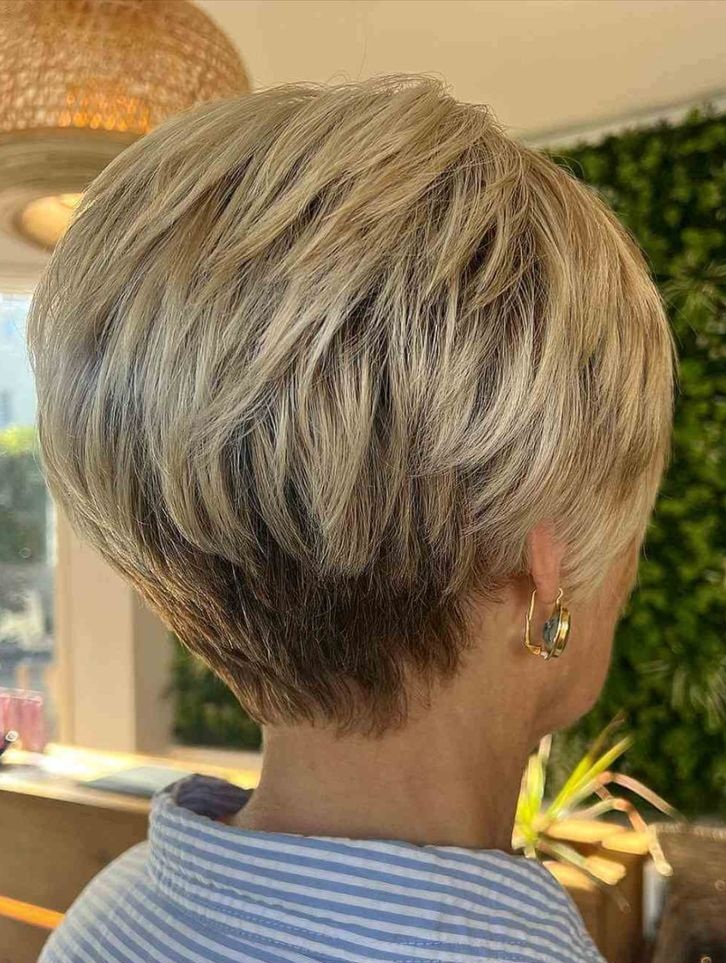
A tapered neckline creates a clean silhouette without requiring a lot of work each morning.
The back and nape are kept shorter while more length remains through the crown and front. This contrast creates a defined shape even when the hair isn’t heavily styled.
It can also be a good compromise if a traditional bob feels too heavy but a short pixie feels like too dramatic a change.
Best for: straight or slightly wavy hair.
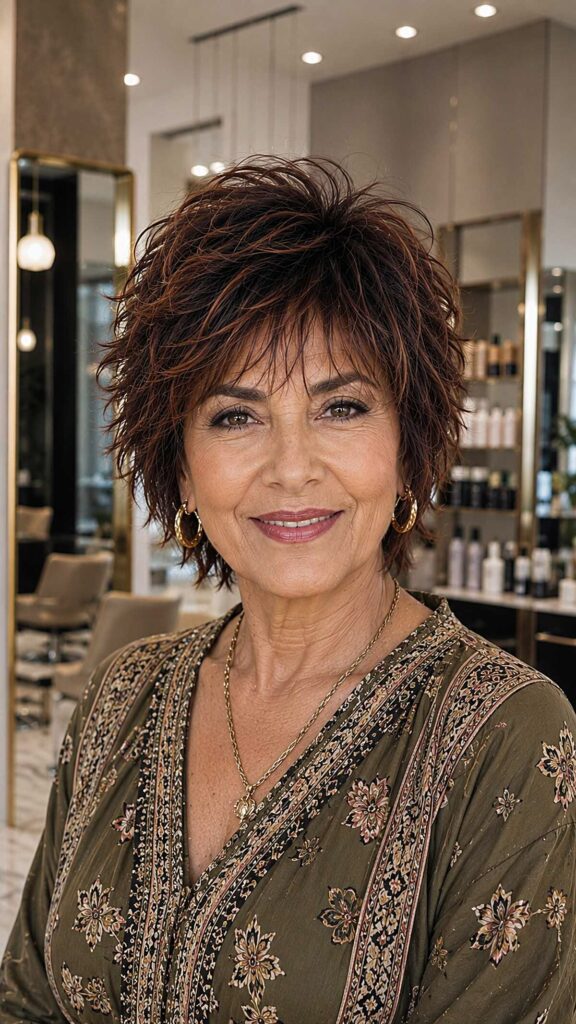
4. Long Side-Swept Pixie Bob
Keeping more length through the front makes a pixie bob surprisingly versatile.
A longer side-swept fringe can be worn across the forehead, softly pushed back, or tucked behind the ear. Because the front already has a defined direction, you don’t need to create an elaborate style every morning.
The longer fringe also gives the haircut a softer appearance than a very cropped pixie.
Best for: straight to slightly wavy hair and anyone who prefers more length around the face.
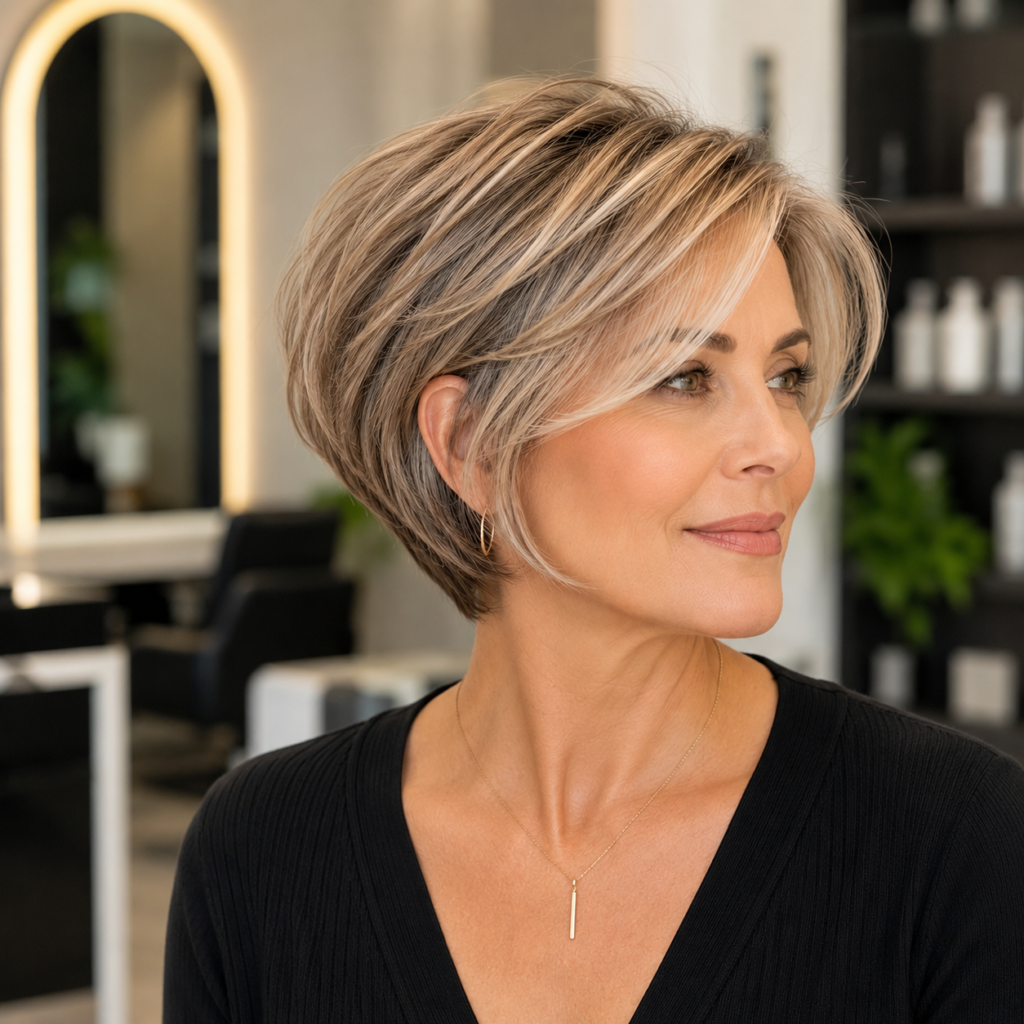
5. Sleek Pixie Bob for Straight Hair
Not every pixie bob needs lots of texture or volume.
If your hair naturally dries straight, a sleek pixie bob can actually require less work than trying to force it into a tousled style. A stronger perimeter with minimal, strategic layering allows the natural straight texture to become part of the look.
A side part or slightly longer front keeps the shape modern without requiring complicated styling.
Best for: naturally straight, fine to medium hair.
Easy styling: Smooth the hair while blow-drying and finish with a tiny amount of lightweight smoothing product if necessary.
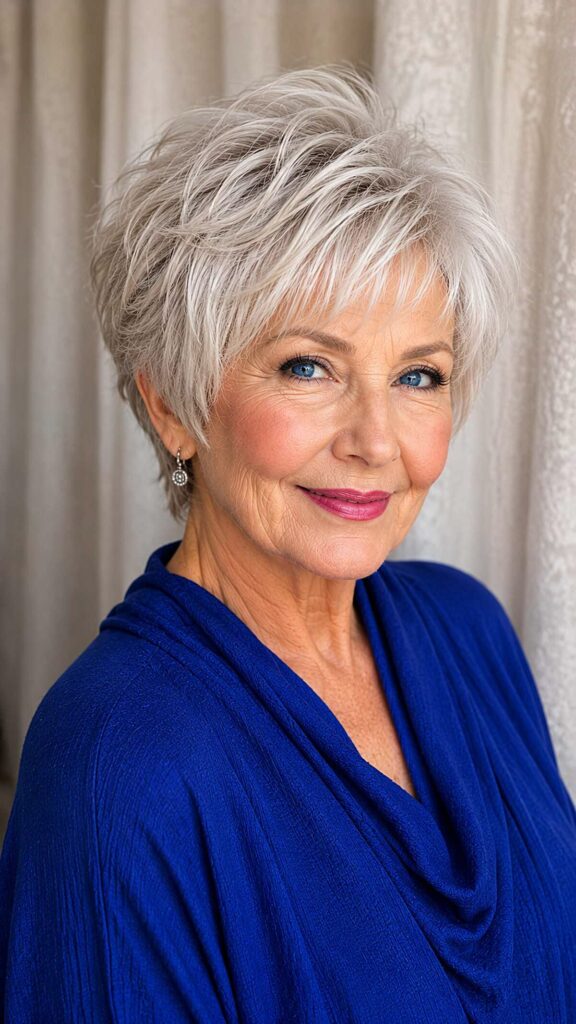
6. Naturally Wavy Pixie Bob
Natural waves can give a pixie bob shape and volume with very little intervention.
The key is keeping enough length for the wave pattern to form while removing excess weight in areas where the haircut becomes bulky.
Rather than trying to make every wave identical, embrace a slightly undone finish. It often makes this haircut look more modern—and makes mornings much easier.
Best for: naturally wavy hair.
Easy styling: Apply a small amount of wave-enhancing product to damp hair, scrunch gently, and air-dry whenever possible.
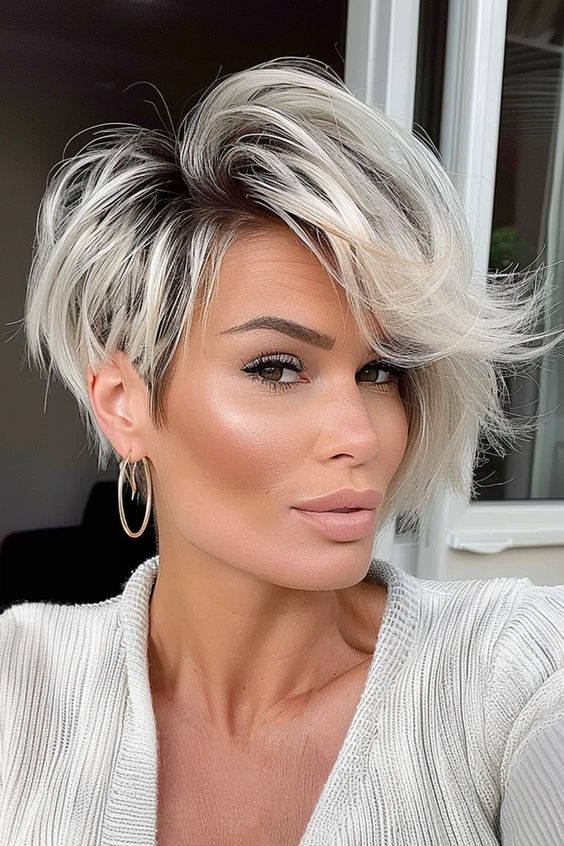
7. Pixie Bob With Soft Side Bangs
Side bangs can add softness without the commitment of a heavy, straight-across fringe.
When blended into the rest of the haircut, they naturally follow the direction of the longer layers. That means you can usually style the fringe at the same time as the rest of your hair rather than treating it as a separate section.
The diagonal line can also draw attention toward the eyes and cheekbones.
Best for: straight or softly wavy hair.
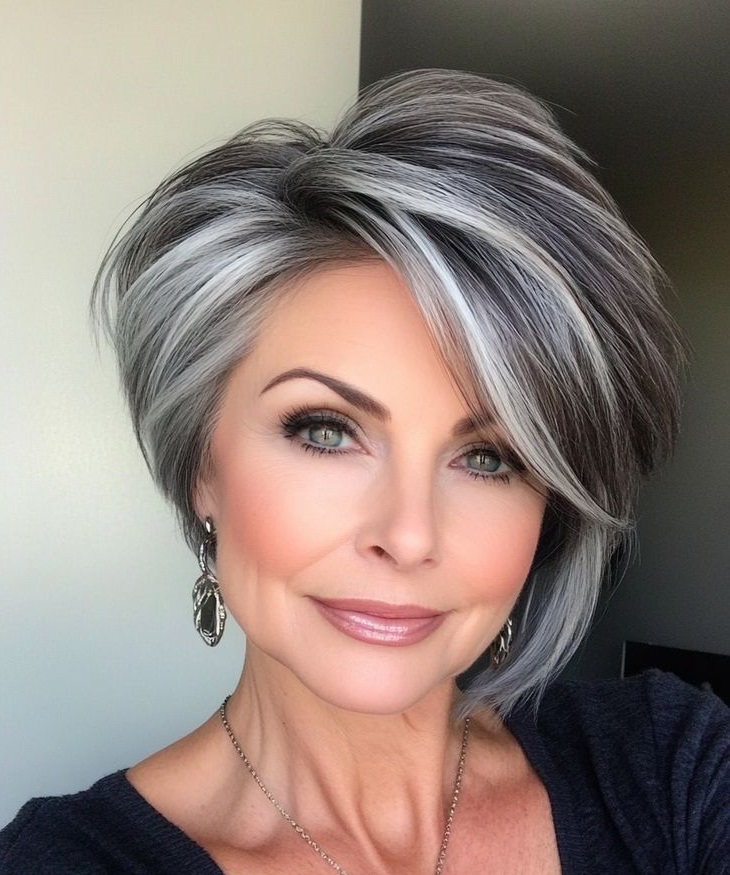
8. Crown-Lift Pixie Bob
If your main concern is hair that falls flat at the crown, you don’t necessarily need an entire head of short layers.
Strategic layering around the crown can provide support while leaving other areas relatively simple. The result is a pixie bob with more natural lift without requiring heavy teasing or multiple styling products.
Pixie and pixie-bob cuts are often recommended for fine or thinning hair because their shorter structure can help create the visual impression of greater fullness.
Best for: fine hair or hair that tends to lie flat at the crown.
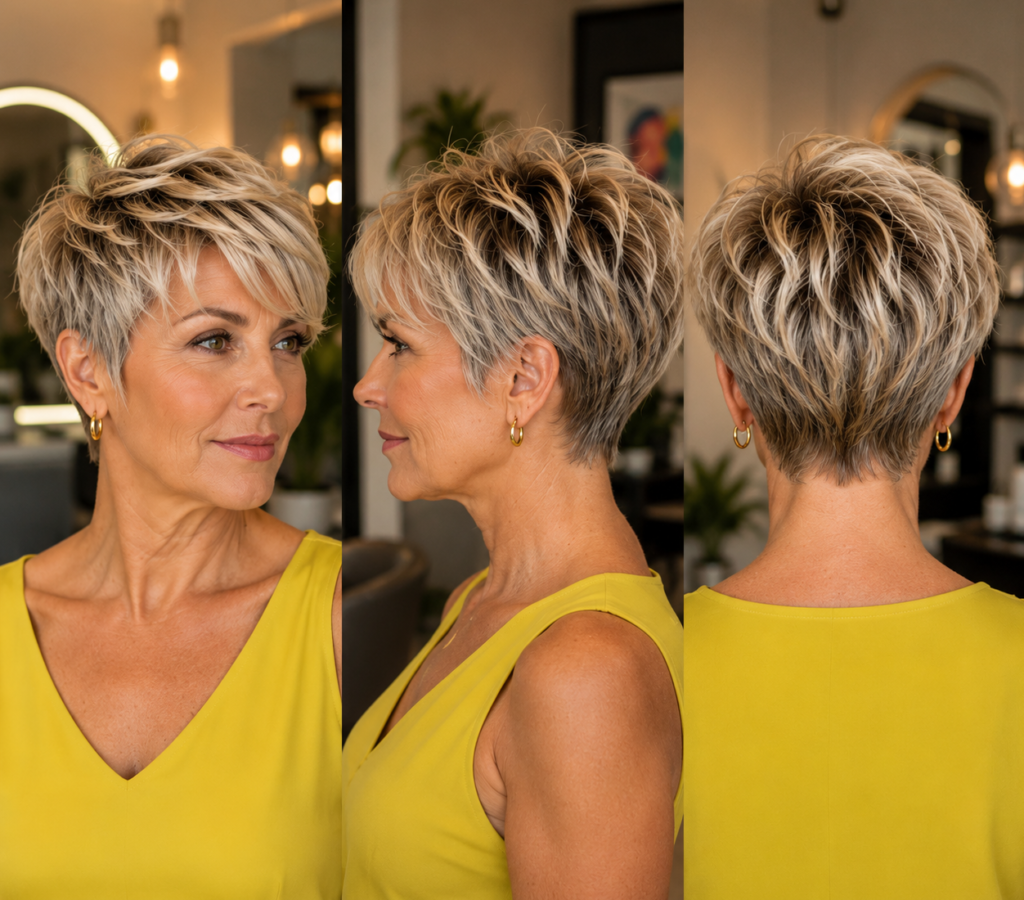
9. Silver Pixie Bob With Natural Texture
Natural gray or silver hair can look particularly striking in a simple pixie bob.
Instead of creating an overly precise finish, allow some natural texture to remain visible. A softly tapered nape keeps the shape polished while longer layers on top create movement.
This is also an opportunity to let the color itself provide dimension rather than relying on complicated styling.
Best for: naturally gray, silver, or salt-and-pepper hair.
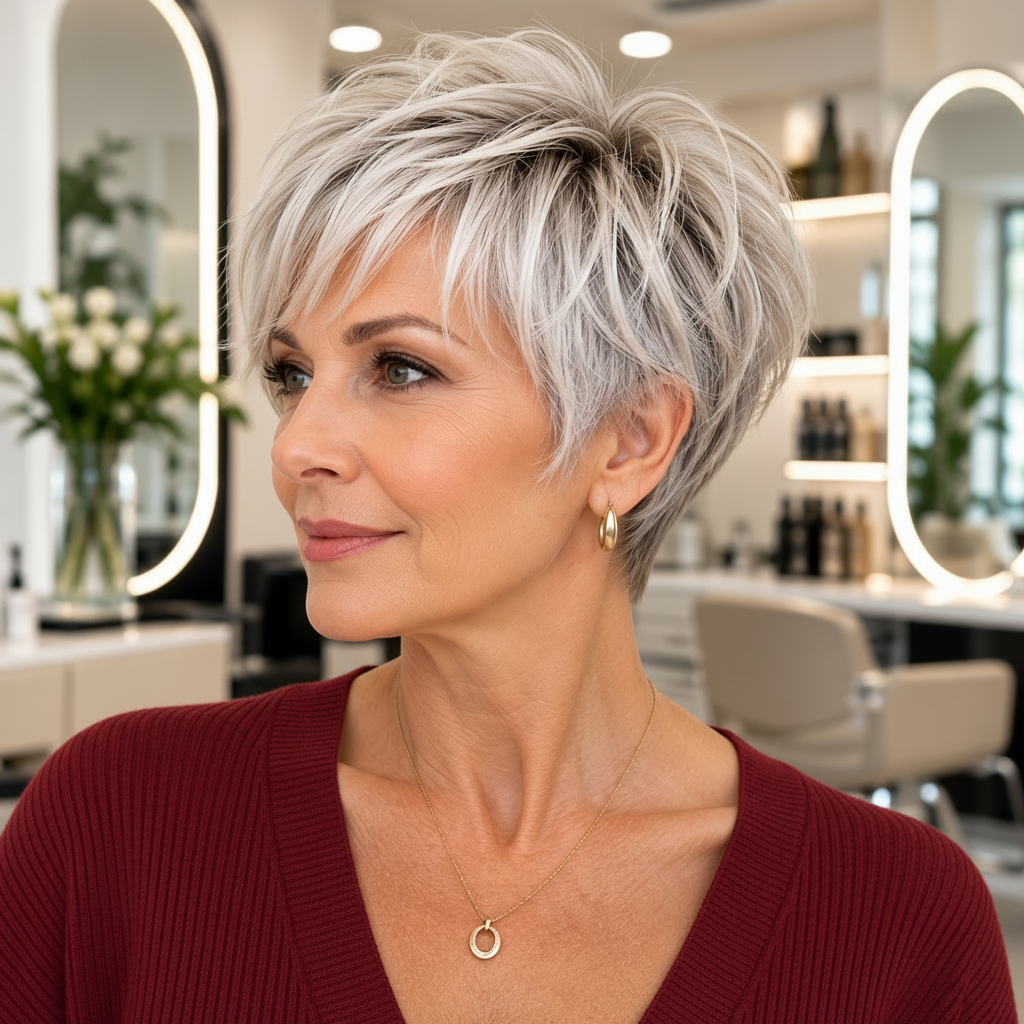
10. Ear-Length Pixie Bob
An ear-length pixie bob sits comfortably between very short hair and a traditional bob.
It provides enough length to frame the face but removes enough weight to keep the overall shape light. Depending on your texture, the front can be tucked behind the ears or left loose for a softer silhouette.
It is also a practical option for someone experimenting with shorter hair without immediately committing to a cropped pixie.
Best for: straight, slightly wavy, fine or medium-density hair.
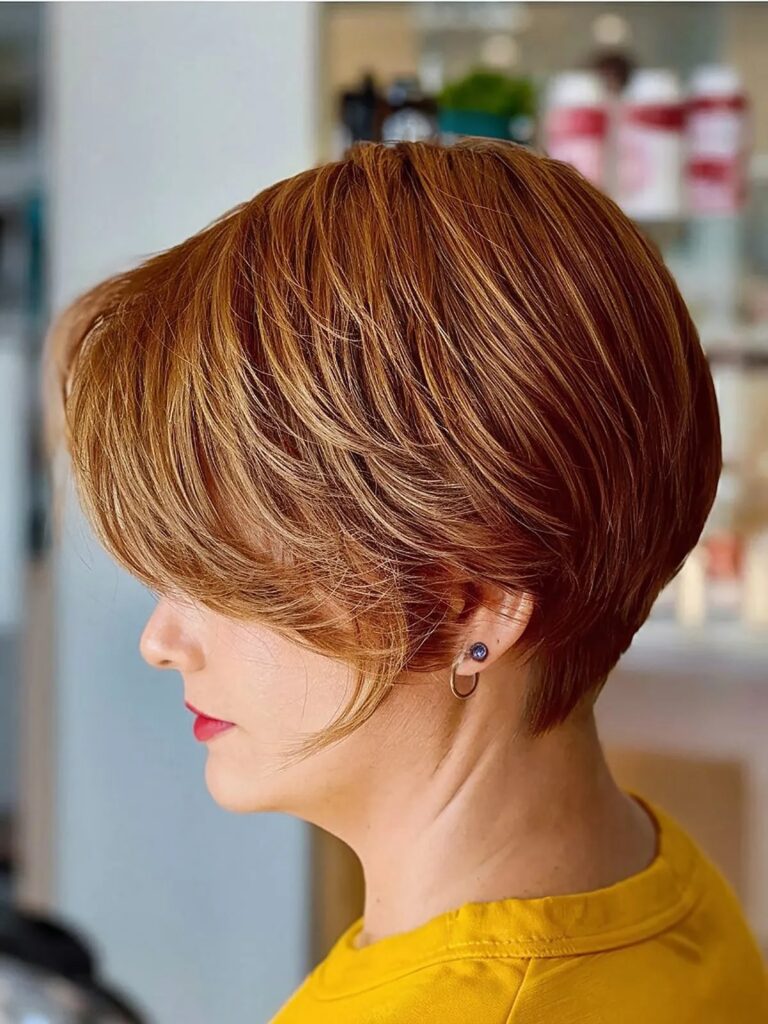 11. Tousled Pixie Bob
A haircut that is supposed to look slightly undone has one obvious advantage: it doesn’t need to look perfect.
The tousled pixie bob uses soft texture and separated pieces to create movement. Rather than trying to smooth every strand into place, you can work with the natural direction of your hair.
Keep the layering controlled, particularly if your hair is fine. Removing too much density can make the ends look sparse instead of intentionally textured.
Easy styling: Use your fingers while drying and finish with a very small amount of lightweight texturizing product.
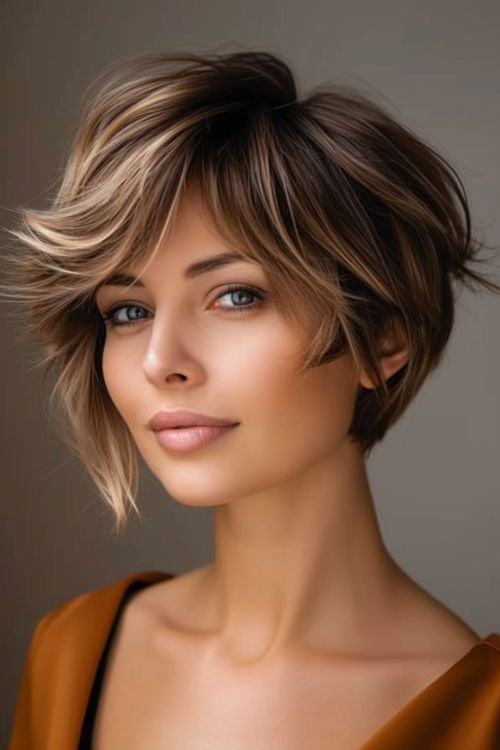
12. Classic Rounded Pixie Bob
If trends aren’t your priority, a classic rounded pixie bob is difficult to beat.
The silhouette stays softly full around the crown and sides, with a neat neckline and enough length around the face to avoid looking severely cropped.
Because the structure comes primarily from the haircut itself, daily styling can remain relatively simple.
Best for: straight to softly wavy hair and anyone who prefers a polished, timeless shape.
Which Pixie Bob Requires the Least Daily Styling?
The easiest pixie bob is usually the one closest to your natural hair texture.
If your hair is naturally straight, a sleek or softly rounded pixie bob may require less work than a heavily textured bixie.
If you have natural waves, a softly layered or tousled version can allow you to air-dry rather than straightening your hair every morning.
Fine hair that falls flat may benefit from strategic crown layers, while thicker hair may need carefully placed weight removal to prevent the shape from becoming bulky.
Before choosing a haircut from a photograph, ask yourself a simple question: Does this model’s natural hair behave anything like mine?
That can be more useful than choosing a style based on appearance alone.
How Often Does a Pixie Bob Need a Trim?
This is where “low-maintenance” needs a little clarification.
A pixie bob may require very little daily styling, but short hair changes shape more noticeably as it grows. Hairstylist guidance for pixie bobs commonly places maintenance somewhere around the four-to-eight-week range, depending on how structured the haircut is and how quickly the hair grows.
A sharply tapered nape will usually show growth sooner than a longer, softer bixie.
If you prefer fewer salon appointments, tell your stylist. A slightly longer and less structured shape may grow out more gracefully. How to Keep a Pixie Bob Easy to Style
Start by avoiding too many products.
Fine and mature hair can quickly become weighed down by heavy oils, waxes, and creams. Use only what your texture actually needs.
For extra lift, concentrate volumizing product at the roots rather than coating the entire length. If your natural texture already creates movement, a lightweight styling cream or mousse may be enough.
And don’t underestimate the haircut itself. A well-shaped pixie bob should still look intentional even when it isn’t styled perfectly.
Fine Hair? Choose Your Pixie Bob Carefully
If your hair is fine, low-maintenance doesn’t necessarily mean adding lots of layers.
Too much layering can remove the density you’re trying to preserve. Instead, you may benefit from a stronger perimeter combined with selective layering around the crown or front.
If fine hair is your main concern, see our guide to 15 Pixie Bob Haircuts for Fine Hair Over 50 That Add Natural Volume.
What to Ask Your Hairstylist
Don’t simply ask for “a low-maintenance pixie bob.”
Tell your stylist what low-maintenance means to you.
For example:
“I want to be able to air-dry my hair most days.”
“I don’t want to use a flat iron every morning.”
“I’d like the haircut to grow out without immediately losing its shape.”
“I only want to spend about five minutes styling my hair.”
Also mention how often you’re realistically willing to return for a trim.
That information helps your stylist design the haircut around your lifestyle rather than simply reproducing a reference photo.
Frequently Asked Questions
Is a pixie bob really low-maintenance?
It can be low-maintenance for everyday styling, particularly when the cut works with your natural texture. However, shorter shapes generally require regular trims to maintain their proportions.
What is the easiest pixie bob to style?
Usually, the easiest version is one that follows your natural texture. Straight hair may suit a sleek or rounded pixie bob, while naturally wavy hair often works well with a textured or tousled bixie.
Is a pixie bob good for fine hair over 50?
Yes, it can be. Shorter lengths and carefully placed layers can create movement and the appearance of greater fullness. Avoid excessive layering if preserving density is important.
Can I air-dry a pixie bob?
Some pixie bobs air-dry beautifully, particularly on naturally wavy or textured hair. The cut needs to be designed around your natural growth pattern and texture if air-drying is a priority.
Is a pixie bob the same as a bixie?
The terms are often used interchangeably. Both generally describe a haircut that combines elements of a pixie and a bob, although “bixie” is frequently associated with a softer or more textured interpretation.
Final Thoughts
A low-maintenance pixie bob shouldn’t require you to completely change the way your hair naturally behaves.
The best versions use your texture, density, and growth pattern to create a shape that still looks good when you haven’t spent twenty minutes styling it.
Whether you prefer a sleek pixie bob, soft layers, natural waves, longer bangs, or a textured bixie, choose the version that fits both your hair and your everyday life.
Save the styles you love and show them to your hairstylist—but let your own hair determine the final cut.