15 pixie bob haircuts for fine hair over 50 that add natural volume
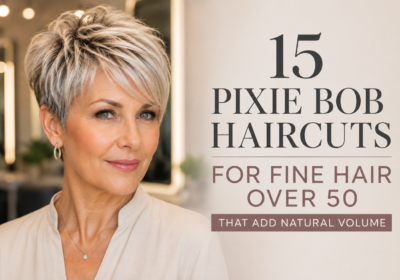
Fine hair can lose some of its natural fullness over time, but the right haircut can make a noticeable difference. A pixie bob is one of the most versatile short hairstyles for women over 50 with fine hair because it combines the lightness of a pixie with the softer shape and longer lines of a bob.
The key is choosing the right balance of length, layering, and texture. Too many layers can make fine hair look thinner, while strategic layers around the crown can create movement and the appearance of fuller hair.
Whether you prefer a polished shape, soft layers, side-swept bangs.
Why Does a Pixie Bob Work for Fine Hair Over 50?
A pixie bob, sometimes called a bixie, sits somewhere between a classic pixie and a short bob. It typically keeps more length around the top and front while maintaining a shorter, lighter shape through the back.
For fine hair, removing excess length can help prevent the hair from being weighed down. Carefully placed layers can also create movement and lift, particularly around the crown. Current hairstylist guidance emphasizes thoughtful, softer layering for mature fine hair rather than excessive layering that sacrifices density.
The result can be a hairstyle that feels modern and lightweight without requiring an extremely short cut.
1. Soft Layered Pixie Bob
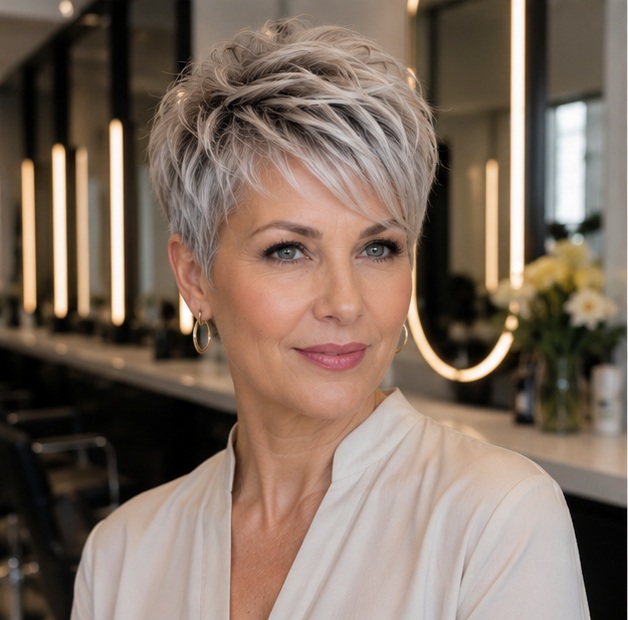
A soft layered pixie bob is a great starting point if you want volume without an overly textured finish. The layers should be subtle enough to preserve density through the ends while adding movement around the crown.
Keeping slightly longer pieces around the face creates a softer silhouette and gives you more styling flexibility.
Best for: fine straight or slightly wavy hair.
Styling tip: Use a lightweight volumizing mousse at the roots and blow-dry while gently lifting the crown.
2. Crown-Volume Pixie Bob
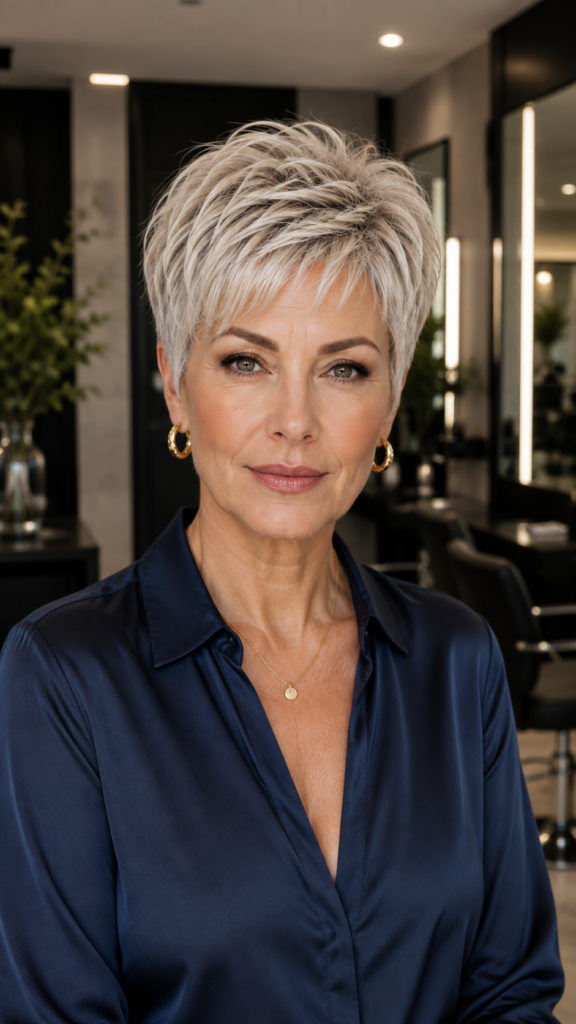
If your hair tends to fall flat at the top, focus the shape of the haircut around the crown.
Shorter supporting layers underneath slightly longer top layers can create lift without removing too much hair. This is particularly useful when the lengths look reasonably full but the crown lacks volume.
The sides can remain relatively sleek so the volume on top becomes the focal point.
Best for: fine hair that tends to lie flat.
Styling tip: Direct the roots upward while blow-drying instead of immediately brushing everything into its final position.
3. Side-Swept Pixie Bob
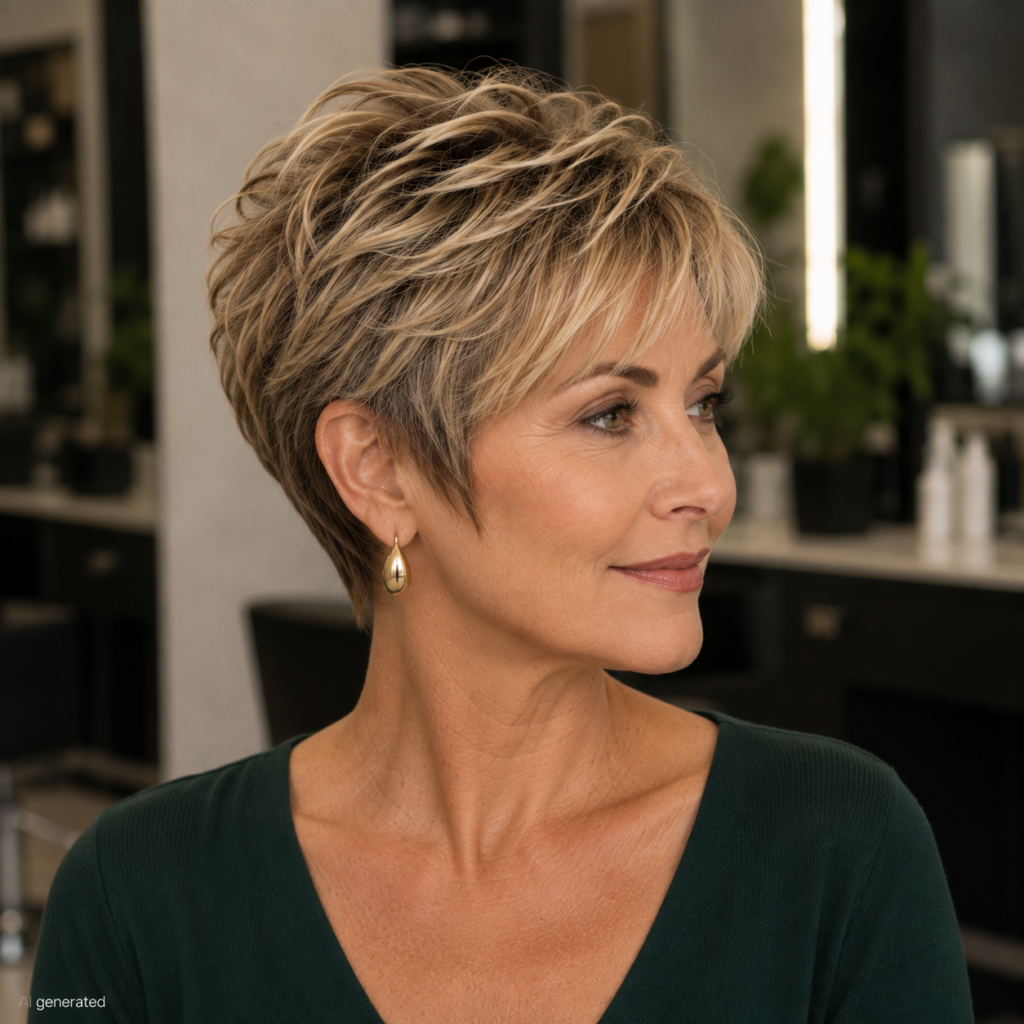
A deep side part can instantly change the appearance of a pixie bob.
Keeping one side slightly longer creates movement across the forehead while the shorter side prevents the overall haircut from becoming heavy. It also gives fine hair a more dimensional silhouette without requiring aggressive layering.
This is a particularly elegant option if you prefer softer, polished hairstyles.
Best for: straight to slightly wavy fine hair.
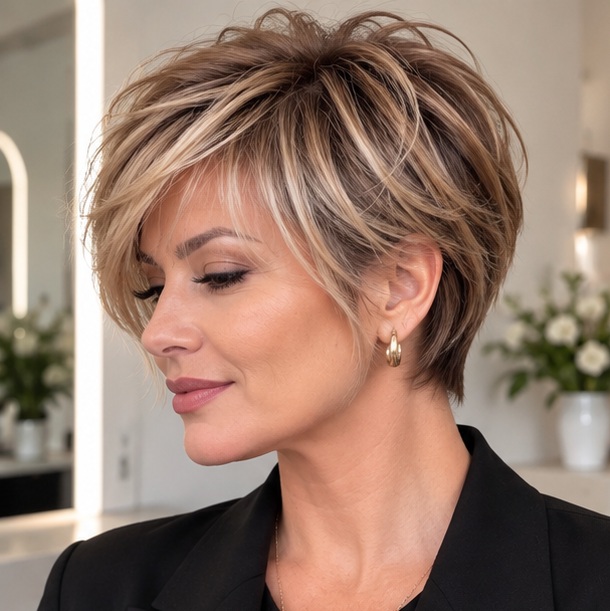
4. Textured Bixie
The bixie combines the cropped shape of a pixie with some of the softness and movement of a bob.
Light texture throughout the top can prevent fine hair from looking flat, while slightly longer pieces around the ears and nape keep the style feminine and versatile. Bixie cuts are currently being recommended as one of the short layered options that can add texture and volume to mature hair.
The important word here is light. Fine hair usually benefits from controlled texture rather than removing too much density.
5. Pixie Bob With Wispy Bangs
Wispy bangs can soften a short haircut without creating the weight of a full fringe.
They work particularly well with a pixie bob because the fringe blends naturally into the longer layers around the face.
Keep the bangs airy rather than extremely thin. A few strategically placed pieces can frame the eyes while maintaining enough density through the front of the haircut.
Best for: women who want a softer look around the forehead and eyes.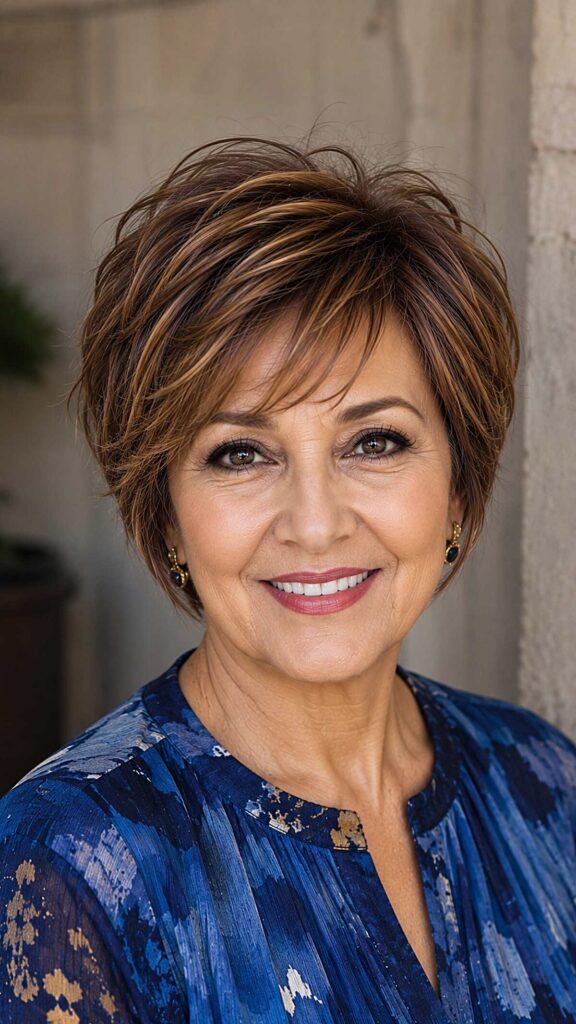
6. Stacked Pixie Bob
A stacked pixie bob uses graduated layers through the back to create a more rounded silhouette.
This can be especially effective when fine hair looks flat around the back of the head. The shorter underneath layers support the longer layers above them, helping create shape without relying entirely on styling products.
Avoid making the graduation excessively dramatic if your hair is very fine. Preserving enough density through the perimeter is important.
7. Silver Layered Pixie Bob
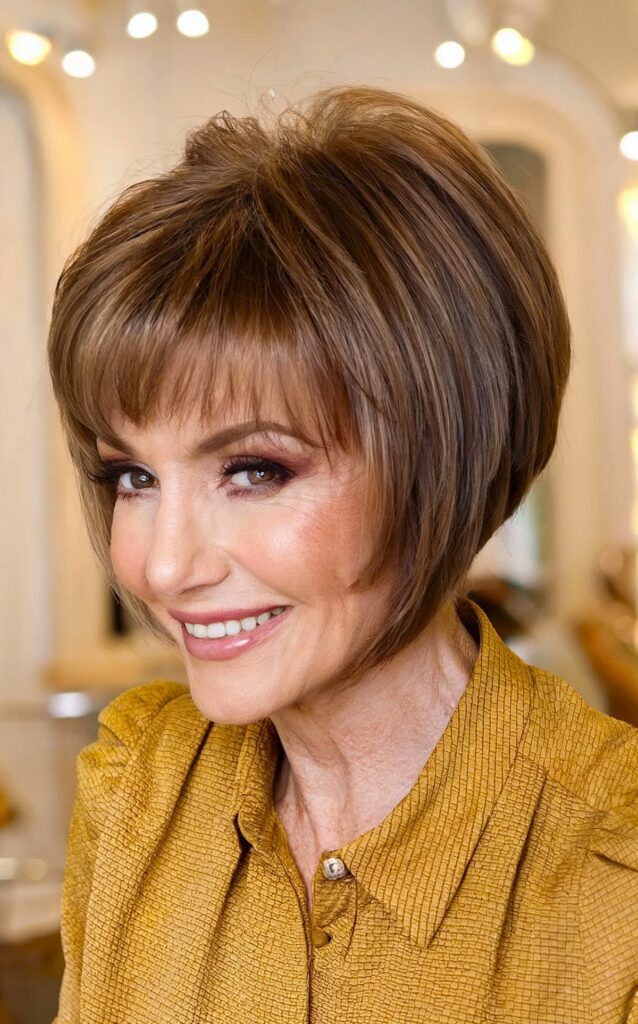
Natural silver hair and a softly layered pixie bob can make a striking combination.
Rather than trying to create extreme volume, this version focuses on movement and definition. A slightly longer top paired with a neat nape creates a clean silhouette, while subtle layering prevents the shape from appearing rigid.
Silver and gray tones can also make the texture of a layered haircut particularly visible, so a precise cut matters.
Styling tip: Use lightweight products that create separation without making fine strands feel coated or heavy.
8. Pixie Bob With Side Bangs
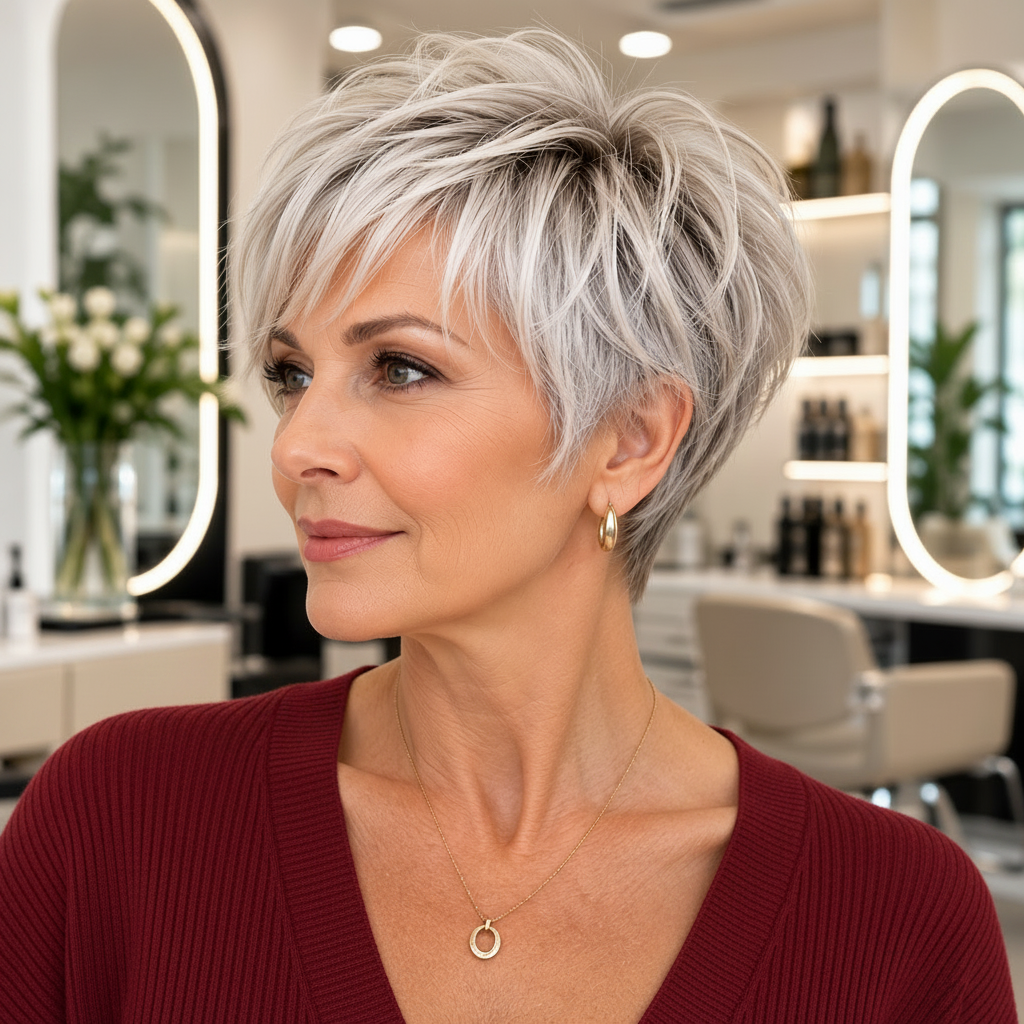
Longer side bangs are an easy way to change the proportions of a pixie bob while keeping plenty of styling flexibility.
They can be worn smooth, tucked behind one ear, or styled with a little volume. The diagonal line of the fringe also adds movement to an otherwise simple short haircut.
Keeping the bangs connected to the longer top layers helps the style look cohesive rather than like a separate fringe added to a short cut.
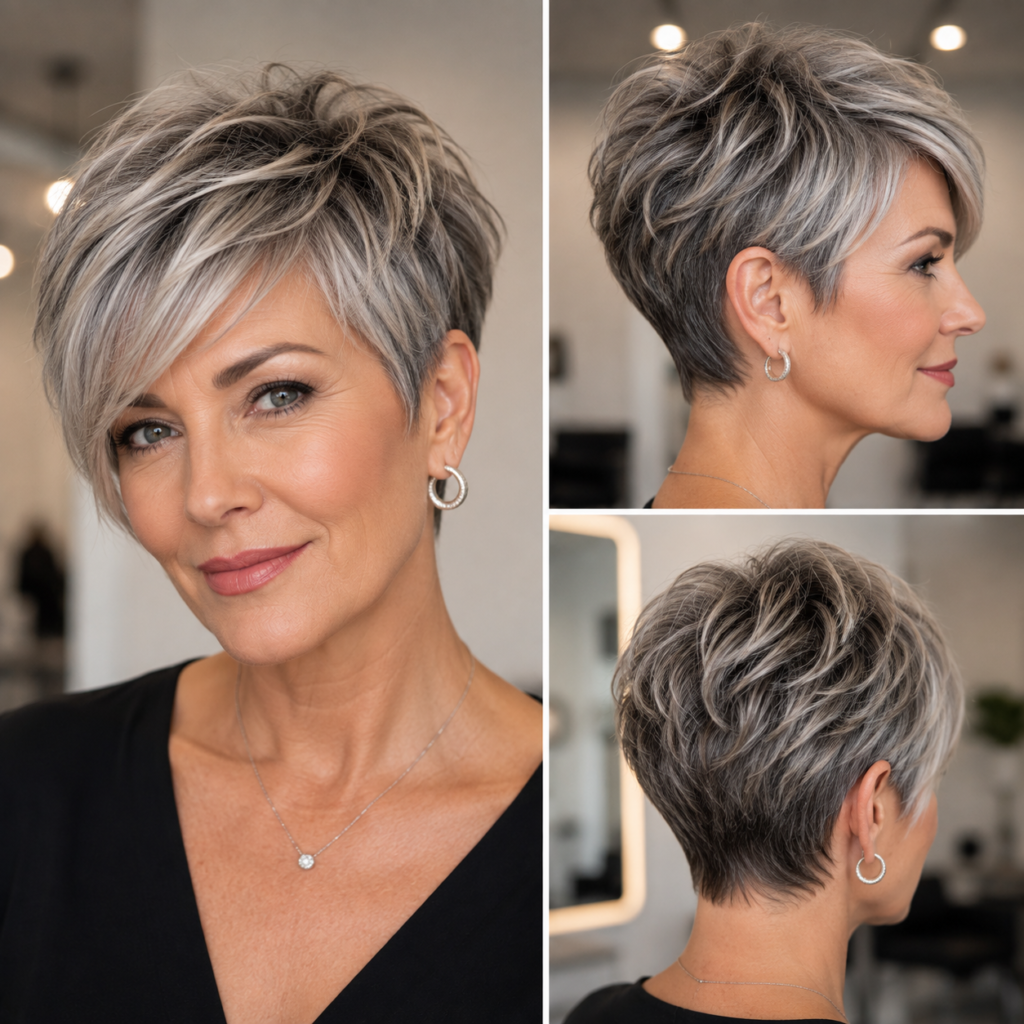
9. Tapered Pixie Bob
A tapered pixie bob keeps the neckline clean while preserving more length through the top and front.
Removing unnecessary bulk around the nape can make the longer areas appear fuller by contrast. It also creates a more defined shape that tends to grow out neatly.
This style is a good option if you want something shorter than a traditional bob without committing to a very cropped pixie.
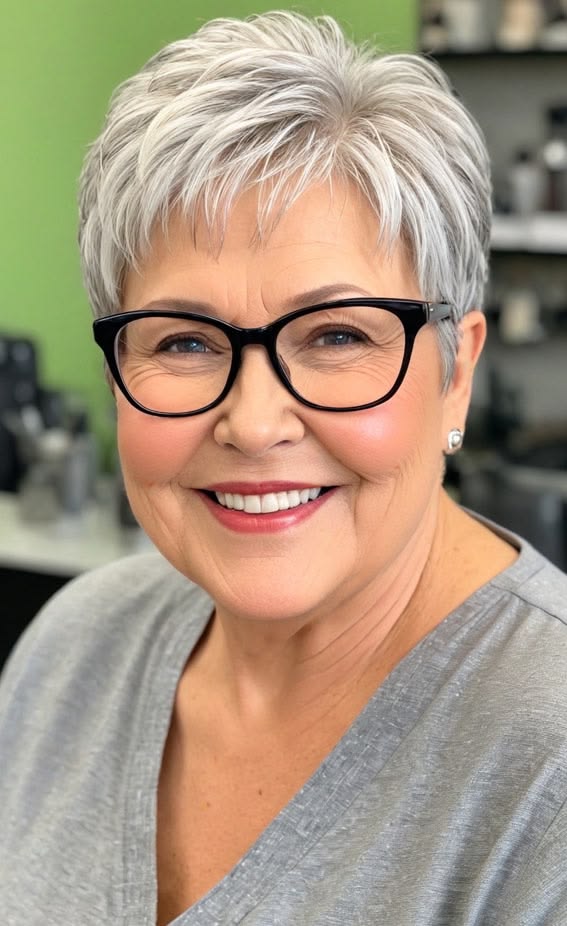
10. Feathered Pixie Bob
Soft feathering can introduce movement into straight fine hair, particularly around the crown and fringe.
The goal is not to create dozens of short layers. Instead, a few carefully blended sections can prevent the hairstyle from falling into one flat shape.
A feathered finish can be styled polished or slightly tousled depending on the occasion.
Best for: straight fine hair that needs movement rather than dramatic volume.
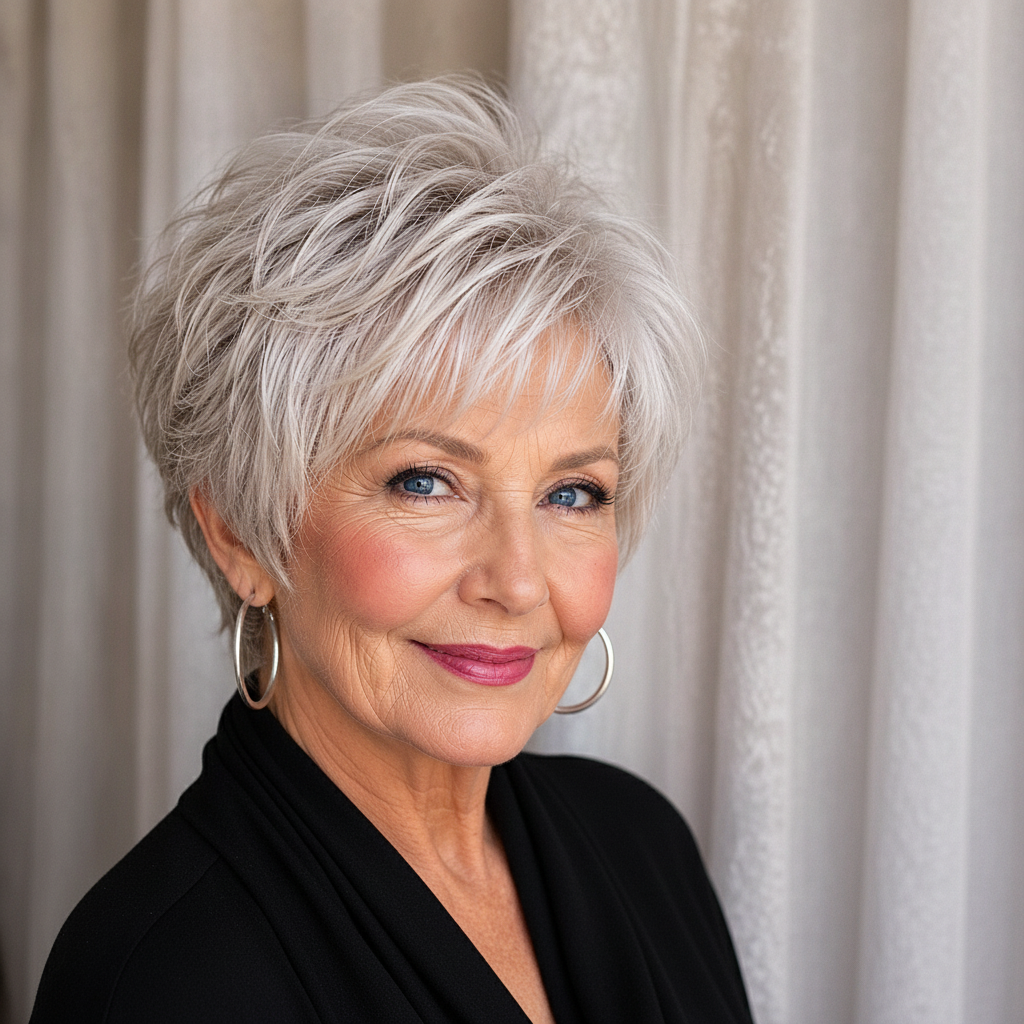
11. Sleek Pixie Bob for Fine Straight Hair
Fine hair doesn’t always need to look big.
A sleek pixie bob can make fine straight hair look polished by emphasizing shape rather than volume. Keeping a stronger perimeter and limiting excessive layering helps preserve the appearance of density.
A side part or slightly asymmetrical front can add visual interest without sacrificing the clean finish.
Best for: naturally straight hair and anyone who prefers a sophisticated, minimal style.
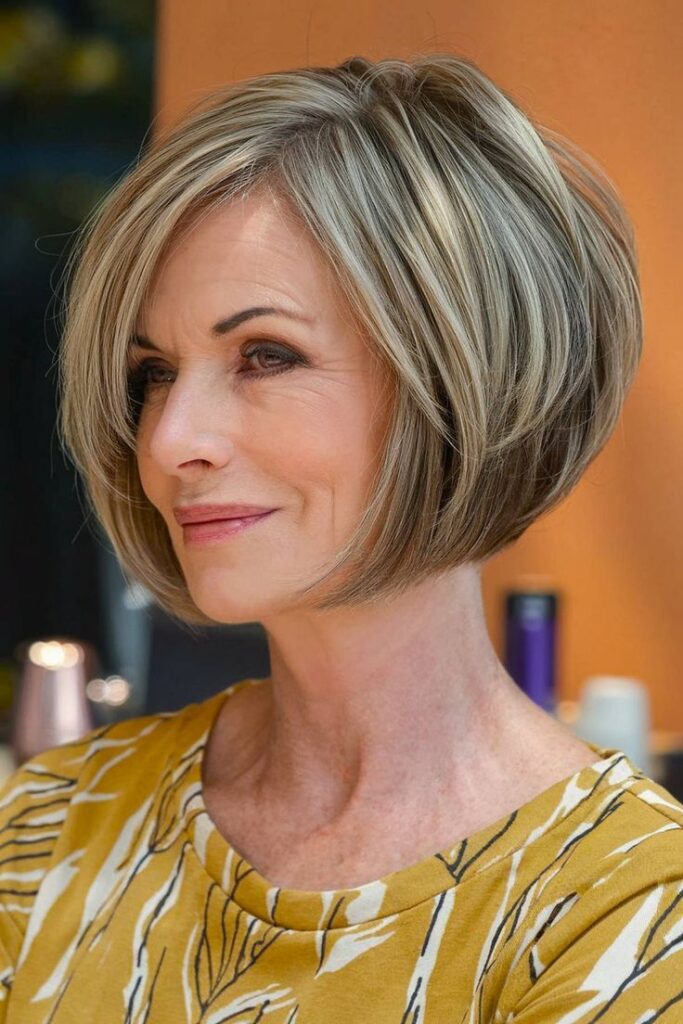
12. Tousled Pixie Bob
If you prefer a relaxed finish, a tousled pixie bob creates movement without requiring perfect styling.
The haircut needs enough layering to allow individual sections to move, but the ends should still retain sufficient density.
Use your fingers rather than repeatedly brushing the hair while blow-drying. Finish with a small amount of lightweight texturizing product, concentrating on the mid-lengths and ends rather than the roots.
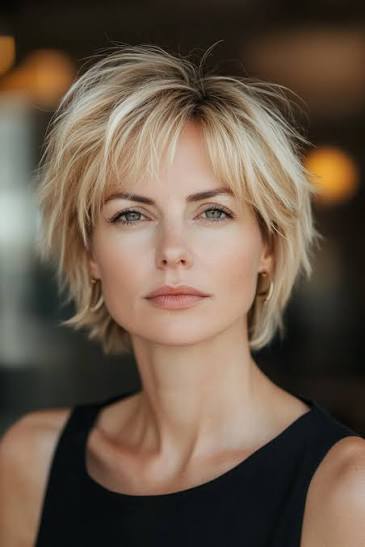
13. Longer Pixie Bob
Not ready for a dramatic chop? A longer pixie bob offers a comfortable middle ground.
Keeping additional length around the ears and jaw creates the softness of a short bob while a shorter back prevents fine hair from becoming weighed down.
It’s also a practical transition haircut if you’re moving from a traditional bob toward a pixie.
Best for: anyone trying short hair for the first time or wanting more styling versatility.
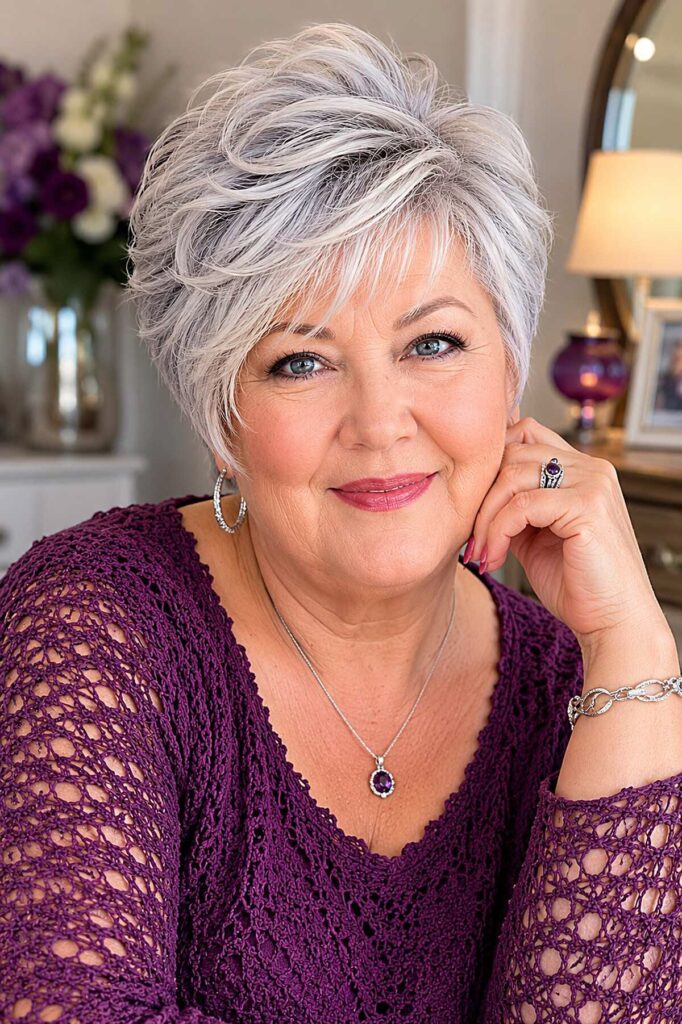
14.Pixie Bob With Face-Framing Layers
Face-framing pieces can change the overall feel of a short haircut without requiring lots of layers throughout the entire head.
Slightly longer sections around the cheekbones or jaw create movement and softness, while maintaining more density through the back.
Ask your stylist to customize the placement rather than copying an exact photograph—the most flattering length will depend on your features and natural hair texture.
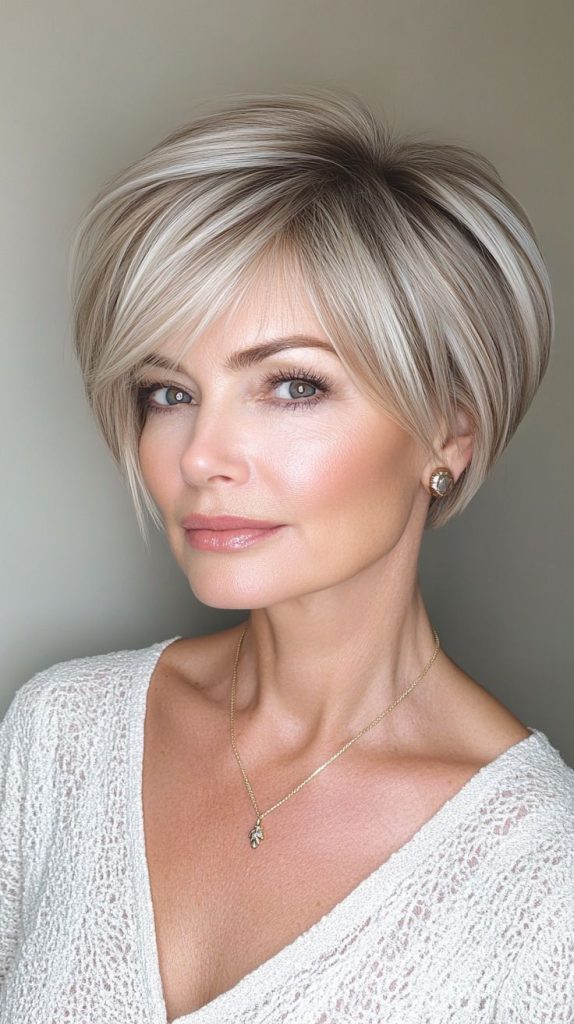
15. Low-Maintenance Pixie Bob
A low-maintenance pixie bob should work with your natural texture rather than requiring daily heat styling.
The shape is usually softly structured, with enough length on top to move naturally and a clean but not overly precise neckline.
Remember that low-maintenance styling doesn’t necessarily mean zero maintenance at the salon. Short shapes generally need periodic trims to retain their proportions.
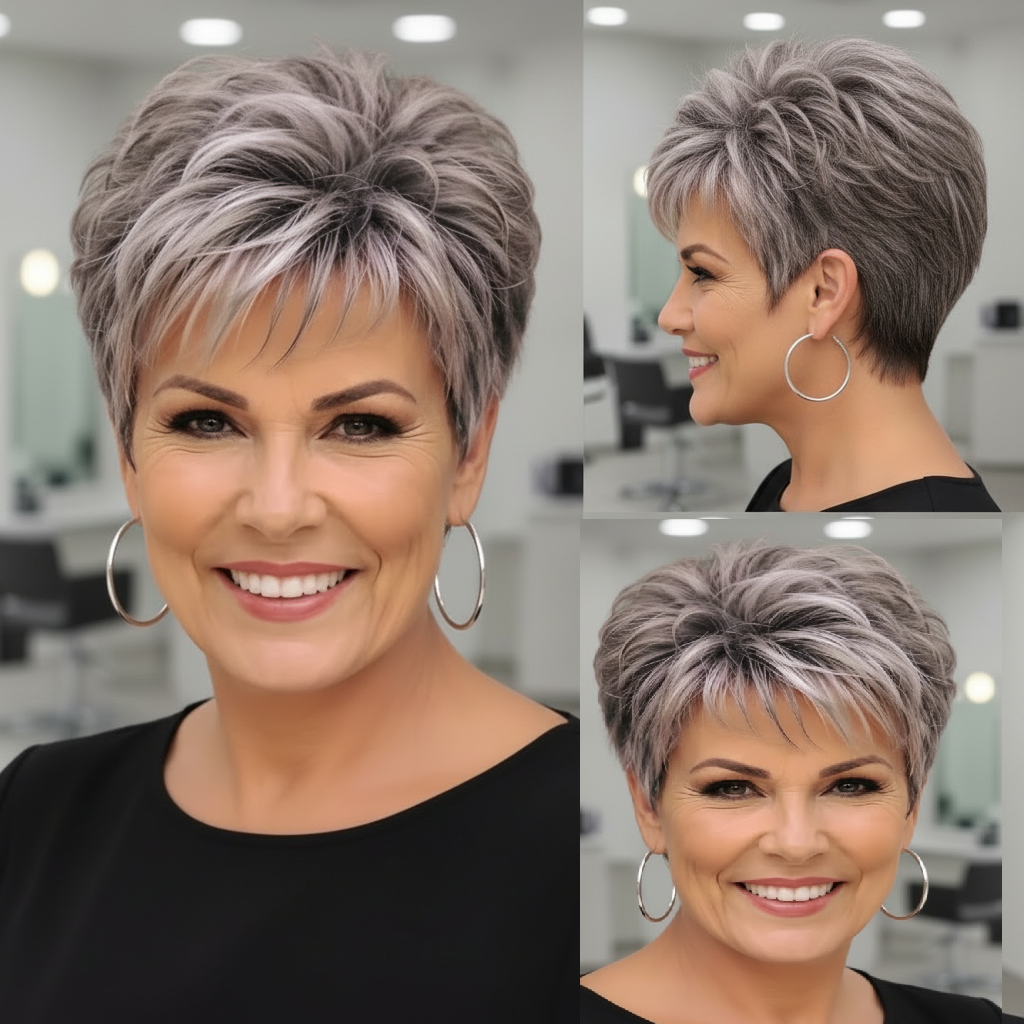
How to Choose the Right Pixie Bob for Fine Hair
Start with your natural hair rather than the photograph you want to recreate.
Consider three things: density, texture, and where your hair naturally loses volume.
If your crown tends to fall flat, strategic layering and slightly shorter lengths around that area may help. If your ends already appear sparse, keeping a stronger perimeter may be more flattering than adding many layers.
Women with naturally straight hair may prefer a sleek or softly graduated pixie bob, while slight waves can work beautifully with a more textured bixie.
Most importantly, tell your stylist that maintaining the appearance of density is a priority. Fine hair and thin hair aren’t necessarily the same thing, and the best cutting technique depends on how much hair you actually have as well as the diameter of each strand.
What to Ask Your Hairstylist
Bring two or three reference photos rather than relying only on the name “pixie bob.” The term can describe several different lengths and shapes.
Explain where your hair tends to fall flat and how much time you realistically want to spend styling it.
Useful questions include:
“Will these layers make my hair look fuller or remove too much density?”
“Where should we keep more length?”
“How can we create lift around my crown?”
“How often will this shape need trimming?”
A good haircut should be customized to your actual hair rather than copied exactly from a model.
How to Style a Pixie Bob for More Volume
Start with damp rather than soaking-wet hair. Apply a small amount of lightweight volumizing mousse or root-lifting product, concentrating where you need fullness.
While blow-drying, lift the roots at the crown and change the direction in which the hair naturally falls. Once the roots are dry, shape the longer sections with your fingers or a small round brush.
Avoid loading fine hair with multiple heavy products. Too much oil, wax, or styling cream can quickly undo the volume you created.
For a textured finish, use a very small amount of lightweight texture product after the hair is dry.
Frequently Asked Questions
Is a pixie bob good for fine hair over 50?
It can be. The shorter length reduces some of the weight that can make fine hair fall flat, while strategically placed layers can create movement and lift. The cut should be customized according to both your hair density and texture.
Can a pixie bob make fine hair look thicker?
The right shape can create the appearance of fuller hair, particularly by preserving density at the ends and adding controlled lift around the crown. It cannot change the actual number or thickness of your hair strands.
Should fine hair be heavily layered?
Not necessarily. Too much layering can remove density and leave already-fine ends looking sparse. Soft, strategic layers are often a better choice.
Is a bixie the same as a pixie bob?
The terms overlap considerably. Both describe a haircut positioned between a pixie and a bob, although “bixie” is often used for a more textured, layered interpretation.
How often should a pixie bob be trimmed?
It depends on the exact shape and how quickly your hair grows. More structured or tapered versions generally show growth sooner than longer, softer pixie bobs. Ask your stylist for a schedule based on the specific cut you choose.
Final Thoughts
The best pixie bob for fine hair over 50 isn’t necessarily the shortest or most layered option. It’s the one that works with your natural density, creates shape where you need it, and fits the amount of styling you’re willing to do.
From soft layered shapes to sleek pixie bobs and textured bixies, small changes in length, fringe, and layering can produce very different results.
Save your favorite looks, bring them to your hairstylist, and use them as inspiration for a pixie bob customized specifically for your hair.