Thin Hair: Haircut Lengths That Make Hair Look Thicker
Thin Hair: Haircut Lengths That Make Hair Look Thicker
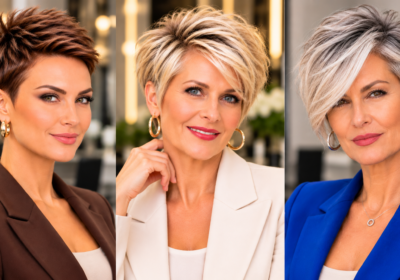
When you have thin hair, choosing the right haircut length can make a noticeable difference in how full your hair looks. Sometimes, cutting just a few inches can transform flat, wispy ends into a hairstyle that appears thicker, healthier, and more balanced.
But shorter isn’t always better. The most flattering length depends on your hair’s density, texture, natural movement, and how much styling you’re willing to do.
In this guide, we’ll explore the haircut lengths that can make thin hair look thicker, from short, structured cuts to longer styles that preserve movement without sacrificing fullness.
Why Haircut Length Matters for Thin Hair
Hair length affects how weight is distributed throughout a haircut.
When thin hair grows longer, the ends can begin to look sparse, especially if the hair has uneven density or excessive layering. Longer strands may also lie flatter against the scalp because of their weight.
A shorter haircut can help create a stronger outline, making the ends appear more substantial.
However, the goal isn’t simply to remove length. It’s to find the point where your hair naturally looks its fullest.
A well-designed haircut should:
- Create a clean, balanced silhouette.
- Preserve density through the ends.
- Avoid unnecessary thinning or excessive layering.
- Complement your natural texture.
- Maintain movement without making the hair look wispy.
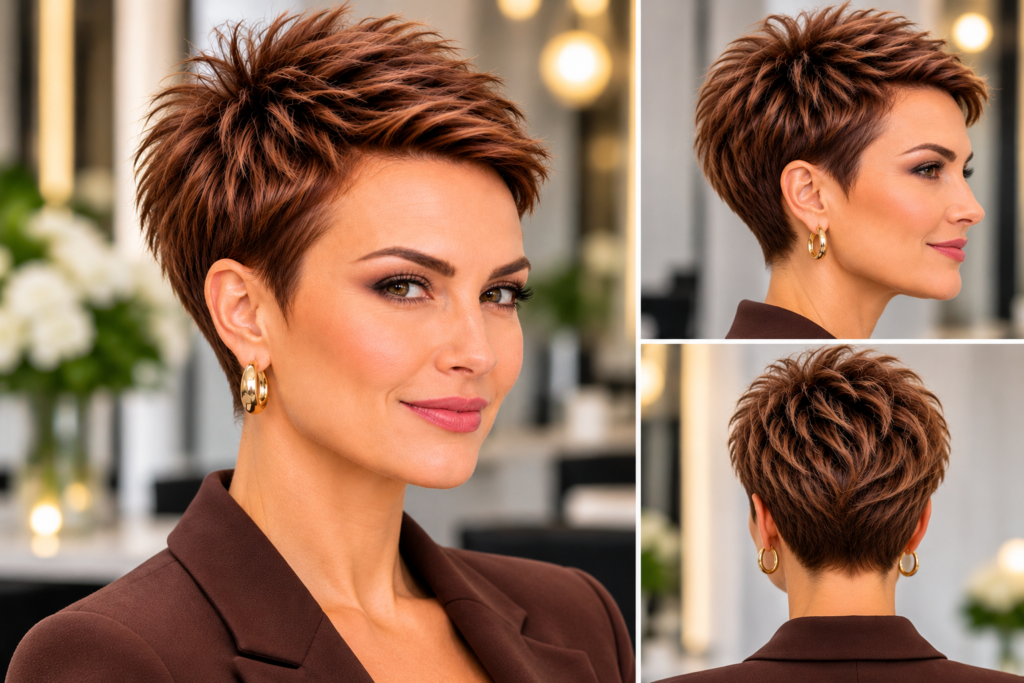
1. Ear-Length Haircuts: Short, Structured, and Lightweight
Best for: Fine, straight hair that struggles to hold shape.
Ear-length haircuts remove much of the weight that can pull thin hair downward.
A short pixie-bob, structured crop, or softly rounded ear-length cut can create a compact silhouette with definition around the sides and crown.
The key is keeping enough length on top to maintain shape rather than cutting everything extremely close to the head.
Styling tip: Use a lightweight volumizing mousse near the roots and blow-dry with your fingers for natural lift.
2. Jaw-Length Bobs: A Stronger, Fuller-Looking Outline
Best for: Thin hair with wispy or uneven ends.
A jaw-length bob is one of the most effective options for creating the appearance of thicker hair.
By keeping the perimeter relatively blunt, this haircut concentrates visual weight along the bottom edge.
Unlike heavily layered styles, a jaw-length bob can make the ends appear more substantial.
A slight side part or soft face-framing detail can add movement without removing too much density.
Styling tip: Keep the ends smooth and gently curved inward for a polished, fuller-looking finish.
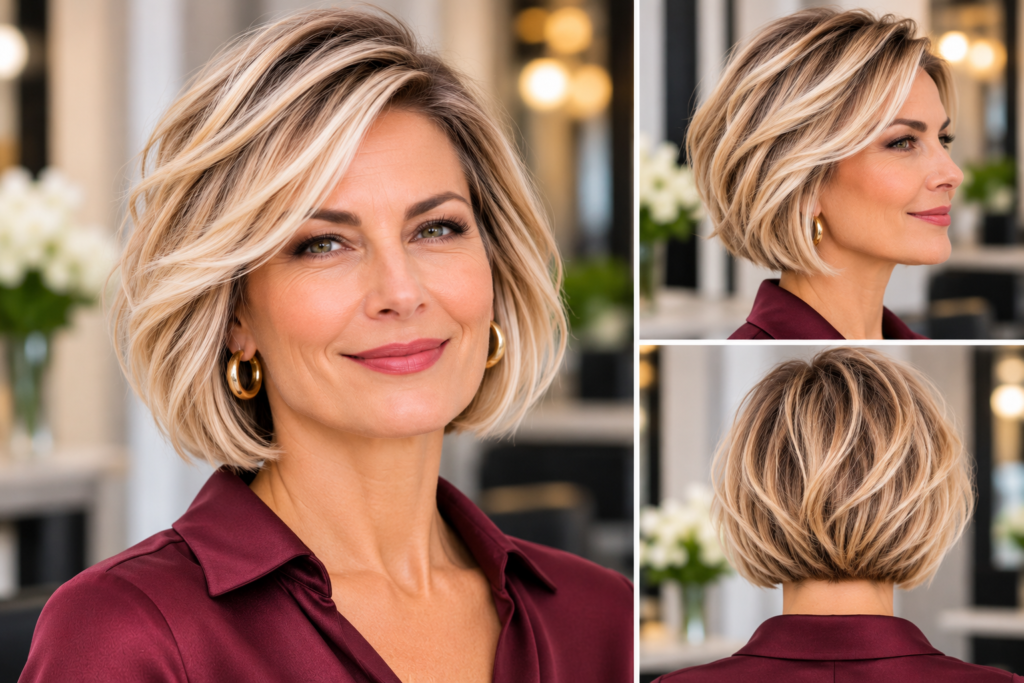
3. Chin-Length Haircuts: The Balance Between Fullness and Movement
Best for: Thin hair that needs shape without an extremely short cut.
Chin-length haircuts offer a flattering middle ground.
They provide enough length to create movement while remaining short enough to prevent the ends from looking overly stretched or sparse.
A chin-length French bob, softly rounded bob, or minimally layered cut can work especially well.
For thin hair, subtle shaping is often more effective than dramatic layers.
Styling tip: Try a slightly off-center part and a lightweight styling spray to add natural movement.
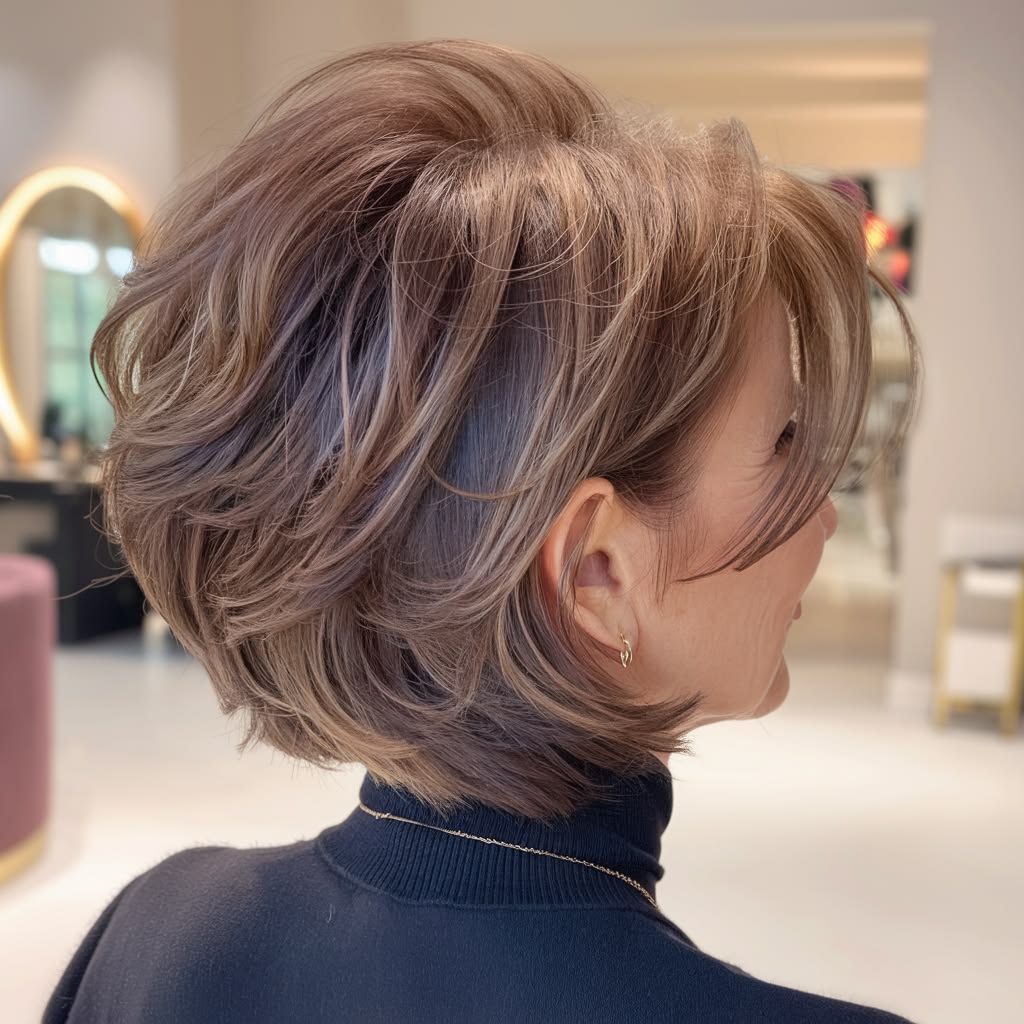
4. Collarbone-Length Haircuts: Keeping Length Without Sacrificing Density
Best for: Women who prefer longer hairstyles but have thin ends.
Not everyone with thin hair wants a short haircut.
A collarbone-length cut can be an excellent compromise between maintaining length and creating a fuller appearance.
The most important detail is the perimeter.
A relatively solid baseline can help thin hair look denser, while minimal internal layering can prevent the hairstyle from appearing too heavy or flat.
This length also allows for versatile styling, including soft waves and low ponytails.
Styling tip: Add loose bends through the mid-lengths while keeping the ends visually compact.
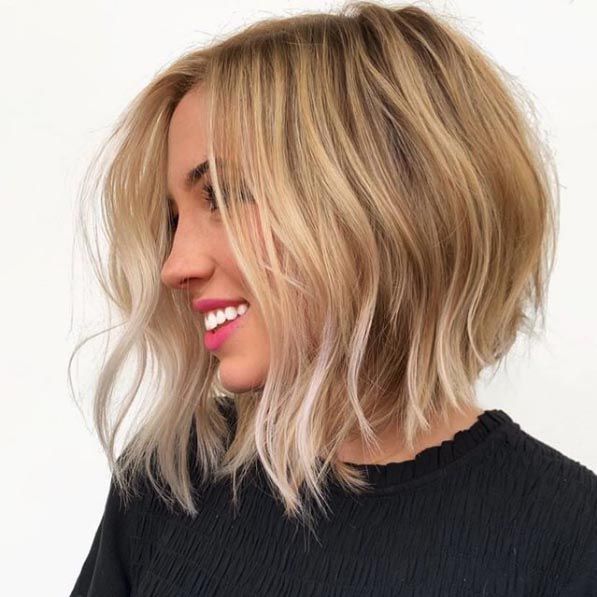
5. Shoulder-Length Haircuts: When Longer Hair Can Still Look Full
Best for: Thin hair with reasonably even density through the ends.
Shoulder-length hair can look beautiful, but the haircut needs careful shaping.
If the ends are already sparse, maintaining extra length may emphasize that thinness.
A shoulder-length blunt cut or softly shaped lob can create a more balanced appearance than a heavily layered hairstyle.
The goal is to preserve enough hair along the bottom edge to maintain a strong silhouette.
Styling tip: Avoid excessive texturizing at the ends. A smooth finish with gentle movement often makes the hair appear fuller.
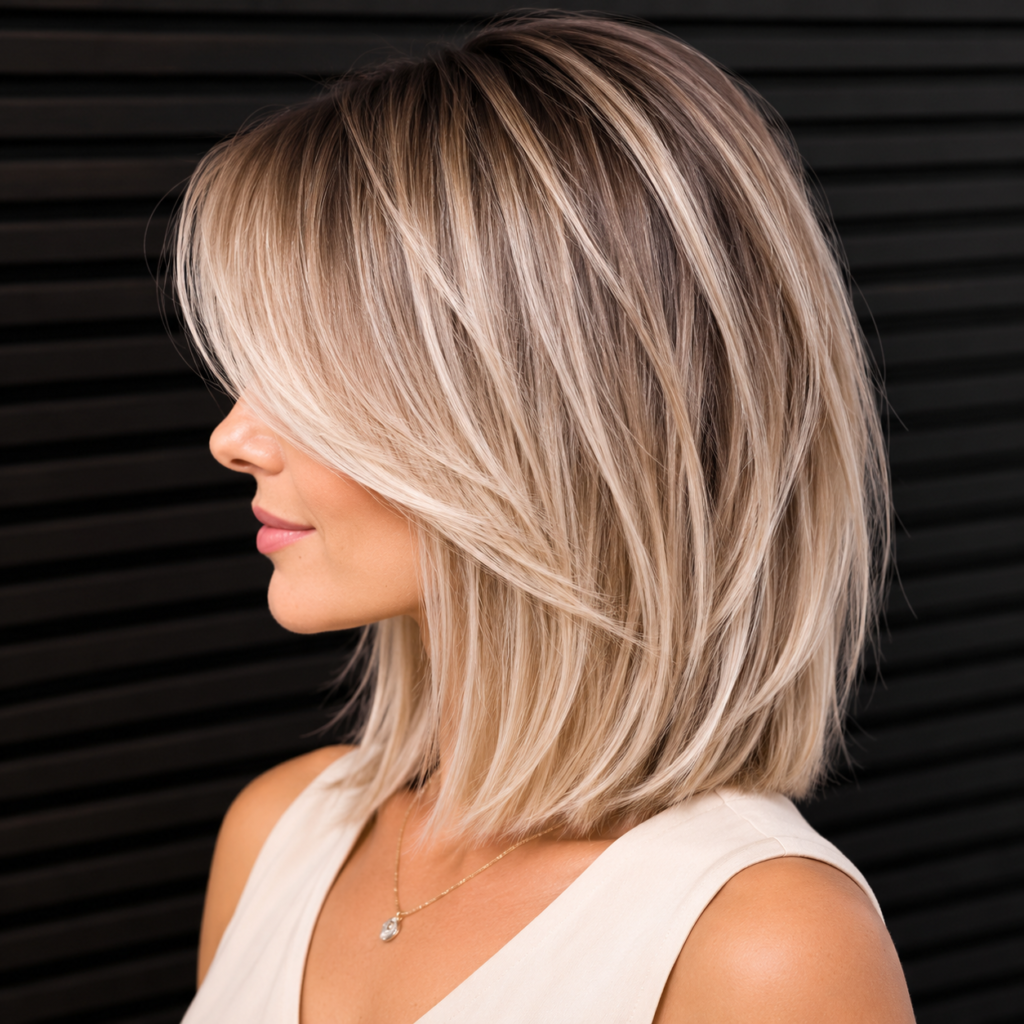
Blunt Cuts vs. Layers: Which Makes Thin Hair Look Thicker?
Both blunt cuts and layered haircuts can work for thin hair, but they create different visual effects.
Blunt cuts
Blunt cuts maintain a stronger perimeter, which can make the ends appear thicker.
They are particularly useful when thin hair becomes wispy toward the bottom.
Soft layers
Carefully placed layers can introduce movement and prevent certain hairstyles from looking flat.
However, excessive layering may remove too much weight from already thin hair.
The best approach: Preserve density through the perimeter and add only the layering needed to improve shape and movement.
Haircut Lengths That Can Make Thin Hair Look Thinner
Some haircut choices can unintentionally emphasize low density.
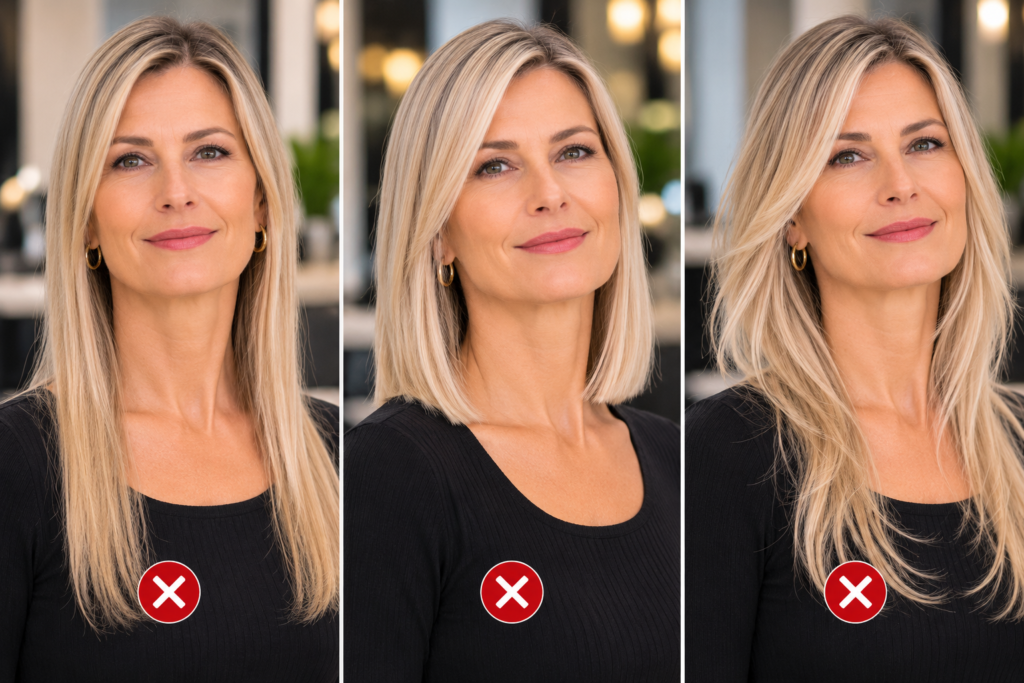
Very long hair with sparse ends may look stringy, especially when worn straight.
Heavy layering can also create visible gaps between sections, making the lower lengths appear thinner.
Other common mistakes include:
- Keeping damaged, transparent-looking ends just to preserve length.
- Adding too many short layers throughout the haircut.
- Using aggressive thinning techniques on already sparse hair.
- Choosing a length based only on trends rather than natural density.
These aren’t universal rules. Hair texture, density, and individual styling preferences all influence the result.
How to Choose the Right Haircut Length for Thin Hair
The ideal haircut length depends on where your hair looks naturally fullest.
If your ends appear noticeably sparse below the shoulders, a collarbone-length cut may create a stronger silhouette.
If your hair looks flat and lacks movement, a jaw-length or chin-length bob may provide a more defined shape.
If you prefer very short hair, an ear-length cut with carefully balanced proportions can create a polished, lightweight style.
Before your next salon appointment, ask your stylist to evaluate the density through your ends and recommend a length that preserves the strongest possible perimeter.
Frequently Asked Questions
What haircut length makes thin hair look the thickest?
There is no single best length for everyone. Jaw-length and chin-length bobs often create a fuller-looking outline, but the ideal choice depends on hair density, texture, and the condition of the ends.
Is short hair always better for thin hair?
No. Short hair can reduce weight and create a stronger silhouette, but collarbone-length and shoulder-length cuts can also look full when the ends retain enough density.
Do layers make thin hair look thicker?
Soft, strategically placed layers can add movement. Too many layers, however, may make thin hair look more sparse, especially near the ends.
Should thin hair be cut blunt?
A blunt or relatively solid perimeter can help thin ends appear fuller. Some subtle layering may still be beneficial depending on the haircut and natural texture.
How often should thin hair be trimmed?
The ideal schedule varies according to the haircut, hair condition, and personal preferences. Short, structured cuts may need more frequent reshaping, while longer styles can often go longer between appointments.
Final Thoughts
The secret to fuller-looking thin hair isn’t necessarily choosing the shortest haircut. It’s finding the length that preserves density, creates a balanced silhouette, and complements your natural texture.
Whether you prefer a jaw-length bob, a chin-length French bob, or a collarbone-length cut, the right shape can make thin hair look noticeably more substantial.
Focus on strong ends, thoughtful layering, and a haircut that works with your hair rather than against it.