9 Short Haircuts for Thin Hair That Don’t Look Flat
Thin hair and short hair can be a surprisingly good combination — as long as the cut has the right shape.
One of the biggest concerns women with fine or thin hair have before going shorter is that their hair will end up looking flat, sparse or stuck to the head. But short hair can actually make thin hair appear fuller because there is less length pulling it down.
The secret is choosing a haircut that creates shape, movement and strategic volume without relying on excessive layering.
From soft bixies to structured bobs and modern pixies, these nine short haircuts can help thin hair look fuller while remaining easy to style.
Looking for more options? See our guide to haircuts for thin hair that make it look fuller.
1. Full Soft Bixie
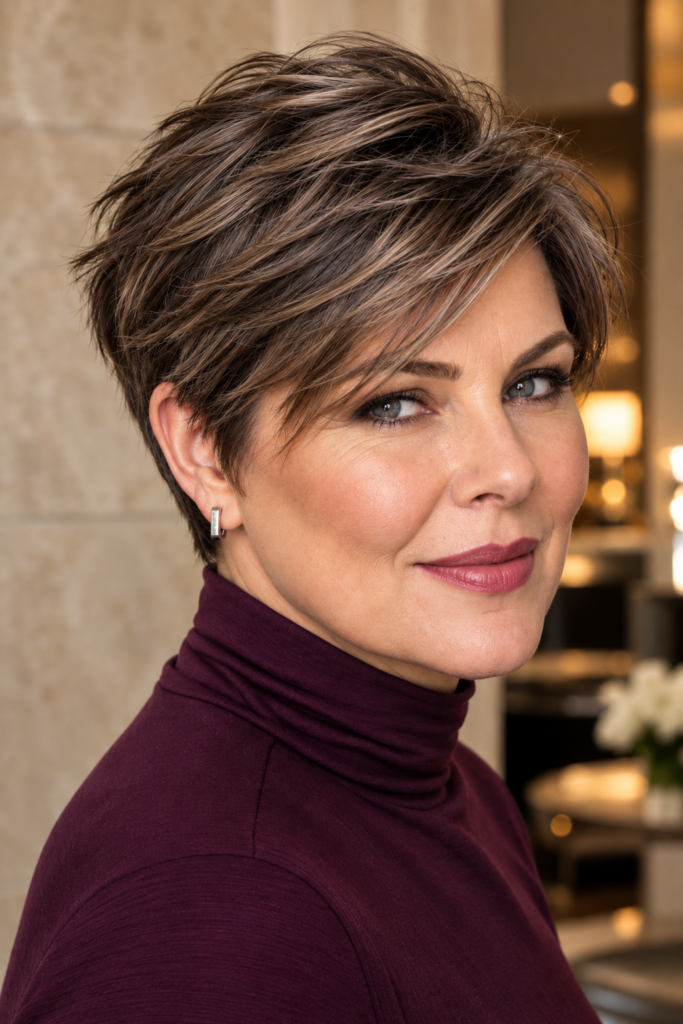
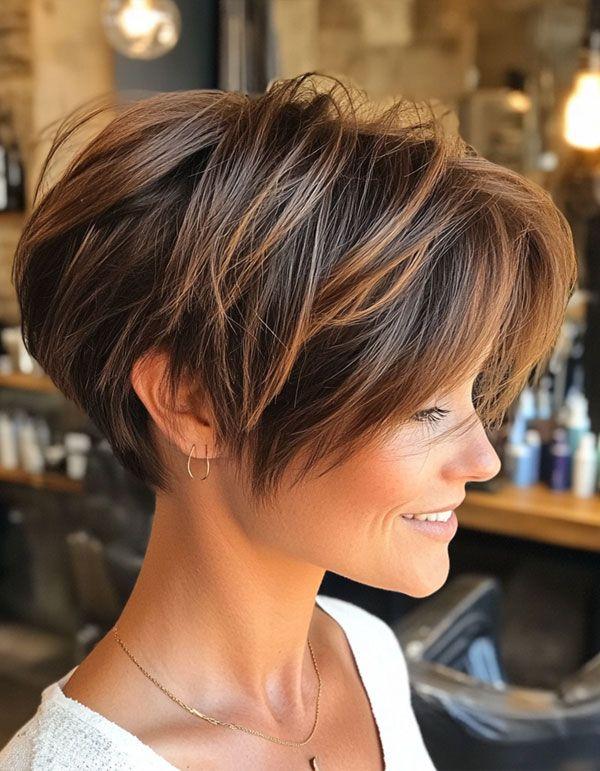
A soft bixie is one of the most flattering choices for thin hair because it combines the fullness of a short bob with the lighter structure of a pixie.
The best version for fine hair keeps some density through the perimeter while introducing subtle layers through the crown. A longer side-swept fringe can also create the illusion of more hair around the front.
Avoid making the layers too short or heavily feathered. Thin hair usually benefits from keeping enough weight to maintain a substantial-looking shape.
Best for: fine straight or slightly wavy hair.
Styling tip: Lift the roots at the crown while blow-drying and leave the ends soft rather than overly separated.
2. Stacked Pixie-Bob
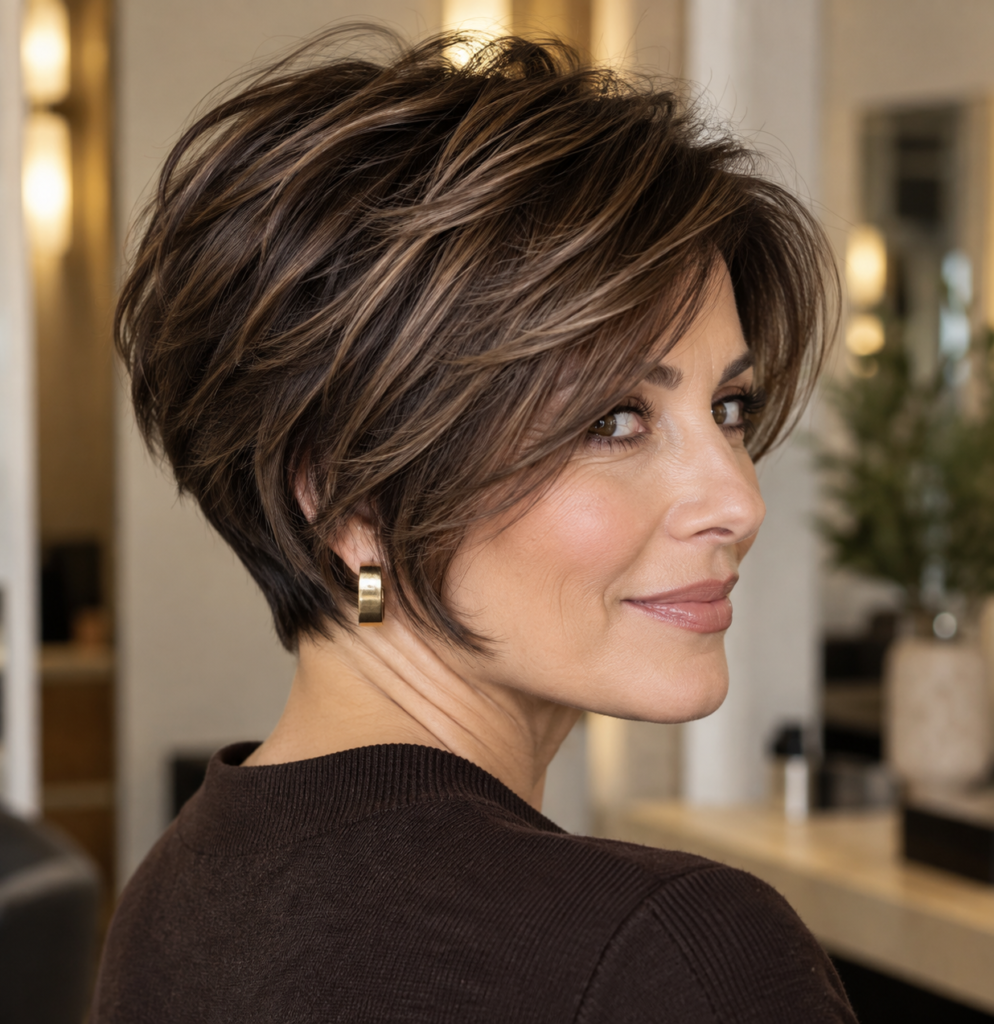
A softly stacked pixie-bob uses subtle graduation through the back to create natural lift.
Instead of relying on styling products to manufacture volume, the architecture of the haircut itself creates a rounder, fuller silhouette.
The front can remain slightly longer, which gives the haircut softness and prevents it from looking too cropped.
The important word here is softly. Excessive stacking can expose thin areas and make the haircut look dated, while subtle graduation creates fullness without removing too much density.
Best for: straight fine hair that tends to collapse at the crown.
Styling tip: Direct the roots slightly upward while drying the back instead of smoothing everything flat.
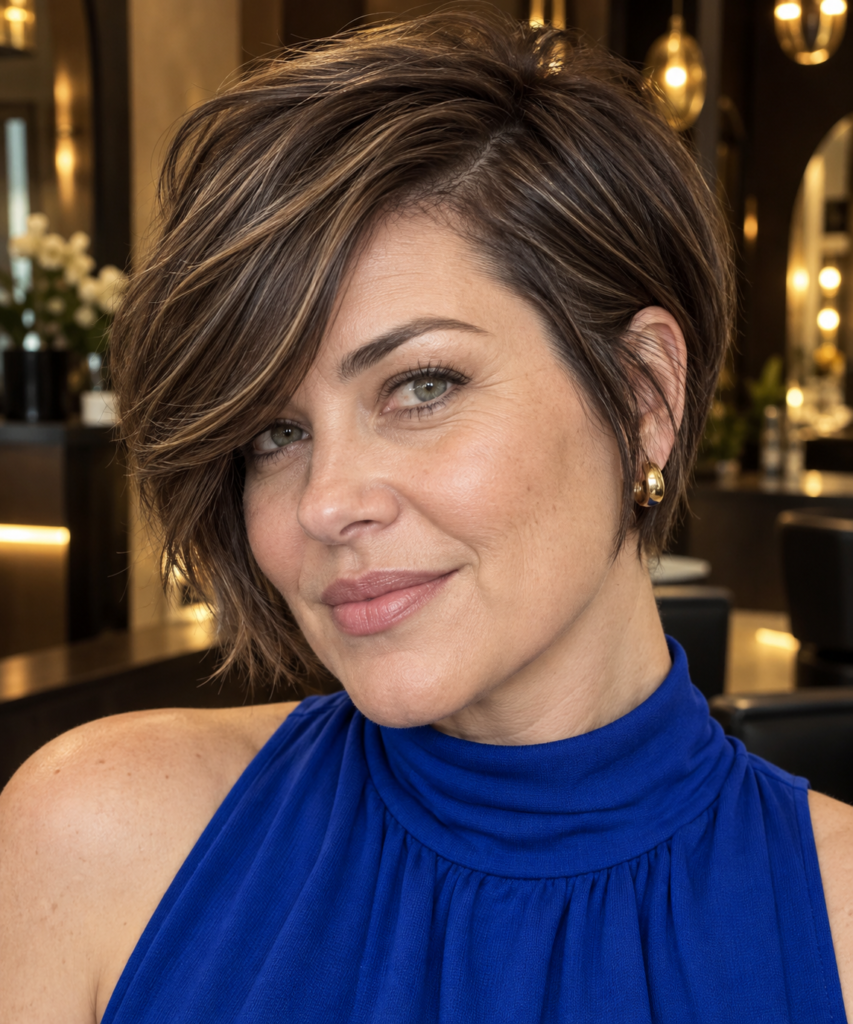
3. Textured Long Pixie
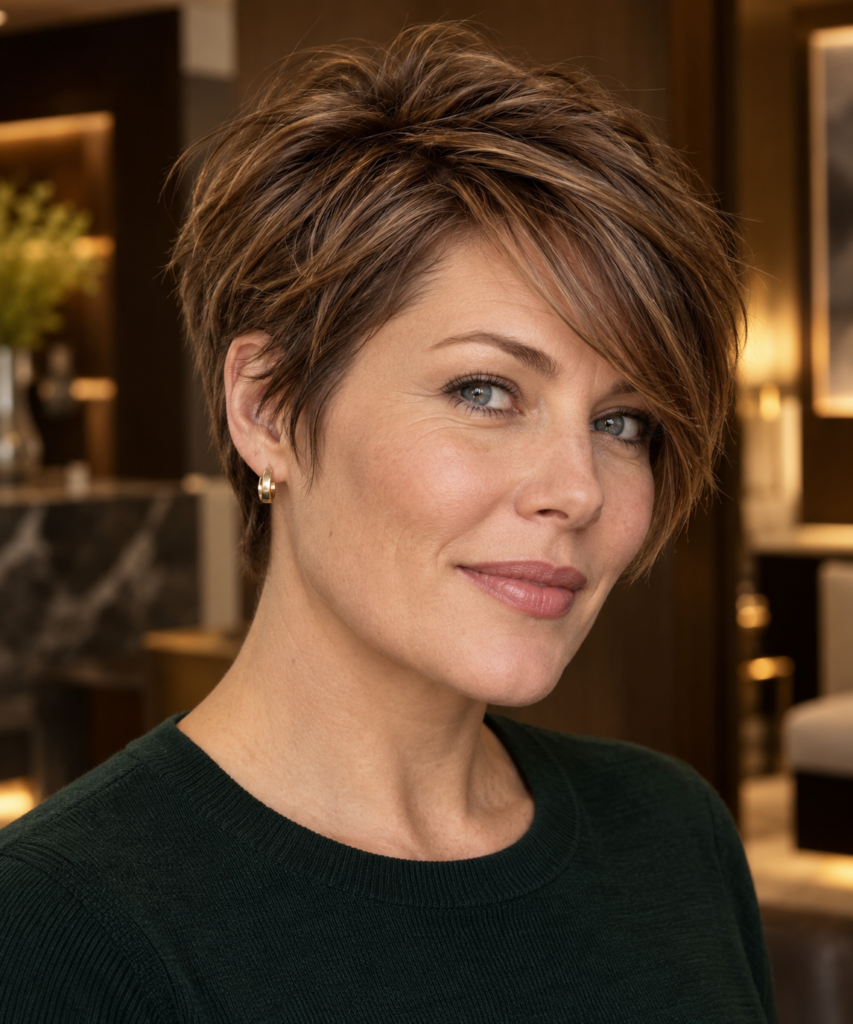
A long pixie gives thin hair room for movement without the weight of a bob.
Keeping more length through the top allows the hair to be swept sideways, forward or slightly upward, creating several layers of visual dimension.
The sides and nape should remain relatively neat so that the longer top becomes the focal point.
This contrast between a compact perimeter and a fuller upper section can make thin hair appear considerably denser.
Best for: fine hair with enough natural density through the crown.
Styling tip: Use a very small amount of lightweight texture product. Heavy waxes can separate fine strands too much and expose the scalp.
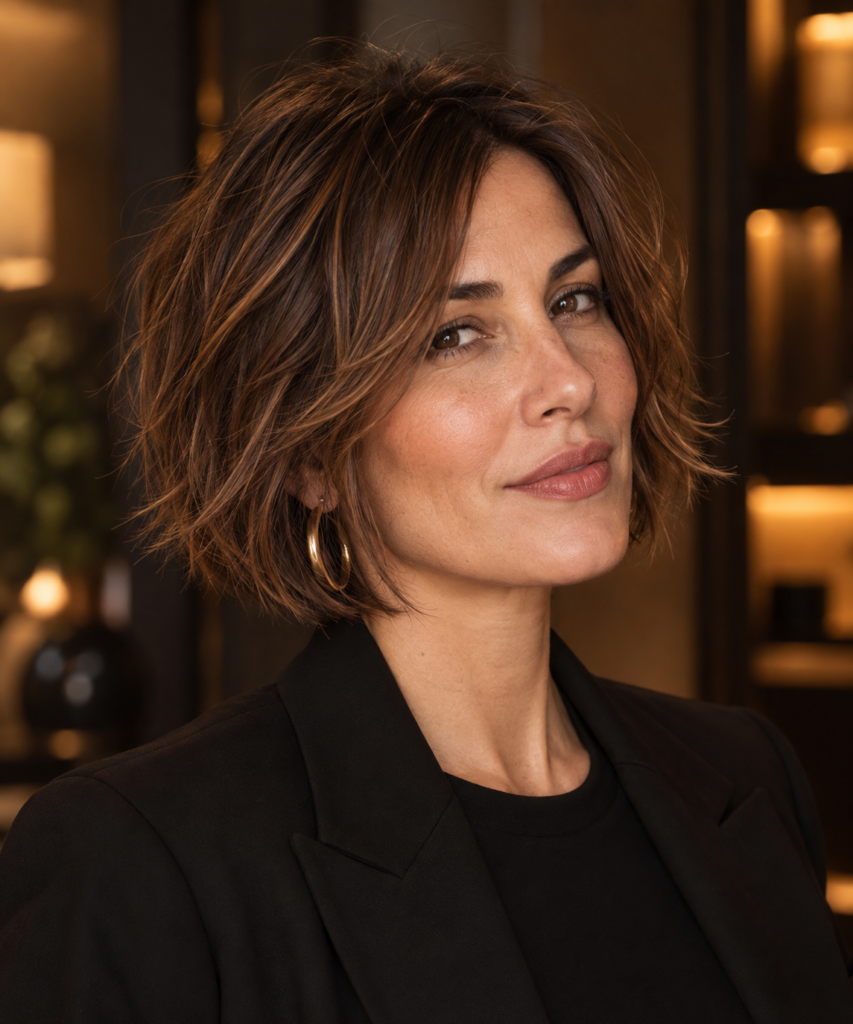
4. Jaw-Length Bob With Subtle Graduation
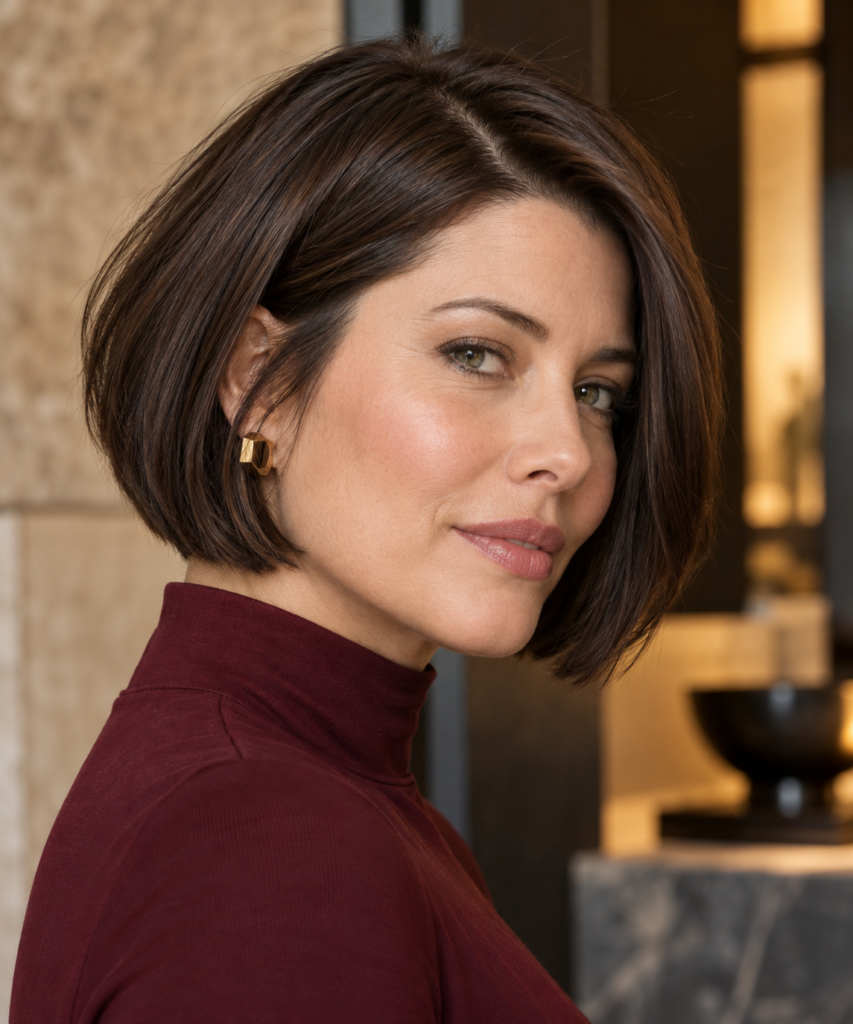
Not every haircut for thin hair needs obvious layers.
In fact, a strong jaw-length bob can make fine hair look thicker simply because the ends remain concentrated along one visible perimeter.
Adding just a little graduation through the back gives the haircut extra shape while preserving that strong baseline.
The result is a bob that feels polished and substantial rather than flat.
Best for: fine straight hair, especially when the ends tend to look wispy at longer lengths.
Styling tip: A slight bend through the ends creates more body than an extremely flat, pin-straight finish.
If you love this shape, discover more bob haircuts for fine hair that add volume.
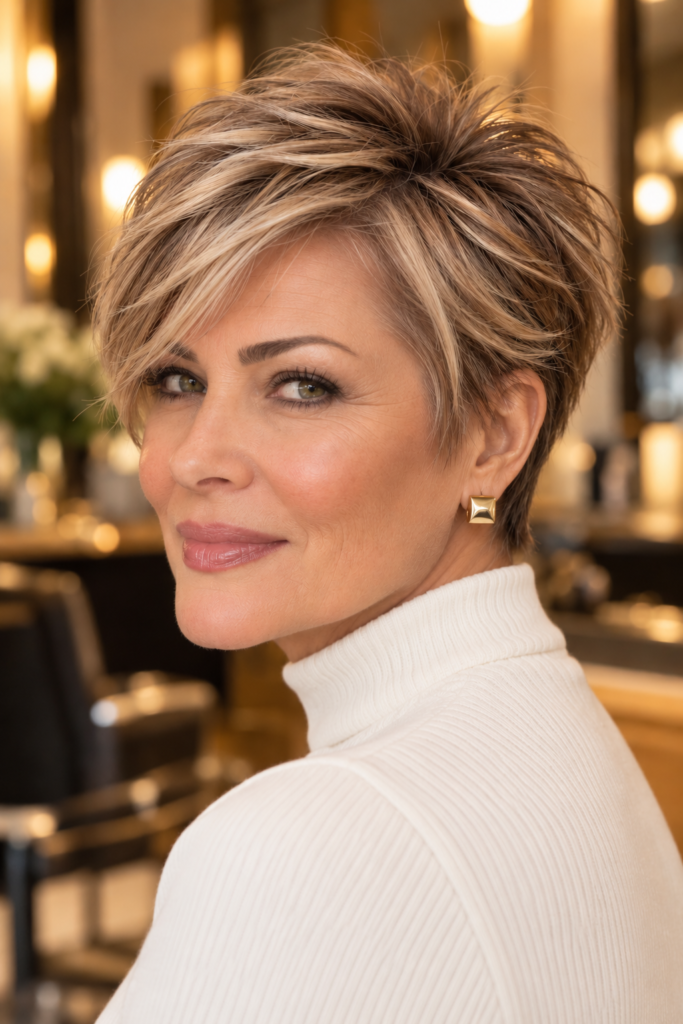
5. Feathered Pixie With Crown Lift
A feathered pixie works particularly well when thin hair lacks height on top.
Short, carefully placed layers through the crown allow the hair to lift away from the scalp, while a slightly longer fringe keeps the haircut feminine and versatile.
The sides should stay relatively compact. Too much volume around the ears can make the haircut wider rather than fuller.
The goal is to direct the eye upward, creating height where thin hair often needs it most.
Best for: fine hair that becomes flat shortly after styling.
Styling tip: Dry the crown in the opposite direction from the way it naturally falls, then reposition it with your fingers.
6. Short French Bob With Soft Texture
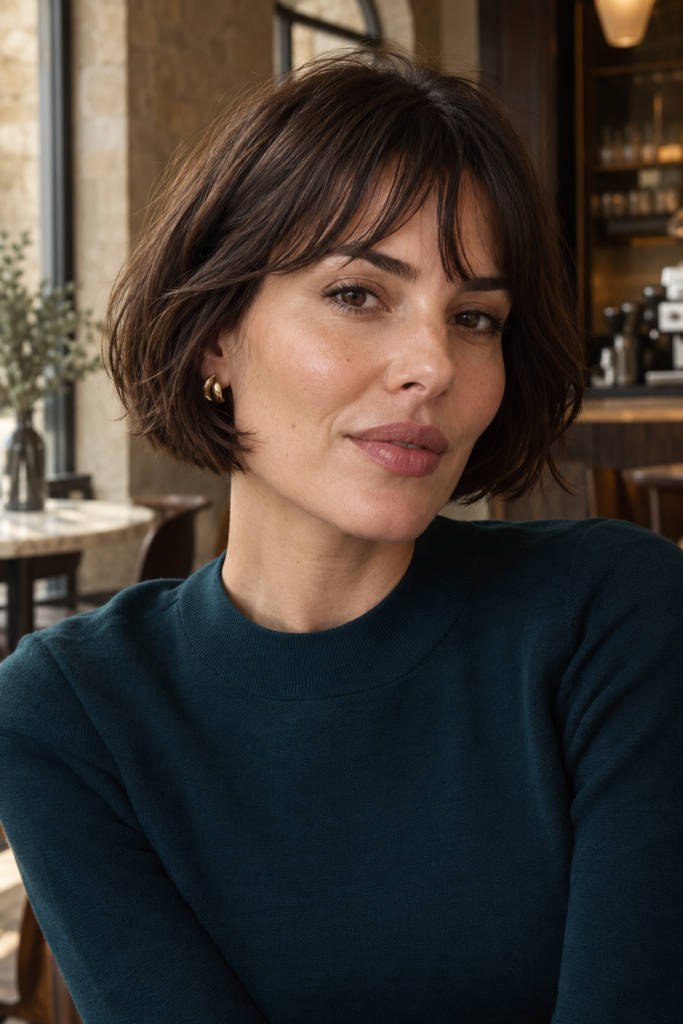
A French-inspired bob can work beautifully on thin hair when the perimeter remains strong.
Instead of creating dozens of visible layers, keep the haircut around jaw length and introduce only enough internal texture to prevent it from looking rigid.
A soft fringe can add another area of visual density around the face, although very sparse hair may look fuller with a side-swept or broken fringe rather than a heavy straight bang.
The result should feel effortless rather than perfectly sculpted.
Best for: straight-to-wavy fine hair.
Styling tip: Allow a little natural movement through the ends instead of trying to make every strand sit perfectly.
7. Layered Crop With a Longer Top
This haircut uses proportion rather than length to create fullness.
The sides and back remain short and clean, while noticeably more length is preserved through the upper section. Because the top contains more hair, it can be styled with lift, direction and texture.
A longer diagonal fringe can also make the haircut appear denser from the front.
For thin hair, the layers should remain relatively substantial rather than being aggressively thinned with a razor.
Best for: women who want a genuinely short haircut without sacrificing softness.
Styling tip: Concentrate volume at the roots and keep the ends lightly defined.